The death yesterday (Tuesday) in a Monaghan hospital of former IRA Northern Commander and Chief of Staff, Kevin McKenna marks the end of an era in the history of Irish republicanism, one which saw the first seeds of the peace process sprout into a faltering but ultimately permanent ceasefire that led, eventually, to the disbandment and disarming of much (if not all) of the Provisional organisation.
McKenna was the longest serving of the Provo Chiefs of Staff, succeeding Ivor Bell in September 1983 – who was court-martialed and expelled for plotting against Gerry Adams. McKenna remained Chief of Staff until October 1997 when Tom ‘Slab’ Murphy replaced him.
During his reign as IRA supremo, the Provos imported hundred of tons of weaponry from Libya but lost the biggest shipment of all, on the Eksund, thanks to leaks from the highest levels of the organisation to British intelligence.
That loss scuppered plans to launch a surprise military offensive, nicknamed ‘the Tet’ after the North Vietnamese campaign against US and South Vietnamese forces in 1968.
He also led the IRA into the 1994 ceasefire – voting against it himself at a special Army Council meeting – but lost his position in the wake of the collapse of that cessation when a new Army Council emerged from the October 1997 Convention. That gathering saw the Adams leadership narrowly escape defeat at the hands of opponents of the peace process strategy.
Within the upper echelons of the Provisionals, however, he will be best remembered for a tumultuous feud with the former Chief of Staff, Martin McGuinness from which he ultimately emerged victorious.
The episode at the centre of their feud concerned an informer from Derry called Frank Hegarty, who had been expelled from the IRA some years previously but allowed back, apparently at McGuinness’ behest, and had subsequently risen in the Quarter-Master’s department, perilously close to the Libyan shipments.
Much controversy surrounds Hegarty’s death. Exposed as a spy working for the British Army’s Force Research Unit, he fled to England where he was in the care of British intelligence. But he was homesick and when McGuinness gave him assurances that he would be safe, he decided to return home.
McGuinness’ guarantee proved to be worthless. Hegarty was dead within hours of returning to Derry, leaving unanswered and dark questions about McGuinness’ motives.
The IRA’s military commander at the time of the 1994 cease-fire was the Tyrone man Kevin McKenna. Appointed chief of staff after the fall of Ivor Bell, McKenna became the longest-serving of all the IRA’s chiefs of staff, and his period at the top of the IRA encompassed the crucial transition from war to peace. Born on the family farm near Aughnacloy on the Tyrone-Monaghan Border in 1945, McKenna had been in the IRA briefly before the Troubles erupted in 1969 but had emigrated to Canada and missed key moments, such as the split between the Officials and the Provisionals. The introduction of internment in 1971 brought him back to Ireland and to the IRA, as it did scores of other young Northerners made angry at the turn of events and eager to help strike back. McKenna quickly made his mark and was soon a leading figure in the Tyrone organization, as a contemporary recalled:
His rise in the IRA was accounted for by the fact that back in those days there would have been three types of IRA men, the bulk were eighteen-to nineteen-year-olds, some in their fifties and sixties who were veterans of the ’56–’62 campaign and a small number like Kevin in their mid-twenties who were the right age to take the lead. He had come back from Canada with a bit of money, enough to buy a car. He was mobile, the right age, single and willing to work, and away he went.
McKenna helped form an IRA unit around the Eglish-Aughnacloy area of Tyrone and afterward rose through the Tyrone Brigade. Kevin Mallon, the first OC of Tyrone, was succeeded by another figure known for his operational daring, Brendan Hughes, who was no relation to the Belfast figure of the same name. At the end of 1972, after Hughes’s departure, McKenna became commander of Tyrone but within eighteen months had been arrested and interned. Released in early 1975, he again assumed command of Tyrone, this time running the brigade from the distance of Monaghan, where he has lived ever since. The Northern commander immediately prior to Slab Murphy, McKenna was eventually elevated to the Army Council, and there was little doubt that, whatever his military skills, he was also put there to placate a Tyrone IRA made uneasy by Adams’s routing of Kevin Mallon in the wake of the disastrous Tidey kidnapping.
“McKenna would have been seen as keeping Tyrone out of politicking and troublemaking,” said one IRA veteran. “He’d be there to keep Tyrone happy, so they could say that their man was chief of staff. He would also empathize with the South Armagh men; he knew the price of cows and was happy wearing wellies.”
The chief of staff was liked by his men even if his political analysis, like that of the other “soldiers” on the Army Council, was less than sophisticated, as the same IRA source recalled:
“He is a very pleasant man to talk to, thoughtful, hospitable, and affable. He wasn’t a superior type nor stern, more an avuncular figure. While Twomey would be full of rage and almost physical retribution if you failed to carry out a mission, McKenna was more tolerant and understanding. If a unit was operating well, he would make sure it was well equipped. The fighting men had time for him; he was always there for them.
“He had no well-defined politics as far as I could remember, and he was confused about the movement’s support for socialism. I remember at the time of the 1972 cease-fire him saying to me that he wanted the Brits out but he was not sure whether we needed socialism. I then saw him at a Sinn Fein Ard Fheis in the mid-seventies wandering around. A Portuguese army colonel had just spoken, and McKenna was in a daze saying this really is a revolutionary party. He was lost in terms of economics. He knew how to buy and sell cattle and would have made a good small businessman, but the macro stuff left him trailing.”
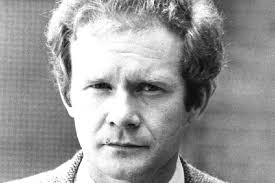
McGuinness’ feud with McKenna was thought to have roots in the Derry man’s ambition to be Chief of Staff again
The Army Council was never an entirely united body, and personality clashes often soured its meetings. The squabbling between McGuinness and McKenna, a product of deep personal rivalry, was particularly serious. McKenna, who managed to be a most secretive and publicity-shy commander, resented constant media reports that McGuinness was the real chief of staff, and he suspected that the Derry man had done little to discourage them. There was a widespread suspicion that McGuinness desperately wanted his old job back and in particular to be chief of staff when the Libyan-resourced “Tet offensive” began. Before the Libyan weapons arrived, he launched a torrent of criticism at McKenna’s handling of the IRA’s campaign and, but for the support of Slab Murphy, the chief of staff might have succumbed. “Everything was thrown at him except a vote of no confidence,” recalled one source. Adams, by contrast, generally stayed above their conflict and refused to take sides, waiting to see who emerged victorious.
After the Libyan weaponry started to arrive, the rows between the two men worsened. As Northern commander, McGuinness and his staff had the final say on which units were to receive the new weaponry. But when it was discovered that arms were being sent to areas with inactive or small IRA units, such as Lurgan in County Armagh, or where training in the new equipment had yet to be given while other well-trained areas were ignored, McKenna angrily intervened. The problem was that the weapons were being lost by inexperienced units almost as quickly as they arrived, and the drain on the Libyan stores became so great that by the early 1990s McKenna gave an order to cease replacing lost weapons and issued instructions that existing stocks in Northern Command be moved around internally, with a consequent risk that guns and equipment would be bugged by the British. There were accusations that McGuinness was either attempting to curry favor with the rank and file or was just incompetent; relations between the pair became icy.
McGuinness and McKenna clashed again when more precious Libyan weapons were lost. This time the trouble broke out after Gardai discovered two plastic tanks full of automatic rifles, Semtex explosives, and ammunition hastily buried in the beach at Five Fingers Strand near Malin Head in north Donegal in January 1988. The weapons had been moved to Donegal on the basis of assurances from McGuinness’s right-hand man, an activist from the Inishowen peninsula, that the appropriate dumps had been located and readied. The assurance was bogus, and the arms had to be quickly buried on the nearest available beach as soon as they arrived. The van carrying the load was stopped by alert Gardai, who realized that the driver and passenger had republican records. The van was empty but there were traces of sand inside. On a hunch, a search of beaches near the driver’s home on Malin Head was ordered, and the weapons were duly uncovered. The Inishowen activist was sacked from the IRA at McKenna’s insistence, the episode being recorded as another black eye for McGuinness.
The biggest row between the pair, however, was over the activities of a well-placed IRA informer in the Derry Brigade, Frank Hegarty, who was attached to the quartermaster’s department. Hegarty had been seconded to work with Northern Command staff to help move part of the first Libyan shipment to dumps in the west of Ireland. The consignment, some eighty AK-47s that had come to Ireland as part of the Kula’s cargo in August 1985, was being moved by stages when in January 1986 the Gardai swooped. Two transitional dumps, one in Roscommon and one in Sligo, were raided and the weapons seized. The next day Hegarty disappeared from Derry, and it soon became clear not only that he had given the dumps away but that he had been working for MI5, the British Security Service, which had spirited him away, and that he was being kept in a safe house somewhere in the north of England.
Hegarty’s forced flight was a disaster for the intelligence community. An IRA member from the 1970s, Hegarty was Northern Command QM in 1982, when it was discovered that he was having an affair with the wife of a soldier in the Ulster Defence Regiment. His case went as high as the then chief of staff, Ivor Bell, who dismissed him from the IRA. Not long afterward Hegarty was approached by an arm of British military intelligence called the Force Research Unit who persuaded him to return to the IRA and work as a double agent. Inexplicably, Hegarty was allowed back into the IRA in Derry and made his way once again into the QM’s department with a brief from British intelligence to rise as far as he could, even as high as QMG. His handlers assured him that his IRA bosses would be removed one by one to smooth his way. British intelligence’s ambitious plans for Hegarty were, however, frustrated by the Special Branch in the Republic’s police, who insisted on moving in on the IRA dumps in Roscommon and Sligo as soon as the weapons arrived. Eager to strike a damaging propaganda blow against the IRA, the Gardai vetoed a British plan to bug and follow the weapons, and they moved to seize them. Fortunately for the IRA, Hegarty had been given a false story about where the weapons had come from; he was told that they had originated in Europe, and this, together with the fact that some Belgian FN rifles had been mixed in with the AK-47s, satisfied British intelligence. Nevertheless, the British had lost a potentially priceless agent as well as an opportunity to track the progress of the weapons.
The British had, though, come perilously close to discovering the Libyan link. Since most of the remaining Libyan shipments were still being awaited, including the Eksund’s 120 tons, the episode gave the IRA leadership a bad fright, and a high-level investigation was ordered. The first question to be resolved was how Hegarty had been allowed back into the IRA. Since McGuinness was Northern commander, it stood to reason that he must have known of Hegarty’s return, but he denied this and argued that the real informer had to be someone other than Hegarty.
During Hegarty’s period in hiding in England he was in regular contact by phone with his family in Derry. A month after his sudden disappearance Hegarty just as unexpectedly returned to Ireland, and so began one of the most controversial chapters in McGuinness’s republican career. Hegarty’s family would later insist that he had agreed to come back only after they passed on to him an assurance from McGuinness that he would not be touched. McGuinness has always denied this, but sources familiar with Hegarty’s subsequent interrogation at the hands of the IRA say that the informer repeated the claim while in the organization’s custody.
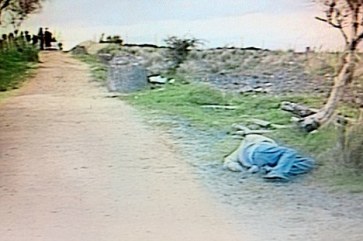
Hegarty also told his questioners that McGuinness had known and approved of his return to the IRA’s ranks, an admission that sparked a blazing row between the Northern commander and the chief of staff. Behind the row lay an unanswered question: why had McGuinness advanced Hegarty’s second career in the IRA’s quartermaster’s department when there had been so much doubt about his loyalty that he had previously been thrown out of the organization? In May 1986, just four months after the Gardai seized the Roscommon and Sligo arms dumps, Hegarty’s body was found on the outskirts of Castlederg near the Tyrone–Donegal Border. His eyes had been taped over, his hands tied behind his back, and a bullet wound to the back of his head indicated that he had received the punishment customary for those judged guilty of informing. The rivalry between McGuinness and McKenna would simmer on for years to come, but Hegarty’s death effectively marked the end of the Derry man’s ambitions to take over the chief of staff’s job.



 The Broken Elbow
You must be logged in to post a comment.