Exposure exposed

(Four updates below – a fifth added on January 23rd, 2012)

Back in July this year I was contacted by a journalist from a new ITV documentary series with the titillating title Exposure. I answered the email and then had a phone conversation with the reporter about the project she was working on.
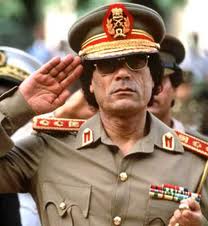
The project, which apparently was chosen as the first of six documentaries touted as ITV’s answer to BBC’s Panorama, will be/was broadcast on September 26th. Judging by what I have read about itExposure looks like it will be an eminently missable series to watch, or rather not watch.

The entire programme is based around a claim that Colonel Muammar Gaddafi decided earlier this year to send over £1 million to Republican dissidents in Northern Ireland in an effort to cause trouble for Cameron’s government, one of the leading lights in NATO’s bombing campaign against the then Libyan leader.

The programme claims that a Libyan government courier flew into London  carrying a suitcase packed with two million dollars (wrapped in plastic the programme says, in one of those little credibility-adding details in a story that is otherwise distinctly lacking in plausibility) destined for the dissidents’ war chest.

The Libyan courier hid out in one of Gaddafi’s London homes, a luxury property in Knightsbridge, before delivering the suitcase to a businessman and IRA dissident sympathiser.

An enticing tale, yes? But who was the source? Well it turns out someone in MI6 told the programme all about this extraordinary plot. Will we be told the name of the MI6 man or woman? We’ll see but I doubt it. Will he or she be interviewed and the claim subjected to proper scrutiny? Again I doubt it but we’ll see.

I certainly hope that the source is quizzed as one of the questions I would like to see put is whether this claim is really just a piece of black propaganda put about to justify a regime-change bombing campaign by the MI6 person’s employer, to wit the Cameron government.

Will Exposure have other evidence to back up this claim or will the rest of the programme consist of lurid archive of IRA bombs and shootings from the days when Gaddafi did arm and fund the Provos, archive designed to make the current claim all that bit more believable?

Going back to that phone conversation with the journalist from Exposure. Flattering me with praise for my book ‘A Secret History of the IRA‘, the journalist suggested that I could be flown over to London where I would be interviewed by the programme makers.

But it did not take long before it became clear I was not saying what the journalist wanted to hear. Did I not think that Gaddafi had made the Provisional IRA a really potent threat, that the weapons he provided were amongst the deadliest available (i.e. and would do the same therefore for the dissidents)?

Well, I replied, there’s no doubt that he gave them lots of weapons, some of which like Semtex explosives did make a big difference, but some were duds or next to useless, like the SAM-7 missile launchers which turned out to be so outdated the British counter measures easily neutralised them, or the Dushkie machine guns which were so heavy they were completely unsuitable for guerrilla warfare. I had written in ‘A Secret History…’ that many of Gaddafi’s weapons had come from the back shelves of his stores and I still believe that.

The Eksund - 1987 capture of IRA gun-running ship strengthened peace camp

And then, I added, there was an irony about Gaddafi’s support for the IRA, it had actually if unintentionally helped foster the burgeoning peace process. So in a sense, Gaddafi was, loathe that he would be to admit it, one of the midwives to the process. I explained: the interception of the gunrunning ship Eksund in the autumn of 1987 robbed the IRA’s planned Tet-style offensive of its vital surprise element. The loss of this potentially valuable military card gave added value to the then infant peace process which eventually became the Provos’ only game in town. If Gaddafi hadn’t sent the Eksund it wouldn’t have been caught and the Adams camp in the Provos would not have been suddenly strengthened.

Meanwhile the earlier arms shipments from Libya, which had not been betrayed and were now stored in dumps around the country, gave the Sinn Fein leadership a priceless card to play in the subsequent peace negotiations – i.e. decommissioning –  thereby making the peace process even more enticing to the Provos. So in these ways Gaddafi had unwittingly helped to bring peace to Northern Ireland.

Needless to say with each point I made the prospects of  me being flown to London diminished visibly. The killer came when I suggested that the programme’s source in British intelligence had a dog in the fight – the need to blacken Gaddafi and justify his overthrow – and therefore his or her word about the former Libyan leader funding the dissidents had to be taken with a spoonful of salt unless it could be verified independently. Maybe I will regret writing this and tomorrow I will read that the MI6 claim has been stood up in some convincing way. But I am not holding my breath.

There was a time, pre-Margaret Thatcher, pre Murdoch, pre-deregulation, when British television documentaries were the best in the world, when each week the viewer had a tantalising choice of good programmes to watch like This Week, World In Action, Weekend World, First Tuesday & This World whose coverage on the Troubles, incidentally, became invaluable as Section 31 bit deep into the Irish media.

That was the golden age of British television, now long gone, sadly missed and badly needed. How sad that Exposure chooses as its flagship programme a tawdry piece of government black propaganda tarted up as journalism. The Director of Television for the ITV network, Peter Fincham, had this to say about his new strand, Exposure: “It will be investigative current affairs of a sort that has been an ITV tradition.” And I am the King of Siam.

And, no, I never did get that trip to London. Wonder why?

UPDATE

It seems I was wrong about Exposure. Wrong in the sense that I completely underestimated the idiocy of the programme-makers. The two links highlighted, first here and then here, tell the sad story. You really couldn’t make this stuff up! What was that Peter Fincham was saying about Exposure  following ITV’s “tradition” of investigative current affairs? Hat-tip to Eamon Lynch and Cormac Lucey.

SECOND UPDATE

It seems that shooting down a helicopter was not the only footage lifted from that computer game. Love to be a fly on the wall in Exposure’s office today.

MORE

Exposure’s shoddy journalism is now getting coverage in the mainstream British press. Any chance that MI6’s role in this shabby affair will come under the spotlight? Don’t hold your breath.

AND NOW THE LIE

In response to the embarrassing disclosure that claimed footage of the IRA shooting down a British helicopter with Gaddafi-supplied weapons had actually been lifted from a computer game, ITV has taken refuge in a porky. This is what the Guardian reported today: “An ITV spokesman said: ‘The events featured in Exposure: Gaddafi and the IRA were genuine but it would appear that during the editing process the correct clip of the 1988 incident was not selected and other footage was mistakenly included in the film by producers. This was an unfortunate case of human error for which we apologise.'”

In other words the editor reached for the wrong tape and no-one noticed. Well, I can remember the incident and the film quite distinctly and this cover story cooked up by ITV just doesn’t wash. I remember it because at the time Danny Morrison told me of his anger when he saw the IRA film and realised the cameraman had botched the job and squandered a wonderful opportunity to land a really impressive propaganda coup. Danny was of course the IRA’s….sorry Sinn Fein’s publicity director at the time so I guess he knew that whereof he spoke.

The ambush of the helicopter took place in South Armagh and the presence of the cameraman was evidence that this had been a carefully planned event, long in the making. The only problem was that the guy chosen to film it was a plonker. The IRA squad opened fire on the chopper, which as I remember it was flying very low at the time – either it had just taken off or was about to land – and apparently winged it, forcing it to the ground. But the cameraman missed the whole thing. His lens was instead focussed on the masked gunman firing their weapons which included a lumbering Dushkie machine gun.

So a carefully staged event designed to demonstrate that the IRA now ruled the skies over South Armagh & that at long last the much-cherished goal of downing a hated British helicopter had been achieved instead became embarrassing evidence of the allure exerted by masks and guns on the Provo psyche. Understandably Morrison was, I recall, fuming at the cameraman.

So the other “correct” footage of the IRA shooting down a helicopter with Gaddafi’s guns was nothing of the sort; it was just another film of IRA gunmen firing at an unidentified target, the sort of footage which Danny & his minions produced by the mile every year.

That is why, I strongly suspect, the real footage was not used and instead the programme-makers at Exposure reached instead for the sexier, more dramatic computer game. I don’t believe it happened by accident. I suspect it was quite deliberate.


UPDATE

OfCom which regulates British television has slated the producers for their use of bogus footage. Their comments can be read here.
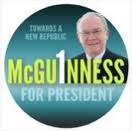
Martin McGuinness – Some Questions To Ask & Answer

It has been the accepted wisdom in Irish politics for almost as long as I can remember that when it comes to telling the story of their lives in the IRA that Gerry Adams is regarded as a brazen liar while Martin McGuinness is treated like a paragon of virtue and candour.

As far as the first part of that statement is concerned there is no contest. Gerry Adams’ contention that he was never, ever in the IRA has to rank amongst the world’s biggest whoppers ever, a veritable taradiddle in the pantheon of untruths. Almost as breathtaking as the cheek of Adams’ claim was his belief and assumption that somehow he’d get away with it. In fact he has paid a huge price for this fairy tale.

His attempt to distance himself from the IRA and what it did under his command so angered Brendan Hughes that he broke the IRA’s unwritten rule of omerta and told all, or nearly all he knew of Adams’ past history to researchers at Boston College. By so doing Hughes made Adams’ effort to rewrite his life a ludicrous sham. Similarly I very much doubt whether Dolours Price would have given an interview to the Irish News, and indirectly to the Sunday Life, about Adams’s role in the various ‘disappearances’ of the early 1970’s if she had not been maddened by the disavowal of his and therefore her life.

So when Martin McGuinness appeared in front of the Saville Tribunal on Bloody Sunday and admitted that he had been in the IRA and held a senior position in the Derry Brigade at the time of 1 Para’s killing spree, much of the media hailed his honesty and so was born one of the most enduring myths of the Troubles: Gerry Adams lies about his IRA past while Martin McGuinness tells the truth.

Thus when it comes to choosing Sinn Fein’s candidate for the Aras, all that puts McGuinness at a considerable advantage over his party leader. While Adams would be hounded by awkward and damaging questions from the media about his past, McGuinness can play the role of the honest paramilitary apostate, truthful about his past and now a changed man.

But what did Martin McGuinness actually tell Saville? Was it the truth or did he too lie? The answer can be found very easily on the web. Type Saville Inquiry into the Google search box, and when the Tribunal’s web page comes up click on the link to Contact Us and then go to Transcripts. Scroll down to Ts391, which stands for transcript of day 391, which happened to be November 5th – Guy Fawkes’ Day – 2003. There, on pages 137 through 141, you will discover what Martin McGuinness really had to say to Saville.

He was being questioned by Edwin Glasgow QC, counsel for the Paras who began this part of the cross-examination by asking McGuinness about the IRA’s “Green Book”, the organisation’s manual, for want of a better term. McGuinness’ answer is the first hint that his admission of IRA membership is very much time-limited, that he is ready to acknowledge membership in the days when the IRA’s campaign was part of a popular uprising but not later when it took on the characteristics normally associated with terrorism.

Asked what the “Green Book” is, McGuinness answers: “Well, I have been aware for many years that there has been a book, described as ‘The Green Book,’ which is the book which most IRA volunteers would read and would be guided by. I have to say, in 1972, whenever I was in the IRA, there was no such book.”

A little later on, more of the same: “….in 1972, whenever I was in the IRA, there was no such thing as ‘The Green Book’….”. And more again: “……you might find this surprising, but I have never read this book. This is the first time that I have seen extracts from the book.”

The creation of ‘The Green Book’ was a part of the re-organisation of the IRA that took place in the late 1970‘s and early 1980‘s. This all arose out of discussions in Long Kesh involving Gerry Adams, Ivor Bell and Brendan Hughes amongst others and was prompted by their perceived need to rebuild the IRA after the failed ceasefire of 1974/75. “The Green Book” set out the IRA’s aims, tactics and politics, included a copy of the organisation’s constitution and was required reading for recruits not least because it set out the penalty – death – for informing and for other transgressions. An IRA Volunteer accused of betraying secrets could avoid a bullet to the head if he or she could prove that they had not been “Green-booked”, i.e. instructed to read the document.

McGuinness’ claim that when he was in the IRA “The Green Book” didn’t exist led Edwin Glasgow to ask the obvious question. Here then is the exchange between Martin McGuinness and counsel for 1 Para on the question of the Derry man’s IRA membership:

Q. It may well be, sir, you had already left the IRA by the time this document in the form that we have it, came into existence. When did you leave the IRA?

A. Here we go again, on another trawl through the Martin McGuinness fixation.

Q. No, it is not at all, sir, not at all. May I just explain to you, because you have been very concerned, understandably, to be treated in the same way as the soldiers, and it is precisely the same question, word for word, as was asked, I think, of some seven or eight soldiers.

A. Were they asked when they left the British Army?

Q. Yes, simply because it was thought to be relevant to the way in which other people had reacted to what had happened on Bloody Sunday. You do not have to answer my question or any of them, I ask them, and I will not ask them twice, it is for the Tribunal to say whether you should answer them or not: I ask again, when did you leave the IRA, if you did?

A. I left the IRA in the early part of the 1970s.

Now Martin McGuinness could have taken up Edwin Glasgow’s offer and declined to answer that question, but he didn’t. Instead he chose to tell a lie. It may not be as flagrant as Gerry Adam’s lie to be sure; he didn’t say he had never been in the IRA (and given his infamous interview with the BBC’s Tom Mangold, he could hardly do otherwise) just that he’d been in it for only a short time. But it was still a lie and, given events between ‘the early part of the 1970s’ and the ending of the IRA’s war in 2005, a pretty darned big one.

In a sentence his post-1972 career as Chief of Staff, twice Northern Commander and Chairman of the IRA’s Army Council (during which times he would have been on familiar terms with “The Green Book” and those who had ignored its warning to putative informers) was simply washed away and with it all the things he is alleged to have done while holding down those jobs.

It will be interesting to see how the media treats all this as the campaign for the job in Phoenix Park hots up.

UPDATE: In today’s Irish Times, a Sinn Fein spokesperson is quoted thus: “We are not naive political operators. Martin has never run away from his past, and he took the lead in terms of republicans facing up to the legacy of the past.”

How does that statement square with what McGuinness told the Saville Tribunal?

A Principled Stand On Boston College

Three cheers for the Irish Echo and Terry Golway.

Reproduced below is this week’s editorial in the Irish Echo, New York’s largest and by far most interesting Irish-American publication. Written by journalist and academic Golway, it deals with the Boston College subpoenas in a straightforward and principled way: this effort by the PSNI and, to its shame, the US government in trying to force the surrender of interviews in the BC archive is an attempt to gag historians and those who try to record the story of the Troubles, this most cataclysmic episode in recent Irish history, in an honest and complete a way as possible.

It is perhaps because of their fear of such an outcome that others – and they know who they are – have chosen to cloak their comments about the Boston College controversy in poisonous bile. By contrast the Echo is to be congratulated for taking an honorable stand on a matter that should be of concern to all who value the telling of truth.


Boston College should stand its ground

Editorial | By Terry Golway | September 14th, 2011

History nerds like myself spend a lot of time combing through boring letters and government documents. It may not be everybody’s idea of entertainment, but, heck, it beats watching Jersey Shore or sending out a few thousand tweets every day.

In the course of this curious hobby, I often find that access to a certain document or collection of documents is restricted if not banned outright.

If the documents in question are government property, well, you may be surprised to learn that, yes, government officials do have lots of secrets, and sometimes they can keep a document secret for decades.

On other occasions, a private citizen might donate personal documents or participate in an oral history on the condition that researchers cannot gain access to the documents or oral histories for, say, ten years. Or longer.

Historians and other scholars have to deal with these kinds of issues all the time. It’s awfully frustrating, and historians, other academics, and journalists occasionally gather together to fight government attempts to keep certain documents secret.

Sometimes, however, the roles are reversed, as is the case in the ongoing controversy over Boston College’s collection of oral histories chronicling the Troubles in Northern Ireland.

As this newspaper and other outlets have reported, the U.S. government is demanding that BC turn over several oral histories that BC promised to keep confidential while the interview subjects were still alive.

The federal government’s action is related to a renewed effort in the Six Counties to solve the disappearance and murder of Jean McConville, a Belfast mother of 10 who was executed by the IRA almost four decades ago on suspicion of being an informant. In other words, the U.S. government is taking drastic legal action against a U.S. college on behalf of a foreign government.

The McConville murder was particularly horrific. There is a sense that the authorities in the North are trying to pin the crime on Gerry Adams, and so discredit Sinn Féin, and perhaps even the peace process itself.

There’s no reason why the U.S. has to be party to this investigation. Boston College is right to resist the demands of both the Justice Department and the PSNI. After all, if Washington and London can keep secrets in the interests of peace or public order, or whatever other reason they might have, an academic institution has a right and a responsibility to keep confidential files confidential.

Those who participated in the oral history project, which contains interviews with members of paramilitary organizations on both sides of the conflict, did so with the understanding that BC would not release their comments until they were dead. That condition was a simple matter of self-defense: participants feared that their candor could lead to violent retribution.

The director of the BC project, veteran journalist Ed Moloney, understood that this collection of testimony required absolute candor. Historians and journalists know that personal oral histories are valuable tools, although they also know that memories can be faulty, supposed eyewitness accounts can be flawed, and that apparent candor still must be subject to skepticism.

Still, oral histories are only valuable if the testimony offers insight or information that is reasonably truthful By promising both republican and loyalist paramilitaries that their oral histories would be secret until their deaths, researchers who conducted the interviews did their best to ensure frank talk about a highly contentious period in Ireland’s history.

If BC were forced to turn over the oral histories, in complete violation of its promise, people may die. That’s no exaggeration. That’s why BC is fighting to hard to prevent the federal government from obtaining access to the archive and then sharing the findings with the PSNI.

It’s an odd conflict, to be sure. Usually it’s the government seeking to keep secrets, and academics (and journalists) demanding access. This time, for reasons that are suspect at best, the federal government is trying to circumvent confidentiality, not on behalf of any pressing U.S. national interest, but on behalf of authorities in a foreign land.

Generally, academics are on the side of transparency. But in this case, Boston College has an obligation to shield the subjects of its scholarship from that harm that would certainly befall those who (presumably) told uncomfortable truths and made candid remarks about events in the north during the long years of conflict there.

BC has lived up to its promises thus far. When onetime IRA member, Brendan Hughes, died four years ago, BC made transcripts of his oral history available to authorities, or anyone else who was interested. Federal and PSNI officials now want access to the oral history of Dolours Price, another IRA member who recently implicated Adams in the McConville killing.

It certainly is worthy of note that the feds and the PSNI are interested only in republican oral histories. Nobody has demanded access to oral histories given by loyalists. BC took note of this when it told the BBC that it would continue to oppose Washington subpoenas.

The focus on IRA interviews, a BC spokesman said, seems to support the notion that the inquiry is “politically motivated.”

Boston College should stand its ground. In this case, confidentiality is the right and only course of action.


Peter King – ’nuff said!

Peter King, who readers of this blog will be aware has been leading a Congressional investigation into so-called Muslim radicalisation in the US, has been appearing himself as a witness in front of another probe into Muslim extremism, this time at Westminster. Inevitably, the subject of his past support for IRA terrorism figured prominently in the exchanges with British MP’s. Here is Salon.com’s report of the hearing along with video footage. Thanks to Justin Elliott.


Revenge Is a Dish Best Served Cold – Gerry Adams and the Boston College Subpoenas

Within the confines of its goals, Sinn Fein’s peace process strategy was both clever and effective. Boiled down to its essence it amounted to the party negotiating away the IRA’s war and associated political dogma in return for political and electoral gain and advantage for Sinn Fein.

The goal was not a united Ireland – that was never on the agenda – but the relaunch of Sinn Fein as a constitutional party of government in both parts of Ireland, firstly and most easily in the North and then, with initial hiccups but then with some help from the bankers, in the South.

The Provos had some valuable, even priceless chips to trade with the British in the peace process negotiations. These included the first and second ceasefires, the acceptance of the consent principle, the decommissioning of the IRA’s arsenals, agreement to become Ministers in the government of the state they were once pledged to destroy, deference to British economic and social policies, recognition of the PSNI and finally, formally ending the IRA’s war and the dismantling of its structures.

The Sinn Fein negotiating team were very adept at playing some of these chips. The decommissioning chip in particular was deployed in such a way that it helped destroy both the SDLP (an intended goal which gave SF the leadership of Northern Nationalism) and David Trimble and his Official Unionists (perhaps unintended but ultimately advantageous to the party).

But Sinn Fein could not have strung out the decommissioning process for so many years (seven of them to be exact) without the approval and assent of the British authorities. To the intense frustration and anger of Trimble’s allies, Blair’s government refused time and again to apply pressure or threaten sanctions against Sinn Fein unless the IRA made good on the pledge to disarm. Even when the IRA robbed the Northern Bank and its members knifed Robert McCartney to death, Blair’s government, along with the Bertie Ahern administration in Dublin, sought refuge in denial, so strong was the impulse to coddle the Shinners.

The reason why the Blair government behaved like this was the same reason that key parts of the security establishment, namely MI5 and the RUC Special Branch, went out of their way in those days to help those in the Provos who favoured the peace process and to hinder those who were opposed. (I remember, as an example, one senior Special Branch man telling me how, on the eve of IRA Conventions, his men would issue orders for the arrest of troublemaking delegates so they wouldn’t be there to cause Adams and his allies any difficulties).

After all the prize was unimaginably alluring and something that even in their wildest dreams security chiefs could never have believed possible: the war being ended by Provisional IRA fiat, its leaders delivering its members and guns into a settlement that was less than that available to the SDLP in 1974. It made obvious common sense that the security forces would do all they could to ensure this outcome and help those in the Provos who were leading the mission.

Perversely and for reasons all to do with convincing its supporters that the peace strategy was heading to a very different place, Sinn Fein leaders persisted in claiming that the security establishment was actually fighting tooth and nail to do the opposite, to obstruct its negotiations. So was born the securocrat myth, the idea that legions of MI5 and RUC Special Branchmen were working day and night to hinder Sinn Fein’s clever plan to achieve Irish unity.

It was of course nonsense – but only at the time. The key point is that that was then and this is now. The IRA has given up most of its weapons (the non-defensive ones, that is), the IRA itself has formally ended its war with Britain and its structure & units have mostly been dismantled. Defanged and disarmed the IRA now presents no threat to the British and accordingly the need to indulge and accommodate the Provos and their leaders has diminished.

It is not difficult to imagine how much it must have stuck in the craw of MI5 and the RUC Special Branch to lend a hand to Gerry Adams during the days of the peace process. He was, after all, the effective leader of an organisation that had killed the Queen’s cousin, nearly obliterated Margaret Thatcher and her cabinet, had bombed the City of London to smithereens and generally made their lives miserable and complicated for over three decades. The temptation to hang him out to dry must have been immense but given that their real interests lay in the opposite direction, they resisted it. But that need has gone.

This then is the weakness of the Provos’ peace strategy. As long as they had chips to play in negotiations and as long as the IRA was a threat then it behoved the British to lend Adams and his colleagues a hand; the strategy was a strong and powerful one for these circumstances. But once the deal was done what reason was there for the British to continue cosseting the Sinn Fein leadership, especially since the various dissident groups have turned out to be every bit as inefficient, divided, riddled with agents and incapable of presenting a threat as it was predicted they would be?

It is in such circumstances that the thoughts of some in the security establishment may turn to revenge against people like Adams, to extract payback for Mountbatten, Warrenpoint, Brighton and so on. Especially so at a time when his party is on the verge of significant electoral and political success in the South. If that project could be undermined or damaged, then so much the better.

That’s where the subpoenas served against Boston College, seeking Dolours Price’s interviews as well as any that mention the disappearance and death of Jean McConville, enter the story. From what is known publicly about that killing, from Brendan Hughes’ published interviews and especially Dolours Price’s tape-recorded interview with Allison Morris in the Irish News/Sunday Life in February 2010 – which was ultimately responsible for the move against Boston College – any criminal investigation of the McConville death is bound to end at Gerry Adams’ door, one way or another.

As the saying goes, revenge is a dish best served cold.

Boston College Subpoenas – New Links

In an escalation of the campaign to resist the PSNI/US Department of Justice invasion of the Boston College oral history archives, we have created a website which gathers together all the publicly available documents & articles about the affair, opened a Facebook page and activated a Twitter feed on developments.

This supplements our recent attempt to intervene legally in the case with a strategy devised by our lawyer Eamonn Dornan. You can read about that here.

Here is the website.

The Facebook page:

And finally, Twitter.

Murdoch revisited

Great piece of journalism here from the BBC’s Adam Curtis. ‘A Portrait of Satan’ weaves informative commentary with great archive footage to tell the Rupert Murdoch story from beginning to what increasingly looks like the end. Some surprises here, including a sympathetic interview in the Village Voice with the Dirty Digger by Alexander Cockburn of all people. (hat tip to Naked Capitalism, a great blog)

Boston Globe and Boston College

First of all apologies for not having posted here for so long. I had surgery at the end of July which was more exhausting than I imagined it would be and it has taken time to restore enthusiasm and interest in much else.

Today’s post replicates three articles that were published in the Boston Globe earlier this month and today. The first was an editorial in the paper, a second, in effect an answer to that editorial by myself and fellow Boston College researcher Anthony McIntyre and the third by Kevin Cullen, the paper’s famed Irish-American columnist.

Kevin’s article was inspired by a further move by the PSNI and US Attorney’s office to invade Boston College’s archive of IRA interviews, an outrageous fishing expedition which daily looks more and more like a politically motivated effort to damage the IRA’s peace process architect Gerry Adams.

The second, by ourselves, was driven by an outrageous neocon-style editorial in the Globe urging Boston College to surrender the archive to the PSNI. I am told that it was written by a woman whose normal beat is pop culture. The ignorance and lack of understanding of Irish affairs evident in the editorial was strong evidence that the woman should really stick to pop music and the world it inhabits. In the absence of any response from Boston College itself, we asked for the right of reply.

GLOBE EDITORIAL

BC should abide by subpoena, provide info in murder case
August 1, 2011
BOSTON COLLEGE is justifiably proud of its relationship with Ireland and its role in helping to shepherd the Good Friday Agreement of 1998. Those close ties are one reason the college has been waging a court battle against a US government subpoena, requested by British authorities, which seeks testimony from a sealed oral history project about the war in Northern Ireland. Boston College’s concerns are valid, but the interests of justice and diplomacy outweigh any claim for special protection. The promise that was made to participants in the oral history project – that their testimony wouldn’t be released until they died – must be rescinded in light of a murder investigation.

The testimony in question comes from Dolours Price, a former paramilitary with Irish Republican Army. She was interviewed several years ago as part of the Belfast Project, a laudable effort to record views and stories from both sides of the Troubles, before the participants pass away. British authorities believe her testimony contains information about kidnappings and murders committed more than 30 years ago, including the death of a widowed mother of 10.

Boston College argues that releasing Price’s testimony could having a chilling effect on oral historians everywhere. But carving out a special legal exception for oral history isn’t consistent with judicial interpretations of the First Amendment. The courts have set high standards for issuing subpoenas to journalists – whose role is specifically protected by the First Amendment and who serve a watchdog function in our democracy – but even reporters must testify under certain conditions. The benefits of oral history are more diffuse. And if the US government refuses to honor this British request, it could reasonably expect Britain to put up similar roadblocks down the line – at a time when all forms of international cooperation on terrorism are matters of life and death.

Supporters of Boston College say the subpoena itself could be politically motivated, since Price’s testimony might contain information damaging to Northern Ireland nationalist leader Gerry Adams. And the college suggests that Price and her interviewer could be in danger of retribution for talking at all. If those dangers are real, the British government should offer reasonable security. But potential threats and conspiracy theories don’t change the fact that murders, no matter how old, are worth pursuing. If a university in Ireland had information that could help solve, say, a cold-case murder from civil rights-era Mississippi, American authorities would want access to those file – and would be justified in seeking them.

The Boston Globe

Fishing in BC’s archives

BOSTON COLLEGE is currently resisting efforts by the security forces in Northern Ireland to force it to hand over part of its oral history archive on the Irish Republican Army, and as well it should. This attempt to violate the college’s files could have disastrous consequences for oral historians and their close cousins in the media. It also could be immensely destructive to the peace process in Northern Ireland.

The subpoenas that have been served are based on an unproven assertion: that an interview given to the college by a former Irish Republican Army activist, Dolours Price, could shed light on a 40-year-old murder and should be surrendered.

The truth, however, is that the Police Service of Northern Ireland (PSNI), on whose behalf US Attorney Carmen M. Ortiz is acting, does not know what Dolours Price told Boston College’s interviewers. Neither does Ortiz.

They do not know because the legal basis for the subpoenas is deeply flawed, the result of either rank incompetence or sleight of hand. The authorities have justified the action by claiming that an interview with Price published in a Belfast newspaper in February 2010 about the murder was derived from her Boston College interview, when in fact it was based on a separate taped interview given directly to the newspaper. Price’s interviews have never been released by Boston College and never would be – because a guarantee of confidentiality was given to every interviewee.

What is happening is essentially an unwarranted fishing expedition into the college archives. It has been suggested that not to comply with the subpoenas could anger the British government, which might then raise obstacles in America’s fight against terrorism. Yet the subpoenas are not the work of the British government per se; its minister in Northern Ireland has expressed embarrassment at the move. Rather, they originate from a small number of PSNI detectives who can hardly be surprised if their motives are questioned. After all, the murder at the center of this case was largely ignored by the police for the best part of 40 years, and even when Price’s newspaper interview was published in 2010 they did nothing.

A whole year passed before action was taken. When the police service did move, it was within weeks of Sinn Fein’s remarkable electoral comeback in the general election in the Republic of Ireland. In that election, Gerry Adams was elected to the Dublin parliament and is well-placed to lead his party into government next time. Only then did the PSNI crank into action. Was that just a coincidence?

Irredentist elements opposed to the Good Friday Agreement in Northern Ireland have long seen this case as an opportunity to bring down Adams for his alleged role in the 40-year-old murder – and, perhaps, to bring down aspects of the peace process they abhor. The stability of the power-sharing government in Belfast could conceivably be threatened by this case. The United States played a huge role in bringing about peace in Northern Ireland; wouldn’t it be ironic if now it played a part in undoing it?

The police and the British authorities in Northern Ireland do not come to this case with clean hands. Their track record in covering up official involvement in some of the most shocking murders of the Irish Troubles is well known, and they cannot be allowed to present themselves in America as an unblemished force attempting to get to the bottom of an awful killing.

Since this case could affect the stability of the peace process in Ireland, it is worth reflecting on recent remarks made in the wake of these subpoenas by the Independent International Commission on Decommissioning, a body set up at the suggestion of the Clinton White House to facilitate the disarming of the IRA: Peacemaking, the commission said, “means that however reprehensible some acts are that were committed in the past, at some point a line needs to be drawn under them – never to forget, but to be able to move on.’’

Ed Moloney was the director of the Belfast Project at Boston College. Anthony McIntyre was the project’s lead researcher on the IRA.

Troubling request

By Kevin CullenGlobe Columnist / August 23, 2011

When last we left the saga of efforts by the US attorney’s office to wrest confidential oral histories about the Troubles in Northern Ireland from Boston College, prosecutors wanted the recollections of just two people: former IRA volunteers Brendan Hughes and Dolours Price.

But give an overreaching, overzealous government an inch and they’ll take a mile.

Some new court filings show the feds, acting on behalf of some law enforcement entity in Northern Ireland that dares not speak its name, now want the whole enchilada: They want anything and everything in the BC secret archive related to the 1972 disappearance and murder of a Belfast mother of 10 named Jean McConville, who was abducted and executed by the Irish Republican Army as a suspected informer. Her body was recovered in 2003.

At least we now know what this fishing expedition is all about. It’s about using the US government as a pawn in a blatantly political act, an attempt by police in Northern Ireland to certainly embarrass and possibly prosecute the Sinn Fein president Gerry Adams over McConville’s disappearance and murder.

Hughes and Price fell out with Adams over his getting the IRA to disband without achieving Irish republican goals. They publicly accused him of being the IRA commander who ordered McConville’s disappearance and murder. Adams has repeatedly denied this.

In the nearly 40 years since McConville was disappeared by the IRA, police in Northern Ireland showed little interest in her murder. They did nothing after Price gave an interview to a Belfast newspaper in 2010, alleging that Adams gave the order to abduct, kill, and secretly bury McConville. But earlier this year, shortly after Adams was elected to the Republic of Ireland’s Parliament, the demand for BC’s archive was made. Coincidence? I think not.

BC promised Irish republican and British loyalist former combatants that their oral histories would not be released until their deaths. The feds say BC had no authority to promise that confidentiality. John McNeil, the Boston-based prosecutor who disputed the notion that menace still lurks over who says what in Northern Ireland, is a fine fellow, but I’m guessing he hasn’t spent much time in West Belfast, where hard men nurse fresh pints and old grudges.

After BC lawyers complained that the first set of subpoenas was too vague, the feds issued a second set demanding “any and all interviews containing information about the abduction and death of Mrs. Jean McConville.’’

The feds, as proxies for British law enforcement, said they want only the 26 interviews of former IRA members. There is no interest in whatever crimes were discussed by loyalist paramilitaries who took part in the project.

Not only does this show a selective, politically motivated prosecution taking place, it underscores the seriousness of the threat to the power-sharing government in Northern Ireland, which is the cornerstone of the peace process. Given the hundreds of unsolved murders that took place during the Troubles, the idea that the only one of interest in those BC files happens to implicate the leader of the party that represents the majority of Irish nationalists in Northern Ireland shows what this is all about. This isn’t about justice. It’s about revenge. And if this is followed through to its logical conclusion, the power-sharing government will collapse in a sea of recrimination.

The US government spent many years and millions of dollars stewarding the peace process in Northern Ireland. Now it is unwittingly doing the bidding of others who want to wreck it.

Kevin Cullen is a Globe columnist. He can be reached at cullen@globe.com. Follow him on Twitter at @GlobeCullen.

Mississippi Fats – A Story Of America


The woman in this photo is from Mississippi, which recently was found to be the fattest state in America – and that’s some going. Nearly thirty-five per cent of the people in Mississippi are classified as obese and this in a country that is overwhelmingly fat. A report published last week by the Centers for Disease Control estimated that 73 million people, or 34 per cent of the population of the US of A are obese.

Nine of the ten fattest states in America are in the South and it is no accident that they are also the poorest states in the Union. Being poor does not just mean that people are not well educated and therefore ignorant about which food is best for their health. It means they just can’t afford to buy decent, healthy food or don’t have the opportunity to access cheaper, high-quality produce because they live in places where farmers’ markets exist only on TV shows.

The reason why fast food outlets like McDonalds do so well in this country is that they sell bad food cheaply to poor people. A huge proportion of Americans buy and eat their evening meals at places like Kentucky Fried Chicken because it is cheaper than buying good food in supermarkets and cooking at home. And in families where people hold down two or more jobs just to keep going it is also easier and more convenient to go to KFC than to spend the evening in a hot, small kitchen after a hard day’s work.

The reason why the food at places like KFC is cheap is not only because it is of poor quality but because the regulatory authorities allow such companies to buy their produce, like chickens, filled with growth-stimulating chemicals that are reared in unhealthy, overcrowded animal factories. That keeps the unit cost low and therefore the price to their poor customers – but it means that people are also all eating those disgusting and harmful chemicals that were fed to the animals.

The regulators, in this case the Food and Drug Administration (FDA,) have, like their counterparts on Wall Street, been encouraged to relax health regulations because that is good for sales and profits. The deregulatory craze which first hit America in the Reagan years and was then absorbed into the political mainstream, Democrats and Republicans, and which has now driven the country to the brink of a devastating economic recession has also had a catastrophic effect of the quality of American food, in turn significantly worsening the health of her people.

The woman in that photo doesn’t look that old, albeit seen from behind, but in a few years her joints will collapse as arthritis rages through her body and she will not be able to walk or work. The fact that she uses a cane to get around is evidence that may be happening already. The strain on her heart from carrying all that weight will soon be unbearable, as it will be on all her vital organs and it is likely that she will suffer an early death.

Before that she will probably endure very bad health which will be extremely costly to pay for – those drugs, thanks again to the FDA’s relaxed, pro-business attitude to the renewal of drug companies’ licences on products, do not come cheap and nor do the disabled carts you see everywhere in America, not least at Tea Party rallies, carrying outraged ‘patriots’ as they assail Obama’s ‘socialism’ and sing the praises of Sarah Palin!

The health insurance companies, thanks to Obamacare, will raise their premiums more and more each year (in 2011 I pay more for my own single insurance than I did in 2001 for a family of three), increasingly putting health care beyond the reach of more and more Americans. The absence of a public option in Obama’s health ‘reforms’ means there is not even a modicum of socialised medicine to compete with private health insurance. (If Obama had done that he would have provoked the rage of the health lobby and his fundraising for 2012 would have suffered. The lobbyists, in health, banking, oil and so on own politics in this country) As people like this woman retire their health costs will soar, putting pressure on Washington politicians, as is happening right now, to cut back on schemes like Medicare rather than raise taxes on those who are well off and healthy, the people who fund their re-election campaigns.

More and more people will either have to pay more for health care or do without which means that poverty will increase, which means that food quality will continue to be poor and may even deteriorate more, which means that health care will continue to deteriorate. America, or at least the bulk of it, is headed in an accelerating downward spiral towards misery and destruction with politicians like Barack Obama playing the Pied Piper, playing tunes of hope and change to the crowds that gaily follow them but offering none in reality.
One group of people in America will not have to live this nightmare. They are the one per cent who own 24 per cent of the wealth and growing, and whose political representatives in Washington, both Republican and Democrat, are as I write this, making it possible for that 24 per cent share to head ever upwards by cutting back on health care, social security and other public spending while refusing to sanction tax increases.

The story of America can be told in that photo of a fat woman in Mississippi. There are some who say that America deserves the wretched end that is coming. Others who say it cannot come fast enough.

Dennis Potter’s Parting Shot At Rupert Murdoch

As the British media and, slowly but surely, their American counterparts begin dismantling the myth and blowing away the aura that has surrounded Rupert Murdoch for far too long, this is a moment perhaps, to pay tribute to the man who was the first to spot the stink of sewage coming from that direction, who cried the warning but was ignored. I know I have featured the audio from this interview before but here is the video, which is well worth watching.  That man was Dennis Potter, the English playwright and here he is speaking about the Dirty Digger in a celebrated TV exchange with Melvyn Bragg. Potter suffered from psoriatic arthritis, a terrible disease, and was a few days away from death from cancer when he gave the interview. Enjoy and remember he was blowing the whistle on Murdoch in 1994, seventeen years ago, since when the Australian media mogul has visited his blight elsewhere in the world, notably here in America courtesy of Fox News.

Update 15.22 EDT – Rupert Murdoch’s influence on the course of British politics – buying politicians’ favours by putting his media clout at their disposal – has been brilliantly chronicled by Lance Price, whom I knew vaguely when he worked at the BBC in Belfast. Once he moved into doing PR for Tony Blair my estimation of him dipped – until that is I read this piece by him describing the Dirty Digger as the unseen minister at Blair’s Cabinet table exercising influence over so many of Blair’s key decisions. Hugh Grant, another character who has risen in my judgement over this affair even if he has behaved in unashamed self-interest, wrote these scathing words about Margaret Thatcher’s relations with Murdoch. We know current PM David Cameron has also kowtowed to Murdoch because he chose disgraced NOTW editor Andy Coulson as his press person. That means every major prime minister during the year’s when Britain was wooed into the world of neo-liberal economics was under the sway of Murdoch and owed him big time for the support his media empire gave them at election time.

Update – 22:17 EDT: No-one involved in the extraordinary News of the World (known as News of the Screws in my youth) scandal – extraordinary because someone in a high place in News International was so dumb as to think they would get away with such a blatant and widespread malpractice carried out by so many people for so long – deserves any sympathy. But spare a thought for Rebekah Wade’s predecessor as NotW editor Andy Coulson who clearly is being set up by Murdoch & his despicable crew as the fall guy for the

Murdoch's patsy, Andy Coulson

hacking & police bribery that went on. Bets are that this is possible because the bold Rebekah has the goods on Murdoch’s son, James and if the Dirty Digger moves against her, he knows that she can produce the emails, recorded phone calls and so on in sufficiently damning quantity and quality as to bring the House of Murdoch to its knees.

Murdoch et al are probably gambling that Coulson does not have the same sort of quality leverage, so he has become expendable – hence all the disingenuous, faux horror from Murdoch, his son James and the rest of the News International crew that of course they are ‘appalled’ to learn what was going on, and of course they knew nothing of any of this, there were  loose cannons in the newsroom don’t you know & wasn’t Rebekah tanning herself on the beach in Crete when Milly was hacked and so on?

But it is a gamble. Even if Coulson does not have the sort of evidence Rebekah may have/probably has he would have been a very foolish man indeed if he had not spent the last months reconstructing in painful detail all those incriminating conversations he undoubtedly had with News International’s top echelon before, during and after the whole sordid affair broke. So he can do lots of damage one way or the other. That’s one reason why this ploy by Murdoch is such a huge gamble.

The other is that Murdoch is also threatening to throw Coulson’s erstwhile employer, Tory leader and British PM, David Cameron to the lions. It is a challenge Cameron can hardly duck. His judgement in hiring Coulson has already been severely questioned – even Ed Milliband couldn’t help but look good attacking him, for God’s sake – but standing idly by as Coulson, and by implication his most recent employer, are destroyed in the courts will be his Waterloo (the one where John Wayne wasn’t born). So, he has to fight back. The public opinion tipping point against Murdoch has been passed and it’s doubtful if the needle can ever be pushed back. If Cameron fails to see that – the fate of the BSkyB deal will tell this story – then he’s a goner. Murdoch has always dealt with pliant, malleable politicians in Britain (see Lance Price’s account of Blair, in his first year as PM, traveling half way across the world to pay homage to Murdoch and his lackeys) and also in America. No British prime minister has ever defied Murdoch and one has to doubt whether Cameron has the stuff to be the first. But if he doesn’t he will be toast. One of them will fall. As political dramas go, you couldn’t make this one up. But for the first time in my life, I’m tempted to root for the Tory.

Update, July 8th, 21:13 EDT – When the British Army’s favorite daily, The Daily Telegraph, house journal of establishment British Conservatism (rather like the Wall Street Journal or Morning Joe on MSNBC) , turns against Murdoch as it has done here in this piece written by its Chief Pol Corr, Peter Oborne or in this lead news story then you know Murdoch is totally under water. As one of my old mates in Belfast used to say in other similar situations, ‘it couldn’t happen to a more deserving fella’.

Update, July 10th, 17:19 EDT

It been almost impossible to switch on a radio or TV programme dealing with the Murdoch hacking scandal without Roy Greenslade popping up to lecture the world about how insidious and destructive Murdoch’s media reach has been in Britain. Only this afternoon I switched on NPR’s On the Media and there he was again, this time full of breathless excitement about the latest sordid twists and turns in the story. Reading his Guardian blog, it is clear that the former Daily Mirror editor turned journalism professor is savouring ever moment of the Dirty Digger’s fall – as, indeed, are we all.

But there is an old rule in journalism, as in life, which says that people who live in glass houses should be pretty careful about where and in whose direction they toss stones. A couple of years ago the Guardian reporter Nick Davies, who has been more responsible than any other British journalist for uncovering the NOTW hacking scandal, published a book called Flat Earth News dedicated to uncovering malpractice and misbehaviour in the British media, not least at the Sunday Times, the flagship of the Murdoch media empire in Britain and Greenslade’s former employer.

According to Davies, during Roy Greenslade’s tenure as Managing News Editor at the same Sunday Times, the now ubiquitous Murdoch scourge doubled as an pseudonymous correspondent of An Phoblacht-Republican News, the Provisional IRA’s once weekly newspaper. According to this report, Greenslade was so angry at bad British reporting of the 1988 SAS shootings in Gibraltar that “(he) was provoked into one particularly bizarre manoeuvre in his efforts to let some light into the story. He believed in the Irish republican cause and occasionally wrote for the Sinn Fein paper An Phoblacht, but discreetly hid his work behind the pseudonym George King.” George King was of course meant to be a play on ‘King George’ (ho!ho! Nice one Roy).

Now, compared to hacking into Milly Dowler’s cell phone, hiding behind a false by-line to write for an overtly political newspaper hardly rates, while others might choose to celebrate this rarest of rare examples of a British hack actually taking the other side in the Irish story. But it is still unethical journalistic behaviour – reporters are not supposed to take sides and isn’t the fact that Murdoch egregiously, aggressively and unapologetically takes sides all the time, in his case on behalf of the powerful political elites in Britain and America, that makes him both a dangerous and insidious influence?

If Greenslade felt so strongly about the Gibraltar killings and in particular the way his colleagues on the Sunday Times reported the story, there were other, more acceptable, honest and certainly more effective ways to have made his views known – not least by going public with his criticism under his real name. As the Glasgow-based Media Research Group reported in their investigation of the British media coverage of the Gibraltar killings, Murdoch’s Sunday Times, whose news coverage Greenslade was partly responsible for, led a despicable pack of British newspapers which distorted and twisted the evidence of eye witnesses like Carmen Proetta whose testimony damned the SAS and the Thatcher government. Few people were better placed to expose all these dirty deeds than Roy Greenslade. But he didn’t – at least not in the way he should have.

As I say, this doesn’t rate compared to hacking into the mobile phones of teenage murder victims but imagine the impact if Greenslade had publicly critiqued his own newspaper’s coverage of the story – and presumably he could have told some tales – particularly since more principled journalists, like Roger Bolton and his Thames TV team were being crucified by the Murdoch media for their great investigative documentary ‘Death on the Rock’. But he bottled. Instead Greenslade chose to keep his job at Wapping while salving his conscience anonymously in the columns of AP-RN while no doubt racking up some brownie points with Gerry Adams & Co.

As if that wasn’t all bad enough, Greenslade wrote this review of Davies’ book in in the Guardian in February 2008 and managed to make no mention at all of his own little excursion outside the realm of journalistic ethics in an otherwise rousing ‘three cheers for Nick’ piece celebrating the exposure of other peoples’ outrageous transgressions.

In some later pieces for the Guardian, the keen-eyed and perhaps cynical reader might wonder if Roy Greenslade ever stopped writing for AP-RN, at least in his own head. Take a look at this indignant 2002 piece that he wrote in the aftermath of the Stormont raid on Sinn Fein’s offices (you know, the one that eventually exposed Denis Donaldson as an British spy!) and note the line on ‘British securocrats’ out to sabotage the peace process because it is such a threat to the union. The piece could have come wholesale from a Martin McGuinness/Gerry Adams speech so full is it of Sinn Fein-speak. Had Roy done his homework and actually talked to some of these so-called ‘securocrats’, he might have discovered that far from beavering away at its downfall many were so enamoured of the peace process, recognising it as signalling the end of the IRA, that they were bending over backwards to make it work and to ensure the survival of the Adams-McGuinness leadership. But again, he didn’t.

Anyway here is the wonderful Dennis Potter: