-
Join 1,388 other subscribers
Subscribe in a Reader
Twitter Updates
Tweets by EdMoloney48-
Recent Posts
Categories
- 'Mr Eddie'
- 'Slab' Murphy
- Al Jazeera
- Al Qaeda
- American Right
- An Phoblacht-Republican News
- BBC
- Belfast
- Belfast Telegraph
- Benghazi
- Berlusconi
- Bernadette McAliskey
- Bernie Madoff
- Bertie Ahern
- Bill Clinton
- Blair
- Bob Woodward
- Brian Moore
- British Government
- Bush
- Cable TV
- Cameron
- Censorship
- Chad
- Charlie Haughey
- Chernobyl
- Chicago
- CIA
- Cluster bombs
- Cormac
- Crime
- Daily Telegraph
- Danny Morrison
- Dean Godson
- Democrats
- Dennis Philcox
- Donald Trump
- Egypt
- Eksund
- Exelon
- Fianna Fail
- Fine Gael
- Fox News
- Fukushima
- Gamal Abdel Nasser
- Garret FitzGerald
- Geneva Convention
- George W Bush
- Gerry Adams
- Glenn Beck
- Goldstone report
- GOP
- Guantanamo
- Henry Jackson Society
- Hillary Clinton
- Hitchens
- Hugh McAteer
- Illinois
- IRA
- IRA hunger strike
- Irish politics
- Israel
- Japan
- Jimmy Steele
- John McGuffin
- Kevin McKenna
- Khalifa Heftir
- King Idris
- Libya
- Los Angeles Times
- Lunacy
- Martin Mansergh
- Martin McGuinness
- Media
- Men of No Property
- Michael Gove
- Micheál Martin
- Micky McKevitt
- Misurata
- Muammar Gaddafi
- Muslim Brotherhood
- National Front for the Salvation of Libya
- NATO
- Neocons
- New York Times
- Northern Ireland
- Nuclear
- Obama
- Osama bin Laden
- P O'Neill
- Pakistan
- Palestinians
- Peace Process
- Policy Exchange
- Radioactive
- Reactor
- Reagan
- Republican News
- Richard Perle
- Robert Crumb
- Roman Empire
- Rush Limbaugh
- Sarah Palin
- Sarkozy
- Saville Tribunal
- Sean O'Callaghan
- Semtex
- Sinn Fein
- Stormont
- Tariq Ali
- Tea Party
- TEFL
- TEPCO
- The Times of London
- Tony Blair
- Trimble
- Tripoli
- Tritium
- Uncategorized
- Underground Comix
- University of Tripoli
- US media
- Vincent Browne
- Washington
- White phosphorous
Archives
- October 2025
- July 2025
- May 2025
- January 2025
- December 2024
- November 2024
- October 2024
- September 2024
- July 2024
- June 2024
- April 2024
- March 2024
- February 2024
- January 2024
- November 2023
- October 2023
- September 2023
- August 2023
- July 2023
- June 2023
- May 2023
- April 2023
- March 2023
- February 2023
- January 2023
- December 2022
- November 2022
- October 2022
- September 2022
- August 2022
- July 2022
- June 2022
- May 2022
- April 2022
- March 2022
- February 2022
- January 2022
- December 2021
- November 2021
- October 2021
- September 2021
- August 2021
- July 2021
- June 2021
- May 2021
- April 2021
- March 2021
- February 2021
- January 2021
- December 2020
- November 2020
- October 2020
- September 2020
- August 2020
- July 2020
- June 2020
- May 2020
- April 2020
- March 2020
- February 2020
- January 2020
- December 2019
- November 2019
- October 2019
- September 2019
- August 2019
- July 2019
- June 2019
- May 2019
- April 2019
- March 2019
- February 2019
- January 2019
- December 2018
- November 2018
- October 2018
- September 2018
- August 2018
- July 2018
- June 2018
- May 2018
- April 2018
- March 2018
- February 2018
- January 2018
- December 2017
- November 2017
- October 2017
- September 2017
- August 2017
- July 2017
- June 2017
- May 2017
- April 2017
- March 2017
- February 2017
- January 2017
- December 2016
- November 2016
- October 2016
- September 2016
- August 2016
- July 2016
- June 2016
- May 2016
- April 2016
- March 2016
- February 2016
- January 2016
- December 2015
- November 2015
- October 2015
- September 2015
- August 2015
- July 2015
- June 2015
- May 2015
- April 2015
- March 2015
- February 2015
- January 2015
- December 2014
- November 2014
- October 2014
- September 2014
- August 2014
- July 2014
- June 2014
- May 2014
- April 2014
- March 2014
- February 2014
- January 2014
- December 2013
- November 2013
- October 2013
- September 2013
- August 2013
- July 2013
- June 2013
- May 2013
- April 2013
- March 2013
- February 2013
- January 2013
- December 2012
- November 2012
- October 2012
- September 2012
- August 2012
- July 2012
- June 2012
- May 2012
- April 2012
- March 2012
- February 2012
- January 2012
- December 2011
- November 2011
- October 2011
- September 2011
- August 2011
- July 2011
- June 2011
- May 2011
- April 2011
- March 2011
- February 2011
- January 2011
Blogroll
Links: Here
- Barack Obama's Promises
- Conscience of a Liberal: Paul Krugman
- Counterpunch
- Edge of Sports: Dave Zirin
- Harper's
- Hullabaloo
- I.F. Stone
- Informed Comment: Juan Cole
- LobeLog: Jim Lobe
- Media Matters
- Naked Capitalism
- OpenLeft
- ProPublica
- Raw Story
- Reader Supported News
- Right Web
- Solitary Watch
- Stephen M. Walt
- Tax.com
- Technorati
- TomDispatch
- Truthdig
- Truthout
- Unsilent Generation: James Ridgeway
- WhoWhatWhy
Links: There
Links: Yonder
Boston College – Letter From Senator John Kerry to Secretary of State Hillary Clinton
Posted in Uncategorized
Statement After Court Hearing
This afternoon’s judgement in Boston comes as no surprise. However we will appeal Judge Young’s decision, along with the rest of our case, which will be heard in the US Court of Appeals in March when we expect a much more positive outcome.
We would like to welcome Judge Young’s remark about the Belfast project: “I’ve read thousands of pages of the transcripts. This was a bona fide academic exercise of considerable intellectual merit.”
This is the answer to those of our critics in Ireland who have labelled the Belfast Project ‘an anti-Adams exercise’. They have not read the interviews, Judge Young has.
We would also like to thank our attorneys Eamonn Dornan and Jim Cotter for their sterling efforts on our behalf and also our many supporters here in Irish-America who have rallied to our cause. The fight goes on.
Ed Moloney & Anthony McIntyre
Posted in Uncategorized
A Reply to Ted Folkman
Once upon a time, a long time ago, in fact a very, very long time ago, the United States was a radical place where people were quick to stand up to authority when it abused its powers. It was these attitudes that led the American colonists to throw the English out of the country, declare independence and set up a republic free of monarchical interference from London. America set an example first to France which had its revolution in 1789, thirteen years after the Declaration of Independence, and then to Ireland where an uprising took place in 1798 and was brutally put down by Lord Cornwallis, the same barbarian whose ass had been badly spanked by the American colonists at Yorktown. The United Irishmen rebellion, as it was known, laid the foundations of modern, non-sectarian Irish Republicanism, the outworkings of which are plain to see at Boston College this week. The United Irishmen’s revolt and that of the French were essentially about the same things that had inspired the Americans: a desire to throw off the yoke of intolerable and unjust authority.
But as I said that was long, long ago. The America of 2012 is as different from that of 1776 as it is possible to be. The modern America is the America of the one per cent versus the ninety-nine per cent, of corporations who control what people eat, read and watch on television, of politicians who are corrupted by the same corporations’ profits and, for the last decade, an America of the security state, where fear of a poorly-armed, brown-skinned enemy many thousands of miles away has created a profitable industry of watchers and scaremongers, a government which spies uncontrollably on its citizens, where drones fly above homes and roads filming their every day activity, of a policing system that routinely employs agents provocateurs to invent and amplify the threat and where just the mention of the word terrorism is sufficient to induce communal obedience and compliance and where a President with a stroke of a pen can imprison an American citizen for life or sign his or her life away.
It is also an America where deference to power is commonplace and its polar opposite a rare and infrequent phenomenon. Unquestioning obedience to authority and power, driven by fear of the consequences of doing otherwise and the personal benefit that can derive from conforming to it, is invariably the rule in modern America. If the Americans of 2012 could be transplanted back to the America of 1776, there would have been no revolution, no declaration of a republic, no written constitution, no Bill of Rights and France and Ireland – and arguably the world – would be immeasurably poorer for it. Americans would still be kissing the ass of the Queen of England and a very different red, white and blue flag would flutter over its buildings. When the Occupy Wall Street movement erupted briefly on the streets of New York and elsewhere last Fall the most remarkable thing about it was that it had happened at all. The America of 1776 is a dim, distant thing but so too is the America of the Sixties and Seventies.
Throughout the saga of the Boston College archives, one voice has been notable for its dependable defense of Boston College as it abandoned its interviewees, fled the legal field of battle and left its researchers alone to fight on to protect those to whom the college had given such solemn assurances of confidentiality when they agreed to be interviewed about their lives in the IRA and Ulster Volunteer Force (UVF).
I have never met Ted Folkman. I am sure he is a good person who loves his family dearly and his dogs and cats almost as much. I also hope that he can be persuaded out of his dogged and pathetically predictable advocacy of Boston College’s legal strategy and criticism of that of the researchers, and by proxy the interviewees which he has pursued through his blog Letters Blogatory. I’d like to think that he arrived at his various positions on the Boston College subpoenas by dint of intellectual discovery rather than deference to local power and wealth – but I would have to be persuaded. I have ignored most of his posts on the subject or at least not allowed myself to get worked up by them. But a recent posting proved to be the unbearable straw and so myself and Anthony McIntyre drew up this reply to Ted Folkman, which I hope you enjoy:
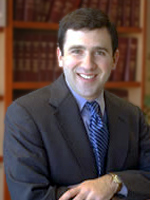
Ted Folkman, a Boston based lawyer, is living proof that because one follows a case it does not follow that they come remotely close to grasping what lies at the heart of it.
He writes that he has been struck by a change in emphasis among those ‘publishing articles critical of subpoenas.’ In essence he means Ed Moloney and Anthony McIntyre given his accompanying reference to ‘their defeat in the District Court.’
There has not been a shift in emphasis but rather an expansion of the discussion to encompass the conditions that helped produce the crisis that has beset the Belfast Project. The fight to prevent the enforcement of the subpoenas, although abandoned by Boston College, is very much a work in progress. Are we in court contesting the enforceability merely for the optics?
Ted Folkman seeks to frame the current debate in terms of an assumption on our part that the subpoenas are enforceable. The problem is less that the subpoenas are enforceable but more that they could ever have been issued in the first place. Boston College is on public record as stating that ‘the arrival of subpoenas was ‘totally unexpected’. It found them totally unexpected, despite its current waffling about ‘to the extent American law allows’ only because it was certain no such action was possible; an assurance it separately conveyed to both sides of the Belfast Project, loyalist and republican.
In the contract given to the Belfast project director it was stated that:
each interviewee is to be given a contract guaranteeing to the extent American law allows the conditions of the interview and the conditions of its deposit at the Burns Library including terms of an embargo period, if this becomes necessary…
Yet that undertaking was never put into effect. BC did not give each interviewee a contract to this effect and the question must be why not? Why did they break their word? What they did was bury the ‘American law’ reference in a separate contract with Ed Moloney. Had this reference been included in the donor agreement this would have been a red flag to everyone, project director, interviewers and interviewees alike and the project would have been dead in the water. But the reference was excluded. Why? Was it because BC did not want to kill off the project at this point? That they did not want to lose this opportunity to acquire a very valuable historical archive? These were BC’s contracts not ours. BC stated that the operative contract was the donor agreement which encapsulated what they stipulated at the outset, that nothing would be allowed into the Burns Library that would be at legal risk. The question then becomes, did BC deliberately mislead the project director, interviewers and interviewees?
We will be charitable and assume that Ted Folkman did not fully read the blog post that we separately posted over the weekend that addressed this issue and that he entirely missed the contribution of the Loyalist group involved in this project, the Ulster Volunteer Force (UVF).
For obvious reason Anthony McIntyre was not involved in the dealings that led to the UVF’s inclusion in the project and aside from one brief meeting in Belfast, Ed Moloney, then based in New York, was not substantially involved either. Instead representatives of that group held their own face-to-face meetings with senior BC staff which were, by their account, dominated by the issue of legal safety.
One of their number gave us this quote, which we reproduced: ‘they i.e. BC)…..from day one, gave guarantees that were directly related to the interest this material would have from the PSNI.” Allow us to translate in words that close down the space for Ted Folkman to proffer any alternative plausible interpretation: we asked whether the cops could ever get their hands on the interviews and we were told no.
At the heel of the hunt everything lies within the donor agreement, the operative contract. While it can be argued with hindsight that the reference to American law can be cited as covering the issue of confidentiality it nevertheless does not single out and specify confidentiality. In fact it could as easily be argued that given BC’s own wording in the donor contract, which the College crafted, the American law reference was framed with ownership of copyright in mind, which was very clearly written into the contract. This concerned Brendan Hughes so much that in his own donor agreement he imposed limits on the effects of copyright belonging exclusively to Boston College.
The confidentiality issue appears very much as a standalone matter in the contract. There is a very specific reference to confidentiality in the donor contract: ‘the ultimate power of release shall rest with me.’ It is clear that ‘ultimate’ is not BC, the courts or anybody else but the interviewee. If American law did not permit ‘ultimate power’ of release to reside with the interviewee why was it ever part of the donor agreement? If a court constituted a higher power that rendered the ‘ultimate power’ of the interviewee redundant why write into the donor contract that the interviewee had such power?
The sin of omission Ted Folkman refers to finds its equivalent in the case of the driver who omitted to sound his horn and then blamed the pedestrians he mowed down.
Mr Folkman also argues that:
Promises of confidentiality are always subject to the power of a court to issue subpoenas, except in cases where there is an evidentiary privilege (the best known examples in the US: the attorney/client privilege and the priest/penitent privilege).
Yet given the highly sensitive nature of the Belfast Project, for it not to have specified the nature of limitations is an omission that begs for much greater scrutiny than Ted Folkman is prepared to give it with his dismissive comment ‘I don’t think it’s particularly blameworthy to have omitted something that should have been generally understood.’
Why should it have been generally understood if in assurance after assurance, and also in its donor contract, Boston College stated that the archived material was subject to the ‘ultimate power’ of release by the interviewee? Surely, such an ambiguity-free undertaking, were it not given in bad faith, ought to have had any derogation explicitly pointed out in the same document?
That one simple line of Folkman, ‘promises of confidentiality are always subject to the power of a court to issue subpoenas’, could easily have been inserted into the donor contract and all current problems would never have arisen. As Ed Moloney has correctly pointed out there would have been no archives to invade had that been in the contract.
To boot, we do not have to guess what Boston College’s own thoughts on the matter of privilege were. In his May 2000 fax the Burns Librarian stated “Nevertheless, the First Amendment to our Constitution is greatly cherished here, and I suspect the courts would look upon these interviews as privileged information.” If, Boston College resiled from this position where did it make this clear? Certainly not in the donor agreement, the tone and tenor of which resonated with the notion of privilege. The term ‘ultimate power of release’ does not lend itself to any other inference.
Moreover, Boston College has shown its own contempt for the notion ‘to the extent American law allows.’ American law allowed it not to hand over the entire republican archive to the court for in camera review; American law allowed it to appeal the decision by the District Court to hand the Dolours Price interviews over to British authorities. Yet, in spite of ‘the extent American law allows’ Boston College did not make use of such allowance and pulled out of the case. It is quite prepared to allow the archive to be handed over to British authorities even though American law allows Boston College to go much further in its legal battle than round one. This is evidenced by the fact that the archive remains on US soil not as a result of Boston College’s legal strategy which has clearly failed, but because we are fighting the case ‘to the extent American law allows.’ How come Boston College is not doing the same?
Ted Folkman displays a stultifying sense of respect for institutional authority so breathtakingly deferential that it raises the issue of what trust can be placed in an institution that is quite prepared to let its researchers and research participants go to prison before making any sort of ethical stand itself. Has he thought through the implications of what he is actually advocating, that researchers and their participants should go to prison while the university should eat, drink and be merry? Such gratuitous acquiescence in the institutional abrogation of ethical responsibility is a slave owner’s charter not a code of ethics for a modern university.

Posted in Uncategorized
Boston College Statement
Statement to supporters from Boston College researchers Ed Moloney & Anthony McIntyre.
Contrary to widespread media reports, this Tuesday’s court hearing in Boston will not decide the outcome of our fight to prevent AG Eric Holder from handing over IRA interviews to the PSNI in Belfast.
The important hearing in this case will instead take place some time in March before the US Court of Appeals when our lawyers will argue that Eric Holder failed to take into account the damage these subpoenas will cause to the Irish peace process before issuing them against Boston College.
Our lawyers will also argue that Holder should take into account the US-UK extradition treaty which forbids the extradition of any person for an offense allegedly committed before the Good Friday Agreement of 1998.
This appeal will be unaffected by Tuesday’s hearing on the stay against handing over the interviews which we secured in December. Assuming the judge rules against us, we will automatically appeal and the case will be subsumed into the more important March appeal.
This means that the fight against the subpoenas will continue no matter what happens on Tuesday and we urge all our supporters in the United States to contact their members of Congress to protest Eric Holder’s action against Boston College and to urge him to withdraw the subpoenas.
Final legal papers for that appeal have to be lodged by February 27th, which means that we have one month in which to persuade Eric Holder to drop this disastrous, one-sided action. Please contact your local member of Congress to protest this outrageous action.
Posted in Uncategorized
No Subpoenas For Patrick McCullough
There is a poignant letter in today’s Irish Times from a Fr Joseph McCullough about the way his 17 year-old brother’s 1972 killing in Belfast has been treated by the authorities down through the years, from the days when the RUC controlled policing through to the modern PSNI and Historical Enquiries Team (HET).
He writes: “Like most, if not all, murders of this kind, it remains unresolved. My brother’s killing was never investigated, and requests from my family for relevant reports and information have drawn a complete blank from the RUC/PSNI. They informed my family that no paper work or forensic reports in relation to Patrick’s murder exist. They were apparently destroyed in a police station fire!”
It is what he wrote next that struck me hardest, given the lengths to which the PSNI and the HET have gone recently – after a near 40 year gap, mind you – to investigate the killing of Jean McConville, an inquiry which has seen the HET employ the full powers of the US judicial system, 3,000 miles away from PSNI headquarters in East Belfast, to obtain alleged evidence in the case. Contrast the subpoenas served on Boston College and the hounding of myself and researcher Anthony McIntyre that will likely follow if they succeed with Fr McCullough’s experience at the hands of the exact same people:
“A number of years ago I raised these concerns with the chief constable of the RUC/PSNI and the Historical Enquiries Team. I can only describe its response as abysmal.”
The other striking thing about the killing of his brother Patrick McCullough is that it happened in the same year that Jean McConville was disappeared by the IRA, in 1972, although a half a year earlier. Patrick McCullough’s killing has actually gone unsolved longer than Jean McConville’s.
Here’s what happened, courtesy of an excellent and thorough report in 2003 by Sharon O’Neill, then of the Irish News: “On the night of June 23 1972, Patrick was with a group of young Catholics including his girlfriend, standing chatting outside a bank at the corner of Atlantic Avenue in north Belfast, not far from his home.
“It is still a regular meeting spot for Catholic teenagers, but is located on the corner of a road which on numerous occasions has proved to be an easy escape route for both UVF and UDA killers and would-be murderers.
“Loyalist gunmen opened fire from the safety of their getaway car, hitting Patrick and his 14-year-old friend, who collapsed to the ground bleeding. Despite his proven resilience, Patrick’s injuries were too severe and a priest administered the last rites at the scene. His friend survived.”
The circumstances of Patrick McCullough’s short life and death are no less sad and deserving of sympathy than Jean McConville’s. He was born with spina bifida, had major surgery when he was just eight months old and was lucky to survive. At 14 he nearly drowned trying to save a younger brother, Gerard during a holiday in Co. Down. He had just got a job as an apprentice compositor at the Irish News when his life was snatched away. Jean McConville left behind ten orphaned children; Patrick McCullough left behind thirteen siblings and grieving parents.
According to Fr Joseph McCullough’s letter it seems that the HET and PSNI have made no credible effort to locate his killers. This despite the fact that Sharon O’Neill was able, 21 years after the killing, to put names to the killers: “Although no-one admitted responsibility”, she wrote, “it is believed the UVF was behind the murder and further inquiries by the Irish News have established that the identity of the killers was well known, yet not one person was arrested or charged.”
This seems to me to raise a key point about the HET, and that is whether it is a fit and proper agency to investigate Northern Ireland’s bloody past. Fr McCullough raises this issue, albeit tangentially and by so doing highlights a fundamental flaw in the HET’s mindset, at least as we know it be or how it would like the world to see it. He writes:
“Also of deep concern to my family are the number of allegations that have surfaced in recent times about possible security force collusion in the murders of innocent Catholics in the North, especially in North Belfast.
“These allegations ought to be thoroughly investigated and should cause great concern for the judicial integrity of the state. Such concerns should also address the rampant institutionalized sectarianism in the RUC during the Troubles.
“The fact that many murders remain un-investigated and unresolved should be a cause of deep shame to the British state, and to all political parties in the North that supposedly value truth and justice. It represents a monumental failure on their part that the demands of justice have been so pitifully disregarded down through the years.
“…….Surely the time has come for the UK government, including its Assembly at Stormont, to order a public inquiry into the failure of its police to investigate and to bring to justice those responsible for the sectarian murders of innocent non-combatant victims.”
If you want a glimpse inside the mind of the HET regarding this sort of issue, there’s no better place to go than its own video which is available on YouTube. The film features four victims, the son of a Catholic shot dead by the UDA; the sister of a British soldier shot dead, presumably by the IRA; the husband of a victim of the IRA’s Shankill Road Fish Shop bomb and the brother of two Catholic men killed by the UVF. And what’s missing? Well any relatives of people killed by the police or army, that’s who’s missing. Seemingly they don’t rate a mention on the HET video and that is not insignificant surely? It means they don’t really appear on the HET radar and in such a way are almost airbrushed out of existence. The video provides a subliminal and fascinating peek into the HET’s consciousness.
That’s not to say that in the video the HET’s commander Dave Cox does not at all address the issue of security force collusion in killings. He does, but look at how he deals with it: “Could his death have been avoided, was there collusion? Most times we are able to actually answer and dispel those worries.” In other words: “Our work is about nailing all those terrible terrorists and setting minds to rest about the role of the RUC and army.” It’s an approach that dovetails exactly with the state narrative of the Troubles, with the state and its forces on the good side and everyone else on the bad side. Problem is, it wasn’t ever as simple as that.
Fr. McCullough addresses an issue that is at the heart of any truth recovery process. It is not just about the IRA and UVF but also what the police, military and intelligence agencies did and, judging by that sort of evidence, the HET is simply not the body to do that job.
In this regard, the Provos’ attitude to the Boston College subpoenas becomes even more perplexing. As anyone following media coverage of the issue must know the Provos and their various surrogates have used the affair to mount attacks on myself and Anthony McIntyre. It is clear what motivates them: revenge for the product of the archive, notably a disturbing alternative version of the 1981 hunger strike and an angry rebuttal by Brendan Hughes of Gerry Adams’, “I was never in the IRA” nonsense.
If I was in the Provo leadership there are two other aspects of the Boston College subpoenas that I would be much more worried about and which I would be channeling my energies to counteract, if I were them.
The first is the point made by Fr. McCullough about the RUC’s core sectarianism and the implication that the HET is incapable and probably unwilling to address this fundamental reason for political instability and violence in Northern Ireland. The HET is an integral part of the PSNI and Sinn Fein signed up to the PSNI, promising to support and defend it in the new dispensation. This means SF supporting a truth recovery process which implicitly accepts the state’s version of what happened, and rejects theirs, and which seems mentally ill-equipped and/or unwilling to deal with the state’s role in all the killing in the way it should be.
The HET also seems hell bent on bringing as many people as it can before the courts for events that happened before the Good Friday Agreement of 1998 and by so doing breach an understanding that pinned the peace process, that a line would be drawn under the past. Will Sinn Fein back Fr McCullough’s call for a public inquiry into the failings of the RUC? We’ll see, but in the meantime they prefer to go for me and Mackers.
The second has to do with why Patrick’s McCullough’s killing remains un-investigated and unsolved while extraordinary resources are being poured into probing Jean McConville’s death. People will say, well that’s because it was such a sad case, a widowed mother of ten thrown into an anonymous hole in the ground. It deserves such treatment. That may be true but Patrick McCullough’s killing was just as sad to his family and Jean McConville was not the only person ‘disappeared’ by the IRA.
If the truth be told, and as everyone knows, the feature of the Jean McConville killing that really sets it apart is the alleged role played by Sinn Fein president Gerry Adams. Now the Provos probably think that the ever cautious Mr Adams will never face criminal charges over the matter, either because neither the British nor Irish states will ever countenance such a thing or because he was cute enough back in the early 1970’s to construct firewalls between himself and the wet end of IRA business.
Perhaps. I cannot say. But if I was the Provos I would be a little less untroubled about this issue. The HET seem set on providing evidence for criminal proceedings against someone. It may not be Gerry Adams who ends up in the dock but if the PSNI get their way someone probably will. And if that happens the evidence provided in court can then be used legally in civil proceedings against Mr Adams and one way or the other he will end up in the dock. Go check Helen McKendry’s public statements if you doubt what I say.
This means the HET investigation carries profound implications for the Sinn Fein leader, for his party and for the peace process. But as I say, the Provos are more concerned with getting in digs at me and Mackers. Go figure. I can’t, except to say I guess some people just can never get away from the back streets.
Posted in Uncategorized
A Reply to Niall O’Dowd
Yesterday, Niall O’Dowd published an article on his website accusing Anthony McIntyre and myself of tricking Republican interviewees into participating in the Boston College oral history project with false promises of confidentiality. The article below is our response to this false claim.
Readers should bear in mind two things: firstly, the Provisional leadership dislikes the oral history project because a) one of the participants, Richard O’Rawe went on to publish an inside account of the 1981 hunger strike which strongly challenged that leadership’s version of the protest and raised grave questions about its behavior towards the fasting prisoners, and b) another of the interviewees was Brendan Hughes who was motivated by his anger at Gerry Adams’ denial of his own IRA past to tell a no-holds barred account of his and Adams’ life in the IRA. In other words the oral history project challenged the official narrative and history – and thereby their sole control – of two key aspects of the Provisional leadership’s story: how it dealt with the hunger strike and Gerry Adams’ own life story.
Had Richard O’Rawe not decided, against our advice, to tell his story in book form, his interview would have remained sealed until his death and his controversial version of the 1981 hunger strike would have remained hidden from view for many years. But publishing his own story was Richard’s right and, as he felt it, his duty. Likewise Brendan Hughes was insistent that his interview be published after his death rather than just made available to scholars. The rest of the archive includes a wide spectrum of republican viewpoints and organisations, from differing generations and geographical locations. Happenstance has meant that the first two projects to result from the archive were these. The idea that the archive was an anti-Adams’ project, as claimed by O’Dowd and the Provisional leadership, is therefore a myth. In this context it is worth reflecting on this question: if Gerry Adams had been less inventive about his past would Brendan Hughes have ever contemplated talking as openly as he did?
The second point to bear in mind is that Niall O’Dowd is a close ally and friend of the Provisional leadership. Some might be inclined to describe him as an apologist for them and unofficial spokesperson. That O’Dowd’s critique of the Boston project echoes, almost to the word, that of the Provisional leadership is, in our mind, no coincidence. Reading O’Dowd’s article one is tempted to reach for Mandy Rice-Davies’ famous observation: “Well he would [say that], wouldn’t he?”
Appealing though it might be to leave the matter at that, we have decided to explain the background to the oral history project and the issue of confidentiality as it affected both Republican and Loyalist participants as fully as we are able and to answer O’Dowd’s points. Incidentally he and others seem, or wish to forget that the UVF was part of this project. Does he or anyone else imagine for a moment that such an organisation would take part in this enterprise without ensuring for itself that there were adequate assurances of confidentiality from Boston College. That these assurances were given by the college is beyond doubt. The question is whether they were ever meant.
This preamble has been written by me. The article that follows was written by myself and Anthony McIntyre:
There is clear evidence that Niall O’Dowd does not know ‘full well’ the background to Boston College’s Belfast Project. And on the basis of not knowing ‘full well’ he pumps out a piece riddled with errors. What evidence O’Dowd has found is as clear as the mud he seeks to sling.
This is somewhat unfortunate because for a while Niall O’Dowd strongly opposed the British government’s efforts to invade Boston College’s oral history archive. Now he has opted to say nothing about the British and instead seeks to exonerate Boston College and the American courts. All in the dubious service of blaming the researcher and project director.
Quoting from a ‘Boston College affidavit’, which was not in fact a Boston College affidavit, O’Dowd writes: “Prior to the commencement of the project, Robert K. O’Neill, the Burns librarian (where the tapes were to be housed) cautioned Moloney that although he had not spoken yet with Boston College’s counsel, the library could not guarantee the confidentiality of the interviews in the face of a court order.”
The striking aspect of this and other parts of his May 2000 fax to Ed Moloney – which O’Dowd fails to cite – is that it is clearly O’Neill’s preliminary judgement of the legal situation. For instance, he went on to say: “Nevertheless, the First Amendment to our Constitution is greatly cherished here, and I suspect the courts would look upon these interviews as privileged information.”
This was one reason why the project was not started in the summer of 2000 but was delayed a further eight months. We required very specific assurances and we waited until we got them. When Boston College finally came back with those assurances, which it later provided separately to the loyalist side of the project, the green light was given.
And what were the loyalists assured? We were not directly involved in their deliberations but some of their number had face-to-face meetings with senior college staff in Belfast and in their own words, these representatives of Boston College: “…..from day one, gave guarantees that were directly related to the interest this material would have from the PSNI. (BC staff) gave these guarantees formally as official representatives of BC and did so putting on the line the integrity of this unrivalled Irish Studies collection in this illustrious academic institution. At every meeting subsequently, discussion centered around how the project was coming along and every time that discussion touched upon how none of this could have happened without the iron clad guarantees that predicated the whole thing.”
O’Dowd then proceeds to cite Boston College spokesperson Jack Dunn’s assertion that ‘an agreement was signed between Boston College and Ed Moloney that stated that each interviewee is to be given a contract guaranteeing confidentiality to the extent that American law allows.’
While this is not in dispute, it seems to be a late in the day fallback position adopted by Boston College to shift the blame onto to other shoulders. Their position when the court case began last May was substantially different. As the Boston-based lawyer Ted Folkman points out at Letters Blogatory : ‘in its motion to quash the subpoena, Boston College did not suggest that the promise of confidentiality was a promise only to the extent permitted by American law’.
That aside, one would expect the contract drawn up by Boston College to have this health warning, if that indeed is what it was, written clearly and unambiguously into the confidentiality contract. So what exactly did this donor agreement say?
The donor agreement signed by interviewees stated: “Access to the tapes and transcripts shall be restricted until after my death except in those cases where I have provided prior written approval for their use following consultation with the Burns Librarian, Boston College. Due to the sensitivity of content, the ultimate power of release shall rest with me. After my death the Bums Librarian of Boston College may exercise such power exclusively.”
There was no caveat in the contract drawn up by Boston College’s attorneys stating that the type of confidentiality it guaranteed would not withstand a court order. Clearly BC’s legal opinion was that it was unnecessary. Otherwise why not insert the caveat if the type of confidentiality stipulated in the contract in any way clashed with American law?’
O’Dowd goes on to approvingly cite Jack Dunn of Boston College who argued that his ‘good friends in Ireland seem to lack a fundamental understanding of the American legal process.’
That is true. We are not lawyers. Boston College has its own law school and legal counsel yet for all of that it seems not to have understood the American legal process. When we, who ‘did not understand’ American law, warned Boston College that a second subpoena could be imminent, we were told that would not happen. And the reason given later: ‘……practiced lawyers … people who were formally schooled in international law’ had ruled out that eventuality. A second subpoena duly arrived. So much for Boston College’s knowledge of American law.
Furthermore, in a September 2011 email a Boston College official said in respect of the subpoena ‘the action of the PSNI Special Crimes Division was totally unexpected.’ A very definitive statement. But how could it be ‘totally unexpected’ if Boston College’s position is that it always felt the archive might not withstand a court order? Boston College was ‘totally’ surprised because the PSNI action flew ‘totally’ in the face of its own legal counsel.
O’Dowd further argues that we are now ‘defending the indefensible.’ How is protecting the interviewees who took part in this project indefensible? Is he suggesting that we should have abandoned them?
Finally, Niall O’Dowd repeats a hoary old canard when he states that the interviewees were all opponents of Gerry Adams. How on earth would he know? Does he know who we interviewed? Of course not. The project was designed to increase knowledge of republican history and interviewees were chosen for their knowledge not their biases. Ultimately, if the archive survives and is eventually made available the public will judge for itself the academic integrity of the project.
Posted in Uncategorized
Boston College: Warnings That Were Ignored
Earlier this week, we issued a statement condemning Boston College for its failure to appeal a recent court decision ordering the handing over of interviews from the Belfast Project oral history archive and calling on the college to close down the archive and return/destroy interviews.
In the course of our statement we referred to an earlier proposal we had made to safeguard the archive which had been rebuffed by Boston College. When asked about this, BC spokesperson Jack Dunn claimed not have “heard” of such a proposal.
Since Dunn’s response cast doubt on our veracity we decided to make an email exchange about this matter public, redacting only material that infringed our promise of confidentiality to interviewers, masking their names and keeping internal BC affairs secret. Had Dunn not suggested we had been erroneous, the emails would not have been released. Those emails resulted in this blog, which I recommend be widely read.
Posted in Uncategorized
Mr Dumb-Ass Whiteway of the British Embassy, Dublin
Now, this might come as startling news to Sinn Fein supporters but today’s Irish Times has the British embassy in Dublin labeling me as a Provo supporter. Admittedly that was back in 1981, during the hunger strikes and a lot of water has flowed under the bridge since then and admittedly it is also clear from reading the report that the diplomat in the embassy who penned all this was a dumb-ass idiot.
This is what the Irish Times report said: “While Whiteway (the idiot diplomat) did not believe there were many IRA sympathisers within the national broadcaster (RTE), he did suggest that there were a ‘scattering of them in the newspapers and magazines’. Of these, he claimed the ‘best known’ were Ed Moloney and Seán Cronin in The Irish Times, Deasún Breathnach in the Irish Independent, Vincent Browne and Gene Kerrigan in Magill , Eamon McCann and Gerry Lawless in the Sunday World and Paddy Prendiville in the Sunday Tribune. That said, it was also made clear that ‘the presence of journalists sympathetic to the Provisionals does not seem to have affected the editorial line of the main newspapers and magazines with the exception of Magill’. Most newspapers remained ‘bitterly anti-IRA’.”
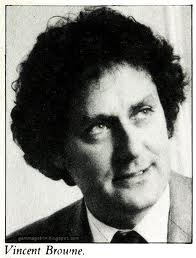
With one exception, and I’ll leave you to guess his identity, I am quite proud to be a member of that group, especially the likes of Vincent Browne, Gene Kerrigan and Eamon McCann. Difficult and frustrating as he can be, Browne is the best newspaperman and editor Ireland has ever had – incidentally I have skin in the game as he gave me my break in journalism – while Kerrigan and McCann are supremely gifted writers. It is a privilege to be included in their company.
A couple of things jumped out at me from today’s piece. The first is just how shallow and badly informed Mr Whiteway was and therefore how badly informed his government must have been. If this is what he had to say about me, I shudder to think what other misinformed garbage about Ireland he was peddling to his masters in Whitehall. It also suggests that either he wasn’t plugged into his intelligence people or they weren’t plugged into anything. No wonder the Troubles lasted for four decades.
Don’t get me wrong. I am not running scared from the ‘Provo fellow-traveller’ label. I was well aware at the time that this is what people said and thought but just accepted it as the price of taking an approach to covering the North rooted in the idea that a reporter just had to take the Provos seriously and report on them accordingly. The best way to avoid the label given to me was to run with the herd and either avoid the Provos altogether or join in the outrage and condemnation, to cover them only while holding your nose. Why be a journalist if that’s how you saw your job?
In this respect I very much took my cue from Vincent. He knew, as I did, that the Provos had deep roots in the North, that they were organically connected to their community and his coverage of them in Magill, in which I participated, very much reflected that approach. I carried on in that manner after I left Magill, first with Hibernia, then the Irish Times and finally the Sunday Tribune.
I like to think that I also learned to be cynical and distrustful from Vincent, that you should never allow the importance of the subject matter or the relevance of the source to distract you from an abiding duty: always look for the hidden motive, the reason to push you down a blind alley. While he certainly regarded the Provos as a subject to be reported seriously that didn’t mean he always believed them. In fact, because they knew that you thought they should be covered properly, his lesson was that you should therefore beware of them taking advantage of you, be on the lookout for trickery on their part and always double and if necessary triple check.
By the time of the 1981 hunger strikes I was well travelled along an increasingly jaundiced learning curve about the Provos and their West Belfast leadership and had learned a number of things, mostly the hard way: they had a very slick propaganda department with Danny Morrison at the core of it; you would be foolish to automatically believe everything he or his minions said; more often than not, they lied like troopers and they could be very vindictive if you crossed them.
This is where Mr Dumb-ass Whiteway got it so badly wrong. If he or the intelligence people who fed him had been up to their job they would have known that the story of me and the Provos during the first and second hunger strikes was one of constant conflict and friction, not the uncritical, fawning support he suggests. In fact I mark the hunger strikes as the start of a process in which I grew increasingly cynical but realistic about the IRA and its leadership; that process ended with me writing ‘A Secret History of the IRA’.
Students of the hunger strikes will remember that the first one, led by Brendan Hughes, ended in controversial circumstances. At its core was a document presented by the British via a Redemptorist priest intermediary. I was working freelance shifts in the Irish Times’ Belfast office the night the hunger strike ended. Danny Morrison phoned the office and invited our reporters to come up and view the document that the British had presented, a document he said that spelled victory for the protesting IRA prisoners.
I didn’t drive up to Sevastapol Street but David McKittrick & Fionnuala O’Connor did. They reported back that there was nothing in the document that had not already been offered; in other words the hunger strike had not budged the British at all. I soon got hold of my own copy and was able to confirm that.
None of this stopped Danny Morrison and the rest of the West Belfast leadership from trumpeting the hunger strikers’ victory. But in the Provo grassroots there was doubt & confusion, a dangerous combination for Morrison and his crew for indiscipline and even rebellion grow from such seeds. A victory parade organised by the leadership had attracted just a few hundred, convincing evidence that few believed the official line. I learned that the Provo leadership was refusing to show copies of the document to its supporters. There was only one copy, they were told, and that had been sent to Dublin. When I heard this from a source I volunteered to drive up to Stormont Castle and get a copy for them, which we did. Anyway one way or another the Provo leadership heard that I was casting doubt on their lie and so I was banned from republican drinking clubs in West Belfast.
Mr Dumb-ass Whiteway and his intelligence people assumed that I was getting my stories during the hunger strikes from the Provos, i.e. from Morrison et al, when in fact the best ones were coming, to Danny’s great irritation, from unofficial sources who were acting either in defiance of the party whip or because of an old-fashioned affection for the truth.

Mr Dumb-Ass himself, photo courtesy of a link from Bill Grantham (see comments) - wouldn't you know he'd look something like this!
For instance in the run up to the March 1st start of the Bobby Sands protest I reported in the Irish Times that the hunger strike was going to be a staged affair, unlike the first hunger strike, with Sands leading by himself and then followed in ones and twos at regular intervals by other prisoners. This would avoid the weakness of the Brendan Hughes protest when the life of the weakest of their number was ultimately in the hands of all the other hunger strikers. It meant that deaths on this protest were more or less inevitable.
I didn’t get that story from Morrison & Co, needless to say. In fact they were furious. They had been planning a big stage-managed announcement with massive media coverage and I had pricked their balloon. As I say, Mr Dumb-ass Whiteway.
That’s how things stood when the second hunger strike began and the ban was removed. I could drink once more in the Felons, although the truth was that I really didn’t want to. But a truce of sorts was re-established. It wasn’t until death number three or four that things began to turn sour again. The election of Bobby Sands, his death and the rioting that followed, the deaths of Francis Hughes, Raymond McCreesh and Patsy O’Hara happened so fast and so closely together that it wasn’t until the lengthy gap between O’Hara’s death and that of Joe McDonnell that there was time to reflect on what was happening.
The memory I have of that time is of a growing conviction that the Provo leadership knew that the hunger strikes were a winner for them, that the whole of Ireland was being alienated from Mrs Thatcher’s government, that the ambition of entering electoral politics, something I knew West Belfast Provos had harboured for a long time, was much closer to realisation than ever and therefore it would be foolish, tactically, to end the protest.
The answer to all these questions from the likes of Danny Morrison was that the leadership was a prisoner of the hunger strikers. Those on the protest wanted to stay on it, so what could the leadership do? They couldn’t go against the wishes of the prisoners. Morrison’s line was credible because it was generally accepted that the first hunger strike had gone ahead against the wishes of the likes of Gerry Adams, who had calculated that it would probably end in failure. That seemed to give credence to the idea that the hunger strikers were in the driving seat.
Except common sense, and increasingly frequent grumbling from people I knew in the Provo grassroots, said otherwise. The IRA was a military organisation, the hunger strikers were volunteers in a command structure and if the IRA leadership ordered the protest over then it would be. Fr Denis Faul was saying this publicly, and what he said made sense, but also rank and file republicans, especially of the pre-1969 vintage, were saying something similar and expressing real anguish over a hunger strike that was being prolonged, with needless loss of life and suffering, simply for narrow political advantage, not for the benefit of those on the protest. I just didn’t believe Danny.
I like to think that my coverage during the latter half of the second hunger strike reflected this. In fact I know others felt it did. Bernadette McAliskey stopped talking to me at around this time and hostility from leadership Provos was fairly open. In fact I remember virtually giving up on running stories past Morrison and his people on the grounds that I had been told too many lies.

Danny Morrison, outside Long Kesh during the height of the prison protest, at the peak of his lying days
But I was still getting stories from non-official Provos and from others, they were good stories and Morrison & Co were furious. Eventually he approached me, complaining that I hadn’t been checking stories with him. I explained why not and he promised never to tell me a lie again.
A few weeks later, in the last week of September 1981, I heard a rumour that the hunger strike would be called off the following Saturday. I rang Morrison. Was this true, I asked him. “Absolutely not, Ed’, he assured me. Like a fool I believed him. That Saturday, October 3rd, 1981, the second hunger strike was called off. I swore, never again. Never again.
Like I say, Mr Dumb-ass Whiteway.
Posted in Uncategorized
Boston College Indicted For Betraying Interviewees
The following piece by Chris Bray, an historian and blogger based in Los Angeles, is required reading for all those following the saga of the Boston College subpoenas. I thoroughly recommend it. It charts a disgraceful and shameful chapter in the history of American academic life.
Posted in Uncategorized
Ciaran Barnes, the Boston College Blackguard Outed as Internet Troll
Those of you who have been following the Boston College saga will be aware of a series of articles both on my own blog, the brokenelbow.com and thewildgeese.com dealing with the background to the PSNI/DoJ subpoenas against Boston College and my conviction that these arose because of a piece of deception and chicanery on the part of two Belfast journalists, Allison Morris of the Irish News and Ciaran Barnes of the Sunday Life.
My case was that they fraudulently cited Boston College’s oral history archive as the source for a lurid story on Dolours Price’s alleged involvement in a series of IRA disappearances in 1972 when in fact the source was a taped interview done by Morris with Dolours Price.
In a deal with the Price family to protect Dolours, who gave the interview while under psychiatric care, the Irish News agreed not to use it but Allison Morris betrayed the family and passed the tape on to Barnes. He wrote that he had heard Dolours Price on a tape and wrote his report up so that it appeared that the tape had come from Boston College.
This “access” by Barnes was cited by the US attorney in Massachusetts to justify the subpoenas against Boston College. Morris later won two journalistic prizes for her article on Dolours Price.
In other words the basis of the subpoenas was bogus and was the result of an atrocious piece of dishonesty by two journalists in Belfast.
Ciaran Barnes has all this while been anonymously posting on the slugger o’toole website in Belfast, using a pseudonym, urging that the BC tapes be handed over and prosecutions instituted against those allegedly involved. He has been using the name ‘maradona’, the same as the Argentine football cheat and cocaine addict. Behaviour like this – such people are known as ‘trolls’ on the web – is bad enough when it is done by joe citizen but unconscionably unethical when practised by a journalist.
Ciaran Barnes has been outed by another Belfast blogger, Mark McGregor whose piece can be accessed here.
There are links in Mark’s piece to both thebrokenelbow.como the wildgeese.com articles.
Posted in Uncategorized


You must be logged in to post a comment.