Should Rusbridger Have Resisted The Destruction Of The Guardian’s Hard Drives?

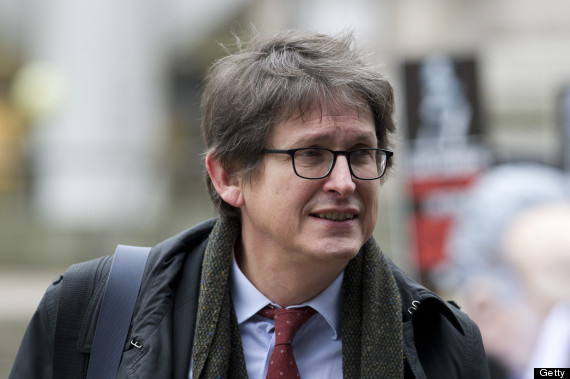
Guardian editor-in-chief, Alan Rusbridger

Guardian editor-in-chief, Alan Rusbridger

The question that forms the title of this posting is only slowly entering the NSA debate, post the arrest of David Miranda, but it is surely an important one, raising issues of tactics and principles that should or ought not to be employed by the media as journalism and journalists face the most sustained onslaught in living memory from the surveillance empire.

Guardian editor Alan Rusbridger revealed in today’s edition that in the face of British government threats of a court-ordered “prior restraint” on his newspaper’s coverage of Edward Snowden’s NSA leaks, he agreed that his paper’s hard drives could be destroyed. Had the effort to establish “prior restraint” been successful, The Guardian would have been barred from covering the Snowden story.

The deed was done in the newspaper’s basement by Guardian staffers overseen by technicians from Britain’s NSA equivalent, GCHQ on July 30th but we only learned about it today, exactly a month later. The delay has not yet been explained.

Rusbridger did this, his paper reported, so that The Guardian could continue its reportage – which it did less than a fortnight later with the revelation of NSA funding of GCHQ activities – and because other copies of the Snowden material existed on computers outside the jurisdiction, presumably in Brazil on Glenn Greenwald’s hard drives and in Berlin on Laura Poitras’ computers. These other databases enabled the paper to continue reporting albeit from further afield.

Glenn Greenwald and David Miranda

Glenn Greenwald and David Miranda

By and large Rusbridger has been feted for his stance which enabled his paper to maintain its controversial coverage and solidified The Guardian’s reputation as one of the world’s most courageous and gifted newspapers. It is important to remember that its Snowden coverage is only one of a series of recent triumphs for The Guardian: without the paper’s intrepid journalism, Rupert Murdoch’s empire would still reign unchallenged and undamaged on both sides of the Atlantic and the Wikileaks dump might still be searching for a mainstream media outlet, or at least one with more moxie than Bill Keller.

There is no doubt at all that The Guardian and its doughty editor deserve all the plaudits being showered on them but I have to admit to a more than nagging doubt whether Rusbridger did the right thing here.

I say so because even acts of courage can have unfortunate consequences if they are badly thought out, and I fear that may be the case here. Here’s my worry: by acceding to the British government’s threats The Guardian editor may have set an unhappy precedent. There was a principle involved here and it was that The Guardian has the right to create any journalism it wanted from its base in Britain.

By agreeing to destroy its hard drives on foot of a government fiat, Rusbridger was effectively giving the authorities in Britain the right to say that stories of which it disapproved could not be generated from the Guardian’s London office or if they were they would incur official displeasure and the unimpeded invasion of its workplace. After all, having already conceded the government’s right to enter the Guardian’s basement to destroy his hard drives, Rusbridger cannot go into court and challenge it should Cameron’s government wish to do the same again.

The Miranda/Greenwald/Snowden story is not especially problematic in this regard. The story is after all mostly an American one and the principal actors do not work or live in the UK. So it matters less for this story that Rusbridger gave up ground to the British authorities. The notion of keeping the story going from Brazil and Berlin also makes practical sense. But what if the next whistleblower is a Brit and works in GCHQ or MI5? Not now being able to stop the authorities invading his offices to destroy sensitive source material, is Rusbridger going to have to base the reporters covering the story abroad? How feasible or even possible is that?

Would it not have been better to have forced the British government’s legal hand and obliged them to seek court permission to gag what is after all now one of the world’s best known and respected newspapers? It might not be the ideal solution for a newspaper editor keen on keeping his circulation healthy but it sure as hell would clarify the great danger to liberties represented by the growing surveillance state. And the result would not necessarily be a foregone conclusion, not least because the case would inevitably have ended up at the European Court at Strasbourg where the British would likely face a less pliant judiciary.

Had Rusbridger chosen this option he would have done so from a position of strength. Public opinion in mainland Europe (if not yet in Britain) and in much of America has been outraged at most, disturbed at least by the Snowden revelations and suppression of The Guardian could have been one of those game-changing moments in the fight to preserve healthy journalism. (The story would have come out anyway; I am sure Glenn Greenwald and Laura Poitras would have seen to that!)

I hope it was not a missed opportunity but I fear that it might have been. I suspect the British government’s failure to follow through on its legal threat to Rusbridger was an implicit admission of its own weakness. Next time you can be sure that if the British or American governments move it will be in circumstances much more favorable to their cause.

The Future Of Journalism, Part 2

A great piece by Nick Cohen on The Spectator blog of all places on the arrest at Heathrow airport of Glenn Greenwald’s Brazilian partner David Miranda by British customs officers and police from the London Met on spurious suspicions of involvement in terrorism.

No-one believes that of course. The purpose of the exercise is to intimidate Greenwald, the principal reporter in The Guardian of Edward Snowden’s leaks on NSA excesses, a process begun in June by the loathsome David Gregory of NBC. Doubtless Gregory, who suggested The Guardian reporter ought to face charges alongside Snowden, would get his way if Greenwald ever returned to the US

Anyway, here’s the piece. Enjoy:

Always remember mornings like these, the next time police officers and politicians demand more powers to protect us from terrorism. They always sound so reasonable and so concerned for our welfare when they do. For who wants to be blown apart?

But the state said its new powers to intercept communications would be used against terrorists. They ended up using them against fly tippers. Now the police are using the Terrorism Act against the partner of a journalist who is publishing stories the British and American governments would rather keep quiet.

The detention of David Miranda at Heathrow is a clarifying moment that reveals how far Britain has changed for the worse. Nearly everyone suspects the Met held Miranda on trumped up charges because the police, at the behest of the Americans, wanted to intimidate Miranda’s partner Glenn Greenwald, the conduit of Edward Snowden’s revelations, and find out whether more embarrassing information is on Greenwald’s laptop.

The Brazilian government has gone wild. (Greenwald lives in Brazil and his partner is Brazilian.) All kinds of people are saying, quite properly, that although they disagree with Greenwald’s politics they defend the right of citizens to hold governments to account.

You might have thought the Met would have been anxious to reply to its critics. You might have thought – expected indeed – that it would angrily rebut the charges, and provide irrefutable evidence that its officers are not like the goons of a dictatorship but remain the conscientious public servants of a democracy.

The Terrorism Act of 2000, which the Met used against Miranda, says that terrorism involves ‘serious violence against a person’ or ‘serious damage to property’. The police can also detain the alleged terrorist because he or she ‘endangers a person’s life’, ‘poses a serious risk to the health and safety of the public’ or threatens to interfere with ‘an electronic system’.

I wanted to ask the Met: Which of these above offences did your officers suspect that Miranda might have been about to commit? What reasonable grounds did they have for thinking he could endanger lives or property? And, more to the point, which terrorist movement did you believe Miranda was associated with: al-Qaeda, Hezbollah, Hamas, Continuity IRA, ETA, Shiv Sena, the provisional wing of the Unabomber Appreciation Society?

Greenwald may not thank me for saying this but in one respect America is an admirable country. In the US, the police reply to reporters’ questions. They may lie, but at least they reply. In the UK, they say nothing. Chief constables could save precious money and protect front line services by sacking every police press officer in the UK. They are useless. Actually, they are worse than useless: they are sinister. They provide the illusion of accountability while blocking it at every stage.

I phoned the Met press office. You will need to read our statement before we can answer your questions, a spokeswoman said. She emailed me the statement. True to form, it said nothing worth noting:

‘At 08:05 on Sunday 18 August 2013 a 28 year old man was detained at Heathrow Airport under Schedule 7 of the Terrorism Act 2000.
He was not arrested.
He was subsequently released at 17:00.’

That was it. As I, like every other journalist on the story, had further questions, I phoned back.

‘We’re not saying anything else,’ a new flak-catcher said.

I pointed out that the Miranda detention was now an international incident, and that the Met looked as if it was turning into a political police force.

The flak-catcher bridled. ‘We are not politicised,’ he insisted. ‘We are operationally independent.’

‘You can’t just say that,’ I replied. ‘You have to prove it. You have to show you are accountable.’

‘Ah,’ said the flak-catcher. ‘We are legally accountable. But we are not accountable to the media.’

As I understand him, unless Miranda sues, the Met believes it can do what it wants, and behave as badly as it likes, without a word of elucidation or justification.

The Miranda affair is proof, if further proof is needed, that we are now stuck in the post-Leveson world where not only journalists but their partners can be detained and questioned for hours on end. Where police officers feel no need to explain themselves to the public, in whose name they work, and whose taxes pay their salaries. The next time they try to tell you that the secrecy and attempts to silence legitimate debate are ‘in the public interest’, do not forget what they did to David Miranda, because they can do it to you too.

Breathtaking Hypocrisy!

Sometimes the hypocrisy of government can be so brazen it literally takes the breath away. I am still struggling to retain my composure after reading a news story in The Irish Times today sent by a friend in Ireland.

The story dealt with a successful legal move by the NI Secretary, Theresa Villiers and the PSNI Chief Constable Matt Baggot to prevent the relatives of three victims killed by British security forces from being able to read inquest documents because of British concerns “about the possible disclosure of any sensitive information on members of the security forces”.

Relatives of the three are attempting to re-open their cases and the information is potentially important to them in this effort.

A fuller account than The Irish Times’ is carried in the often excellent Detail website, which I recommend you read.

NI Secretary Theresa Villiers - only other peoples' secrets can be revealed

NI Secretary Theresa Villiers – only other peoples’ secrets can be revealed

The three victims were IRA man Paddy McAdorey who was shot dead by a British Army sniper on the morning of internment, August 9th, 1971; Michael Donnelly who was killed by a plastic bullet in 1980 and Sadie Larmour, a Catholic woman who was shot dead in October 1979. Mrs Larmour’s death is especially intriguing. She was killed at her home in Rodney Drive, in the heart of the Falls Road by a UVF gunman who broke into her home. Why is her killing considered by Villiers and Baggot likely to lead to “sensitive information on members of the security forces?” Don’t we have a right to know?

The hypocrisy is breathtaking because at the same time these two individuals, Baggot directly and Villiers by virtue of her post in the British government, are demanding that all information in the archives of Boston College relating to a killing carried out by the IRA must be handed over, no exceptions allowed.

So here we have a classic example of double standards. Boston College must hand over everything but the British can seek to hide what they will, and probably will get away with it. Unless that it is public opinion can be mobilised to force them to play by the same rules they apply to everyone else. Over to you, Irish media. There’s a story here. You do remember what a story is don’t you?

Disgraceful Scenes On Royal Avenue

Clifford Peeples is not exactly the sort of person who would be high up on most peoples’ list of possible dinner guests. There doesn’t seem to have been a  brand of violent Loyalism that he has not been involved with, no outer limit of wacky, ultra-Protestant evangelism that he has not crossed. And then there were those pipe bomb attacks in the late 1990’s for which he was given a ten-year jail term.

Clifford Peeples, on the right, leaves Long Kesh with Pastor Kenny McClinton

Clifford Peeples, on the right, leaves Long Kesh with Pastor Kenny McClinton

I would not have a problem entertaining him myself but others would. I have spent much of my professional life breaking bread or ingesting stronger substances with greater and more mendacious blackguards than he, and while I have never met Mr Peeples, he strikes me from a distance as an honest type. Loopy almost surely, but probably sincere. Others I have entertained did or ordered worse than he and happily admitted so in my presence but now pretend it never happened. So, who is worse, who is worthy of more respect?

Anyway, these days Peeples wears a different hat, or rather has another hat to wear alongside the others hanging in his wardrobe. I don’t know what he does politically or whether he still preaches in a tin hut somewhere in the desolate wastes of north or east Belfast but currently he also practises as a freelance photographer.

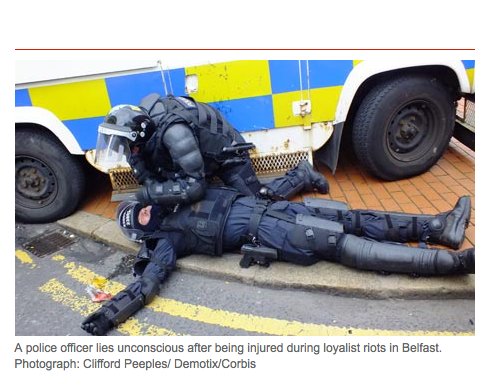
His work is sold through the freelance agency Demotix, which has a distinguished international record of capturing important images in places as far apart as Tehran and Norway. As the pic of a policeman injured during Friday night’s disturbances on Royal Avenue below demonstrates, newspapers like The Guardian consider Peeples’ work good enough to buy and publish.

peeples

Purists in my profession would cavil at the notion of a political activist doubling as a journalist but personally I don’t have a problem with it at all. Politics and journalism go together like fish and chips and while I do try to separate my own views from my reporting, I understand it in others – as long as they are upfront and straight about it. In practice I have found the reporters most po-faced on the issue to be the most hypocritical.

What I do mind however is when journalists allow their political differences, or personal animosities fueled by political differences, to spill out in public shows of malevolence and threats of violence, especially when the effect is to stop or obstruct a journalist doing his or her job.

According to Clifford Peeples this is what happened to him in the centre of Belfast last Friday night during Loyalist demonstrations in Royal Avenue against an anti-internment rally being staged by republican dissidents. Eye-witnesses  apparently support his story.

Peeples was on assignment for a website called ‘Ulster News’ which seems to be relatively new addition to the internet, given that the only story running on it is about his experience last Friday evening. He was, he says, busy taking photographs of the developing riot when he was verbally assaulted by a fellow journalist and so violent was the onslaught that a policeman on riot duty had to leave the lines to intervene. I don’t know what the source of the anger towards Peeples was, but the chances are that it has its origins in his political activity.

This is how he described the attack:

Screaming that I was a “dirty fat bastard” and continuing with threats of “I’m going to fix you, you Fucking Fat, Fucking Cunt”. This continued as I tried to report on what was taking place. Police officers were being injured and a full riot was now about to engulf Royal Avenue…….I told him to stop screaming obscenities and if he wanted he could talk to me later round the corner.  He continued on his obscenity fueled diatribe, making more threats of physical violence towards me. Something that was of concern to those standing around him. One woman was telling him to, “stop behaving like some mad man on drugs”. His disgraceful barrage became too much for one riot control officer, who broke away from keeping public order and publicly reprimanded him, telling him he would be arrested if he were to continue. The officer came to me and told me that he had warned him about his behaviour and that I should stay away from him. The officer then reengaged with the riot control team.

So who was the journalist attacking Peeples? Turns out it was Ciaran Barnes, Sunday Life reporter and the man whose dishonest reporting of Dolours Price’s IRA career touched off the Boston College subpoenas and who, using a false name on the internet, urged me to hand over the interviews so confidential sources could be burned, the worst sin in journalism’s playbook.

Ciaran Barnes

Ciaran Barnes

The NUJ’s Code of Conduct says nothing about how journalists should disport themselves in public, how they should not engage in violent verbal assaults against colleagues or threaten to use violence against them or behave publicly in such a way to bring disrepute on the profession. Perhaps it’s time it did.

The Future Of Journalism

As most readers of this blog will know by now, one of America’s and the world’s most famous daily newspapers The Washington Post has been bought by Jeff Bezos, the founder and billionaire CEO of Amazon, the world’s foremost online retailer.

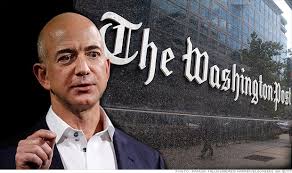
Internet billionaire, Jeff Bezos - new owner of The Washington Post

Internet billionaire, Jeff Bezos – new owner of The Washington Post

While the price Bezos paid, a paltry $250 million, is being seen by industry watchers as an indication of the decline of print journalism the sale of the Post to one of America’s richest businessmen is just the latest sign of a more important trend in American media – the growing plutocrat takeover of the business by individuals with controversial political and economic agendas and close ties to the political and bureaucratic power structure.

Rupert Murdoch already controls The Wall Street Journal, The New York Post and the Fox Network; last week The Boston Globe was sold by the ailing New York Times to John Henry, the billionaire owner of the Boston Red Sox and Liverpool FC; outgoing New York mayor and Wall Street billionaire Michael Bloomberg is rumoured to be preparing a bid for the Times while the ultra-right wing Koch brothers are said to be getting ready to buy The Los Angeles Times, The Chicago Tribune and other newspapers.

The irony of an internet mogul coming to the rescue of a newspaper whose ills, like the rest of the industry, were largely caused by the internet has not been lost on anyone with concerns for the future of journalism. But predictably voices have been raised expressing the view that entrepreneurs with the skills of Bezos are just what print journalism needs. If a man who revolutionised the selling of books and made a fortune in the process can do the same for newspapers then who could complain?

In which case it is well worth having a close look at just exactly how Bezos made Amazon the behemoth it now is and wonder what print journalism will look like in ten or twenty years in the hands of such men.

In April last year The Columbia Journalism Review published this riveting account of a series of articles The Seattle Times had published examining Amazon behind the scenes. Seattle, of course, is home base for Bezos’ retailing giant. Here is the piece below and it is well worth reading. And scary. Is this what journalism will soon look like?

(The CJR and Seattle Times’ articles fail to mention Bezos and Amazon’s’ intriguing links to the US surveillance state. Amazon took Wikileaks down from the internet when the first Bradley Manning leaks appeared, has just signed a $600 million contract with the CIA and is an integral and apparently uncomplaining partner with the NSA in its efforts to surveil the world’s communications networks. What price the Bezos’ Washington Post would ever repeat its Watergate coverage or publish the Pentagon Papers?)

The Seattle Times Takes On Hometown Amazon

A tough series on the dark side of the booming local company

By Ryan Chittum

Here in Seattle, Amazon is growing like crazy, adding thousands of jobs and building several skyscrapers just off downtown, something that will add hundreds of construction jobs. But at what cost?

That’s what The Seattle Times asks in a tough, excellent four-part series that riffs off the company’s logo to go “Behind the smile in Seattle.”

I’m particularly interested in this series because I live here and because I’ve been critical of Amazon, a company I’ve given lots of business since 1999, when, like a true Gen X college kid, I bought a copy of The Baffler, a Nirvana book, and some Pavement Maxi singles, according to my order history on the site.

But the company’s anti-sales tax policies, which have included threatening to move if a state requires them to collect them like their competitors do, and the reporting we’ve seen in the last year on working conditions in its warehouses raise serious questions about how Amazon does business (and have caused me, for one, to buy elsewhere when possible).

With this series the Times has given us the most complete portrait yet of a corporate culture that leads to exploitative warehouse working conditions, monopolistic behavior, and an anti-tax battle to deprive states of revenue and maintain an unfair advantage in the marketplace.

Some of these behaviors are in the DNA of the company, embedded from the start by founder Jeff Bezos and his libertarian bent. Taxes particularly are a critical part of the Amazon origin story.

Bezos started Amazon in the Seattle area, the Times reminds us in its piece on the company’s anti-tax campaign, for tax purposes. The Supreme Court had just issued its ill-timed (right as the Web era was beginning) nexus ruling that said states couldn’t force companies to collect sales taxes if they didn’t have a physical presence there, and Bezos saw that this gave online retailers an unfair price advantage of up to 10 percent. He thought about locating on an Indian reservation, but that was “impractical,” in the Times words, so he went to Washington state, which had relatively few people, especially back then, which meant that fewer of his potential customers would have to be charged sales tax.

That was all well and good back then. But as the company has expanded and Internet retail has matured into a giant industry, it has continued to fight states that have tried to get it to collect taxes. And it plays hardball:

Code-naming their effort “Project ASAP,” South Carolina officials offered up more than $33 million in incentives, including free land, a property-tax cut and payroll-tax credits. They even agreed to loosen the area’s Bible Belt moral code, repealing a decades-old Lexington County “blue law” so Amazon’s warehouse could stay open Sunday mornings.

As they discovered, that wasn’t enough.

Amazon also insisted on an exemption from collecting the state’s 6 percent sales tax on purchases by South Carolinians. When the state Legislature balked, voting down the sales-tax break last spring, Amazon stopped construction on its million-square-foot warehouse and prepared to leave, throwing thousands of jobs into jeopardy

South Carolina caved, naturally.

Another of the four Times pieces looks at Amazon’s absence from the civic/philanthropic scene in Seattle. Unlike Boeing and Microsoft, the $85 billion giant doesn’t really give money to philanthropies, and it doesn’t encourage its workers to volunteer.

I have to admit, at first I thought this was a bit much. It’s not necessarily wrong for a company, particularly one with low margins, to not give money to charity. But after reading the entire series I changed my mind on the merits of the story: This is an essential piece of the puzzle The Seattle Times puts together.

Amazon isn’t an evil corporate citizen. It just doesn’t much believe in the concept of corporate citizenship. That’s its right, and it’s almost refreshing to see a sort of pure American capitalism devoid of gauzy marketing efforts to obscure that fact—however dependent it is on direct and indirect government subsidies.

Amazon’s gift to society, it says, is to run its business, which consists of “lowering prices, expanding selection, driving convenience, driving frustration-free packaging, creating Kindle, innovating in web services.” Some people would argue that that’s indeed the case, but you always have to question when someone claims their own self-interest is in the public interest.

And you can see how that ethos leads to the darker practices of the company. Dominant market positions are meant to be leveraged to get ever-more-dominant market positions, at the expense of suppliers and competitors. Governments are meant to be rolled on tax subsidies and tax avoidance. Workers are meant to be used up, discarded, and replaced with robots as soon as possible.

So as the Times asks what kind of $85 billion company doesn’t give money to parks and the United Way, the answer is: The kind of company that fights to avoid paying sales taxes for schools and firefighters. The kind of company that puts ambulances outside its warehouses to ferry the inevitable overworked heat victims to the hospital and then argues with the doctors about how they treat their patients so as to avoid triggering an OSHA report.

This anecdote is revealing about Amazon’s corporate culture, and it comes from an on-the-record executive:

Several current and former Amazon employees said they have wanted to change the company culture to encourage more giving. But colleagues told them not to bother — they’d be better off figuring out how to do good on their own.

“I kind of tested the waters by asking around and I got a sense it’s not worth pursuing,” Kintan Brahmbhatt, head of products for Amazon’s IMDb Everywhere initiative, recalled last year…

He asked about arranging to have charitable donations automatically deducted from his paychecks. But he learned that employees who do paycheck donations are charged a 6 percent fee from a company that processes them for Amazon.

While Amazon doesn’t donate much time or money to its community, it also isn’t involved much in the kind of local corporate pooh-bah stuff like the Chamber of Commerce or Washington Roundtable. Unsurprisingly, though, Bezos personally gave $100,000 to defeat a proposal to levy a state income tax on the rich. Washington state has by far the most regressive tax system in the country, taxing poor people seven times as much as we tax the rich, as a proportion of income.

If you’re in the poorest 20 percent of Washingtonians, you pay an average 17.3 percent of your income in state and local taxes. If you’re in the top 1 percent, like Bezos or Bill Gates or Steve Ballmer or Howard Schultz and on and on, you pay 2.6 percent (and that surely overstates how much those super-rich folks actually pay). Lucky duckies, indeed. The state income tax Bezos helped defeat would have meant the richest 1 percent would have paid a little less than half the tax rate of the poorest 20 percent, up from one-seventh.

TaxAmazon

There is one big local donation the Times reports: The company pledged a couple million dollars to the University of Washington for endowed professorships in “machine learning.” That ought to help get its robots going, at least. Bezos is also dropping $42 million on a clock in a mountain in West Texas that will supposedly work for 10,000 years. I’m not kidding.

The Morning Call’s excellent expose on working conditions in an Amazon warehouse near Allentown, Pennsylvania, showed how the company’s low-paid workers face bodily injury and the constant threat of termination. The Times follows up with a terrific report from Campbellsville, Kentucky that shows the Pennsylvania warehouse was no rogue unit:

A former warehouse safety official said in-house medical staff were asked to treat wounds, when possible, with bandages rather than refer workers to a doctor for stitches that could trigger federal reports. And warehouse officials tried to advise doctors on how to treat injured workers.

“We had doctors who refused to work with us because they would have managers call and argue with them,” he said.

These things come from the top, often from disconnected corporate managers getting pressured by their bosses who don’t see or don’t care how their orders play out on the ground, where human workers ultimately have to try to carry them out. The Times gets at that too:

“There would be phone conferences [with Seattle], and all this screaming, about production numbers. That was always the problem; the production numbers weren’t high enough,” said a former safety manager with oversight of the warehouse who spoke on condition of anonymity. “This was just a brutal place to work.”

And it uncovers a whistleblower, who unfortunately wouldn’t let his or her name be used, who was fired a week after questioning brutal working conditions in the Kentucky warehouse.

To make matters worse, Amazon is one of these places where people who have no other options go to make twelve bucks an hour and have to endure morning “pep talks” and creepy giant corporate slogans on the walls that say “work hard. have fun. make history.” Thanks for the history, bub. But a bump up to 500 bucks a week would surely motivate employees better.

Rounding out the paper’s portrait of Amazon, it looks at how it flexes its muscle in the book publishing market, where it accounts for an estimated 75 percent of print book sales online and 60 percent of e-book sales.

After the series appeared, Seattle Times Editor David Boardman wrote that readers swamped the paper’s website with negative comments. In less anonymous communications, unsurprisingly, like emails and phone calls, he says comments were much more positive.

Well here’s another one. Far too often, newspapers are homers for their big local employers. While it certainly didn’t hurt that Amazon isn’t a major advertiser, it still takes nerve to put out a tough investigation like this on a fast-growing local giant in a dire economy, and to deploy significant resources on it when there aren’t any to spare.

It’s also something that could actually make a difference. It’s one thing to get dinged in The Wall Street Journal, say. That hurts you in the markets, which are awfully important, but fairly abstract.

It’s quite another when it’s the local paper your friends and neighbors read.

Boston College: The Truth Behind The Lost Contracts

Burns Library, Boston College - home of the Belfast Project archive

Burns Library, Boston College – home of the Belfast Project archive

Around the beginning of July this year, myself and Anthony McIntyre began getting increasingly edgy messages from Boston College (BC) alleging that a crisis in the over two-year long subpoena saga was developing which needed urgent and radical action. Only ourselves, we were told, could provide the way out.

What followed was another depressing chapter in the story of Boston College’s seemingly boundless yearning to give up its precious research participants to the US government, the IRA activists who agreed to give the college valuable interviews between 2001 and 2006 about their lives during the Troubles.

The message was clear that that unless we identified three interviewees whose contracts with BC had been lost by the college then the Department of Justice, on behalf of the PSNI, would get a bonanza. BC issued warnings that a court decision this May which severely restricted the number of interviews that were eligible for handover could be reversed by the US government. That outcome, the message suggested, could be a disaster for the Belfast Project. Unless we named the three anonymous interviewees.

What had happened was this. At the very start of the legal challenge to the PSNI/DoJ subpoenas in 2011, a lower court ruled that every single interview given by anyone who mentioned Jean McConville had to be given to the PSNI. Most of the interviewees had provided a number of interviews, such that there were several transcripts related to each interviewee.

The lower court’s ruling created the following ludicrous situation: let’s say interviewee A gave fifteen interviews and had talked about McConville in only one. Even if that mention was just for the equivalent of say a couple of paragraphs, all fifteen interviews would nonetheless end up with the PSNI. Although fourteen of A’s interviews had nothing to do with the disappearance of Jean McConville, they would all be handed over.

Without going into all the detail suffice it to say that in May a higher court known as the First Circuit reversed that decision and very sensibly said that only those interviews which actually mentioned Jean McConville were eligible for handover. So for that hypothetical interviewee A, only one of his or her fifteen interviews could be sent to Belfast.

This was an important change especially for the interviewees because otherwise they possibly could face charges for a multitude of offences that had nothing to do with the McConville case. Doubtless the most disappointed party after the decision was made public was the PSNI.

But this is when BC began to undermine its own project, in the course of which it exploited the potential vulnerability of the interviewees to criminal charges beyond the McConville case in efforts which would have discredited myself and Anthony McIntyre.

The interviewees could only be identified by an alphanumerical code attached to all the transcripts and tapes sent to Boston by the two researchers, Anthony McIntyre and Wilson McArthur. But each interviewee also signed a contract which consigned their interviews to BC on condition that they would only be published after their death. The process included a guarantee of confidentiality and the contract was proof of BC’s ownership.

The agreement between myself and BC was to use a coding system to maintain the anonymity of the interviewees, and that only myself and the Burns Librarian would have access to this code. The only way by which this code could be created was by reference to the donation agreements, which the Burns Librarian – not Ed Moloney – was obliged to collect in Belfast and transport to Boston.

Needless to say, the donation contracts were the most sensitive documents handled by anyone involved in the project. Without them, the interviewees could be not identified, and so they were handled with great care. Written into the arrangements that governed the project was the instruction that these contracts could only be carried to Boston by hand. They could not be sent by mail or via the internet because the risk of interception was too great.

As it happened the man in charge of the project, BC librarian Bob O’Neill was a regular visitor to Ireland and he would arrange to meet the two researchers from time to time to pick up the contracts which he would then take to Boston.

Alas, it seems that O’Neill lost, mislaid or otherwise never collected a number of these contracts. Even though the project ended in 2006 BC claims to have failed to notice this crucial gap in his paperwork until two years or so ago. The extent of the problem was not admitted by BC until the recent court decision when the college had to come clean. That is when we started getting those anxious messages.

Seven interviewees aside from Brendan Hughes and Dolours Price had mentioned Jean McConville in their sessions but the contracts for three of them, identified only as “S”, “Y” and “Z”, had been lost, we believe by O’Neill since both McIntyre and McArthur had compelling reasons to ensure the contracts ended up in his hands.

The message to us from BC was that the the DoJ had made an official request for the names of the three interviewees, absent which it could not identify them. If we failed to cooperate, we were told, the DOJ would request that the First Circuit Court of Appeal in Boston reconsider its decision and issue the whole transcripts, if not the entire archive, so that the DOJ could identify those interviewees whom the First Circuit found had knowledge of the McConville case.

Bear in mind that the DOJ had never asked for the code in its subpoenas, but BC’s alarmism suggested the DOJ would be granted what they never subpoenaed. If the DOJ got their way, then all of the hypothetical participant A’s fifteen interviews would go to the PSNI and the US government would justify this on the grounds that full access was the only way to identify “S”, “Y” and “Z”.

The clear implication of the messages from Boston College was that we, and specifically myself, would be responsible for the collapse of the entire project if the May decision was reversed. As one message from BC put it, referring to myself: “Does your client want this [opening up of entire interviews] to be his legacy?” (What? As opposed to giving up names to the PSNI?)

And so we waited with baited breath for the DoJ’s submission to the First Circuit in expectation that the government, in a fit of pique, would ask the First Circuit court to reverse its decision in the case of “S”, “Y” and “Z”. But we waited in vain.

Last Friday the government’s filing was made public and there was not a mention of this threat at all. Not one. Not even a hint of a threat. Instead the DoJ simply asked the court to not to change the result regarding the release of transcripts, but rather to reaffirm in principle the executive branch’s supremacy in relation to the exercise of treaties governing subpoenas delivered on behalf of foreign governments. However, the DOJ wholly declined to challenge the First Circuit’s earlier decision which still stands.

So, what is the explanation for Boston College’s groundless threats against myself and by implication Anthony McIntyre? The most charitable is that the college and its attorney completely misread the US government’s intentions. They cocked it up, in other words.

The least charitable is that the college knew full well that the DoJ had no intention to challenge the First Circuit’s restriction on the interviews but that, with some well-directed bullying and strong-arming, the result might be that we could be maneuvered into betraying our sources to the PSNI, an act that would completely discredit us in Ireland and end our campaign. If this was the case it is testament to how underhand BC’s tactics had become, and how little understood our motives in waging this battle.

I know which of these theories I believe and I believe it because there is another motive at work here, one that has been apparent almost from the outset of this legal case. That has been BC’s eagerness to put the US government’s law enforcement interests ahead of those of its research subjects; ensuring that it was seen to provide aid to law enforcement in its (bogus) murder investigation always seemed more important to BC than protecting the people who agreed to share important and sensitive historical information with the institution.

And herein lies a very important message. Boston College should be shunned as an institution for academic research until it proves that it will fight with integrity and determination to protect the confidentiality and interests of its research subjects. Until then BC simply cannot be trusted. It is not a safe place to conduct research.

Boston College Loses Dolours Price Contract, Throwing Jean McConville Probe Into Disarray

Boston College does not have in its possession the contract Dolours Price signed with the university that established the authenticity and ownership of the interview about her life in the IRA conducted by researchers from the college, thebrokenelbow.com can now reveal. It is not known whether the contract has been lost or was never collected from researchers in Ireland.

Dolours Price - Boston College has lost her contract proving ownership and authenticity of her interview

Dolours Price – Boston College has lost her contract proving ownership and authenticity of her interview

This disclosure follows revelations in The Irish Times this weekend that Boston College also cannot locate the contracts that identify three out of the seven IRA interviews that have been successfully subpoenaed by the PSNI and the United States’ Department of Justice in an effort to solve the forty year long IRA murder and disappearance in 1972 of Jean McConville, a Belfast widow and mother of ten whom the IRA accused of spying for the British military. These interviews are still the subject of legal argument in the United States.

This means that four out of the nine interviews or sets of interviews – nearly half of the interviews successfully subpoenaed as being relevant to the McConville murder investigation – are now of dubious legal and evidential value despite a lengthy and expensive legal battle fought by the PSNI and their allies in the Obama White House over the past twenty-seven months.

Jean McConville with two of her children

Jean McConville with two of her children

These revelations also raise questions about how many other interviewee contracts with participants unconnected with the McConville investigation or who were part of the UVF section of the archive that so far has escaped PSNI attention have been lost or were never collected by Boston College.

Amid efforts, so far resisted by Boston College, on the part of interviewees to get their interviews returned and to force the closure of the archive, legal sources say that the inability of Boston College to prove that contracts exist will result in the automatic return of these interviews to those who gave them.

All these twists and turns add appreciably to the embarrassment of Boston College’s authorities over a project that has been roiled in controversy over assurances of confidentiality that were given to interviewees by the college in order to persuade them to participate.

The contracts at the centre of this controversy tell interviewees that their control and ownership of the interviews they gave was absolute until their death, after which ownership and control reverted to Boston College. It was this contract, drawn up by Boston College’s own legal advisers, which persuaded the researchers, Ed Moloney, Anthony McIntyre and Wilson McArthur, as well as the interviewees, to take part in the project as it seemingly offered protection against official intrusion.

At the outset of the project in 2001 another part of the arrangement, drawn up in contracts, stipulated that the Project Director, Ed Moloney would create a key for Boston College that would identify all the participants who otherwise would only be identified by letters of the alphabet and numbers for the number of interviews they gave.

The key would be created via the contracts which the researchers, Anthony McIntyre and Wilson McArthur, would ask each interviewee to sign. The arrangement was very strict about one point: for security reasons the contracts and the key they created could only be hand delivered to Boston from Ireland by the Boston College librarian, Robert O’Neill, who traveled regularly to Ireland on shopping expeditions for the college.

In other words McIntyre and McArthur would provide the signed contracts, Moloney would create a key from them and O’Neill would carry all this back to Boston where the documents would be lodged, at least in theory, in the college archive.

Almost at the outset however the arrangement was altered by changes in the domestic arrangements of Ed Moloney, who was obliged for family reason to relocate from Belfast to New York in the summer of 2001, by which time the IRA part of the archive was just a few months old.

Because the security of the project and the guarantees given to interviewees necessitated that the all important piece of information identifying each participant be taken to Boston only by hand this meant that Moloney, now residing in New York, could no longer be part of this process and it was left to O’Neill, the Boston College librarian and the man in charge of the project, to collect the contracts and create the key. Had Moloney been involved this would have meant that security would have been compromised since the ‘by hand only’ rule would have been breached, with potentially harmful consequences for the interviewees.

It is interesting to note that the subpoenaed IRA interviewees not identified by contracts are all at the end of the alphabet, suggesting that they were started long after he had arrived in New York and when he was no longer in a position to be given copies of their contracts. In practice he was not informed of the names of participants although he did suggest names of potential candidates and needs and did read transcripts which were sent in an encrypted form. However identities could never be sent encrypted or in any other way as the security risk was too great.

Boston College went along with this arrangement. Again for security reasons none of this was described in writing or email but was done orally. Proof that it was acceptable to Boston College lies in the fact that never once, from 2001 onwards, did the college ever demand the key from Ed Moloney. This was because de facto the job was O’Neill’s. During Moloney’s stay in New York he traveled numerous times to Boston College, gave lectures to students and had meetings with those in charge of the project and never once was this issue or problem raised.

Had the college been so exercised by the failure to provide this key its lawyers could have sued for breach of contract but they allowed the statute of limitations to expire in 2012, a year after the PSNI/DoJ subpoenas were served. This suggests that the college was not then concerned about the matter.

It also means that from 2001 until 2013, and even after a foreign police force had requested access to its archive, the fact that a significant number of interviews lodged in Boston College had no contracts attached to demonstrate Boston College’s ownership or to establish the identity of the interviewees went completely unnoticed by the authorities on campus or was not regarded as being of concern.

Collection of the contracts and therefore compilation of the key became the responsibility of Robert O’Neill, the college librarian. Did he collect the contracts and then lose them or ‘forget’ or somehow fail to collect the contracts? We don’t know. It does however seem logical that McIntyre – and also McArthur – did have an incentive to ensure that contracts were signed and collected.

The contracts were the guarantee of security and safety and it was in their interests to ensure that each interviewee was both aware of the text of the contract and had signed them – this was the way, after all, in which they could assure interviewees that it was safe to participate. Equally it was in their interests to ensure that the contracts were lodged at Boston College.

Doubtless aware of how damaging all this extraordinary chapter in the IRA archive story is to Boston College’s reputation, the university has turned on its researchers as it has done repeatedly during this sad story.

This time the reason is clear. Earlier this summer, the First Circuit Court of Appeal in Boston reversed a District Court judgement of 2011 that authorised the wholesale handover of IRA interviews – eighty-five in total. That judgement had said that if interviewee ‘A’ mentioned Jean McConville in only one of 18 interviews then all 18 interviews should be handed over. The First Circuit, very sensibly, said that only that single interview should be conceded.

Following this Boston College appears to have discovered that thanks to the contracts snafu, it cannot identify three of the interviewees. Anxious that once again the college will be exposed as alarmingly bungling and incompetent, Boston College is trying to shift the blame on to its researchers and in particular project director Ed Moloney.

On the foot of what looks like a tip off to the DoJ from Boston College, the researchers’ legal advisers have been warned that the US government may well go into court next week to ask that in the case of those three interviewees their entire set of interviews should now be handed over so they can be identified. Boston College is telling our legal team that we can stop this happening if we identify the three interviewees. Failing that there is the threat in the background of a subpoena, with jail time if it is defied, against the Project Director Ed Moloney.

This is how far Boston College has sunk. And as this happens US academe stands silent, acquiescing and in effect collaborating.

James Risen Case Shows Obama Justice Department Has No Respect For Media Rights

Once again the US federal judiciary has caved into demands from Obama’s Department of Justice that the media’s right to confidentiality and duty to protect sources should be torn up in pursuit of the administration’s quest to silence whistleblowers and in the process destroy what remains of investigative journalism in America.

New York Times' James Risen - Obama and Holder are trying to force him to give evidence against his source

New York Times’ James Risen – Obama and Holder are trying to force him to give evidence against his source

This time the case involves a prominent New York Times journalist James Risen who the Department of Justice is  attempting to force into the witness box to give evidence against a CIA source who revealed startling details of  incompetence on the part of his bosses. Risen wrote up the episode, which concerned a flawed attempt to sabotage the Iranian nuclear energy project, in his book “State of War” which examined CIA operations during the Bush administration.

I won’t go into all the detail here since I attach a very good blog piece from the Washington Post which explains better than I can the history of the case and the meaning of a recent court decision upholding the DoJ’s effort to force Risen to give evidence.

But I think it is important to set this case firstly against a background of unprecedented harassment of whistleblowers and the media which has attempted to report the details of their whistleblowing during the Obama presidency and the stewardship of the DoJ by Attorney General Eric Holder. Readers will be aware of the targeting of Bradley Manning, Julan Assange and latterly Edward Snowden but the list is longer than that.

Obama and Holder have pursued twice as many whistleblowers and journalists and invoked the Espionage Act against them more times than the combined presidencies of the previous ninety years. It has been an unrivalled assault on the public right to knowledge, something that will mark the Obama presidency indelibly as way more reactionary than George W Bush, an unthinkable thought when Obama campaigned on ‘Change You Can Believe In’ back in ’08.

Most ominously in their efforts to silence dissent from within government, Obama/Holder are seeking to criminalize the media, insinuating in some prosecutions that by facilitating a whistleblower, journalists can be accomplices in crime. So far the White House has shied from actually following through with charges but it is not beyond the bounds of possibility that they may try to over the Snowden case, hence the fierce hostility to the radical journalist Glenn Greenwald in establishment politican and media circles.

America’s journalists, slowly awakening to the great dangers facing the media have finally realised that the effect of the Obama/Holder push will be to destroy investigative journalism. Whether they mobilise successfuly against the threat remains to be seen.

I mention all this so as to make a point about the Boston College subpoenas, or rather to reinforce the point since I have made it before. The US authorities are taking the hard line they have during the BC case not just because they and the PSNI share an agenda but because it is the wider interests of the American security state that has evolved since 9/11 to take a hard line on the IRA archives. To bend on the Boston case would weaken their stand on these other cases and that neither Obama nor Holder will do.

I am limited in what I can say here, but the Boston College case is facing its next legal challenge soon. On July 30th the US government is to decide whether to appeal a decision handed down by the First Circuit Court of Appeal in Boston that limited the extent of the handover of IRA interviews. If they do appeal, the baton will be in the hands of Boston College. Will the authorities at America’s leading Jesuit college answer the challenge or will they fold or turn again against their researchers and interviewees?

We’ll get the answer to that soon, but so far American academe has not shown the same resolve and alarm at this federal incursion of confidentiality rights that the American media is beginning to show. Sadly, I suspect it is way too late for one and almost too late for the other.

Anyway here’s the Washington Post piece:

Can Dolours Price Interviews Be Used In Court: A Correction And Clarification

I am prompted by some confused reporting at the weekend, in particular this story in the Sunday Business Post, to make the following correction and clarification. The claim at issue in the SBP report is to the effect that because Dolours Price has died, her testimony to researchers from Boston College cannot be used in court as evidence.

One Belfast reporter, quoted in the SBP story said this: “I don’t see material evidence coming out of this. [Dolours Price] can’t be interrogated; she can’t be brought before a jury.”

Another agreed: “There is absolutely no conceivable possibility of this stuff being used in court. The witness can’t be cross-examined. I’d be very surprised if you can even get this heard in court.”

The effect of such misunderstanding of the legal situation is to minimise the potential legal and political consequences of the Boston College subpoenas and to infer unnecessary alarmism on the part of campaigners against the subpoenas.

To be fair, these reporters are not the only ones confused. The judge in the Boston District Court who first okayed the handover in 2011 made the same mistake and I have had to correct Congressional staffers who had the same inaccurate view.

The purpose of this short posting is to put the matter to rest for once and for all.

Dolours Price’s interviews can be used in court as evidence and the authority for this statement is no less than the British Crown Prosecution Service. The CPS website posting which deals with the admissibility of hearsay evidence, which is how Dolours Price’s interviews are defined, makes it abundantly clear that statements made by dead people are admissible.

Here is the link to that posting, and here is the extract which cites Section 116 of the Criminal Justice Act of 2003:

CPSOK folks? “There is automatic admissibility of a statement made by an identifiable person that would be admissible if that person were available to give oral evidence but are unable to do so because either: The person is dead (Section 116(2)(a);” And the CPS goes on to list other categories.

The issue of the weight to be given to her interviews will be a different matter. She cannot be cross-examined and she had a history of psychiatric problems which are problems for prosecutors. But if testimony from other interviews, such as the seven currently awaiting a final legal decision, support her evidence then her interviews will carry greater weight. But admissible her interviews most certainly are.

This is not rocket science guys. It’s all on the internet.

Plea To McConville Family: Join Us In Bid For British Army Papers

A British military photo of the Divis Flats complex circa 1972/73

A British military photo of the Divis Flats complex circa 1972/73 – All that remains today is the tower block on the centre left

Today myself and Anthony McIntyre are extending an invitation to members of Jean McConville’s family to join with us in lodging a Freedom of Information request at the British government’s archives at Kew in Surrey to obtain the release of the war diaries of the First Gloucestershire Regiment, which served in Divis Flats at the time, in early 1972, that Jean McConville allegedly came under IRA suspicion as an informer for the military.

The First Gloucesters, one of the oldest and most battle hardened regiments in the British Army, was the only one of the nine regiments to have served in the Divis district of West Belfast during the early 1970’s whose war diaries have been embargoed and closed to the public, in that regiment’s case for an exceptional 84 years, until the year 2059. Under the 30 year rule the war diaries should have been made available by now but an extra embargo of over 50 years was imposed. It is our understanding that the British Ministry of Defence has the final say in such decisions.
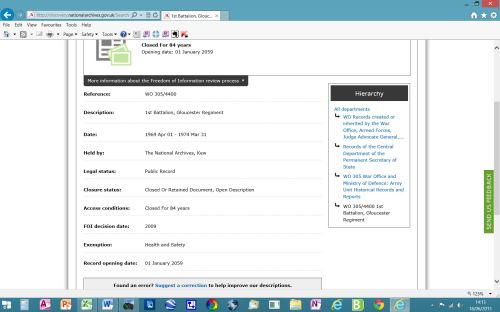
The official embargoed notice at Kew on the war diaries of the First Gloucestershire Regiment

The official embargoed notice at Kew on the war diaries of the First Gloucestershire Regiment

We are also planning to ask that the war diaries for 39 Brigade of the British Army, that is the Belfast command of the military, between August 1st, 1971 and September 30th 1971, and between June 1st 1972 and June 30th 1973 be opened for scrutiny. These documents have been embargoed for between 84 and 100 years.

We will be filing the requests in order to see if the war diaries, which are a daily account of a regiment’s military activity, contain any information which might indicate what happened to Jean McConville, the widowed mother of ten who was abducted from her apartment in the Divis Flats complex by the Provisional IRA in December 1972, taken across the Border to the Dundalk area, shot dead and her body secretly buried in a beach on the edge of Carlingford Lough.

In particular the request might settle for once and for all the question of whether the IRA killed Jean McConville because she worked as an intelligence source for the British Army.

Significantly, Nuala O’Loan, the former NI Police Ombudsman who investigated the Jean McConville ‘disappearance’ and whose report challenged suggestions that she had been a British Army informer, told thebrokenelbow.com in a phone interview this weekend that she had never heard of these war diaries until now.

She said that she would be ready to lend her support to our efforts to get the embargo lifted. “I am always ready for documents to be examined but I don’t know anything about them. I don’t know why they have been embargoed. I think I could be supportive of getting the documents out. I think there may be issues attached, there may have to be sections redacted. But I think that would be my only proviso.
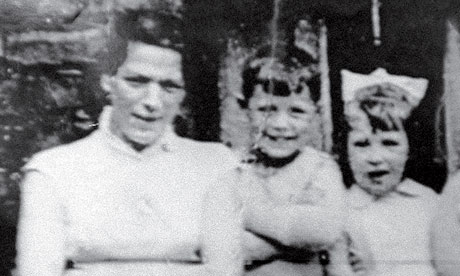
Jean McConville with two of her children

Jean McConville with two of her children

We wish to stress that we are not conducting this exercise to prove that the IRA was telling the truth when it claimed that Jean McConville was killed because she was working for the British Army. We have enormous respect and understanding for the family’s view that their mother was killed and disappeared for reasons unconnected to any military exigency on the part of the IRA.

Nor do we wish our proposal to be regarded as an attempt to vindicate this heinous act by the IRA. What happened to Jean McConville was not only unjustified but was callous, cynical, barbaric and unnecessary and both of us are on public record repeatedly as saying so. I have also written that in my view her killing was a war crime; so has Anthony McIntyre. Strikingly, a significant number of former IRA activists have told me this is their belief also, and that they are ashamed that this act was carried out in their name.

There is no doubt either that certain key figures in the IRA of that time have lied about their part in Jean McConville’s disappearance and have done so repeatedly and grossly. Nor can there be doubt that such lying has infected the IRA’s account of Jean McConville’s death and the reason for her murder.
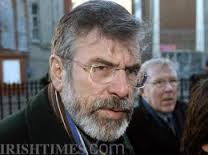
Gerry Adams denies all knowledge of Jean McConville's disappearance

Gerry Adams denies all knowledge of Jean McConville’s disappearance

At the same time two credible IRA figures have come forward both to denounce that lying and also to say that her role as an informer was the reason Jean McConville was killed. Both Brendan Hughes and Dolours Price are now dead and cannot be quizzed about their versions of events but they both gave lengthy, credible and coherent accounts, Hughes in the book Voices From The Grave, which was derived from his interviews with Boston College, and Price in an interview with the Sunday Telegraph.
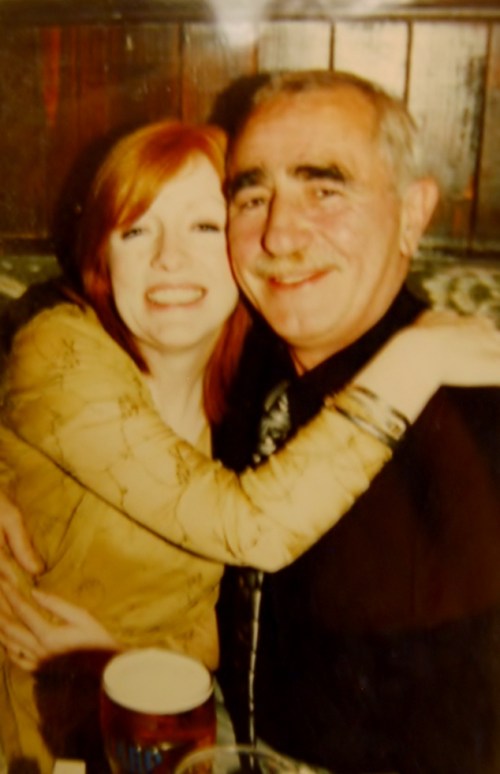
Dolours Price and Brendan Hughes

Dolours Price and Brendan Hughes

On the other hand, the former Northern Ireland Police Ombudsman, Nuala O’Loan has reported that from her inquiries in security circles she could find no evidence to verify the allegation that Jean McConville worked as an agent for the military or any other branch of the British security apparatus. But she has declined to go into detail and has, for instance, refused to say who in security world she spoke to or at what level.

No-one can doubt Nuala O’Loan’s integrity, nor that what she reported she genuinely believed to be the truth. But at the same time, if the IRA account is true, some in the British Army and others in the intelligence and political hierarchy may have had as much reason to lie and dissemble to the Police Ombudsman as does the IRA’s then Belfast leadership to the people of Ireland.

Remember Brendan Hughes’ account. According to his version, Jean McConville was uncovered as a spy when a radio transmitter was found in her apartment. According to Hughes she admitted her role when confronted with the evidence but because of her family situation, she was given a so-called ‘Yellow Card’ by Hughes and let go. But later the IRA discovered evidence she had resumed spying and that sealed her fate.

Nobody knows whether Brendan Hughes’ account is accurate but if it is, it means that the British Army continued to use as an agent someone whose cover had been blown, thus putting the agent’s life in great peril. And, if Hughes’ account is accurate, the army would have known Jean McConville’s cover was blown because her radio had been confiscated by the IRA.

If all this is true the British Army contributed significantly to the series of events that led to her murder. If all this is true the British Army acted recklessly and selfishly and was at least partly responsible for ten children losing their mother. If all this is true then British soldiers, possibly senior ones, had good reasons to lie and to keep these facts from the public and the McConville’s. And the McConville family have good reason to seek the maximum redress.
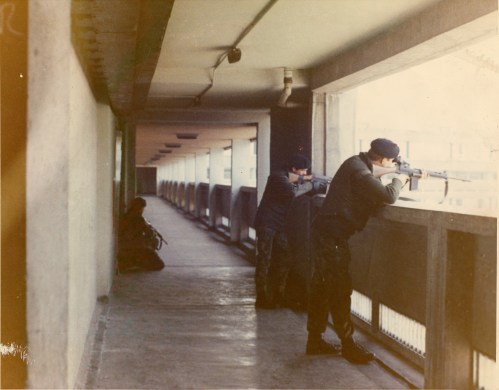
A daylight patrol in Divis by the First Gloucestershire Regiment (copyright: The Soldiers of Gloucestershire}

A daylight patrol in Divis by the First Gloucestershire Regiment (copyright: The Soldiers of Gloucestershire}

It should also be remembered that the British Army has a track record of telling lies, in one notorious case a massive lie, about its intelligence operations. When John Stevens, the former Cambridgeshire Deputy Chief Constable was sent to Northern Ireland in 1989 to investigate intelligence leaks to Loyalist paramilitaries he was told at a high level military briefing that the British Army ran no intelligence agents in Northern Ireland.

In fact, as he soon found out, the army not only ran agents but it had an entire dedicated detachment, the Force Research Unit, which did nothing else except run agents. The British Army lied then to cover up its role in the UDA murder of Pat Finucane; in such a context it is not inconceivable that they may have lied to cover up the death of Jean McConville.

So we have conflicting accounts, dead witnesses, lies told by one side and possibly lies told by the other. What we do not have enough of is truth that can be backed up by independent, contemporary evidence. That is why today we are announcing our plans to seek the opening of British Army files and asking the McConville’s to join us.

We are seeking only the truth. It may be that the files contain nothing of interest or significance and if that is the case, then so be it. It may be that the files support Nuala O’Loan’s suggestion that Jean McConville never worked for the British Army. It may be that they show she did but that her handlers exploited her and helped usher her to an early death. If that is the case, then so be it.

Over the past two years, the PSNI and the British government have sought to obtain interviews lodged in the archive of the Belfast Project at Boston College in their search for facts in the investigation of Jean McConville’s murder and disappearance. We also seek to obtain files lodged in the UK’s archives at Kew in our search for facts in the investigation of Jean McConville’s murder and disappearance.

With the appointment of Dr Richard Haass as the new US Special Envoy with the brief of charting a way to deal with the past, it is becoming clear that any effort to find out what happened during the Troubles will be fatally flawed unless there is absolute balance between competing sides, between paramilitary groups and security forces. The leadership of the Historical Enquiries Team is currently learning the hard way what happens when a process of investigating the past become tainted with double standards.
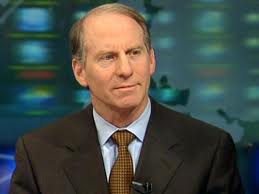
Richard Haass - new US Special Envoy to N

Richard Haass – new US Special Envoy to N

And so, if the PSNI is to be allowed access to Boston College’s files by the US courts, then we who were responsible for creating them should be allowed access to the British Army’s archive. Otherwise we have an investigatory process that is doomed to be one-sided and whose conclusions will be respected by only one part of the community. Such an outcome can only breed mistrust and further division.

So, why do we single out the First Gloucestershire Regiment in this Freedom of Information request?

The first reason has to do with the unusual act of requesting an embargo on the regiment’s war diaries and the length of that embargo, eighty-four years. This means that unless the embargo is successfully challenged the diary will not be opened until January 1st, 2059, by which time most of those reading this article will be long dead.

To put the embargo into context, it is the same length or just slightly shorter than the embargo placed on 39 Brigade war diaries at a time when the Brigade commander was Brigadier Frank Kitson and he was busy creating the Military Reaction Force (MRF), a super secret undercover unit which allegedly was involved in a series of drive by shootings and killings in Belfast.

In other words to qualify for an 84 year or 100 year embargo as 39 Brigade has, the activities in question need to be the sort that you really don’t want the world to know about, at least for a very long time, and long after those responsible have shuffled off this mortal coil.

The full list of 39 Brigade embargoed war diaries is below. By contrast British Army brigade war diaries in Europe and Britain are open for public inspection:

So what was it that soldiers from the First Gloucestershire Regiment did in Divis Flats in 1972 and also in 1973 that they want hidden until 2059?

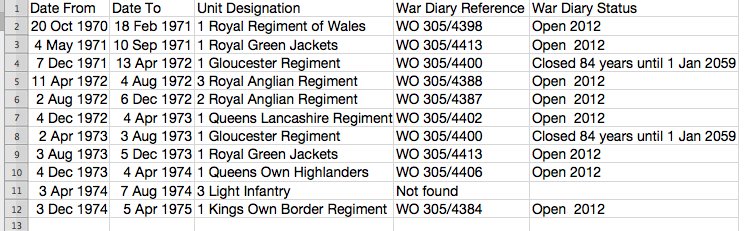
None of the other military units that served in Divis during these years felt that way. According to records compiled by our resourceful researcher Bob Mitchell, nine British regiments served in Divis Flats between October 1970 and April 1975. The list can be seen below in the graphic and it records that only one regiment cannot be traced in the Kew archive, the Third Battalion Light Infantry. Of the other eight, all can be traced and aside from the Gloucesters, none asked that its war diary(ies) be embargoed or were ordered by the MoD to be embargoed even though some of them, like the Royal Green Jackets and the Royal Anglian Regiment were posted to Divis during the worst periods of violence.
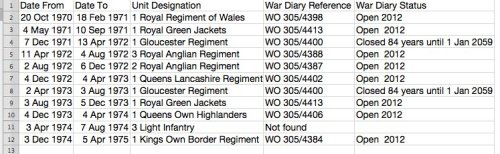
List of regiments that served in Divis in early 1970's. The First Goucesters are the only unit whose war diaries have been embargoed until 2059. All the others are available for public inspection.
List of regiments that served in Divis in early 1970’s. The First Goucesters are the only unit whose war diaries have been embargoed until 2059. All the others are available for public inspection.

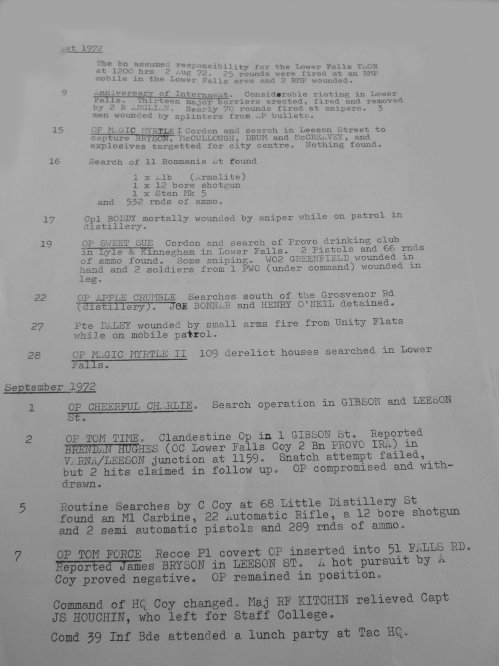
A war diary is a daily account of a regiment's or Brigade's activity during a tour of duty. This is a sample page fromn the Royal Anglin Regiment's war diary for 1972.

A war diary is a daily account of a regiment’s or Brigade’s activity during a tour of duty. This is a sample page fromn the Royal Anglin Regiment’s war diary for 1972.

So what was it that the First Gloucesters were involved in, in Divis Flats that made them so different from seven of their brother regiments?

Our research also brought us to journals and magazines produced by British regiments during the 1970’s which describe in sometimes fascinating detail their activities while posted to Northern Ireland. The Royal Green Jackets (RGJ) Chronicle is a particularly rich source of information.

The RGJ were posted to Belfast for the second time in August 1973 and a single company, ‘B’ Coy, was sent to Divis where, according to the account produced in that year’s Chronicle, priority was given to cultivating sources in the local population. While the Chronicle makes light of the way this was done, it seems that female residents of Divis were especially targeted. The account, which can be read in full below, concludes: “….by the end of the tour, all sections had established a friendly contact here and there.”

Extract on Royal Green Jackets tour of Divis Flats in 1973, between eight and twelve months after Jean McConville's disappearance

Extract from Royal Green Jackets Chronicle dealing with its tour of Divis Flats in 1973, between eight and twelve months after Jean McConville’s disappearance

So cultivating and recruiting intelligence sources from the population of Divis Flats, and possibly from female residents, appears to have been standard operating practice for British units, which common sense suggests would be the case. It is something the British would have done as a matter of course and not just in Divis.

A key part of Brendan Hughes’ story concerned the radio that was allegedly discovered in Jean McConville’s flat and with which she is supposed to have communicated with her handlers in Hastings Street RUC station which had become the British Army’s local HQ. In his interview with Boston College, Hughes did not describe the radio in any detail but it appears that it was what most people would know as a walkie-talkie type radio, small and compact, easy to hide and use.

The problem is that some people have raised doubts about whether the British Army had access to such equipment in the early 1970’s and that the only radios in use at that time were heavy, bulky sets totally unsuitable for use by an agent such as Jean McConville. In fact that is not true and the source for this is the Saville report on the Bloody Sunday killings of January 1972.

Paragraph 181.13 of the report reads:

“We should also record that there is evidence that before Bloody Sunday some of the resident battalions were, at platoon level only, using portable Stornophone radios in place of Larkspur radios. A number of former soldiers serving in Londonderry recalled having Stornophone radios available on 30th January 1972. Often nicknamed “Stornos”, these radios, like the Pye radios discussed above, were a commercially produced system purchased by the Army. There is little doubt that the use of Stornophone radios was a consequence of the fallibility of Larkspur radios in built-up areas.”

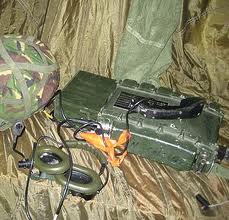
Stornophone radios were ideal for agent use. Manufactured by the Norwegian Storno Company, the average set was 10” long. 2.5” wide and 1” thick, it had a rechargeable battery pack and a simple ‘push to talk’ operation. The question then is whether Stornophone radios were available to British troops in Divis in early 1972 and the answer is yes.

The bulky Larkspur radio, totally unsuitable for agent use
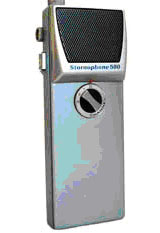
The bulky Larkspur radio, totally unsuitable for agent use

The Norwegian made Stornophone radio, available to some platoons in NI in early 1972. Very agent friendly.

The Norwegian made Stornophone radio, available to some platoons in NI in early 1972. Very agent friendly.

The answer comes from the ‘Soldiers of Gloucestershire’ website, which is dedicated to all things to do with the Gloucestershire Regiment, including a massive collection, dating back to the 18th century, of paintings, prints and photographs of the regiment during its various campaigns and wars, including its various tours to Northern Ireland.

One photograph shows a soldier from the Gloucesters on patrol in Divis Flats in 1972 holding and maybe using a Storno-type hand held radio.

Here is the photo:

A soldier from the First Gloucesters uses a Stornophone type radio while on patrol in Divis Flats in April 1972 - copyright

A soldier from the First Gloucesters uses a Stornophone type radio while on patrol in Divis Flats in April 1972  (Copyright: The Soldiers of Gloucestershire)

So a hand held walkie-talkie type radio of the sort that Brendan Hughes said was found in Jean McConville’s flat was in use by soldiers from the First Gloucestershire regiment in Divis Flats in 1972, the year she was abducted & killed, and the war diary for that tour has been embargoed until 2059. A cloud now hangs over the Gloucestershire regiment which can only be dispelled by full disclosure of the unit’s archives.
There is one final issue that arises out of the Police Ombudsman’s report on Jean McConville’s disappearance. It derives from a section of her report dealing with intelligence reports on the whereabouts of Jean McConville after she disappeared from Divis. That section was summarised in a press release dated August 13th, 2006 from the Police Ombudsman’s office. Here is the relevant section:

“There is no intelligence about or from Mrs McConville until 2 January 1973. An examination of RUC intelligence files show that the first intelligence was received on January 2 1973 when police received two pieces of information which said that the Provisional IRA had abducted Mrs McConville.

“On January 16 1973, Mrs McConville’s disappearance and the plight of her children were reported in the media. A police spokesman was quoted as saying that although the matter had not been reported to them, it was being investigated.

“RUC intelligence files show that the next day police received two pieces of information about the disappearance: One claimed that Mrs McConville was being held by the Provisional IRA in Dundalk. The other also alleged that the Provisionals were behind the abduction and suggested it was related to drug dealing.

“The RUC intelligence files also show that the police later received two separate pieces of information from military sources which suggested that Mrs McConville was not missing: The first was received on March 13 1973 and suggested that the abduction was an elaborate hoax. The second piece of information, which was received 11 days later, said that Mrs McConville had left of her own free will and was known to be safe.”

There is a clear pattern here. Intelligence coming in to the RUC in the first weeks after her disappearance was remarkably accurate. The Provisional IRA had abducted her. Check. Jean McConville was being held in Dundalk. Check. A second report again said that the Provisonals had abducted her. Check. The same report claimed a drug connection which was clearly wrong. But this is the only piece of inaccurate intelligence coming into the RUC at this time.

But then in mid-March the story changes dramatically. Two separate pieces of intelligence from military sources throw cold water on the abduction explanation. One, on March 13th, says that the story of Jean McConville’s kidnapping was “an elaborate hoax”. A second report on March 24th claimed she had left Belfast of her own free will and was safe.
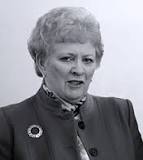
Former NI Police Ombudsman Nuala O'Loan

Former NI Police Ombudsman Nuala O’Loan

So who were these military sources? Nuala O’Loan does not tell us. But here is an interesting coincidence. On April 2nd, 1973 the First Gloucestershire Regiment arrived in Belfast for a four month tour – their second since late 1971, early 1972 – and two days later took over duties from the Queens Lancashire Regiment.

It was standard operational procedure for advance parties to arrive several weeks ahead of the main regimental force and included in them would be an intelligence unit. This was done so that the new regiment would be able to ease in to its new duties. So an intelligence unit from the 1st Gloucesters would likely have been in West Belfast when those reports were sent to the RUC saying that Jean McConville was safe. Did the 1st Gloucesters create those intelligence reports or have any hand in them? We don’t know. Perhaps the information is contained in those embargoed War Diaries. That’s another reason they should be opened.

As I say, the war diary may reveal absolutely nothing about Jean McConville at all, in which case her surviving family have everything to gain by knowing this. And so do the First Gloucesters, whose name deserves to be cleared if the regiment is innocent of any suspicion attached to it.

But if the diary does reveal information that the family would probably regard as unwelcome then they and everyone else will have to deal with it. We need to know the truth about what happened to Jean McConville. Hiding facts behind embargoes is unacceptable when others are being forced by legal measures to disclose theirs. Equally, lying about the past by those involved in these events is as intolerable as continuing to exploit an agent whose cover has been blown.

One way or another we need to know what is written in the embargoed War Diaries of the First Gloucestershire regiment.