Hat tip to Mick Browne for directing me to this YouTube video of a rare home movie of the June 1969 Bodenstown commemoration made by Terry McMillen. It is a fascinating piece of film made just two months before the Loyalist incursions of August 1969 which would split the Republican movement and divide many of those marching that day to honour Wolfe Tone, the founding father of Irish Republicanism.
One of the striking aspects of the day is the sheer size of the crowd, surely not usually as large as this and very possibly a reflection of the sense of impending crisis North of the Border, and very quickly South of it too, and the huge boost all that would give to armed republicanism.
Leadership figures are easy to spot and identify. Cathal Goulding, then Chief of Staff, is there chatting at one point to Belfast Adjutant Jimmy Sullivan. Tomas MacGiolla, Seamus Costello and Billy McMillen, then OC of Belfast are all on or around the platform.
Less certain are the identities of figures who were less well known at that time but who would later make major marks on Irish history. Readers are invited to submit their views but here are a couple of conjectural spots by myself and others who have viewed the video.
For example, is this person in this screen grab Ruari O Bradaigh, soon to be one of the leaders of the Provisional split from the IRA and Sinn Fein, who then led another split away from the Provos in 1986? O Bradaigh died last year. He can be seen at 12:22 minutes into the film. Here he is, I think:
Is this Ruairi O Bradaigh?
Someone else has spotted a person they believe to be Charlie Bird, the famous RTE broadcaster who in those early days was better known for his radical socialist views. Bird later outraged some of us in the media when he quit as father of the NUJ chapel at RTE when the union decided to join a British challenge to censorship laws at the European Commission on Human Rights. Anyway make your own minds up:
Charlie Bird?
The most intriguing figure in the home movie appears just after six minutes. He is marching behind the colour party and can be seen on the viewer’s right. It looks very much like Gerry Adams, at least to me. He would then have been just 20 or 21 years old and still working as a barman at the Duke of York’s in Belfast. Have a look, make your own minds up and please send your views in. Here he is:
Is this Gerry Adams, wearing classes, on the right?
And here is the full video which is a really fascinating piece of history. Full credit to Terry McMillen for making it available. Enjoy:
AS USUAL I HAVE UPDATED HERE AND THERE AS I CONTINUALLY RE-READ, ALL THE TIME HOPING TO IMPROVE AND REFINE WHERE NECESSARY– I DON’T CARE ABOUT BLOGGING PROTOCOL THAT MUCH SO I HAVEN’T DETAILED THE CHANGES.
This is a captivating extract from Empire of Secrets, an account of British intelligence in the dwindling years of empire, written by Calder Walton, and published last year which details the struggle between Zionist armed groups, principally the Irgun and the Stern Gang, and British intelligence in Palestine in the decade or so before the creation of the Israeli state in 1947. I came across it on the Foreign Policy magazine website this morning and because of some intriguing Irish linkages, thought brokenelbow.com followers would enjoy reading it.
The story is calculated to infuriate and exasperate pro-Israel neoconservatives, especially those lurking in think tanks associated with Cameron’s Tory party in Britain, because of the history of co-operation between extreme Zionism and the IRA that Walton traces.
Not only were many of the Zionist military tactics in 1940’s Britain and Palestine drawn from pre-war IRA bombing campaigns in Britain but the Irgun was re-organized “on IRA lines”, according to Walton, by Robert Briscoe, father of Fianna Fail TD and Mayor of Dublin Ben Briscoe, who travelled secretly to Britain in the pre-war years to meet and advise Irgun representatives.
Briscoe Senior, himself a Fianna Fail TD for many years, had impeccable IRA credentials. He accompanied Eamonn de Valera to the USA on a lengthy fund-raising trip during the Anglo-Irish war and also was sent by Michael Collins to Germany in 1919 to procure arms for the IRA. A former Chief of Staff of the IRA’s boy scouts, na Fianna Eireann, Eamonn Martin was Briscoe’s best man at his wedding and he hated the British, describing himself in a memoir as a self-appointed professor holding “the chair of subversive activities against England”.
Another Irish Jew who strongly supported both Irish Republican and Zionist terrorism was Isaac Herzog, the former Chief Rabbi of Ireland who emigrated to Palestine in 1936 where he was appointed to the chief rabbinate, the most powerful clerical position in the Jewish world. MI5 kept him under close surveillance and asked the Irish police to keep tabs on Briscoe.
The idea that Zionist extremists could draw inspiration from and co-operate with a group like the IRA rather than the pro-British Unionists, and that both could happily regard Britain as their common foe, is clearly a mind-blowing thought for neocons.
This part of the story of Israel’s origin has been airbrushed almost out of existence for two very good reasons: bad enough that Israel’s more violent founders made common cause with people linked in the modern popular mind with likes of Col Gaddafi but the ending of the IRA’s war carries some uncomfortable implications for the neocons.
If the IRA’s conversion to peaceful ways is genuine (or even an admission of failure or inability to win) then so could the Palestinians’, and if that is the case then Israel’s refusal to come to final terms with the Palestinians becomes impossible to justify. Far better to depict the IRA as Arab-loving irreconcilables whose alleged conversion to peaceful ways is at best ingenuous, at worst legerdemain – just like the Palestinians – whose deceit and duplicity can only succeed if faced by government weakness and timidity. Hence Israel’s staunch refusal to be beguiled into a deal with Palestinians stands in sharp contrast to Britain’s abject post-colonial capitulation to the IRA’s peaceniks. The essential neocon gospel, which says that negotiations with terrorists must never happen, is undermined by the Zionist-IRA romance. (A classic expression of this neocon attitude towards recent events in Ireland can be found here)
The truth of course is staggeringly simple: armed groups are deeply pragmatic at heart; not only will they always make alliances that benefit them most – and both the Zionist extremists and the IRA entertained alliances during their most violent days that embraced the full ideological spectrum – but they knew when it was time to hang up the guns, embrace respectability and take power, the Zionists because they won, the IRA because they never could. Neocons can just not afford to view such groups, even those from which they have sprung, as self-servingly rational in this way. To do so risks collapsing their world. So far better that such history be forgotten or rewritten.
Although Walton does not deal with this aspect of the relationship, the Zionist-IRA connection arguably worked both ways. Many people have wrongly assumed, myself included, that the IRA invented the car bomb in the early 1970’s; in fact it was the Irgun and the Stern gang which first used them in Palestine. The IRA was copying a tactic devised by Zionist groups.
Equally, the Irgun’s tactic of infiltrating bombing teams into Britain by ordering members to join the British services was copied by the IRA in the run up to the 1956-62 campaign when undercover IRA members helped stage significant arms raids on British Army installations. And the IRA’s bombing of the Grand Hotel in Brighton in 1984, which nearly killed British prime minister Margaret Thatcher, could almost have been a carbon copy of the Irgun’s bombing of the King David hotel in Jerusalem in 1946 which killed 91 people. The IRA aimed to wipe out the British cabinet; the Irgun’s target was Britain’s administrative headquarters in Palestine as well as the command post of MI5 and MI6.
And like Irgun’s leader Menachim Begin and Stern gang’s Yitzhak Shamir, IRA leaders from Michael Collins and Eamon de Valera to Gerry Adams and Martin McGuinness all eventually recanted their violent ways to embrace respectability and political power.
Anyway, here is Walton’s chapter on Zionism’s war with British Intelligence. Enjoy:
How Zionist Extremism Became British Spies Biggest Enemy
In World War II’s aftermath, MI5 turned to fight a new threat. It wasn’t the Soviets. It was bombers from Jerusalem. BY CALDER WALTON
The years after World War II were not kind to Britain’s intelligence services — especially MI5, its domestic counterintelligence and security agency. In the name of austerity, funding of the nation’s intelligence services was slashed, their emergency wartime powers removed, and their staff numbers drastically reduced. MI5’s ranks were reduced from 350 officers at its height in 1943, to just a hundred in 1946. Its administrative records reveal that it was forced to start buying cheaper ink and paper, and its officers were instructed to type reports on both sides of paper to save money. And there were some serious discussions within the government, as there had been after World War I, about shutting MI5 down altogether.
Unfortunately for MI5, in the post-war years it faced the worst possible combination of circumstances: reduced resources, but increased responsibilities. After the war Britain had more territories under its control than at any point in its history, and MI5 was responsible for security intelligence in all British territories.
But MI5’s most urgent threat lay not in its diminished resources, nor from its new Soviet enemy. Recently declassified intelligence records reveal that at the end of the war the main priority for MI5 was the threat of terrorism emanating from the Middle East, specifically from the two main Zionist terrorist groups operating in the Mandate of Palestine, which had been placed under British control in 1921. They were called the Irgun Zevai Leumi (“National Military Organization,” or the Irgun for short) and the Lehi (an acronym in Hebrew for “Freedom Fighters of Israel”), which the British also termed the “Stern Gang,” after its founding leader, Avraham Stern. The Irgun and the Stern Gang believed that British policies in Palestine in the post-war years — blocking the creation of an independent Jewish state — legitimized the use of violence against British targets. MI5’s involvement with counterterrorism, which preoccupies it down to the present day, arose in the immediate post-war years when it dealt with the Irgun and Stern Gang.
Irgun’s crest
MI5’s involvement in dealing with Zionist terrorism offers a striking new interpretation of the history of the early Cold War. For the entire duration of the Cold War, the overwhelming priority for the intelligence services of Britain and other Western powers would lie with counterespionage, but as we can now see, in the crucial transition period from World War to Cold War, MI5 was instead primarily concerned with counterterrorism.
As World War II came to a close, MI5 received a stream of intelligence reports warning that the Irgun and the Stern Gang were not just planning violence in the Mandate of Palestine, but were also plotting to launch attacks inside Britain. In April 1945 an urgent cable from MI5’s outfit in the Middle East, SIME, warned that Victory in Europe (VE-Day) would be a D-Day for Jewish terrorists in the Middle East. Then, in the spring and summer of 1946, coinciding with a sharp escalation of anti-British violence in Palestine, MI5 received apparently reliable reports from SIME that the Irgun and the Stern Gang were planning to send five terrorist “cells” to London, “to work on IRA lines.” To use their own words, the terrorists intended to “beat the dog in his own kennel.” The SIME reports were derived from the interrogation of captured Irgun and Stern Gang fighters, from local police agents in Palestine, and from liaisons with official Zionist political groups like the Jewish Agency. They stated that among the targets for assassination were Britain’s foreign secretary, Ernest Bevin, who was regarded as the main obstacle to the establishment of a Jewish state in the Middle East, and the prime minister himself. MI5’s new director-general, Sir Percy Sillitoe, was so alarmed that in August 1946 he personally briefed the prime minister on the situation, warning him that an assassination campaign in Britain had to be considered a real possibility, and that his own name was known to be on a Stern Gang hit list.
The Irgun and the Stern Gang’s wartime track record ensured that MI5 took these warnings seriously. In November 1944 the Stern Gang had assassinated the British minister for the Middle East, Lord Moyne, while he was returning to his rented villa after a luncheon engagement in Cairo. Moyne’s murder was followed by an escalation of violence in Palestine, with incidents against the British and Irgun and Stern Gang fighters being followed by bloody reprisals. In mid-June 1946, after the Irgun launched a wave of attacks, bombing five trains and 10 of the 11 bridges connecting Palestine to neighboring states, London’s restraint finally broke. British forces conducted mass arrests across Palestine (codenamed Operation Agatha), culminating on June 29 — a day known as “Black Sabbath” because it was a Saturday — with the detention of more than 2,700 Zionist leaders and minor officials, as well as officers of the official Jewish defense force (Haganah) and its crack commandos (Palmach). None of the important Irgun or Stern Gang leaders was caught in the dragnet, and its result was merely to goad them into even more violent counteractions. On July 22, the Irgun dealt a devastating blow, codenamed Operation Chick, to the heart of British rule in Palestine when it bombed the King David Hotel in Jerusalem, which housed the offices of British officialdom in the Mandate, as well as serving as the headquarters of the British Army in Palestine.
The bombing was planned by the leader of the Irgun, Menachem Begin, later to be the sixth prime minister of Israel and the joint winner of a Nobel Peace Prize. On the morning of July 22, six young Irgun members entered the hotel disguised as Arabs, carrying milk churns packed with 500 pounds of explosives. At 12:37 p.m. the bombs exploded, ripping the facade from the southwest corner of the building. This caused the collapse of several floors in the hotel, resulting in the deaths of 91 people. In terms of fatalities, the King David Hotel bombing was one of the worst terrorist atrocities inflicted on the British in the twentieth century. It was also a direct attack on British intelligence and counterterrorist efforts in Palestine: both MI5 and SIS — the Secret Intelligence Service, also known as MI6 — had stations in the hotel.
The King David Hotel after the Irgun bombing attack
In the wake of the bombing, the Irgun and the Stern Gang launched a series of operations outside Palestine, just as the reports coming into MI5 had warned. At the end of October 1946 an Irgun cell operating in Italy bombed the British Embassy in Rome, and followed this in late 1946 and early 1947 with a series of sabotage attacks on British military transportation routes in occupied Germany. In March 1947 an Irgun operative left a bomb at the Colonial Club, near St Martin’s Lane in the heart of London, which blew out the club’s windows and doors, injuring several servicemen. The following month a female Irgun agent left an enormous bomb, consisting of 24 sticks of explosives, at the Colonial Office in London. The bomb failed to detonate because its timer broke. The head of Metropolitan Police Special Branch, Leonard Burt, estimated that if it had gone off it would have caused fatalities on a comparable scale to the King David Hotel bombing — but this time in the heart of Whitehall. At about the same time, several prominent British politicians and public figures connected with Palestine received death threats from the Stern Gang at their homes and offices. Finally, in June 1947, the Stern Gang launched a letter-bomb campaign in Britain, consisting of 21 bombs in total, which targeted every prominent member of the cabinet. The two waves of bombs were posted from an underground cell in Italy. Some of those in the first wave reached their targets, but they did not result in any casualties. Sir Stafford Cripps was only saved by the quick thinking of his secretary, who became suspicious of a package whose contents seemed to fizz, and placed it in a bucket of water. The deputy leader of the Conservative Party, Sir Anthony Eden, carried a letter bomb around with him for a whole day in his briefcase, thinking it was a Whitehall circular that could wait till the evening to be read, and only realized what it was when he was warned by the police of the planned attack, on information provided by MI5.
The problem for MI5 in London, and local security forces in Palestine, was the extremely difficult nature of detecting and countering the Irgun and the Stern Gang. Both groups were organized vertically into cells, whose members were unknown to those in other cells, and whose extreme loyalty meant they were nearly impossible to penetrate. As one of MI5’s leading officers dealing with Zionist terrorism, Alex Kellar noted in one MI5 report, “these terrorists are hard nuts to crack, and it is by no means easy to get them to talk.” To complicate matters further, they also frequently made use of false identities and disguises. Female agents used hair dye or wigs to alter their appearance, while male agents were known to dress as women to elude security patrols.
Menachem Begin was known to travel under several aliases, and in the wake of the King David Hotel bombing he managed to elude the Palestine police and the bounty on his head by a series of clever disguises. In November 1946, the Palestine police produced alarming reports that he might be traveling incognito to Britain. Then, in early 1947, the alarm reached fever pitch when SIS sent a report to MI5 warning that Begin was thought to have undergone plastic surgery to alter his appearance, though as the report dryly concluded, “we have no description of the new face.” The story soon leaked to the press, with the News Chronicle running the headline “Palestine Hunting a New Face,” and sarcastically noting that although Begin might have changed his appearance, it was “likely that the flat feet and bad teeth have remained.” As it turned out, the reports of Begin’s plastic surgery were inaccurate: they were caused by confusion within the Palestine police (CID) when comparing photos of him. Begin had not actually left Palestine, but had grown a beard and disguised himself as a rabbi, evading the local police by concealing himself in a secret compartment in a friend’s house in Jerusalem. When he agreed to give a secret interview to the author Arthur Koestler, he did so in a darkened room: Koestler vainly attempted to counter this by drawing heavily on his cigarettes, hoping to generate enough of a glow to catch a glimpse of Begin’s appearance.
Begin as prime minister of Israel
The situation was made all the more alarming for MI5 by the fact that members of the Irgun and the Stern Gang were known to have served in British forces during the war. With bitter irony, some of them had been trained by Britain’s wartime sabotage agency, SOE, and its foreign intelligence services, SIS, while serving in the elite Palmach commando unit of the Jewish paramilitary organization, the Haganah. Just like the former members of a number of other guerrilla groups the British armed during the war, such as communist forces in Malaya, the Irgun and the Stern Gang used their training in explosives and other paramilitary warfare against their former masters. Reports landing on MI5’s desks throughout the summer of 1946 warned that Irgun and Stern Gang fighters were likely to be still serving within British military ranks, and were planning to use that as a cover to travel to Britain. MI5 was thus faced with the real possibility that terrorists could arrive in Britain wearing British military uniforms.
***
With these startling reports coming into its London headquarters, MI5 devised a range of measures to prevent the extension of Zionist terrorism from Palestine to Britain. These have left few traces within records previously in the public domain, but as we can now see from MI5’s own records, they were often extremely elaborate. The front line of its counterterrorist defense was what was termed “personnel security,” which involved making background checks and scrutinizing visa applications for entry into Britain. On MI5’s recommendation, all visa applications made by Jewish individuals from the Middle East were immediately telephoned through to MI5 for checking against its records before the applicants were permitted entry. MI5 also conducted a series of background vetting checks against its records on approximately 7,000 Jewish servicemen known to be in the British armed forces. This led to the identification of 40 individuals with suspected extremist sympathies, 25 of whom were discharged from the armed forces. MI5’s security measures also involved heightened inspections at ports and other points of entry to the United Kingdom, to each of which an MI5-compiled “Index of Terrorists” was distributed, while on its advice Scotland Yard ratcheted up its protection of many leading political and public figures, and increased the number of officers detailed to guard Buckingham Palace. In October 1947 a senior Palestine police CID officer, Maj. John O’Sullivan, traveled to London and provided MI5 with microfilm photographs of terrorist suspects that were added to the index. Some of these mug-shots are today held with unconcealed pride by former Irgun and Stern Gang members.
The Grand Hotel, Brighton in the aftermath of the 1984 bombing attack against Margaret Thatcher’s cabinet
At the same time as these “personnel security” measures, which were designed to frustrate the entry of terrorists or terrorist sympathizers into Britain, MI5 embarked on the intensive surveillance of extremist Zionist political groups and individuals who were already there. Its assumption in doing this was that Irgun or Stern Gang operatives who succeeded in gaining entry to Britain would at some point make contact with these organizations or individuals, and therefore scrutinizing their activities could provide crucial leads to tracking them down. MI5 also assumed that agents would make contact with elements of the diaspora Jewish community in Britain. These assumptions would prove correct.
To investigate Zionist groups and individuals in Britain, MI5 used the full repertoire of investigative techniques at its disposal. At the heart of its investigations were Home Office Warrants, which allowed for mail interception and telephone taps. In the post-war years MI5 imposed HOWs on all the main Zionist political bodies in Britain: the Jewish Agency for Palestine, the Jewish Legion, the Jewish-Arab Legion, the Zionist Federation of Jewish Labor and the United Zionist “Revisionist” Youth Organization. The last of these, in particular, caused a good deal of alarm within MI5. Some of its members addressed local Jewish clubs in North London with firebrand speeches against the British, fusing religion with politics. Another source of concern was the Jewish Struggle, a Zionist “Revisionist” publication based in London that frequently reprinted extremist Irgun propaganda from Palestine, typically denouncing the British as “Nazis” and advocating the use of violence. MI5’s fear was that the Jewish Struggle would act as a recruiting platform for future terrorists in Britain. In December 1946 Alex Kellar and MI5’s legal advisor, Bernard Hill, met the director of public prosecutions, and decided that, although there was insufficient evidence to prosecute, they would officially warn the editors of the Jewish Struggle that if they continued to publish Irgun material, their periodical would be shut down. The Jewish Struggle appears to have ceased publication soon after.
Another major source of MI5’s counterterrorist intelligence in the post-war years were moderate Jewish and Zionist groups, both in Palestine and Britain. It forged close links with the body officially responsible for representing Zionist wishes to the British government, the Jewish Agency. In fact, MI5’s policy toward the Jewish Agency was duplicitous: it cooperated with it, but at the same time kept it under close surveillance, running telephone and letter checks on its London headquarters even while it was liaising with its officers. The reason for this was that although MI5 trusted the agency’s security officials, it suspected that its broader staff and membership might contain Irgun and Stern Gang supporters. The willingness of the agency to provide the British with intelligence on the Irgun and the Stern Gang reveals the extent to which those groups’ activities were not supported by the majority of the Jewish population in Palestine — and this, it should be noted, has no parallel in contemporary Arab and Islamist terrorism. The bombing of the King David Hotel brought the coordinated Hebrew Resistance Movement, which had been forged between the Haganah, the Irgun and the Stern Gang, to an end. The Irgun’s bombing operation was not approved by the Haganah, and after July 1946 it therefore began providing the British with intelligence on the Irgun and the Stern Gang, and helped British security personnel to hunt them down.
In Palestine itself, MI5’s liaison officer stationed in Jerusalem in the post-war years, Henry Hunloke, a former Conservative MP, maintained close liaison with Jewish Agency officials, and acquired valuable intelligence from them, for example on suspected terrorists clandestinely entering or leaving Palestine. One of the agency officials from whom both MI5 and SIS (MI6) received counterterrorist intelligence was Reuven Zislani, who worked in the foreign intelligence department of the Jewish Agency. After 1948 Zislani changed his name to Reuven Shiloah and became the first head of Israel’s foreign intelligence service, the Mossad. In its efforts to establish contacts with Jewish Agency officials in Britain, MI5 used a series of go-betweens, or “cut-outs.” Although the declassified documentation is presently incomplete, it seems likely that the Jewish Agency representative who met MI5’s cut-out in London was Teddy Kollek, later a long-standing and celebrated mayor of Jerusalem, who during the war had become the deputy head of the Jewish Agency’s intelligence department. Kollek is known to have provided MI5 with counterterrorist intelligence in Palestine: for example, in August 1945 he revealed the location of a secret Irgun training camp near Binyamina, and told an MI5 officer that “it would be a great idea to raid the place.” The information he provided led to the arrest of 27 Irgun fighters, including the father of a later Israeli cabinet minister.
Some of the meetings held in March 1947 between the Jewish Agency official — probably Kollek — and MI5’s cut-out, known in the declassified records by his codename, Scorpion, took place in London’s finest restaurants. One was over a lavish meal of “oysters, duck and petit pots de creme au chocolat,” while another featured gin and “rich red roast beef .” The meetings did produce some intelligence on Irgun and Stern Gang fighters suspected of being about to leave Palestine, whose names MI5 placed on “watch lists” at British ports and airports. Despite the value of this information, one MI5 officer could not help noting that his mouth started to water when he read Scorpion’s reports. After all, this was a time when, in Austerity Britain, bread rationing was in place.
***
As the terrorist threat intensified, MI5 became increasingly worried about the support shown by foreign groups, and even foreign powers, to the Irgun and the Stern Gang. It did not take much detective work for MI5 to discover that the two groups were receiving technical support from the IRA. One Jewish IRA leader, Robert Briscoe, who was also a member of the Irish parliament, a “Revisionist” Zionist and a future mayor of Dublin, was known by MI5 to support the Irgun, and in his memoirs he recalled that he assisted them in every way he could. Briscoe, who in his own words “would do business with Hitler if it was in Ireland’s good,” made several trips to Britain before the war and met Irgun representatives there. He wrote in his memoirs that he elected himself “to a full Professorship with the Chair of Subversive Activities against England,” and helped the Irgun to organize themselves on “IRA lines.”
In order to enhance the intelligence cooperation on IRA-Irgun-Stern Gang links, in October 1947 MI5 dispatched an officer and a Palestine police officer, Maj. J. O’Sullivan, temporarily in London to brief MI5 on Zionist terrorism, to Dublin. They liaised with the Irish CID, which kept Briscoe under surveillance and passed its findings on to MI5. The former chief rabbi of Ireland, Isaac Herzog, was also an open supporter of both Irish Republican and Zionist terrorism. After his emigration to Palestine in 1936, Herzog rose to arguably the most important position in the Jewish religious world, the chief rabbinate of Palestine. MI5’s DSO in Palestine and the Palestine police both apparently kept a close watch on Rabbi Herzog’s activities. In a manner that encapsulates the tensions that existed between moderates and extremists in both Palestine and Ireland, one of Herzog’s sons, Chaim, disapproved of his father’s collusion with terrorism. In sharp contrast to his father, Chaim Herzog served in British military intelligence on D-Day, went on to help establish the Israeli intelligence community, and eventually became president of Israel.
The stance taken by the U.S. government over Palestine, and in particular the position of Jewish-Americans, sometimes made it difficult for MI5 to obtain cooperation from U.S. authorities on issues of Zionist terrorism. The unambiguous support shown by the U.S. administration toward Zionist aspirations was one of the main factors which led in February 1947 to the British government’s decision to hand the entire matter of Palestine over to the United Nations. More specifically, MI5 knew that some extremist Zionist groups operating in the United States, such as the “Bergson Group” and the “Hebrew Committee for the Liberation of Palestine,” were raising funds and logistical support for the Irgun and the Stern Gang, with explosives and ammunition sometimes being sent in food packages to Britain.
MI5 established a useful working relationship with American military (G-2) intelligence in occupied zones of Europe over clandestine Jewish migration to Palestine and Zionist terrorism, but in general the relationship between British and U.S. intelligence over Zionism was difficult. In March 1948 the high table of the British intelligence community, the Joint Intelligence Committee, noted its reports on Palestine would inevitably be controversial in Washington, and should only be given to the head of the CIA in person, and not left with him. It also advised that other British intelligence reports on Zionist matters should be censored before they were passed on to U.S. authorities. Meanwhile, Operation Gold, run by U.S. Navy intelligence, was intercepting cable traffic with Jewish gun-runners, but this was not shared with Britain, nor was it acted upon by Washington.
One of the few ways in which MI5 was able to receive cooperation from the FBI on Zionist matters was by stressing many prominent Zionists’ connections with communism and the Soviet Union. MI5 believed that several members of the Irgun and the Stern Gang had made their way to Palestine with the aid of Soviet intelligence. Menachem Begin and Nathan Friedman-Yellin, a leader of the Stern Gang, were both of Polish origin, and MI5 rightly suspected that the Soviets had helped them “escape” to Palestine during the war. Several Zionist leaders advocated cooperation with the Soviet Union, including the head of “security” for the Jewish Agency in Palestine, Moshe Sneh, who was aware of, if not actively involved, with planning the King David Hotel bombing. MI5’s suspicions have been confirmed by subsequent research, which shows that on several occasions the Stern Gang appealed to Moscow for aid.
This makes the involvement of the notorious Soviet spy Kim Philby in SIS’s investigations into Zionist terrorism all the more interesting. Philby — Moscow’s longtime agent in the British intelligence services — was, at the time, the head of Section IX in SIS, Soviet counterintelligence. The position afforded him a legitimate interest in the Middle East — an interest that he probably also inherited from his father, the noted Arabist, Harry St John Philby. During the war St John Philby had unsuccessfully attempted to broker a deal for the partition of Palestine, the so-called Philby Plan. Kim Philby’s manipulative agenda in SIS’s Zionist investigations is difficult to determine. On July 9, 1946 SIS circulated a report throughout Whitehall advising that the Irgun was planning to take “murderous action” against the British Legation in Beirut. Almost certainly this was an inaccurate warning of the King David Hotel bombing, which occurred two weeks later.
It was Philby who circulated the report. Philby had less motivation for sabotaging British investigations into Zionist terrorism, however, than he did in other fields. He undoubtedly would have secretly welcomed the terrorist campaign waged in the British Mandate of Palestine as undermining the British empire, but when he was working on Zionist affairs for SIS — and by extension for the KGB — immediately after the war, the Soviet Union’s policy toward Palestine had not yet crystallized. Moscow initially supported the creation of the state of Israel, hoping that it would be a thorn in the side of the “imperialist” West, and the Soviet Union was the first country in the world to recognize Israel when it was established in May 1948. However, Stalin miscalculated: Over the coming years, Israel built up a special relationship with the USA, not with the Soviet Union, and Stalin spent the final years before his death in 1953 consumed with anti-Semitic conspiracy theories. By this time Philby was no longer working on Zionist matters for SIS, and therefore not for the KGB either. In the absence of still- closed KGB archives, Philby’s precise role in Zionist matters must remain a matter for speculation. Nevertheless, Moscow certainly would have been interested to learn, through him, that London suspected Soviet involvement in Zionist terrorism.
***
Together with its counterterrorist operations in Britain, in the immediate post-war years Britain’s intelligence services were also assessing and countering Jewish “illegal” immigration to Palestine. In fact, MI5 and SIS helped to shape the British government’s overall response to this immigration. In 1939 a quota system was established which limited the number of Jewish immigrants to Palestine to 7,500 per year. Immigration above that number was termed “illegal” by the British government. Then as now, “illegal immigration” was a term fraught with controversy, and a fierce debate about it raged between Zionist politicians and the British government. MI5’s role in it was not to debate the moral and legal aspects of Jewish immigration into Palestine, but to produce dispassionate assessments for Whitehall about its security implications.
MI5’s overall assessment was that mass Jewish immigration to Palestine would almost certainly cause civil war between Jews and Arabs, as it had threatened to do during the “Arab Revolt” in the 1930s. The main policy devised by the British authorities to prevent “illegal” immigration was to intercept refugee ships. Detention centers were established in Cyprus to house intercepted refugees, who were then permitted to enter Palestine through the quota system. This was, however, another public relations disaster for the British government, whose critics accused it of establishing “Nazi-style concentration camps.” The British also deported some Irgun and Stern fighters to detention centers in Eritrea, which again attracted claims that they were no better than the Nazis. Such criticism sometimes came from surprising quarters, not least from the assistant secretary at the Colonial Office, Trafford Smith, who privately detailed his despair:
The plain truth to which we so firmly shut our eyes is that in this emergency Detention business we are taking a leaf out of the Nazi book, following the familiar error that the end justifies the means (especially when the means serve current expediency). We are out to suppress terrorism, and because we can find no better means we order measures which are intrinsically wrong, and which, since their consequence is evident to the whole world, let us in for a lot of justifiable and unanswerable criticism.
Rather than pursuing the ill-conceived and counterproductive measures of deporting and detaining Jewish refugees, MI5 advised the cabinet and the chiefs of staff to concentrate their efforts on preventing “illegal” immigration “at source.” With the assistance of SIS, MI5 identified a number of South American and Greek shipping companies that chartered vessels to Jewish refugees, and the Foreign Office was able to exert pressure on these governments to prevent companies registered in their countries from carrying out this practice. The operations appeared to have an impact. An MI5 report stated that by 1948 “only 1 out of some 30 ships carrying illegal immigrants reached their destination.”
While MI5 made assessments and was involved in defensive measures to counter unrestricted Jewish migration to Palestine, Britain’s other intelligence services attempted actively to subvert the flow of migrants. In February 1947 SIS carried out an operation, appropriately codenamed Embarrass, for “direction action.” A small team, mostly comprised of former SOE personnel, was recruited to attach limpet mines to refugee ships and disable them before they could set sail. In the summer of 1947 the team mined five ships in Italian ports — having first checked that no one was on board. Nevertheless, if Operation Embarrass had been made public, the fact that SIS agents were mining boats containing Holocaust survivors would have been disastrous for the British government.
Operation Embarrass did not stop there. When some of the mines were discovered, SIS blamed them first on a fictitious Arab opposition group, the “Defenders of Arab Palestine,” and then on the Soviet government. It obtained typewriters that were known to be used by dissident Arab groups and Soviet authorities, and used them to type letters implicating both groups, which it then carefully leaked around Whitehall. In a further twist, SIS made it appear that the British government was using the traffic of Jewish refugees to get its own agents out of Europe, hoping thereby to get the Soviets to block the flow of migrants to Palestine. SIS therefore attempted to deceive not only Jewish refugees, Arab opposition groups and the Soviet government, but the British government itself. This was truly the stuff of smoke and mirrors. Britain’s policy of limiting Jewish immigration to Palestine, both overt and covert, was beset with controversy and resentment. It was, however, symptomatic of a much deeper problem that undermined British rule in Palestine: Britain was faced with a range of contradictory demands regarding the future of the Mandate — from Jews, Arabs and world opinion at large.
In early 1946 an Anglo-American committee of inquiry was appointed to find a settlement in Palestine, but despite the best efforts of its members, who in April 1946 recommended that a compromise be found so that Jews should not dominate Arabs in Palestine, nor Arabs dominate Jews, the committee’s findings were not accepted by either party. By September 1947 the JIC in London was painting a gloomy picture for the British government of the future of the Mandate, concluding that any settlement would be unacceptable either to Jews or Arabs. Britain found itself in a situation that was rapidly becoming ungovernable. In 1947 100,000 troops — one-tenth of the military manpower of the entire British empire — were tied down in Palestine, a financial burden that London could not afford.
UPDATE: ANOTHER PHOTOGRAPH HAS BEEN SUPPLIED BY MICK BROWNE. SEE BELOW.
I am grateful to the family of one of Paddy Joe Crawford’s fellow orphans for the following photographs of the 22-year-old who was hanged to death by fellow IRA inmates in Cage Five of Long Kesh internment camp in June 1973.
As readers of this blog will know the IRA lied to the world about how and why PJ, as he was known to friends, died. The false story was circulated that he had committed suicide but the reality, an open secret in IRA circles, was that he had been sentenced to death without any due process for the alleged offence of breaking during interrogation. The truth was finally revealed in Brendan Hughes’ interviews with Boston College and published in 2010.
I recently wrote on this blog about a song that had been written about Crawford’s murder by Belfast songwriter Dave Thompson and reproduced his Mass card with the comment that this might be the only photograph of the dead man in existence. That prompted the son of a man who had been in two orphanages with PJ to email me to correct my mistake and generously offer to send me a couple of the photos of him in his possession. My thanks to him and his family.
The photos were taken at reunions in 1971/72 of boys who had been brought up by the Poor Sisters of Nazareth at the Nazareth Lodge in South Belfast and the De La Salle home run by the Christian Brothers in Kircubbin, Co. Down.
Catherine has a somewhat more jaundiced view of Alec Reid, one fashioned by the cleric’s extraordinary intervention in the wake of the vicious beating of Geoff Commander, a family friend and campaigner for the truth about her brother’s death, an intervention made on behalf of those who had administered the beating not the victim.
As this posting appears, the former US diplomat Richard Haass is in the final stages of negotiating an agreement with Northern Ireland’s politicians that will propose a way of dealing with the past, specifically designed to establish the truth of who did what to whom and why during the Troubles. We shall see if the agreed process, assuming there is one, is capable of telling the truth about Robert McCartney’s death.
Catherine McCartney, pictured at the time of her brother’s death
By Catherine McCartney
The death of Alec Reid has brought with it the usual outpourings of inflated eulogies and unexamined claims about the life of the Redemptorist priest. Media, politicians, church and the Catholic faithful lined up to pay homage to the humanity of this great man while the presence of unionist politicians at his funeral was hailed as illustrative of the fruition of his peace work.
I hadn’t heard of Alec Reid before 2005 and news of his death evoked a different emotion in me. In January of that year my brother Robert was murdered by the IRA outside a Belfast bar, stabbed to death in the most cowardly way and the killing covered up using the full resources of the IRA and its leadership. Ordinarily the murder of a man such as Robert, a working class Catholic from a republican ghetto – Short Strand, the smallest and most vulnerable Catholic area in Belfast – who was killed by his own, would have warranted little attention. However various factors combined to make the fall out a little more extraordinary.
First, was the reaction of my family. We went public, naming the IRA as responsible and demanding his killers be brought to justice – as did the community. For them Robert’s murder could not be placed within an ‘excusable context’ i.e. punishment beating for drug dealing or some other charge, an attitude that indicated that people in Short Strand were fed up with the IRA’s thuggish treatment of them.
Second, his murder came on the heels of the Northern Bank robbery in December 2004 just before Robert’s murder. The cockiness of the IRA at a time when it was supposed to be moving towards decommissioning its weaponry, was a result of the destructive approach that both the British and Irish governments had adopted to IRA criminality for the previous decade. Both London and Dublin had decided to ‘turn a blind eye’ to IRA excesses on the grounds that the Provo leadership needed to reassure its grassroots that no sellout was planned; every now and then a robbery or a killing served to give that reassurance and both governments were complicit in the deceit.
But the robbery put the brakes on the infamous ‘peace process train’ and many commentators concluded that it could be years before there was any further movement. The fall out from Robert’s murder presented an opportunity to the establishment to start the train up again.
As a result the IRA/Sinn Fein came under pressure from the political establishment and our campaign was an instrumental cause of this. They, that is the Provisional leadership, viewed Robert‘s murder as an inconvenience and they were damned if they were going to allow it to lessen any leverage they held within the process.
The IRA leadership’s core objectives were: protecting the murderers, shutting the family up and maintaining control of the community.
Between January and October of that year we received three death threats, there were bomb warnings, and pickets were placed outside the house; eventually we had to move out of Short Strand where we had been born and bred. Essentially it was us against the might of the IRA.
The climax to the intimidation came in September. The community remained angry at Robert’s murder and this spilled over into an altercation with local IRA thugs. This signaled a loosening of the IRA’s grip. To bring the community back into line and steady the ‘green jackboot’ on the necks of the people Geoff Commander, a friend of Robert’s, was brutally attacked by up to eight men as he walked home alone one night.
Geoff refused to be bowed and reported the thugs to the police and charges were brought. Various interventions were made by groups and individuals on behalf of the IRA e.g. Community Restorative Justice (this organisation was closely affiliated to the Provos) to dissuade Geoff from proceeding with the case.
These overtures failed and Geoff and his wife Sinead remained steadfast in their determination to get justice. It was into this very intimidating and volatile situation that Fr. Alec Reid stepped. It would be natural to assume that given the circumstances this intervention would have been of a pastoral nature. Being devout Catholics both would have welcomed the support of a priest. But they were to be disappointed.
Alec Reid rang the Commander household and spoke with Sinead. He asked her to persuade Geoff to drop the charges against those charged. He didn’t give any specific reason as to why the men should not face justice; the fate of the peace process didn’t depend on it, the interest of ‘peace’ would not be served by it, the ‘greater good’ was not at stake.
There was no discernible reason given as to why Geoff should allow his brutal attackers escape justice, and not only that but allow the IRA to retain its grip on the community by increasing people’s fear of the consequences of reporting its crimes to the police. Alec Reid didn’t ask after the family. Sinead was flabbergasted at his request and told him: ‘Father my husband could have come home to me in a box, just like Robert McCartney’. He merely muffled acknowledgement of this but repeated his request for consideration of the matter.
This was how I came to know of Alec Reid. Alec Reid chose to stand with those responsible for the murder of an innocent man, the attackers of Geoff and the IRA in the intimidation and isolation of my family. By intervening on behalf of the IRA to have assault charges against Geoff’s IRA attackers dropped, Alec Reid intervened against the vulnerable, against right and against justice.
When I am asked what I think of Alec Reid my simple response is, ‘Provie priest’. In Belfast everyone knows what that means.
The Mass Card reproduced above is the only photograph I was ever able to trace of Paddy Joe Crawford and it may be, for all I know, the only representation of the 22-year old Provisional IRA victim in existence.
There ought to be something very special created to remember him, for his was not only one of the saddest deaths of the Troubles, it ranked as one of the most barbarous. Now a Belfast songwriter by the name of Dave Thompson has done just that and created a fitting memorial. So, I am grateful to have this opportunity to unveil his tribute to, and remembrance of Paddy Joe, a song called ‘Falling’.
But first a few words of explanation.
Accused of informing but denied the opportunity to defend himself, Paddy Joe Crawford was taken by IRA comrades in the internee huts at Long Kesh in June 1973 and hanged – lynched might be a more fitting word – with all the macabre and grisly ceremonial that accompanies such executions. As if that was not enough, the IRA went on to lie about his death, circulating the story that Paddy Joe had taken his own life.
For nearly four decades that lie was pinned to Paddy Joe as firmly as the accusation that he was an informer, although the lie was purely for public consumption; inside the IRA the reality of his death was a well known secret, something most activists knew about but like the deranged sister locked away in the upstairs attic, would never talk about.
The truth of Paddy Joe’s death appears to be that like scores of young men who joined the IRA in those early years of the Troubles – none of whom were ever trained in counter-interrogation techniques – he broke under questioning. But only he was singled out for death, presumably to warn others of what might happen if they spoke too freely to the police or army.
He was not an informer in the accepted sense, he did not act as an agent, regularly passing on information on a group he had infiltrated to handlers he met in secret. Just a frightened boy who blurted out the truth to people in uniforms, authority figures of a sort that had dominated his life ever since he was handed over to a religious order for rearing a mere eleven days after his birth.
It is hard not to believe that it was his orphan status, his lack of a close family that singled him out for hanging by the IRA. Who would care about Paddy Joe Crawford? Who would ask the awkward and necessary questions about the manner of his death? And so Paddy Joe Crawford was disappeared by the IRA, every bit as completely as Jean McConville, Joe Lynskey, Seamus Wright, Kevin McKee or Eamon Molloy.
Until that is Brendan Hughes came forward to tell the truth about his death in interviews with Boston College. I wrote about Paddy Joe Crawford at some length in Voices From The Grave not just because it was a relevant story but because it affected me. It made me angry and sad but not in equal measure; I was furious at the lie that defined the entire rotten episode. I also wrote it in the hope that a new inquest might be held into his death, his name restored and his killers shamed. Alas that has not happened.
But then on November 9th, I got an email from Dave Thompson and his partner Lorraine telling me about the song he had written and recorded. Today I heard from Dave that the final version had been perfected and a CD produced with ‘Falling’ the last song on the recording. So here is the song ‘Falling’, followed by the lyrics, the email I got from Dave Thompson and an extract from Voices From The Grave dealing with Paddy Joe Crawford. Please enjoy ‘Falling’, track ten of ten on ‘Newsprint Sky’ by Dave Thompson:
Lyrics:
Orphaned at eleven days; never settled long in one place.
Hardly had the chance to know, who you’d become.
Raised beside the pebbled shore; then seething city streets once more,
To a back room and a bed, inside a storm.
Hostility let loose, the old world blown apart,
Anger couldn’t be contained, collapsed the house of cards,
You were falling, You were falling.
You were falling, You were falling.
* * * *
Seeking purpose and a wage; finding brothers in the fifth cage,
Until life behind the bars, fell through the cracks.
No resistance, nothing said; no recording of the charges read.
Only voices from outside, a pulse away.
Body trembling as you climb onto, makeshift steps draped in black,
Nothing left for you to hold onto, hands bound tight behind your back.
You were falling, You were falling,
You were falling, You were falling.
* * * *
Milltown lay below a leaden sky; single figures came to say goodbye,
Liked by everyone they said; so how come?
Only a few possessions left; you didn’t even own your death,
Buried in full view, but disappeared.
We turned the decade still in shock, standing on the precipice,
Several hundred lights gone out, we plunged into the abyss,
We were falling, We were falling, falling, We were falling.
Nov 9th email:
Ed,
Hard to find a way to start this email, but here goes…
I read ‘Voices’ in the summer of 2011, and was struck by your account of the death of Paddy Joe Crawford. I have been a quiet, amateur songwriter most of my adult life, and I decided that I would like to respond, in some way, to what you had written and of course to what happened. I made a few notes at the time, but didn’t really get anywhere. I came to these notes last summer and wrote a little more, and then finished the song later in the year. For the life of me, I wasn’t really sure why I was doing it, or what I should do with it…
At the end of June I was asked to perform a short set of songs…..along the theme of the arts and social justice, and so I decided to include this song. It was then I had to think carefully about it. What gave me the right to sit in a pleasantly extended semi-detached house in……Belfast, and write about the life of someone who lived forty years ago in circumstances I knew little about?
The conclusion I came to was that Paddy’s life actually mattered. No political ideology or revolutionary ideal should ever become so big, that the lives of ordinary people are trodden on. Paddy Joe should have been protected. So I played the song as part of the set, and in my introduction I noted my discomfort about trying to say something about a time and incident that I had little understanding of. But I also said that as an artist, you respond to what’s around you. It’s not a song making demands of the Republican movement, it’s my response to what happened, and it continues to tell a story that should be told.
EXTRACT FROM VOICES FROM THE GRAVE, pp 132-145
On Sunday, 3 June 1973, IRA internees housed in Cage 5 of Long Kesh made a gruesome discovery: from a wall heater in the wood-working room of the hut used for recreation hung the lifeless body of one of their comrades, twenty-two-year-old Patrick Crawford from West Belfast, known to everyone as Paddy Joe. His death was regarded then, and ever since, as a suicide, thanks in no small way to the prison authorities’ speedy assertion, issued that same afternoon, that ‘foul play was not suspected’ in the death. That Sunday, IRA internees had taken part in a march and parade to commemorate comrades who had been killed in the Troubles, and so the huts in Cage 5 had seemingly been emptied of their occupants at
page 132
the time of Crawford’s death. When the parade ended, Crawford’s body was discovered by other internees, or at least that is what the story was. One of the first on the scene, within ‘five or ten minutes’ of the grim find, was Father Denis Faul, the Dungannon- based priest who celebrated Mass weekly in the camp for IRA detainees and was a popular figure with the prisoners, thanks to his staunch critique of British security policy and his sympathy for the Republican cause. Some two weeks later, the IRA staff at Long Kesh issued a statement that said that the dead man had been found by two internees immediately after the parade and attempts to revive him were made by prisoners, prison officers and Father Faul. After twenty or thirty minutes these were abandoned and Crawford was declared dead. Paddy Joe, the statement said, was ‘one of the most liked [internees] by all men’.
The suicide theory was widely accepted and Nationalist politicians lined up to blame prison conditions, internment and the British for Crawford’s untimely end. A group of nine priests, led by Father Faul, said the ‘inhuman and degrading conditions of Long Kesh’ had driven Crawford to suicide, adding, ‘Death was his hopeless protest against the whole situation of which Long Kesh is the symbol.’ SDLP leader Gerry Fitt and his colleague Paddy Devlin called on the International Red Cross to investigate the reasons for his ‘suicide’ – although later Fitt, alone of all the Nationalists, would accuse the IRA of hounding Crawford to death – while the Mid-Ulster MP, Bernadette McAliskey, called for the closure of the prison. The Fermanagh-South Tyrone MP, Frank McManus, said of Long Kesh, ‘The entire camp is a torture chamber .’
But Paddy Joe Crawford did not take his own life. In his interviews with Boston College, Brendan Hughes revealed that the IRA killed Crawford by hanging him, supposedly because he was working as an informer for the British. But Hughes was convinced that his only crime was to break during police interrogation, like countless other young IRA activists who were never punished as harshly. It was, he said, ‘a brutal, brutal murder’.
page 133
Hughes’s belief was that the order to kill Crawford had come into the jail from Gerry Adams, who was still Belfast Commander at the time. Hughes was not present, he admitted, at the Brigade staff meeting that discussed Crawford’s fate and at the time of the hanging he believed that Ivor Bell had sent in the order. But when he discussed the matter with Bell some years later Bell told him that it was Adams who had issued the order, not him. Boston College’s researcher, Anthony McIntyre, interviewed former IRA internees held in Long Kesh at this time in an effort to confirm Hughes’s account and they corroborate his claim that Crawford was hanged. But they say that Adams’s role in the affair was to refer Crawford’s case to GHQ in Dublin which then ordered his death. If true this would mean that, ultimately, permission for the killing was probably given by the then Chief of Staff, Seamus Twomey, the most senior figure on GHQ.
According to this account, the usual IRA procedures for handling accusations of informing were ignored both inside and outside Long Kesh. Although the IRA’s justice system was inherently flawed, Crawford should none the less have been court-martialed and given a chance to defend himself from charges that, inter alia, alleged that he had led British troops to arms dumps and IRA safe houses, and had identified fellow IRA members, admissions he had purportedly made when he was debriefed in Long Kesh by IRA intelligence officers. But he was not court-martialed; instead his life was ended on an improvised gallows by fiat of an IRA leader, whether in Belfast or Dublin it is not certain, and the decision made to lie about what had happened. Whatever the truth about who ordered Paddy Joe Crawford’s execution, it is clear that the Belfast Brigade leadership and the IRA’s GHQ were both fully complicit in his wretched death.
The former IRA members interviewed by McIntyre, who spoke on condition of anonymity, added disconcerting detail to the story. The hanging was accompanied by a macabre ceremonial: a black cloth was draped over the improvised steps from which young Crawford was pitched into eternity and his wrists were taped
page 134
behind his back. Afterwards the cloth, a vital piece of evidence, was removed. They also say that he went meekly to his death. Paddy Joe Crawford was a strong young man and could have fought his executioners – and by so doing could have created enough forensic evidence to cast doubt on the suicide theory – but for reasons still unfathomable, he chose not to resist. Four men helped to hang Crawford. One of them was Harry Burns, known as ‘Big Harry’ to his friends, a prominent Belfast IRA man who was related by marriage to Gerry Adams. During the hanging a group of internees inadvertently burst into the hut and saw everything. Afterwards the word spread among other inmates. ‘Prisoners were simply told he had taken his own life. But people knew, although they did not talk,’ one of the sources told McIntyre.
Paddy Joe Crawford’s death was in one essential respect no different from the deaths of those who had been disappeared before him by the Belfast IRA: Joe Linskey, Seamus Wright, Kevin McKee and Jean McConville. While his body, unlike theirs, was not hidden in a secret grave, the truth about his death was buried just as securely. And he has been disappeared from the death lists of the Troubles as well, made a non-victim by those who ordered and arranged his hanging. Neither Lost Lives nor the Sutton Index of Deaths, the two most extensive and reliable records of Northern Ireland’s death toll, list him among those who were killed in the conflict. Paddy Joe Crawford has simply been forgotten, his story erased from the narrative of the Troubles and, for over three decades, lies told about why and how he died.
Paddy Joe Crawford rightly belongs in the list of the IRA’s disappeared victims because, other than wreaking vengeance on him for his alleged treachery, his death, like theirs, was pointless. Fabricating his suicide meant that killing him could never have a deter- rent effect on other IRA members who might have been tempted to work for the British, since only a very small number of people would know the real facts of his death.
It is difficult not to wonder if the reason why Patrick Crawford was chosen to die, rather than other IRA members who had broken
page 135
during interrogation, was that no one would kick up a fuss afterwards, or ask awkward questions about what had happened, much less campaign for years for the truth. Others who were disappeared, such as Jean McConville, left behind relatives to fight for them and, eventually, they persuaded powerful politicians to back their efforts. Apart from one childhood friend, Paddy Joe Crawford really had no one to fight for him afterwards; he was an ideal candidate to be dis- appeared in the way he was.
Paddy Joe Crawford was an orphan, brought up by nuns in Nazareth House in South Belfast after he was abandoned by his mother. According to records kept by the orphanage, Crawford was born on 5 March 1951 and admitted into care just eleven days later, on 16 March. The Poor Sisters of Nazareth, to give them their formal title, no longer look after children. Nowadays they care for the elderly but in the Belfast of the 1950s and 1960s their convent on the Ravenhill Road was home to scores of rejected waifs. Founded in Hammersmith in London in the mid-nineteenth century, the Poor Sisters built a veritable empire of children’s homes in England, Scotland, Wales and Ireland. The Order spread to America, to Australia, Canada and New Zealand, where more homes were built. Paddy Joe Crawford stayed with the Poor Sisters until he reached the age of eleven, when he was transferred to the De La Salle boys’ home run by the Christian Brothers at Kircubbin on the picturesque eastern shore of Strangford Lough in County Down. He stayed at Kircubbin until he was fifteen years old, the school- leaving age, when he was transferred to digs in West Belfast and a job found for him. He lived with a family in Broadway in the heart of the Falls Road and became a builder’s labourer. He and other orphans from the Nazareth and De La Salle homes were members of St Augustine’s Boys Club, run since the early 1970s by Father Matt Wallace, a Wexford-born priest and one of the most loved and popular clerics in West Belfast. Father Wallace helped Paddy Joe Crawford get a job, gave him the last rites an hour after he died and officiated at his funeral, during which his coffin was carried by members of the youth club. To this day Father Wallace tends his
page 136
grave in Milltown cemetery and that of other Nazareth and De La Salle boys killed in the Troubles.
Like other Catholic religious orders in Ireland and around the world, the Poor Sisters of Nazareth and the De La Salle Christian Brothers in Kircubbin have both been embroiled in scandals arising out of allegations from former residents of physical and mental cruelty, of neglect and sexual molestation. Legal suits against the Poor Sisters have been filed as far apart as Aberdeen in Scotland and San Diego in California, where in 2007 former Nazareth residents won part of a $198 million settlement against the local Catholic hierarchy. One elderly Poor Sister from Scotland was convicted in 2000 of cruelty, and former inmates of the Scottish homes have been financially compensated for their ordeals. Former residents of the Belfast home are similarly seeking redress for alleged ill-treatment through the courts. The De La Salle Order in Kircubbin has similarly been caught up in scandal. The home was extensively investigated by the RUC in the mid-1980s after allegations surfaced of physical and sexual abuse and a government report published in 1984 strongly criticised management at the home for employing abusers. In 2001 two former residents were awarded £15,000 each in out-of-court compensation for sexual abuse committed when they were sixteen years old and charges were filed but dropped against a former principal at the home alleging buggery and other offences.
Frances Reilly was two years old when her mother left her and her two sisters with the Poor Sisters in Belfast and ran off to England. That was in 1956 and many years afterwards, when she read about the court case in Scotland, she decided to write her life story, a heart-rending account of physical, mental and sexual abuse, which was published in January 2009. It was a story, she claims, no Catholics in Belfast at the time would believe. What makes her story relevant to events in Cage 5 of Long Kesh in 1973 is that she and Patrick Crawford would have been residents at the Belfast home at around the same time – albeit in segregated sections. There is no evidence that Patrick Crawford experienced the sort of physical and
page 137
sexual abuse that Frances Reilly claims happened to her – nor that he was ever abused at Kircubbin – but it is impossible to read her book and not wonder if he did.
As it is, the story of his life and death has to be one of the saddest of the Troubles: abandoned at just eleven days old, he was destined never to know a mother’s love. Instead he was brought up by nuns and brothers, some of whom allegedly ill-treated those in their care, and when he reached twenty-two, his life was brutally ended, hanged in jail by the IRA on disputed charges, and then the truth about his death covered up for over three decades.
How or why Patrick Crawford joined the IRA are questions that cannot now be answered, but it seems that he may have become a member not long before he was interned. He and seven or eight other young men were stopped on the border near Newry by British paratroopers as they attempted to cross to the Republic in a van in April 1973. Their story was that they were on a fishing trip but when the soldiers searched their vehicle they could find only one fishing rod. It looked as if they were really en route to an IRA training camp, and if so this suggests that Crawford was a relatively new recruit. He was arrested, questioned and then sent to Long Kesh.
After Crawford’s death, the IRA in Long Kesh had described him as one of the most liked of prison comrades but it seemed this feel- ing was not shared by the organisation outside the prison. Although an IRA member, he was not given a Republican funeral. There was no Tricolour on his coffin or guard of honour around his cortège and there were no crowds lining the streets around Milltown cemetery to pay respects to or merely gawk in curiosity at this man whom the British had allegedly driven to suicide in Long Kesh. An eyewitness account of the event, given recently to the author by a Sinn Fein member who attended the burial, described a funeral that had been shunned by West Belfast Republicans:
There were just a few people [there], a couple of Nazareth nuns at it, a hearse followed by a single car, that was all. Just members
page 138
of the family who had taken him in and perhaps one or two of their neighbours and friends. There was nobody from the organisation at all, not one single person. I thought it would be a Republican funeral. None of the general public who come out to look at Republican funerals turned out. There wasn’t a soul when I went down. It was really a sad funeral, it was so small. I’ll never forget it. I was the only Republican who went. I was the only one there I knew.
Years later, this Sinn Fein activist was told the truth about Patrick Crawford’s death by a former IRA prisoner: ‘I must have been the only one in West Belfast who didn’t know,’ the source now says.
Inquests on victims of the Troubles have often been the occasion for controversy and further conflict. Juries are limited in the verdicts they can deliver, something Nationalists have long believed is intended to spare the police and military authorities deserved scrutiny. They cannot make a finding such as ‘unlawful killing’, while inquests into some high-profile victims, such as people killed in disputed circumstances by the police or Army or where security- force collusion with paramilitaries has been alleged, have still to be held years after the deaths occurred. The inquest on Paddy Joe Crawford happened with remarkable speed. On Friday, 15 June 1973, just twelve days after his lifeless body had been discovered in Cage 5, a jury sitting in Hillsborough courthouse, a few miles from Long Kesh, delivered a verdict in the Coroner’s Court saying that Crawford had ‘died by his own act’, echoing the prison service’s statement hours after his hanging. His inquest file, provided to the author on foot of a Freedom of Information request, contains no evidence that the authorities harboured suspicions about the way he died or that anything approaching a vigorous investigation of the death had taken place.
Crawford was, his autopsy report said, a young man of ‘strong, muscular build’ and was six feet tall and healthy. He was wearing a blue T-shirt, a green V-necked pullover and a pair of denims, in the back pocket of which was a plastic comb. An RUC Inspector called
page 139
James Black said that his body was hanging by a linen rope, apparently torn from a mattress cover lying on the floor near by, fixed to an iron strut which was attached to the wall of the hut, some ten feet from the floor. Directly underneath the strut were two plastic chairs with boot marks on one of them and near by a steel locker lying on its side. Inspector Black surmised that Crawford had placed one of the chairs on top of the locker and climbed up to secure the linen rope to the strut. A pair of boots, thought to be Crawford’s, were sitting in the centre of the floor and his coat was draped over one of the chairs. There is nothing in the policeman’s deposition to suggest that any check was made on the boots to determine if they were Crawford’s or if they matched the marks on one of the plastic chairs. Nor were any of Crawford’s fellow prisoners questioned.
The IRA Commander of Cage 5, whose name has been redacted in the released documents, refused to give evidence at the inquest but on the evening of the hanging he provided a handwritten statement to a senior prison officer which purported to explain why Crawford might have taken his own life. Along with this, the IRA leader handed over a note found in Crawford’s personal belong- ings which could be read as a suicide letter. The IRA Commander’s account is peppered with anecdotes that reinforced the view that Crawford was behaving irrationally before his death, including a suggestion that he might have killed himself to put a spotlight on conditions in Long Kesh. There is no evidence in the inquest documents, however, that the police attempted to interview the IRA Commander about his statement or any of the inmates mentioned by him, while the question of why the IRA had possession of Crawford’s personal effects instead of the detectives investigating the death was left unasked.
The IRA Commander’s statement read:
The day before his death he made a number of gestures to his friends in Hut 28 that he might be leaving them soon. The first gesture he made was when he gave his pipe to a friend and told
page 140
him to keep it as he would not need it any more. Then in a conversation with his friends he started talking about Long Kesh not getting enough publicity and what it needed was a death to high- light the place. Later on that night he was walking round the cage with a friend and told him that nobody in the cage would talk to him and that they were all against him. This of course is wrong as he got on well with everyone. According to some of the men in Hut 28 he was acting very strange over the past few days, but at no time did anyone think he was about to hang himself. At about 9.00 o’clock that night he went round to the workshop to work on a plaque and he was the last one to leave that night. According to a number of other men he was in the workshop every day for a week before his death and spent long hours in it for reasons unknown. On the morning of his death the Hut O/C woke him up at the normal rising time of 12.00 o’clock and he told the Hut O/C that today would be the last time he would be wakening him. When the O/C asked him what he was talking about, he told him to forget about it. The last time he was seen alive was about 1.55 that day when he was seen walking towards the workshop. At about 2.30 two men went to the workshop to learn music and they found him hanging by a rope from the first heater on the left when you enter the workshop. They then informed me and I ran round and found him hanging there. I then ran to the gate and told the Officer to get a Doctor as a man had hanged himself. When I got back the men and the Officers in the cage had him cut down and tried to help him but it was to [sic] late as he was dead. In his personal belongings he left a note that read, ‘When I lay me down to sleep I pray the Lord my soul to keep and if I die before I wake I pray the Lord my soul to take. God bless everybody. P. J. A. Crawford’. This is all the information I can find. Signed —— O/C Cage 5.
In the context of all that was said in the IRA statement, the two-page note found in Patrick Crawford’s belongings could be regarded as the last words of someone who is about to kill himself.
page 141
Except that the part quoted by the IRA Commander, which has the word ‘poet’ written beside it, is actually a well-known bedtime prayer said by Catholics, something that he would almost certainly have been taught by the nuns in Nazareth House, and evidence only of a Catholic upbringing, certainly not of suicidal tendencies. It is written at the top of the first page, which is headlined ‘Notes’, and underneath the prayer is listed the sort of information that might be given out during a geography or general studies class: a list of the counties of Ireland, its provinces, the two capital cities and some historical sites in Dublin. On the second page Crawford had made a list of precious stones and the countries whose soccer teams played in the 1970 World Cup tournament. All this prompts a question: why would Crawford add all this to a suicide note? It is of course the signature that makes it look as if self-destruction was on Paddy Joe Crawford’s mind when the poem cum prayer was written. After all, suicide notes are always signed, or at least that is what many people believe. But there are problems with this as well. The signature is written at the side of the prayer, not directly underneath, which is where it should have been placed. The line immediately underneath the prayer is where the list of Irish counties begins and the signature seems to have been written by a different pen, as if it was added later. The question is by whom: Paddy Joe Crawford or one of those who hanged him?
It has proved impossible to answer that question and the authenticity or otherwise of Paddy Joe Crawford’s signature remains undecided. To determine properly whether the same or a different hand wrote his name, the original note would have to be examined and the signature expertly compared to other writing on the paper. The inquest file released by the Northern Ireland Court Service is a photocopy and, according to one forensic expert consulted by the author, is useless for this purpose. Only the original copy, which lies in the Court Service’s archive, can tell the full story and permission to release the document to the NI Forensic Laboratory in Carrickfergus was denied. For the moment, the truth remains locked away in the file.
page 142
The real story of Patrick Crawford’s sad and miserable death was for decades an open but never admitted secret among many in the Provo community. His hanging was witnessed by several prisoners and, through them, Paddy Joe Crawford’s murder was known about widely, albeit only by Republican activists. Yet for some thirty-five years they kept it hidden from the rest of the world. Now, thanks to Brendan Hughes, a member of the Belfast leader- ship when the order to kill him was sent into the jail, the truth about Patrick Crawford’s harrowing end can be told.
Patrick Crawford was, well, I don’t even believe he was a tout. He broke during interrogation and then gave intelligence and information to his interrogators. He was then interned and he was put in Cage 5. He was executed by the IRA in the prison; he was hanged. And the order was given by Gerry Adams . . . I believed for a long time that it was Ivor [Bell] but it wasn’t . . . There was no purpose to it. The only reason that you execute someone is [to make] an example and [create] a deterrent to others. To hang someone who broke and then deny it and say he hanged himself was brutal, brutal murder. [During] that period I remember so many . . . going into the cages, kids who had broken . . . When other people broke they were just sent to Coventry. No one spoke to them. They were put in a small hut of their own. It was a brutal regime. And that’s the sort of mentality that brought about the death of Crawford. [If he had lived] Pat Crawford probably would have been on the blanket* as well. I mean, I know so many of them who are grown men now. They were brought into the IRA, they were given a weapon, they were given a bomb, they went out and they did the job well. When they were arrested by the RUC, the Special Branch, or whatever, [and] brought into a room, beaten, interrogated and tortured . . . some of them broke. What do you expect? You don’t hang someone who is going through a war. I mean, if every American soldier or British soldier was hanged for breaking during interrogation by the
* IRA prison protest to restore political status.
page 143
Japanese or by the Nazis, there’d [have been] an awful lot of deaths. I had this understanding because I recruited so many of these young lads. They went out and they did what they were told to do, but they were never trained in anti-interrogation [techniques] or how not to break when they were caught. So I had a lot of sympathy for people like Pat Crawford, and others. And I know so many others, like —— and so forth, who was ostracised in the jail, who was recruited into the IRA when he was fourteen, and was very, very good at operations. There were loads of others, young ones, and some of them broke.
Two people, both of them close to Paddy Joe Crawford, have for years harboured doubts and suspicions about his death. One of them is Father Matt Wallace, who told the author, ‘I remember going to the inquest and it was a routine thing, that he died by his own hand. I was so young and stupid I didn’t even question it at that time but I was never satisfied that Paddy Joe did take his own life. I argued that he was in an institution all his life so Long Kesh would have been easier for him than for other young men at the time because he . . . knew nothing else except institutional life.’
The other is Gerry McCann, a fellow orphan and resident at the same time in both the Nazareth and De La Salle homes, although McCann was six years younger: ‘Paddy Joe was one of the older boys and he would be like a protector for me. If you were being bullied as a five-year-old Paddy Joe would have been there for me and I always got on well with him. He was a bubbly, outgoing per- son, out for a bit of craic but a soft, gentle person. His very presence would lift the atmosphere, full of spontaneous laughter and a teller of jokes. He was a tower of strength to those who knew him well.’ Gerry McCann had suspicions ‘from day one’ that Paddy Joe had been killed in Long Kesh: ‘My gut feeling was that he had been taken out,’ he told the author. But for over thirty years he kept his doubts to himself: ‘I was afraid of going into something that would burn my hands. I was a wee bit gullible [back in 1973] and only later did I realise that this was a minefield.’ McCann made a success of his life
page 144
and now manages a golf club in Belfast. He got married and had a son and as his boy approached his thirtieth year, Gerry McCann felt the need to tell his life story and so he began writing a book which he hopes one day will be published. It was then that he decided to try to find out what really happened to Paddy Joe Crawford, a mission that would send him knocking at Sinn Fein’s door.
In January 2008, Gerry McCann contacted Gerry Adams via the Sinn Fein website to ask for a meeting and, on 7 March, he and the Sinn Fein President got together at the party’s offices on the Falls Road to discuss Paddy Joe Crawford’s untimely death. While Adams’s role in ordering Crawford’s killing is open to question, there seems little doubt that the Belfast Brigade staff, of which Adams was the leading member, did play a central part in the events. But like Jean McConville’s family before him, Gerry McCann met a wall of denial from Gerry Adams. ‘The meeting was very cordial,’ recalled Gerry McCann. ‘I gave him a working document with questions. Was Paddy Joe an IRA Volunteer, which I knew he was, and Adams said he wasn’t. I didn’t believe he took his own life at the time and I still believe that he didn’t take his own life and I told Gerry that. His reply was that under no circumstances was he killed by his own people.’ Adams told McCann that he wasn’t in Long Kesh at that time and had no personal experience of the event but he would try to contact people who were and they might be able to tell him more.
The matter rested there but nothing happened for five months until McCann contacted Sinn Fein to ask when Adams would deliver on his promise. After that he got his second meeting, not with Gerry Adams but with Bobby Storey, who was a seventeen- year-old internee in Cage 6, next door to Paddy Joe Crawford’s cage in June 1973. Bobby Storey is, as Gerry McCann put it, ‘Gerry Adams’s right-hand man’, named in the House of Commons by the former Unionist MP David Burnside as the then Director of IRA Intelligence and the alleged moving force behind some of the IRA’s more spectacular operations in the last years of the peace process. Among the many tasks Storey has undertaken for the Sinn Fein
page 145
leadership was handling the delicate issue of the disappeared, in particular the potentially explosive case of Jean McConville. As Adams had done, Bobby Storey denied any IRA hand in Crawford’s death: ‘I asked him’, recalled McCann, ‘was Paddy Joe taken out by his own people and Bobby’s response was decisive and direct: “Under no circumstances could this tragedy be attached to the movement or any inmates.”’ Gerry Adams had told Gerry McCann that Paddy Joe Crawford wasn’t an IRA Volunteer but the Sinn Fein President’s right-hand man had a different answer: ‘Storey said he was,’ Gerry McCann recalled, ‘which raises the question why there were no Republican trappings at his funeral if he had committed suicide. It beggars belief.’
As everyone reading this blog will know by now Nelson Mandela died this evening New York time, bringing to an end a tumultuous chapter in Africa’s history which saw the end of apartheid in South Africa and the political empowering of the millions of black Africans who were denied the most basic political and economic rights by their white rulers.
Mandela flourishes a revolutionary’s fist
Understandably, much of the media coverage in the coming days will dwell on Mandela’s role as the courageous inspiration and figurehead of the struggle against apartheid – with special emphasis in the West on his allegedly non-violent role – but sadly very little of it will subject the South African state to the sort of scrutiny such a passing demands.
In particular do not expect many in the media to ask whether and to what extent black South Africans really achieved the goals and won the liberation, economic as well as political, that Mandela’s African National Congress (ANC) set out to accomplish at the start of their journey. The death of the leader of the ANC’s revolution is surely the appropriate moment to assess the extent to which they failed or succeeded in this mission.
To compensate for that, here are two aids to the process of judging just what the ANC revolution has really meant for South Africa.
A revolutionary tamed? Mandela with Prince Charles and The Spice Girls
The first is a short but telling biography of Cyril Ramaphosa, the former trade union and ANC leader, compiled by Forbes magazine in its profile of Africa’s richest men. Irish readers will remember Ramaphosa as being one of two international monitors called in to keep a watch on a number of IRA weapons dumps during the early days of decommissioning.
I remember attending a Sinn Fein rally at the Ulster Hall not long after his appointment and it was clear from his performance that evening that his role was to assure the Provo grassroots that no sell out was on its way and that isolating IRA weapons in monitored dumps was essentially meaningless. How could it be otherwise? Cyril Ramaphosa was himself a revolutionary and would never collaborate in such an enterprise!
In a critical sense Cyril Ramaphosa represents the failure of the ANC revolution to liberate the black masses from the real system of apartheid, that which was and still is based upon their economic exploitation. The truth about the ANC’s revolution is that it ended in a sordid bargain with the white rulers: South African blacks would get the right to vote and its leaders propelled into power but the ANC would leave the white economic establishment and its sources of wealth untouched.
The result is a country in which the whites still enjoy enormous privilege and wealth while the blacks, although able to vote, still live in shanty towns.
To be sure some black South Africans have risen to wealth and privilege thanks to the ANC and Mandela’s efforts. And Cyril Ramaphosa is their symbolic leader. Once a leader of the National Union of Mineworkers, Ramaphosa is now a successful businessman with a finger in half a dozen corporate pies. Forbes estimated his wealth at $700 million. Read his bio, it is hugely revealing.
Last August, South African police opened fire on striking platinum miners protesting for better conditions at the Marikana mine, killing forty-four of them. Most were shot in the back and the massacre was deemed the largest loss of life at the hands of security forces since the Sharpeville massacre of 1960. The day before the killings, Cyril Ramaphosa had called for action against the miners, accusing them of ‘a dastardly crime’. The next day the police obliged.
The second is a memorable film made by John Pilger about the basis of the deal to end white rule. Titled ‘Apartheid Did Not Die’, Pilger’s film was made in 1998 and he charts the the ANC’s journey to its historic compromise with white South Africa.Although made nearly fifteen years ago, it is still relevant.
The deal that ended apartheid can be seen as the West’s quintessential template for ending all such struggles: the former revolutionaries obtain political power for themselves while agreeing to leave the economic and, if appropriate, the political system largely untouched. It is arguable that in this context Sinn Fein’s infatuation with the ANC during the peace process was hardly a coincidence.
Fr. Alec Reid – this iconic photo shows bloodstains on his face which were from his attempts to give mouth-to-mouth resuscitation to a dying British soldier
The Tipperary-born Redemptorist priest, Fr Alec Reid, who died today, will always be remembered for two things. One was his role in the peace process as the secret envoy, from as early as 1982, for SF leader Gerry Adams as he reached out to the Irish and British governments with proposals for an end to the IRA’s war and Sinn Fein’s entry into constitutional politics. That all culminated, as history records, in the Good Friday Agreement (GFA) of 1998.
The other was his part in one of the most extraordinarily violent few days of the Troubles, which began with the SAS execution of three IRA would-be bombers in Gibraltar on March 6th, 1988, was followed by Loyalist freelance gunman, Michael Stone’s pistol and grenade attack on mourners at their funerals ten days later and then the deaths a couple of days after that, at the hands of a mob, of two British corporals who had accidentally strayed into the path of the funeral of one of Stone’s victims.
Driving into the funeral crowd in a civilian car, the pair were evidently mistaken for Loyalist extremists. They were dragged out of the vehicle, bundled into a nearby sports ground where they were searched, stripped and beaten and then driven by black taxi to waste ground where a single gunman shot them dead.
I once watched the British Army’s ‘heli-teli’ footage of the incident, shot from a helicopter overhead, and it was the one of most riveting and disturbing pieces of film I ever saw. What sticks in my mind is the way the crowd surrounding the soldiers’ car behaved as a single organism, swaying backwards and forwards almost like a flower opening and closing, or a wave crashing against rocks and ebbing away, when one of the soldiers produced a pistol and brandished it out of the driver’s window.
When the soldier produced his pistol, the crowd swayed back and forth like a single organism.
Fr Reid was there that day and there is a photograph of him, which I can’t immediately locate, of him deep in conversation with Gerry Adams and Martin McGuinness as they followed the cortege.
When the crowd abducted the two corporals and threw them over a gate into the sports ground, he followed them and by all accounts pleaded for the soldiers’ lives. When the pair were taken away by black taxi he followed and attempted to resuscitate them after they had been shot.
There was a massive RUC investigation afterwards which centred on identifying those who had surrounded the soldiers’ car and had carried them away to their deaths. Provo stewards confiscated dozens of film rolls from press photographers to make the police’s job harder and I remember watching Sinn Fein officials emptying bags of them inside the party’s press centre not long afterwards.
The police were able nonetheless to identify a large number of participants from surviving media photos and brought prosecutions but their search for witnesses who might have been able to further help their inquiries was less successful.
One man who had a ringside seat, as it were, was Fr Reid, who was on a first name basis with many of the Provos at the funeral, not least some of those who helped kill the corporals. I don’t know if he knew the identity of the gunman who pulled the trigger (who was a very senior Belfast IRA figure) but if he didn’t, he knew most of those who had delivered the soldiers to death at his hands.
The RUC wanted to question him but they never did. The reason why I can now tell, given that Fr Reid is no longer with us and the promise I gave more than a decade ago to keep silent no longer holds.
The story gives a remarkable insight into what was supposedly a highly secret and barely developed process and it suggests that the journey to the GFA was way more advanced at that early point (six years before the first IRA ceasefire) than anyone would dare admit.
Knowing that the police would want to question him and that he if told the truth and identified the soldiers’ assailants his usefulness as an intermediary for Gerry Adams and the Provo peace camp would end, Reid approached a senior official in the Northern Ireland Office to explain his problem.
The NIO was well aware of the IRA’s slow journey towards constitutionalism by this point. Fr Reid had already been in touch with Tom King, the then NI Secretary to explain the process and to win his support for it while the most senior officials at the NIO had been assigned to work on it (similar advances had been made to Charles Haughey in Dublin and 1988 also saw Sinn Fein and the SDLP meet followed by the so-called Hume-Adams talks, encounters that were designed to disguise Haughey’s role in the process).
The peace process was actually very well advanced and everyone seemed to know it except the general public – and of course the Provo grassroots.
So, Reid explained his difficulty to the man at the NIO and soon contact was made with the RUC Chief Constable, Sir John Hermon and the order was quietly passed down: on no account should detectives investigating the corporals’ killings bring Fr Alec Reid in for questioning.
People who were involved in those two deaths – murders in the eyes of the State – escaped prosecution thanks to the NIO/RUC decision to put the infant peace process ahead of the needs of criminal justice.
It is worth bearing this in mind when judging the sanctimonious cant about victims’ needs for justice that has flowed in the wake of John Larkin’s remarks this week that there should be a halt to all pre-1998 prosecutions for the sake of a peace process that these days looks far from healthy.
Today’s Irish Times carries reactions from British, Southern and Northern Irish politicians to Attorney-General John Larkin’s suggestion that there be a moratorium on Troubles-era prosecutions as well as a halt to pre-1998 inquests and inquiries. What the Times did not do was provide the all-important translations of those remarks, the real meaning hidden behind the flowery press statements. Happily, thebrokenelbow.com is able to correct that oversight. Irish Times reports are in italics.
Taoiseach Enda Kenny issued a measured response by saying the suggestion would be hard for families who had lost loved ones in the Troubles to accept. ‘I think it would be difficult for families on either side of the dark time in Northern Ireland if you were to follow, for instance, that advice and put in place what the Attorney General recommended,’ he said in the Dáil yesterday.
Translation: “You’ve gotta be fucking kidding. Give up the biggest stick I have to hit that bastard Adams with? No way!”
British prime minister David Cameron insisted the British government had no plans to legislate on any form of amnesty, and added: “The words of the Northern Ireland Attorney General are very much his own words.”
Translation: “Golly, John! Terribly brave of you and so many thanks for taking the heat. Just wish I had been able to do the same for poor Rebecca. The CO of 1 Para has personally asked me to pass on his deep gratitude. Now, about that vacancy on the bench. Any chance you might settle instead for honorary membership of the Bullingdon Club?”.
Tánaiste Eamon Gilmore said the needs of the victims and their families had to be the priority. “There is already an agreed way for dealing with pre-’98 cases. I have not yet heard a convincing argument for changing that,” he said.
Translation: “Thank fuck they’re not digging into that East German printing press and that very special North Korean paper. Made perfect $50 bills. Or so I’m told. I never saw any, of course. You do realise that, don’t you? Never! As for Seamus Costello, or those brothels that were run with the UVF in Belfast or the building site rackets that certain comrades in the Markets ran, I knew absolutely nothing about them. Hi Tonto, how are ye after all these years!”
Ulster Unionist Party leader Mike Nesbitt said he was deeply suspicious about the timing of the proposal coming at a time when US diplomat Dr Richard Haass is trying to reach agreement on how to deal with the past, flags and parades.
Translation: “You know, I really should have stayed at UTV. They had a great pension plan.”
Sinn Fein TD Gerry Adams said “whatever mechanisms are agreed in the future they need to be victim centred”.
Translation: “So long as they don’t include Joe Lynskey, Seamus Wright, young McKee, that bloody woman McConville and Paddy Joe Crawford then I’m all for it.”
DUP MP Jeffrey Donaldson said “there are 3,000 unsolved murders in Northern Ireland and those families are entitled to the right to pursue justice”.
Translation: “Except the Fenian ones.”
Support for the idea came from former British Labour Northern Ireland secretary Peter Hain. “I think the Attorney General said what needed to be said. He was right to put his head above the parapet, because this issue is not going to go away.”
Translation: “Can’t we do this in Iraq as well? Tony told me he’s be most grateful if we could. And you know how grateful Tony can be these days.”
The leader of the new NI21 party, Basil McCrea, also expressed support.
Comments by the Northern Ireland Attorney General, John Larkin urging an end to all Troubles-era prosecutions in Northern Ireland as well as inquests and inquiries has blown up a predictable storm in the usual circles. The details can be read here in a balanced BBC report which, interestingly, quotes PSNI Chief Constable Matt Baggot using words which clearly signal his approval of Larkin’s remarks. Did Larkin run his ideas past the PSNI before going public? And if the PSNI want this, will it happen? Interesting questions.
John Larkin, NI’s Attorney General, recommending end to Troubles-era prosecutions
Anyway, there will be plenty of time for analysis and examination of the AG’s proposal in the coming days. For the time being, I just want to highlight one wonderful quote from his interview with, I believe, The Belfast Telegraph. Here it is:
What I am saying is take the lawyers out of it. I think lawyers are very good at solving practical problems in the here and now, but lawyers aren’t good at historical research.
The people who should be getting history right are historians, so in terms of recent history, the people who are making the greatest contribution are often journalists.


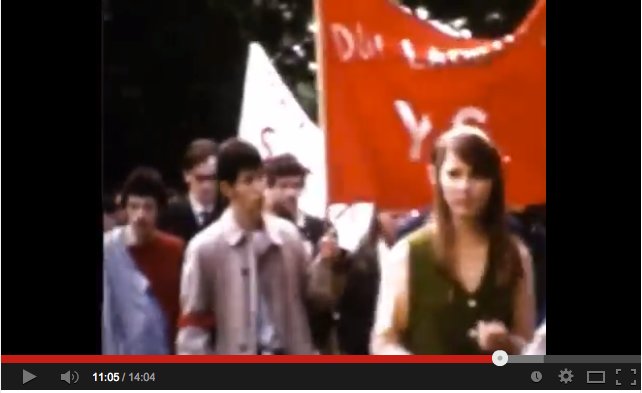
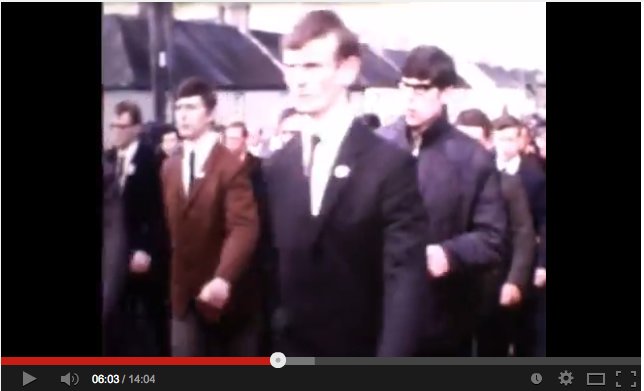
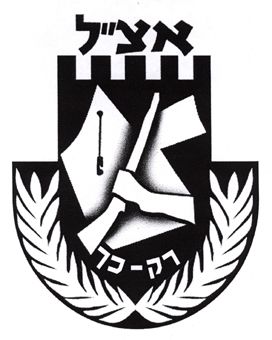
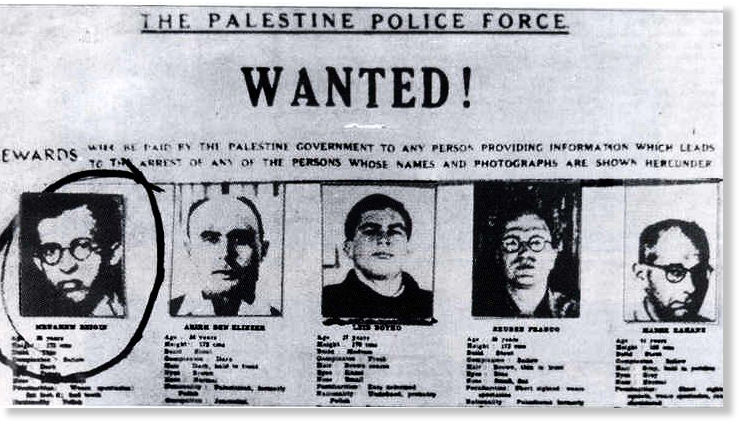
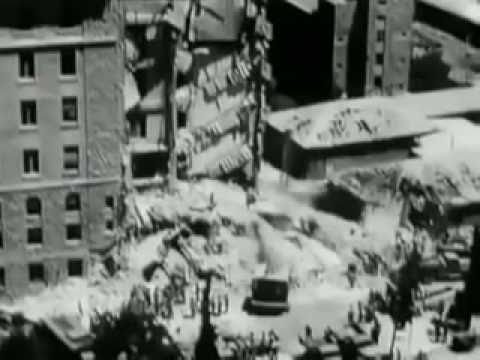


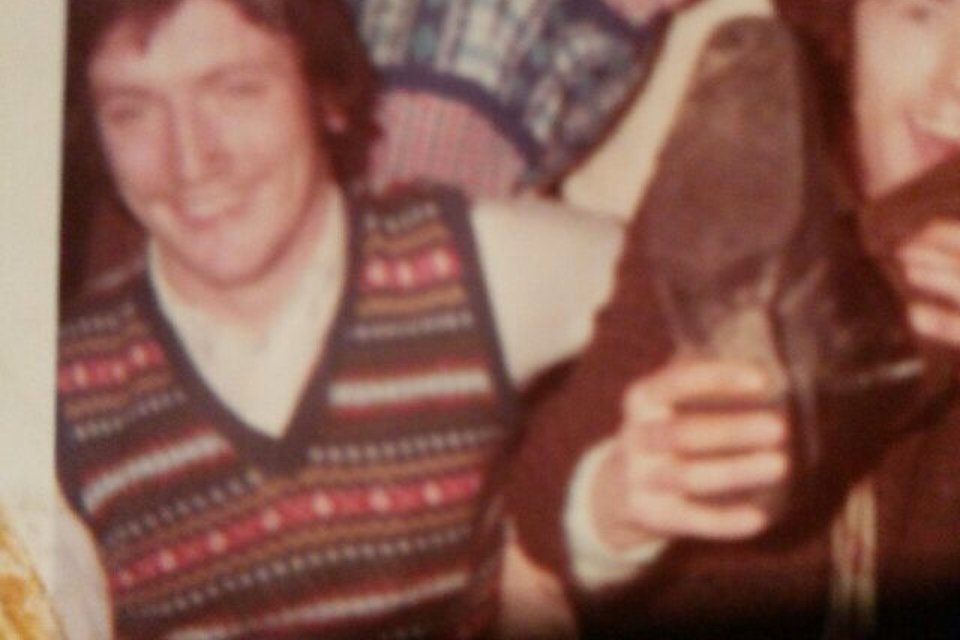
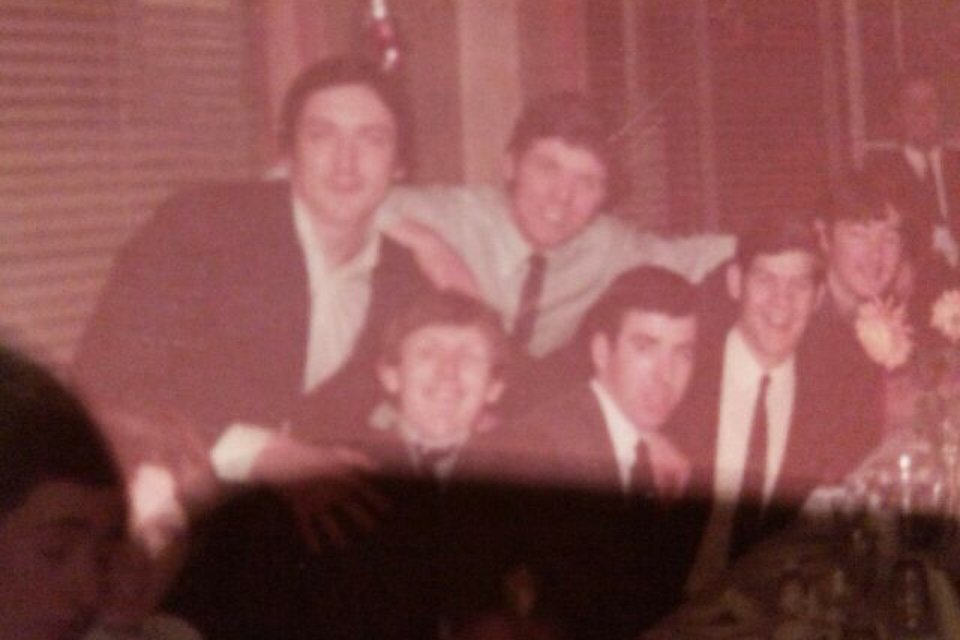
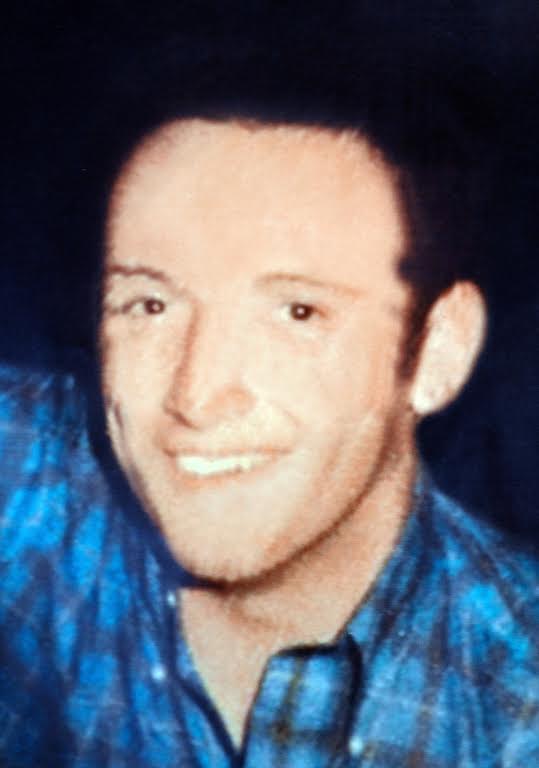

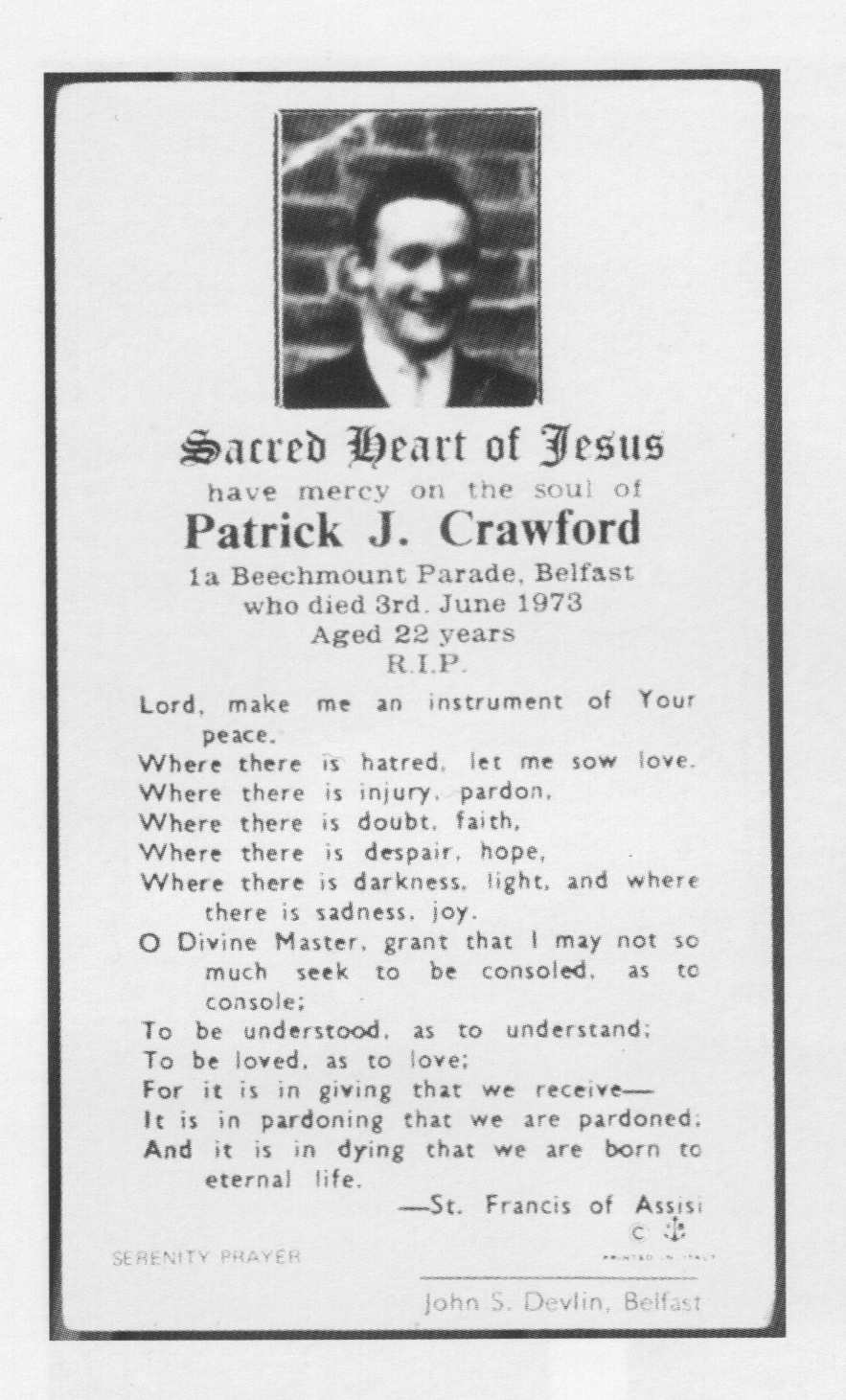




 The Broken Elbow
You must be logged in to post a comment.