So Just Who Was Bill Flynn, Gerry Adams’ Corporate Buddy?

Domestic considerations oblige me to make this posting short – and hopefully sweet, at least for some.

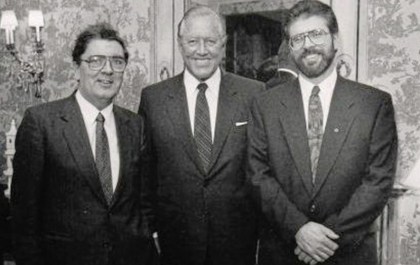
Who was Bill Flynn, the former CEO of the multi-billion dollar insurance giant, Mutual of America whose death at the age of 92 over the weekend, has been accompanied by panegyrics hailing his role as an Irish-American peacemaker?

Bill Flynn flanked by John Hume and Gerry Adams

Through his membership of the establishment-heavy National Committee on American Foreign Policy, Flynn persuaded the Clinton White House to grant a three-day visa for Gerry Adams in 1994 to visit New York, an event that angered the British and helped Adams persuade his grassroots that the Americans could be a Sinn Fein ally as the promised IRA ceasefire of that year became a reality.

So Flynn and his contacts were arguably vital to the Adams’ strategy, enabling the SF leader not just to influence the Oval Office but to reach into the wider Irish-American world beyond the Noraid bars of the Bronx.

Flynn first got interested in the Northern situation through a charity he helped fund in Ardoyne but he had roots in the place. His family came from Loughinisland and when the UVF slaughtered Catholics watching the World Cup at a local bar in June 1994 his interest sharpened.

He will also be remembered for footing the bill for a $40k laser treatment in New York for Gerry Adams’ prostate problem. You can read about that here and here.

But one aspect of Bill Flynn’s career has mostly escaped notice and that was his membership of the elite Sovereign Order of the Knights of Malta, usually known just as the Knights of Malta. (Yes, the same guys who drive ambulances in west Belfast)

Martin McGuinness introduced to a meeting of Bill Flynn’s National Committee on American Foreign Policy by Henry Kissinger

Outside of America only aristocrats can rise to leadership positions in the Knights of Malta. In Britain, the Queen heads the order, even though elsewhere the Knights are overwhelmingly Catholic.

In America there is no hereditary aristocracy but there is a dollar aristocracy and an establishment aristocracy. And the leadership of the Knights of Malta in the US has over the years been peppered with leaders from America’s intelligence, financial, industrial and political worlds.

If you go to this link you can see the sorts who rise or have risen to the top of the Knights in America. People like these CIA luminaries: Bill Donovan, Bill Casey (a close friend of Flynn’s), William Colby, John McCone, Geo Bush Snr and George Tenet. Or J Edgar Hoover, FBI founder; Joe Kennedy Snr founder of the dynasty of the same name; William Randolph Hearst, war-monger extraordinaire and William Buckley, intellectual founder of the New Right. And so on.

I have often wondered if Bill Flynn ever introduced Gerry to this charmed and exclusive circle?

North’s Prosecutors Cover Up Seamus Ludlow Killing

The headline above will be seen in some circles as an exercise in extremism, but having read the recently dispatched letter from the North’s prosecution service to the family of Seamus Ludlow (see below) explaining why the case will not be re-opened, it is very difficult to find other words to describe what has happened.

Seamus Ludlow

Seamus Ludlow, a single, middle-aged forestry worker, was abducted by a gang of Loyalists on the main Dundalk to Belfast road in May 1976, shot dead and his body dumped in a ditch near his home, not far from where he was kidnapped.

The leader of the gang, the man who actually fired the killing shots into Ludlow’s body, was a prominent member of the loyalist Red Hand Commando called Samuel Black Caroll, who went by the nickname ‘Mambo’.

Caroll, who has been in hiding for several decades in the English midlands, has been linked with British intelligence. He has denied any involvement in the night’s bloody events and likewise any association with British intelligence.

Nonetheless the allegations have persisted. The family believe that ‘Mambo’s’ other life helps explain why the Gardai attempted to place blame for Seamus Ludlow’s death on the local IRA and why they refused to follow other leads in the case.

The Gardai, they believe, were protecting allies in British intelligence, either the RUC Special Branch or MI5, and the alliance was blessed by successive Irish governments.

There were three other men in the car with ‘Mambo’ that night who witnessed Seamus Ludlow’s murder. Two of them are willing to give evidence in any criminal proceedings against ‘Mambo’ and the other occupant of the car.

One of the two willing witnesses, a man called Paul Hosking, actually went public about the killing in 1998, when he was interviewed by myself, then the Northern editor of The Sunday Tribune (see below). He gave a very detailed, eye-witness account of what happened that night, an account he gave to RUC detectives long before he went public in the Tribune.

Until Hosking’s interview with The Sunday Tribune, rumours and wild speculation had linked Seamus Ludlow’s death to both the British SAS or the Provisional IRA. Paul Hosking’s testimony, which he repeated at a meeting with members of the Ludlow family, settled the matter: the carload of Loyalists had abducted Seamus Ludlow and ‘Mambo’ Carroll, a suspected British agent, had pulled the trigger.

The four, or at least ‘Mambo’, had initiated the journey in a search for a well known Dundalk IRA man but having failed to locate their target, decided to end the night with a kill and settled on Seamus Ludlow, a vulnerable and easy target.

In October last year, lawyers for the Ludlow family wrote to the North’s Public Prosecution Service (PPS) with a number of queries. The major question posed by the family was why the suspects in the shooting were not prosecuted.

The PPS’ reply is reproduced in full below, but for convenience sake I will list the salient points:

  • Papers detailing the reasons why the prosecution was never mounted have been lost;
  • The individual who made the decision left the PPS in September 2013 (the PPS does not say whether he/she is still alive and if so whether efforts were made to trace the individual);
  • Of the four men, called A,B,C & D in the PPS letter, C and D (presumably one of these two is Paul Hosking) implicated A and B (presumably ‘Mambo’ Carroll is one of them) in Seamus Ludlow’s killing;
  • But C and D’s accounts are, according to the PPS, ‘hearsay accounts’, making them useless in court;
  • There were some inconsistencies in the evidence of C and D, e.g C could not remember D being present;
  • The PPS refuses to re-open the case and re-examine the possibility of prosecuting A and B (one of whom is the alleged British agent ‘Mambo’ Carroll);
  • A family request for a meeting with PPS is turned down;
  • The PPS refuses to hand over evidential material to the family;
  • The PPS refuse to respond to a request to confirm that ‘Mambo’ Carroll was a British agent.

A number of the points made by the PPS scream out for a response. The first is that Paul Hosking is alleged by the PPS to have been a hearsay witness and of no value to a prosecutor.

This is the definition of hearsay evidence given by one respected legal source:

…..hearsay is evidence of a statement that was made other than by a witness while testifying at the hearing in question and that is offered to prove the truth of the matter stated. For example, Witness A in a murder trial claimed on the stand: “Witness B (the “declarant”) told me that the defendant killed the victim.”

There is no way in the world that Paul Hoskings could be classified as a ‘hearsay’ witness. He was in the car when Seamus Ludlow was lured into it, he was in the car when it was driven to a nearly lane, and he was in the car when ‘Mambo’ shot him and when Seamus Ludlow’s body was hauled out of the car and thrown over a hedgerow.

Paul Hosking was an eyewitness, not a hearsay witness; I suspect the same goes for the other witness who is willing to give evidence. As for C not remembering that D was present, my reaction is ‘so what’! The passage of time can do that to the memory. The key point is whether C and D’s accounts coincide, a crucial issue that the PPS does not discuss. If they do, that must mean they were both present at the time, notwithstanding D forgetting that C was also there. Otherwise how could they independently concoct the same story?

As for the lost papers, one would have thought by this stage that so endemic – cynics might say conveniently endemic – has this carelessness been in Northern Ireland’s police stations and legal offices during the Troubles and their aftermath, that there should by now be systems in place to ensure this does not and cannot happen. Like secure filing cabinets. With a lock and key.

As for the missing PPS bureaucrat, is it beyond the powers of his successors to reach for a phone directory, or to contact some of his/her old mates to discover their current whereabouts? Apparently it is.

Below are reproduced the PPS letter, and my original Sunday Tribune article of March 1998:


Sunday Tribune, March 15th, 1998

By Ed Moloney

The RUC Special Branch has been accused of having covered up, for at least the last eleven years, evidence showing that members of the North’s security forces were part of a Loyalist gang which crossed the Border and killed a Dundalk, Co Louth man, the Sunday Tribune has learned.Seamus Ludlow, a 47 year old forestry worker, was found shot dead in an isolated laneway two miles north of Dundalk in May, 1976 and his killing became one of the unsolved mysteries of the Troubles.

However the story of how the authorities concealed the politically sensitive circumstances of his death has now come to light thanks to the man who gave RUC Special Branch officers a full account of the killing over a decade ago.

Paul Hosking (41), from Newtownards, Co Down started the day of Seamus Ludlow’s death drinking with UDR soldiers who were also members of the Loyalist Red Hand Commandos and ended it witnessing the casual and opportunistic murder of the Dundalk man. He was later threatened with death by the Red Hand Commandos if he spoke to the authorities.

Two weeks ago he and the three former Red Hand Commando members were arrested and questioned about the killing by RUC detectives. One was arrested in England. They were released without being charged but a report on each was sent to the North’s Director of Public Prosecutions who will decide whether to take action against the men.

In interviews with the Sunday Tribune, Hosking both protests his innocence and expresses anger at being arrested after having told the Special Branch everything he saw on the day of the Ludlow murder. He has named the Special Branch officer who met him to discuss the details of the killing to detectives in Castlereagh interrogation centre and made a written statement alleging that he gave the Branch a full account of the part played by the killers.

Hosking’s 1987 statement to the RUC Special Branch technically amounted to an admission that he had withheld evidence during the ten years following the killing yet the Special Branch apparently chose not to take any action against him nor the three men he had named as responsible for the killing.At the end of his encounter with the Special Branch, Hosking asked what happened next. “(The officer) said ‘Forget it. Its political’ “, he recalls.

Paul Hosking, then a 19 year old factory worker, invariably spent Saturdays getting drunk in his local, the First and Last pub in Comber. On Saturday May 1st, 1976 he headed down as usual only to find a virtually empty bar. Most of Comber had headed for Glasgow to watch Rangers play in the Scottish cup final but Hoskings was broke and couldn’t go.

So he found himself alone in the bar with a couple of friends and three men who had started coming to the pub three or months before. One was a Captain in the UDR, another who Hosking was told was also an officer in the regiment and a third man from Bangor whose nickname was ‘Mambo’. Hosking was never clear whether ‘Mambo’ was also a UDR man.

Hosking remembers that the UDR men were armed. “They had a big bulge under the arm”, he remembers. (The Sunday Tribune has been furnished with the men’s names but has decided for legal reasons not to publish them.)

Hosking had got to know the men over the preceding weeks and had occasionally drank with them and discussed life in the UDR. The three were also rumoured to be Loyalists, linked to the Red Hand Commando, an offshoot of the UVF. But in Comber as in other Protestant areas that would not raise an eyebrow; overlapping membership of Loyalist paramilitaries and the UDR was common enough. That Saturday the deserted pub drove them together for company.

The UDR Captain suggested that they move on, to see if there was any action elsewhere. They drove in the second UDR man’s car, a two door yellow Datsun, Hosking in the rear passenger side seat, the UDR Captain beside him and ‘Mambo’ in the front passenger seat. They were to keep that formation for the rest of that fateful day.

They tried a pub in Killyleagh first on the shores of Strangford lough but that too was quiet. Then the UDR Captain had an idea. Hosking recalls: “—- —- mentioned that there were supposed to be IRA checks along the Border. It was information obviously from the UDR that they were doing something on the Border. He said do you fancy going down to spy on them? I said great, it was like an adventure.”

It was the first time Hosking had ever been near or across the Border and he was looking forward to a Southern pint of Guinness. He had no idea where they were driving but remembers they did go through a British Army permanent checkpoint at which the driver showed his UDR pass.

“I remember him laughing and saying it was so good to have a UDR pass”, recalls Hosking. They were waved through, headed for Omeath and made for a pub.

Hosking’s memory is that the four of them spent about an hour in the bar. He sat away from the others watching television highlights of that day’s English FA Cup Final between Southampton and Manchester Utd. The three Red Hand Commandos were on the other side of the bar talking amongst themselves.

Some time after closing time the four left the bar. Hosking was quite drunk by that time. He reckons he had consumed about 13 or 14 pints over the whole day. “That used to be my Saturday thing”, he said.

Instead of heading North, the UDR driver steered his vehicle southwards towards Dundalk and the fateful encounter with Seamus Ludlow.

Now married with two children and living in Newtownards not far from his native Comber, Hosking takes up the story: “I saw a sign saying Dundalk, that’s how I knew we’d been there. I remember this guy walking along, he was thumbing actually.We stopped and your man got in. He was drunk. He got in between us in the back. I remember giving him a hand in.”

Seamus Ludlow had spent the evening drinking at various bars. He had just left the Lisdoo Arms and was looking for a lift to his home at Thistlecross about two miles northwards.

“The next thing I can remember”, Hosking continues, “he wasn’t long in the car really, I remember the house and the road in that direction and I remember the guy saying I live over here. I don’t know who it was said he needed to use the toilet. I was bursting anyway, the pints were going through me.

“We went on down anyway and I remember him reversing up a wee lane. ‘Mambo’ got out and pulled the seat back and I got out, I went over to the hedge near the front of the car. I was standing having a pee and the next I heard was banging. I swung round and there was this guy ‘Mambo’ sort of half in the car and he was shooting in the car.

“All I remember then is your man ‘Mambo’ pulling him out and —- was pushing him out. The guy fell on the floor so they got out and picked him up and threw him on to a hedge, I think it was. Then your man shouted get in. I was standing there shocked, I was horrified. My first thought was that they were going to do the same to me because I had seen what they had done. I was horrified. I got in the back and the whole way back I just stared out of the window.”

The inquest was told that his body was found the next day by tourists from the North in a lonely lane about a mile from Seamus Ludlow’s home. It was lying on a hedge. He’d been shot with three bullets all fired at close range and from his front, left. The fatal wound was to his heart. The State Pathologist John Harbinson speculated that Seamus Ludlow had been shot elsehere because his shoes were remarkably clean for being in a muddy lane.

By all accounts Seamus Ludlow was a shy, inoffensive man. At 47 he was a confirmed bachelor who, like so many other Irish family situations, lived with his eighty year old mother. If his death was to be covered up by the authorities he was in many ways an ideal candidate. He had no wife or children to grieve him or cause a fuss and he was poor. He chopped wood in the Ravensdale forest for a living.

Seamus Ludlow’s family have however campaigned for the truth about his death but to no avail. Appeals to the Gardai to re-open the case have fallen on deaf ears while theories have abounded, including one that SAS men were responsible. Despite Garda claims to the contrary the IRA denied any responsibility very shortly after the killing.

The Gardai have told the family not to speak to the press about recent developments and the Ludlow family have, duly, declined to make any comment saying this is the advice they have been given. However the dead man’s brother, Kevin added: “The family will be watching events with great interest”.

After the killing, the yellow Datsun sped nortwards dropping Hosking and the UDR Captain off at Killyleagh. The UDR Captain then drove Hosking home to Comber. Hosking remembers a veiled threat from ‘Mambo’ on the drive home, a remark that if he could get away with it he could kill a Protestant too.

Two days later the UDR Captain approached Hosking and warned him that unless he joined the Red Hand Commandos he would be killed because of what he had seen. He said that he had consulted the Red Hand commander, the late John McKeague about him. By now thoroughly frightened Hosking asked the UDA to intervene. Like hundreds of his contemporaries he had been a low level member of the UDA in Comber and set up barricades there during the 1974 UWC strike. That was the last he heard of the Ludlow murder until eleven years later.

He never went to the police, he says, because he was “petrified”. “If they could do that they were capable of wiping me out or my family”. Two years after the killing he went to Scotland and got married. But the marriage broke up and in 1986 he returned to Comber. He was at a family funeral when an RUC relative told him that the Special Branch wanted to see him about “something serious”.

He agreed to meet the RUC and a pub in Newtownards was chosen as the venue with his RUC relative as a witness. Hosking recalls that the Special Branch man, whose name is known to the Sunday Tribune, “seemed to know all the story”. He thinks the meeting took place in January or February 1987.

He went on:”That’s where I met the Special Branch man, he introduced himself. ——- went away to the bar to get a drink and your man said that he knew I had been there, he knew I hadn’t been involved but he wanted to know my story. I said OK and I told him the story from start to finish. At the end I said what happens now and he said ‘Forget it, its political’.

“I was relieved it had come out but sort of disillusioned that that was it, after all those years just to let it go”.

Three weeks ago Hosking came off the night shift to find scores of policemen at his home. He was arrested and held for four days. He says his first remarks to the CID were: “Why are you coming to me now? I told the Special Branch this…and you’re looking for me now”. He says he told the CID the full story of the day Seamus Ludlow was killed.

A range of questions arise from this affair, not least about why the RUC Special Branch chose to sit on Hosking’s evidence. One possible reason is that the police were acting to protect an informer amongst the three Red Hand Commandos who killed Seamus Ludlow.

If that was the case then once again the focus will be on the issue of Special Branch morality, specifically whether the authorities in the North turn a blind eye to intelligence agents being involved in serious crimes including murder. If there was an informer amongst the gang then it is also possible that the cover-up was longer than eleven years and that the RUC knew all about the murder just after it was committed, twenty two years ago. And just who was the informer? Could it have been the trigger man?

Hosking also spoke to the RUC Special Branch at a politically sensitive time. In early 1987 the Anglo-Irish Agreement was not long in existence but it had helped put the future of the UDR on the political agenda. A revelation at that time that a Loyalist paramilitary cell had been able to inflitrate the UDR to a high level – the leader of the gang was a full time Captain in the force – and had committed murder in the Republic would have given critics of the regiment valuable ammunition.

There also serious questions about how much the Gardai knew. Did the RUC fail to tell their counterparts in the Republic what they knew of a murder carried out in the Gardai’s jurisdiction or were they given all the available information? For the past twenty-two years the Gardai have told the Ludlow family that their brother and uncle was killed by the Provisional IRA, an assertion that now turns out to be as far from the truth as it is possible to be.

The two police forces were saying little about the affair this weekend, only that the investigation was still ongoing and that there had been the usual liaison between them.

Two other questions from the Ludlow murder demand answering above others. Paul Hosking looks like he could face a charge of witholding information about the murder. If the authorities deem him culpable enough to face such a charge where does this leave the RUC Special Branch?

And the other is this: just when will the Ludlow family be told the full truth about Seamus Ludlow’s death and the subsequent cover-up?

Now We Know – It Was All About Making Mary Lou Taoiseach

At least that seems to be the subliminal message in this New York Times article about ‘the most exciting person in (Irish) politics today’, by the interestingly named Shawn McCreesh:

A Woman Takes on Ireland’s Old Boy’s Club

By Shawn McCreesh

Mr. McCreesh is an editorial assistant for the Opinion section.


Mary Lou McDonald, the new Sinn Féin president, at her parliamentary office in Leinster House in Dublin. CreditFran Veale for The New York Times

DUBLIN, Ireland — On a misty Monday morning in the city’s north end, I am sipping coffee — not the Irish kind — with Mary Lou McDonald, the new president of Sinn Fein and the most exciting person in politics here today. At 5 foot 4, this fast-talking, 49-year-old mother of two is barely a few months into the job and is already being whispered about as the possible first female prime minister of Ireland.

“How great would that be?” she asked, with a laugh. “Well, why not?”

While Britain was busy this week celebrating a fairy-tale princess, Ireland was plunged into two painful and bruising debates about women’s health issues and Ms. McDonald was in the rings of fire, arguing, ahead of Friday’s referendum on abortion, that “the old boys’ club that runs this state” had betrayed the women of Ireland with its draconian policy, and in an ongoing scandal about a government cover-up on botched cervical cancer tests.

With her appointment she’s also joined a new girls club that’s faced with tackling another wildly contentious issue — Northern Ireland in the age of Brexit. In addition to herself, Ms. McDonald will work with a cast of all women to hammer out a new deal. They include Theresa May; Arlene Foster, the head of the Democratic Unionist Party; Karen Bradley, the secretary of state for Northern Ireland; and Michelle O’Neill, who is Ms. McDonald’s deputy.

She mused that, “maybe this is a test for women in politics.”

In February, Ms. McDonald’s mentor, Gerry Adams, passed the torch after 34 years, anointing her the new boss of Ireland’s oldest political party and one that, for much of its existence, has been thought of simply as the I.R.A. in a suit.

These are turbulent times for any new leader to step into the fray. Fears abound that the old sectarian conflict could reignite, since Brexit has thrown a monkey wrench into the fragile power-sharing mechanism that keeps Northern Ireland chugging along. The country is bitterly divided over the abortion issue, a procedure outlawed now even in cases of rape and incest. A surge of immigration and a widening inequality gap threaten to crack Ireland’s perceived invincibility to the alarming wave of far-right nationalism crashing on the shores of so many of its neighbors.

And the demise of the once all-powerful Catholic church here has changed the landscape in ways still not fully understood. In some ways, Ireland has grown more European and modern; it passed same-sex marriage easily three years ago and didn’t blink at a gay, half-Indian Prime minister. But in Ireland, as they say, the past is never the past, and the undertow is strong. Ms. McDonald is determined to keep Ireland from falling backward, especially for women.

Amid this identity crisis, Sinn Fein, once on the fringe, rises like a phoenix from the peat bog, gobbling up seats in Parliament and swelling its ranks with new voters. The party of the working class is now Ireland’s third largest. It is the most socially progressive and advocates for wealth redistribution — so badly needed here in the post-Celtic Tiger era. This, while the other parties, continually choked in corruption scandals, have contributed to a feeling of malaise that has set in among an increasingly apathetic electorate.

But if Sinn Fein wants a shot at legitimacy it will need to shed its militaristic image while also remaining true to the gray-flecked beards in the North who make up the bedrock of the party. It is believed that this mom from the south, who majored in English literature, named her daughter Iseult after the daughter of Maud Gonne, Yeats’s muse, can do it.

“Sinn Fein is a changed and changing party,” she says. “I understand it’s a gear shift for people to appreciate that the party is changing but that’s the truth, so the only thing I can say to people is bear with me.”

Referendum posters featuring Sinn Féin President Mary Lou McDonald are all over Dublin. CreditFran Veale for The New York Times

A relative of mine who lives in the North once had a gun put to his head by Sinn Fein. It rattled him enough that he said he would never become “a Shinner,” as Sinn Fein voters are called, sometimes pejoratively. I ask Ms. McDonald what she would say to a person — and there are many — who’d been caught in the crossfire of Belfast confetti before but who now, with the departure of Gerry Adams at the helm, may be up for grabs in elections.

“I’m not on a mission to convince anybody to forget,” she insists. “In Ireland, the whole issue of remembering, and memory, is associated for very obvious reasons with a negative impulse because people suffered across the board, including at the hands of the I.R.A. — I recognize and say that very clearly — and at the hands of the British state, and Loyalist death squads, and so on.

“But remembrance is also a positive thing,” she says, brightly.

Ms. McDonald grew up less than a hundred miles from the armed struggle, which saw more than 3,500 people killed between 1969 and 1998, in a middle class home in a tony section of south Dublin. Unlike many of her Sinn Fein colleagues, and to her political benefit, she lacks what the Irish call “the smell of cordite.” Still, she says the violence shaped her.

She hails from a staunchly Republican family and says her grandmother, Molly, whose brother was executed in an earlier struggle for independence, hugely influenced her. “She used to look up the road to the North and she had a real sense of connection with what was going on up there.

“I remember the morning the news came down that Bobby Sands died. I remember the hunger strikes,” but, she said, growing up in the South, “you didn’t have the British army on the streets.”

Among those who did, some view the lack of blood on Mary Lou’s hands as a lack of credentials.

“You see, you get it from both ends,” she says. “On the one hand, you’re criticized for being too Republican, and then you’re criticized for not being Republican enough.”

Others wonder what business a private-school educated girl from a well-to-do neighborhood has as the head of the party that champions the working class.

“I represent probably the most working-class constituency and district in the country,” she says, referring to her Dublin constituency, where we are today. “I love the working class, and I don’t mean that in a patronizing way. I’m proud to represent them. I’m really proud that they trust me.”

They trust her, sure, but can a Dubliner be trusted to lead the party of the North?

“Some people speculated when I came into position that this woman is from the South, so therefore the North will be forgotten. Far from it.”

Joking, she adds: “I don’t care if they hate the Dubs. That’s ’cause we’re great at football.”

But trying to be everything to everyone is a game so many politicians lose, and to her credit, not one she is playing. “The truth is, there’s no one way to look or be or sound, there’s no particular background to be an Irish republican,” she says. “There used to be a thing that the assumption is Irish Republicans were male, with beards, and black leather jackets. We are now a hugely feminized, feminine movement.”

Indeed, the hard-charging Mary Lou has fast become something of a feminist icon in the Emerald Isle. There isn’t another lawmaker more closely allied with the movement to legalize abortion. Her face is the lone politicians beaming down from pro-choice posters adorning lamp posts from here to Galway. Where other parties’ support for the “Yes” vote has been mixed, Mary Lou has cracked the whip on Sinn Fein, threatening suspension for any of her troops that fall out of line. On a primetime debate about abortion last week, she took the stage and deftly parried her opponents.

Rising to the top of a legislative body that had to impose a gender quota just to ensure minimal female representation has not been easy. “The very male atmosphere is something you kind of have to steel yourself to,” she allows. “You get used to it, actually, and sometimes that’s not a good thing.

“Even just the fact of being a woman makes you kind of noteworthy in the political firmament, still. We’ve got a lot of ground to make up. But ‘Poor us’ doesn’t get us anywhere. It has to be Strong us. Entitled us. Able us. Smart us. Determined us.” (At the abortion debate last week, she said to the audience that it was time to “woman up.”)

Ms. McDonald had an eye-opening experience when she learned, at one of her first jobs out of college, as a consultant, that she was being paid less than male colleagues.

“I remember the precise moment when I discovered it,” she says. “And this is a different thing than being harassed, but there’s something degrading about suggesting that you don’t carry the same worth in terms of your work.”

Now, with the woman known only by her first name in the driver’s seat, she has a chance to broker a new phase of peace in the North with her fellow female adversaries and allies.

“There’s an opportunity here for us to demonstrate that we can actually think outside the box and do things differently and actually challenge a paradigm of politics, particularly in the North where it’s ‘I win, you lose,’” says Ms. McDonald. “That, to me, is a very kind of old school, unhealthy, and dare I say it — a very male — model of politics.”

Still, it won’t be easy. Theresa May has only been able to cling to power at 10 Downing Street thanks to a razor-thin margin afforded to her by a few D.U.P. seats in the Northern Ireland, and talks between the D.U.P. and Sinn Fein have collapsed. Brexit has raised the specter of a hard border again.

“Brexit’s a disaster, to put simply,” Ms. McDonald says. “The European project is far from perfect, it needs a serious rebooting. But we are Europeans. The idea of getting cut off in some kind of insular, splendid isolation is not an Irish thing. That’s not how we roll.”

I ask if her North Star, Gerry Adams, had any advice for her as she settled in to her new gig.

“Keep your Sundays.”

Shawn McCreesh is an editorial assistant for the Opinion section.

Follow The New York Times Opinion section on Facebook and Twitter (@NYTopinion), and sign up for the Opinion Today newsletter.

Why Didn’t He Say This When He Had The Power To Do Something About it?

19 May, 2018

Former DPP Barra McGrory has said that the currently legacy proposals would result in endless litigation.

Barra McGrory, who has since returned to private practice, said he thinks a tribunal or inquiry would be a better way to deal with the past.

The former Director of Public Prosecutions has said that mechanisms proposed to deal with the past, currently out for public consultation, will only result in “litigating the past for years to come”.

Speaking to the Irish News Barra McGrory, who has returned to working in private practice since he left the senior prosecutor role at the end of last year, said the two year moratorium on sentences served by anyone convicted of Troubles killings “tarnishes the justice system”.

The legacy proposals out for public consultation include plans for an Historical Investigations Unit (HIU) which would re-examining 1,700 unsolved murders, along with a truth recovery process that would rely on paramilitary groups voluntarily giving information.

Mr McGrory said the proposals ” while well meaning” are unworkable in practice with prosecutions unlikely, and has called for the end to prosecutions in favour of a civil inquiry.

“The criminal process will significantly inhibit the information process and to what end?

“Very few convictions will result, people will be as unhappy as they are now, and the opportunity to have a process which makes people truly accountable will be lost.

“Any criminal justice system can only deliver one thing and that’s a conviction beyond all reasonable doubt, it doesn’t look behind that.

“A cynic might say that the architects of this (public consultation) know that.

“Some of these cases are 40/45 years old and my concern about that is that those who are accountable will escape accountability simply because the criminal process is very narrowly focused.

“It (legacy) was not addressed and that was a significant political failure in terms of the peace process not to have dealt with this.

“It was addressed in a very narrow way in terms of the moratorium on sentencing, the two year limit, which was designed for one purpose only and that was to empty the prisons.

“That was trade off in terms of how low can we go in order to get the prisons emptied quickly.

“It was a politically created figure.

“Now that there is enormous pressure to have criminal prosecutions, those prosecutions are deeply compromised by the existence of the two year maximum.

“It brings into question the whole issue of whether prosecutions are the way forward at all because the essence of justice is that those who have committed serious crimes are held accountable but that accountability means – if convicted – would not serve the sentence that one would expect them to serve”, he said.

“That in my view tarnishes the justice system”, he said.

During his tenure Mr McGrory was criticised over the decision to prosecute former soldiers with a number of conservative MPs using parliamentary privilege to attack his office.

He pointed to the practice of the RMP (Royal Military Police) investigating up to 300 state killings in the early 1970s, investigations which have since been found to be substandard.

“The problem with a lot of the state cases is that they were not properly investigated when they should have been and the PSNI legacy branch has to prioritise them”, he said.

“But if you look at the stats into the number of cases that were looked at by the PPS, there was a fairly even number”.

Mr McGrory said while he is not in favour of ‘drawing a line in the sand’ a tribunal similar to the Historic Institutional Abuse inquiry should be considered as away to deal with legacy.

“Those who have the power to do something different and show true leadership are hiding behind criminal process and are quite prepared to wait it out”, Mr McGrory said.

“People will continue to avail of their right for civil redress and the problem is the civil courts are now clogged up with writs and judicial reviews and that will continue.

“In my opinion they should create an all encompassing process that takes liability down to the civil standard, removes criminal punishment and brings true accountability.

“Otherwise we are just going to end up in endless litigation”, he said.

Mr McGrory added that when he accepted the senior prosecutor’s job back in 2011 he didn’t think his previous private practice, during which he represented among others Gerry Adams, would become such a big issue.

“You take these jobs, you’re a big boy you deal with it, it wouldn’t have driven me out of office, my return to private practice was something I had always intended to do.

“However, it certainly lead to me to reflect on how troubles and legacy investigations were perceived and how they were going to reflect on the role of the prosecutor in the future”, he added.

More Evidence That The IRA Of 1920’s Also Disappeared People….

Many thanks to Pat Flynn, a reporter in Co. Clare for help with this piece which, I think, adds to the growing body of evidence that disappearing people is not something that was confined to the Northern Troubles, or the Provos, but has been part of an all-Ireland republican tradition going back at least to the 1920’s and, who knows, even long before that.

The story that Pat wrote about this week, and which the rest of the Irish media has studiously ignored, concerns the re-burial of a British soldier, one Private George Duff Chalmers, a member of the Royal Scots regiment who was shot dead by the IRA in Co Clare in June 1921, a month before the Truce, and buried in a local bog.

He apparently deserted from his unit and was either on a spying mission against the IRA or on his way to meet a girl who had won his heart; nobody really knows which was the truth. Why the IRA did not publicly claim his killing is another unanswered question.

His body was discovered by chance in the 1950’s by turf cutters who ignored a warning to stay away from a place which it seems nearly every local knew harboured the remains of the slain Royal Scot as well as, Pat believes, another soldier also hidden somewhere in the bog.

Pvt. Chalmers’ remains had been deposited not far from the surface, resulting in the deterioration of his skeleton by peat acid. Bone fragments were all that was found along with parts of his uniform. Someone placed a slab over the grave and erected a cross, and there he lay until last week when he was dug up, at the request of his family, to be re-interred in a British Army cemetery near Dublin.

According to Padraig Og O Ruairc, an historian and civil servant, three other members of the British forces stationed in Co Clare, two soldiers and a member of the RIC, were killed and buried secretly by the local IRA. You can read about that episode here. One body has never been found.

O Ruairc is also the author of a claim that twenty-five of the 196 people killed by the IRA as informers during the Tan war between 1919 and 1921 were also ‘disappeared’.

Add to that Harry White’s account in his autobiography, ‘Harry’, of a plot during the 1956-62 campaign to ‘disappear’ a Belfast informer which was, allegedly, frustrated only because frozen soil made it impossible to dig a grave in the hills of South Derry and it begins to look as if disappearing people was part of a long if less than proud Irish republican tradition. You can read about that incident here.

All of which begs this question: isn’t it beyond time that the authorities in the South, instead of sneering at the barbarous Northerners, did something about their own disappeared problem? Like making some sort of public acknowledgement that this happened, apologise to the relatives of victims and even organise an effort to try to identify and locate the missing remains? It is never too late to make amends.


Body exhumed in Clare of British soldier killed and secretly buried in 1921

By Patrick Flynn

The body of a British soldier executed and buried in Co Clare almost 100 years ago has been exhumed and will be reburied in Dublin.

18-year-old Private George Duff Chalmers was a member of the 2nd Battalion of the British Army’s Royal Scots based in Clare during the during the War of Independence.

He died on June 10, 1921 at Drumbaun, Co Clare after, it’s believed, he was captured and executed by members of the Irish Republican Army (IRA).

Early today, representatives of the Commonwealth War Graves Commission (CWGC), working alongside the Office of Public Works (OPW) and Clare County Council, exhumed the remains of Pvt Chalmers from a site near Miltown Malbay. Gardaí also attended the exhumation.

The remains of Pvt Chalmers are removed from the bog at Rockmout near Miltown Malbay, Co Clare

Pvt Chamlers’ remains were taken to Ennistymon Church where a brief prayer service was held outside. He will be reburied at Grangegorman Military Cemetery in Dublin while a rededication ceremony will take place later this year.

A spokeswoman for the Commonwealth War Graves Commission (CWGC) said: “In 2017 the CWGC was contacted by the family of Private Chalmers who enquired about the possible relocation of his remains to an alternative location. CWGC identified that as the current location was difficult to access and maintain, relocation of the remains would be possible.”

The CWGC is responsible for commemorating the men and women of the Commonwealth forces who died in the First and Second World Wars, including the building and maintenance of cemeteries and memorials across the world.

War graves from the First World War located in Ireland are managed on CWGC behalf by the Office of Public Works (OPW).

How Israel Is Losing The PR War…..

The two stories below, filed within an hour of each other, from the satirical magazine The Onion demonstrate vividly how the Israeli government is losing, perhaps has already lost, the propaganda war with the Palestinians.

Add to that the fact that the hated Trump is their strongest ally and that young Jews in America are increasingly hostile to/uninterested in the Netanyahu agenda and it is not hard to see how Israel’s isolation can only grow:

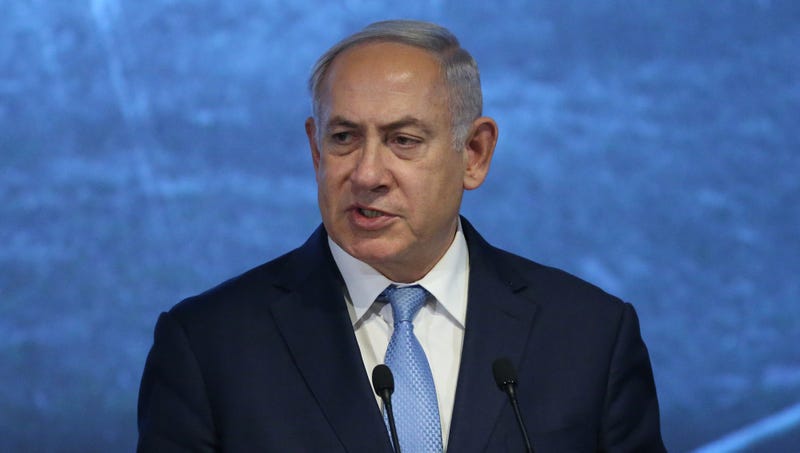
Netanyahu Announces Day Of Mourning For Fence Damaged In Yesterday’s Conflict

JERUSALEM—Wiping away a tear as he confirmed the public’s worst fears, Israel prime minister Benjamin Netanyahu officially declared a nationwide day of mourning Tuesday for a section of security fence damaged in yesterday’s conflict at the Gaza border. “We must all come together and take the time to grieve for this poor, innocent length of fence,” said Netanyahu, who throughout his reportedly stirring eulogy shared several images of the youthful barrier, which was first erected between Israel and the Gaza Strip in 1994. “Let us never forget what happened to this beautiful razor wire–topped barricade, which still had so much life ahead of it. As we lower our flags to half-mast, I encourage all Israelis to take a few moments to consider the great sacrifices made by our many brave fabricated enclosures.” Sources confirmed Netanyahu concluded the solemn ceremony with a 21-gun salute fired directly into a group of Palestinian protesters.

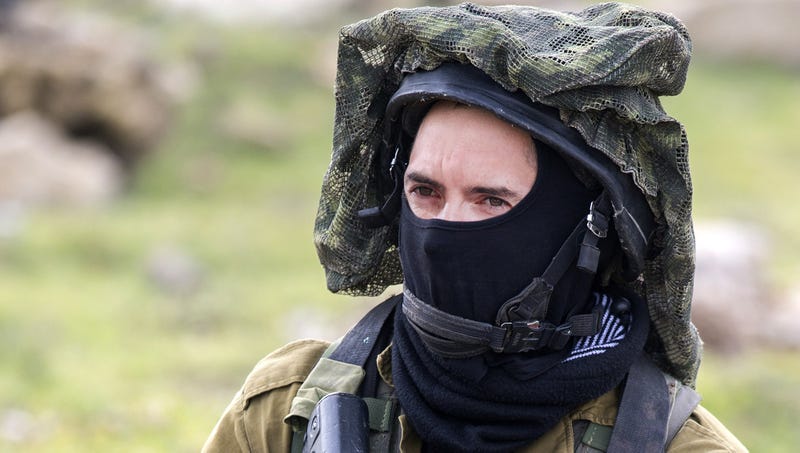
IDF Soldier Recounts Harrowing, Heroic War Story Of Killing 8-Month-Old Child

JERUSALEM—Describing the terrifying yet valiant experience to his fellow battalion members, Israel Defense Forces soldier Yossi Saadon recounted Tuesday his harrowing, heroic war story of killing an 8-month-old Palestinian child during a violent attack against protesters. “It was a heart-pounding experience—there was smoke and gunfire all around me, and I made a split-second decision to hurl that canister of tear gas at the encroaching infant cradled in her father’s arms,” said Saadon to the group of awed soldiers, describing the chills that went up and down his spine as he realized that all he had was his M16 assault rifle and some tear gas to defend himself against the unarmed Palestinian family standing only dozens of yards away. “I could see the whites of the baby’s eyes and hear her terrifying cries, and I knew it was either her or me. And this wasn’t some newborn infant, you know? This was a baby who could probably sit up independently. I was scared, but I acted quickly to throw that tear gas at her and her older sister. And who knows how many lives I saved when I shot the women trying to help her?” At press time, Saadon’s battalion commander informed him that he was submitting his name for the Medal of Valor, the IDF’s highest honor.

Boy, American Journalism Can Be A Real Bitch! – Ask Kevin Cullen

This piece appeared in The Boston Herald web edition following the suspension last month of longtime Boston Globe columnist, Kevin Cullen following charges he had manufactured coverage of the Boston marathon bombing of 2013.

I missed the story at the time and if you did, you can read the details, courtesy of The Irish Times, here.

Like sharks, they turn on a wounded colleague.

Christ, I wonder how many, or rather how long, Belfast’s more notorious hacks would last over here!? Good thing they cover for each other so well!

Kevin Cullen – long time Boston Globe columnist and old hand at covering the IRA in the city and the North, now being devoured by his own

Baby barniclein a scrape

HOWIE CARR
PUBLICATION: Boston Herald (MA)

SECTION: News
DATE: April 21, 2018

EDITION: ALL

Page: 5
Kevin Cullen always wanted to be the next Mike Barnicle. And now he is.
The busted pipe-artist columnist of the dying Boston Globe tweeted out a photo Monday of Trump lawyer Michael Cohen with the caption, “The light of day will show these frauds for what they are.”
Be careful what you wish for, Kevin.
I think I first ran into Kevin when I was working for Channel 7, and he was a cub reporter for the Herald. We were both on a night stakeout of Sen. Paul Tsongas, who had just announced he wasn’t running for re-election.
I had to get some videotape for the 11, and I was worried Tsongas was going to screw out the back door of wherever he was huddling with some bigshots.
So I went around to the back of the building to reconnoiter. I saw a giant trash barrel I realized could block Tsongas’ exit out the back door.
I tried pushing the trash can into position, but it was too heavy to budge. But then Cullen showed up and helped me push the barrel in front of the door.
I got my sound cut and didn’t get fired for another few months. I liked Kevin after that, right up until the moment he quit the Herald to go over to the Globe.
He’d been sucking up to, you guessed it, the tough street kid from Lincoln — Mike Barnicle. Later Cullen and his hero Barnicle worked with 60 Minutes — how’s that for a trifecta of fake news? — on a series of slobbering puff pieces about a junkie murderer named Joseph Yandle.
Never bothering to check a single one of Yandle’s claims, Kevin lionized this Townie thug as a “decorated hero” who had come back from Vietnam with a “fistful of medals.”
Uh, no, actually, Yandle never set foot in Vietnam. But you can’t expect any real reporting from the Globe or See BS News.
After Cullen’s utter destruction by “Kirk & Callahan” on WEEI, people have been asking me about the alleged death threats Cullen got from Whitey Bulger 30 years ago.
I mean, if you’ll lie about hearing Krystle Campbell’s “death wail,” what won’t you lie about? Now, I don’t know if Whitey ever actually threatened him, but I am fairly certain the FBI told Cullen he was on the Hit Parade.
That was the M.O. of the G-men back then — a surefire way to scare reporters off the trail of their serial-killing sugar daddy, you know, the guy Kevin’s blue-blooded bow-tied bumkissing bosses always said “kept the drugs out of Southie.”
As I recall it, Kevin asked the G-men who was saying that Whitey was gunning for him. The crooked cops told him their source was Fat Tony Ciulla, the old Winter Hill horserace fixer.
A very convenient answer — Fat Tony was in the Witness Protection Program and thus unavailable for comment. A few years later, Fat Tony was back in town and I asked him if he had ever really told the feds that Whitey was looking to kill Cullen.
“What the bleep are you talkin’ about?” he asked me.
That actually happened, but can you see how easy it is to come up with a good story, whether you’re the FBI, Cullen or even me, especially if the subject is deceased?
I hadn’t bothered to read his PC mush for years, so when I saw the recent cringe-worthy excerpts on turtleboysports.com, I was surprised by Cullen’s total metamorphosis into what Gerry Callahan has been calling “Baby Barnicle.”
The only difference is, I think Barnicle always knew deep down what an utter fraud he was, whereas Kevin had grown to believe his own myth, that he was a tough street kid from where? Malden? Holyoke? Hingham?
Don’t worry about your future employment prospects, Kevin. I hear MSNBC and CNN are both hiring.
It’s boom times for fake-news hacks on cable TV. Just ask your mentor, Uncle Mike.


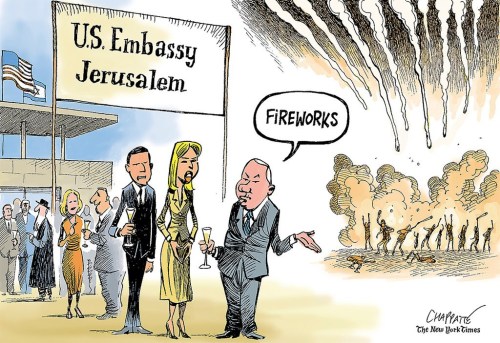
New York Times Cartoon On Jerusalem Embassy Opening


Seymour Hersh On How He Broke The My Lai Story

From the current edition of Harpers magazine, legendary American reporter Seymour Hersh recalls how he researched and broke the story of the My Lai massacre, one of the worst outrages of the war in Vietnam. It is a great yarn:

Seymour Hersh

Trump’s America (continued)

May 9, 2018
By Joe Kloc

US president Donald Trump’s newly hired personal lawyer Rudolph Giuliani, a former New York City mayor who was once filmed at a charity event dressed as a woman and calling Trump a “dirty boy” for touching his fake breasts and who was reportedly not hired to work in the White House when Trump initially took office because the president-elect thought he was falling asleep in meetings and drinking too much, told reporters that he was “aware” and “intelligent” because he “handled” cases involving “cyber matters” and “went through 9/11,” and made a series of television appearances in which he said that Trump’s son-in-law was “disposable,” that the former director of the FBI was a “Judas” who may be a liar, that Trump had “funneled” hush money through a law firm to an adult film star, and that Trump was aware the payment was made, a claim he later said was a “rumor” that he had “maybe” said as fact but “couldn’t prove.” Giuliani gave another television interview announcing that Trump was “committed” to bringing about regime change in Iran, the State Department issued a statement clarifying that Giuliani was not a foreign policy spokesperson for the US government, Giuliani denied reports that Trump was considering barring him from appearing on television, and then went on television and claimed that Trump, who said that all “negative” news was “fake,” was encouraging him to do more interviews as his attorney. Trump’s longtime lawyer Michael Cohen, a former personal injury attorney and taxicab-medallion investor, reportedly used a shell company named Essential Consultants to receive at least $4.4 million from various firms, including $150,000 from Korea Aerospace Industries, which is competing for a US Air Force contract worth billions of dollars; $1.2 million from Novartis, a Swiss drug company that was investigated last year by Greece for bribing politicians; $500,000 from Columbus Nova, an investment company that owns the domains alt-right.co and alternate-rt.com and whose largest client is a Russian oligarch who attended Trump’s inauguration and met with Cohen at the event; and $200,000 from AT&T, which is seeking approval from the Justice Department to merge with Time Warner. AT&T issued a statement confirming that it had paid Cohen for “insights” into the Trump Administration, and a White House employee told a reporter that the staff didn’t know what was going on and texted the reporter the popcorn emoji.