Shame On Andrew Jennings For Aiding FBI Over FIFA Bribery

Every scandal needs a hero and the international media have found one in the unlikely shape of Andrew Jennings – “the curmudgeonly old reporter” as The Washington Post headline calls him – who helped expose the shenanigans that have rocked FIFA and brought down Sepp Blatter.
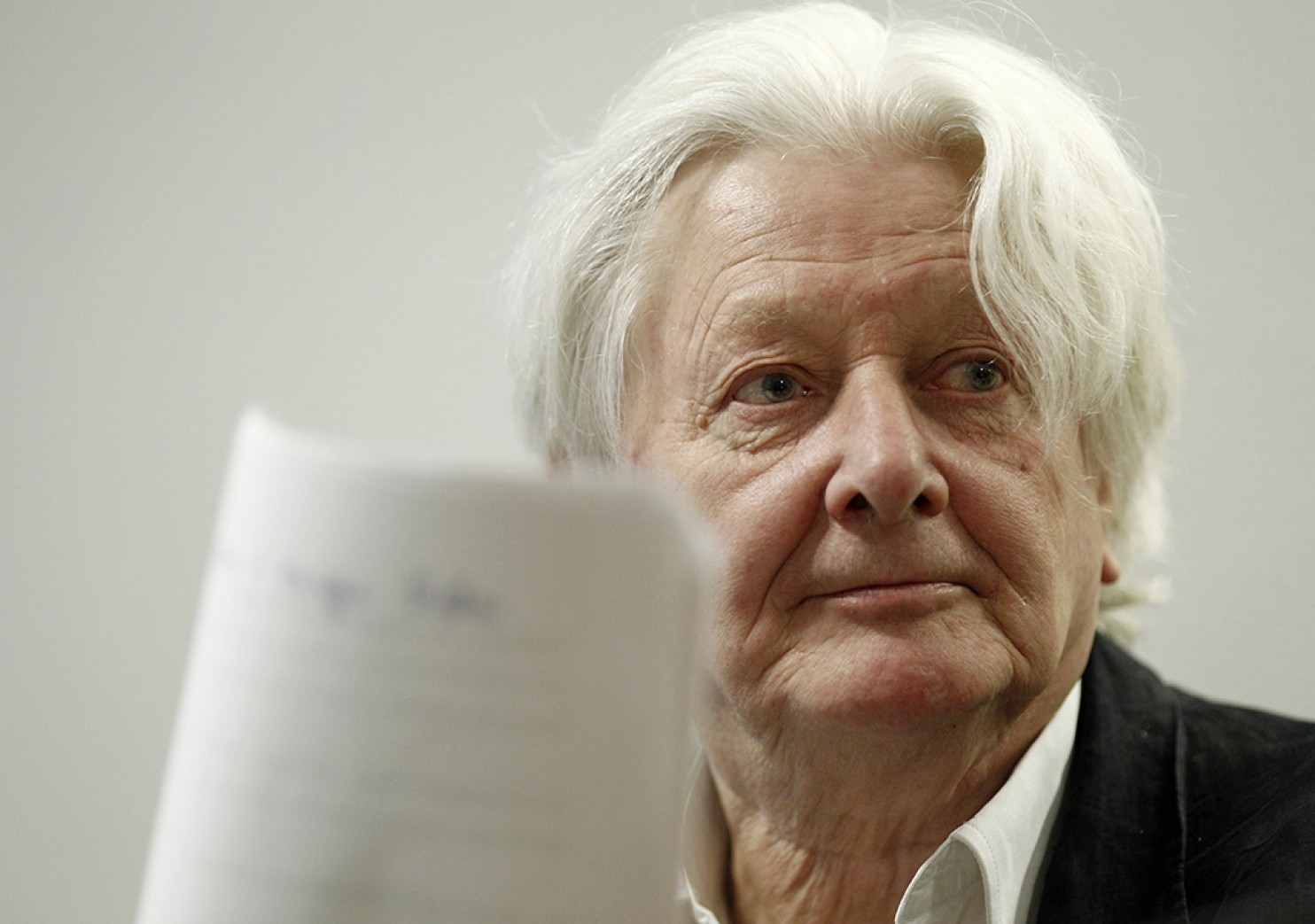
Andrew Jennings - exposed FIFA but crossed the line into police work

Andrew Jennings – exposed FIFA but crossed the line into police work

Jennings, a 71-year-old investigative reporter, has spent the last fifteen years probing the muck at the bottom of the FIFA pond and has written two books and helped produce a major BBC documentary exposing the bribery and financial skullduggery that seemingly is part of FIFA’s DNA under Blatter.

Fantastic, investigative journalism for which he deserves every plaudit available.

But then, six years ago, he crossed a line that no reporter should cross. He stopped being a journalist and became a policeman.

This is how he describes what happened:

In 2009, he got a call from an “ex-spook” who wanted to introduce Jennings to a few people.

“I go down to London to this anonymous office block, and you go in and there are three men with American accents,” Jennings remembers. “They’ve got government-style haircuts. They introduce themselves as FBI special agents and give me their business cards, which say ‘organized crime squad.’”

“Bliss,” Jennings remembered thinking. “The European police forces will do nothing [about FIFA] so it was damn good to see professional investigators get involved.”

Jennings was eager to help, and after making a few phone calls to sources in the Americas, he sent confidential Confederation of North, Central America and Caribbean Association Football (CONCACAF) financial reports to the FBI and the IRS. They showed mysterious, multimillion-dollar “commissions,” Jennings claimed.

“I said, ‘Right, let’s just level the playing field a bit,’” he said. “And I gave them the documents that really got this going.”

Jennings points to the comfortable, uncritical relationship that the bulk of the mainstream media had with FIFA and Blatter – a relationship he believes helped corruption at FIFA to flourish – to justify joining forces with the FBI. Knowing exactly what he means and the anger and frustration he felt, I can sympathise with him – but only to a point.

Once a journalist crosses the line that separates his or her profession from the police or any law enforcement or security agency, they forfeit any trust sources can have in them. Once you cross that line you can never go back.

Andrew Jennings did a great job of journalism on FIFA and the FBI were entitled to work on and expand any information that he made public through his journalistic efforts. But Jennings should have left it at that.

He didn’t and as a result has tarnished the profession of journalism, made crossing that sacred line seem acceptable, even laudable, and set an example that others may be tempted to follow. Shame on him.

Postscript: I can understand how some readers feel that cleaning out the FIFA stable outweighs concern at Jennings’ behaviour but there is a principle here. If you think it is okay to help the FBI put Blatter &  Co behind bars then equally it would have been acceptable for Glenn Greenwald or Laura Poitras to have ratted out Edward Snowden.
Ivor Bell, Franz Kafka And Wee Barra’s Public Prosecution Service

Los Angeles-based academic and writer Chris Bray – one of the few in the United States to have followed the Boston College saga from the outset – pens a few penetrating and caustic thoughts on today’s (Thursday’s) decision by Barra McGrory’s PPS to prosecute Ivor Bell for aiding and abetting in the disappearance of Jean McConville.

And he asks: aiding and abetting precisely who?

After more than a year of bumbling indecision, the Public Prosecution Service of Northern Ireland has taken a bold stand: They are beginning to prepare to think about discussing a way to begin. Franz Kafka, call your office.

Fourteen months ago, using questionable evidence obtained from the archives at Boston College with the assistance of the U.S. Department of Justice, prosecutors in Northern Ireland filed charges against Ivor Bell, who is now 77 years-old. Bell is reputed to have been chief of staff to Gerry Adams during the period when the latter was allegedly the Belfast commander of the Provisional IRA, and he was charged in the 1972 kidnapping and murder of the Belfast widow Jean McConville. But he wasn’t charged with that kidnapping and murder; rather, he was charged with having aided and abetted in that crime.

Today, forty-three years after McConville was killed, no one has been charged with killing her, or even publicly identified as a suspect; Ivor Bell is accused of aiding a crime committed by ghosts. News stories have alleged that Adams ordered her killing, but even those claims lack the most basic facts: Who took her out of her home? Who drove her to the beach where her body was found? Who killed her? In the police version of events, which must necessarily underlie an allegation of aiding and abetting, what was the name of the person who pulled the trigger? In short, if Ivor Bell aided and abetted, who did he aid and abet? Did Bell assist a self-firing gun?

After Bell was first charged last March, the PPS began a long delaying action that saw them returning to court every few weeks to ask for one continuance after another. Finally, this May, a judge in Belfast gave the prosecutors an ultimatum: Make a decision in June, or have the case thrown out of court. So they did. On Thursday morning, the PPS marched back into court to announce that they had decided to proceed with the prosecution of Ivor Bell. They return to court in six weeks.

They are not, however, returning to court in six weeks to begin to prove their case. Here’s how the Irish Times describes the next court date in its story on the most recent developments:

“Mr Bell was released on continuing bail and ordered to come back to court in six weeks when a date will be set for a preliminary inquiry to establish whether the case will proceed to trial in the Crown Court. While the PPS lawyer said six weeks was needed before prosecutors would be in a position to set a date due to extensive prepartory work required, Bell’s solicitor Peter Corrigan questioned the timeframe.”

If “extensive prepartory work” is required, what  have they been doing for the last fourteen months? Never mind that: They will now begin to prepare. In another month and a half, we’ll know if prosecutors in Belfast are able to set a date for an initial hearing that might then, at some future point, lead to an actual trial. Perhaps at the hypothetical future trial someone in Northern Ireland’s system of law enforcement will be able to whisper the name of Jean McConville’s actual supposed murderer. But perhaps not.

The murder of Jean McConville has become a can to be kicked endlessly down a road. The U.S. Attorney’s Office in Boston must be very proud to have helped with this important effort.

Sometimes A Picture Is Worth A Thousand Words

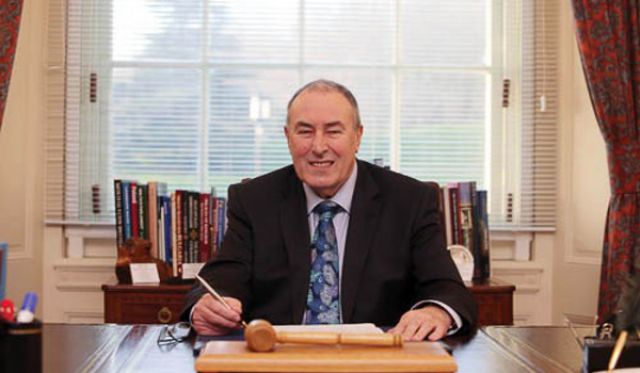
'Was It For This The Wild Geese Fled?' The Speaker Of The NI Assembly, Mitchel McLaughlin

‘Was It For This The Wild Geese Spread?’
The Speaker Of The NI Assembly, Mitchel McLaughlin

Denis O’Brien & Catherine Murphy: A Sad, Shameful Little Chapter In The History Of Irish Journalism

So, now it is official. When the Irish media decided, almost en masse, to censor Catherine Murphy’s Dail remarks about Irish media billionaire Denis O’Brien, they had no way of knowing whether the High Court injunction at the centre of the affair claimed supremacy over Dail privilege.

This means that The Irish Times, RTE and other mainstream Irish media, not knowing if the injunction was intended to over-ride Dail privilege, decided to play it safe and crumbled in the face of O’Brien’s massive wealth.

Rather than risk irritating the great man and prompting him to launch a legal action, which a first year law student could have told them he could never win, they chose to silence an elected representative and deny their readers access to words she spoke in their parliament.

Not one significant Irish media organisation opted for the principled alternative: publish Catherine Murphy’s remarks, let O’Brien challenge the action in the courts, if he dared, and mobilise public and political opinion against the arrogance and hubris of Ireland’s 0.01%.

Reports today arising out of a belated legal action taken by RTE say that the judge at the centre of the legal controversy, Mr Justice Donald Binchy, will make public tomorrow (Wednesday) the reasons he granted O’Brien an injunction preventing RTE from broadcasting a documentary dealing with the billionaire’s acquisition of SiteServ.

None of the Irish media therefore knew what the judge had said about the scope of his injunction before they blacked Catherine Murphy’s speech.

The thirty-some years of the Northern Troubles saw the Irish media hit some low points, involving both the acquiescent acceptance of State censorship and the enthusiastic practicing of self-censorship, but the O’Brien-Murphy affair is its own, unique, sad and shameful chapter in the narrative of Irish journalism.

A Tale Of Two Media

Imagine these two contrasting scenarios.

In one case, in country A, a newspaper gets hold of secret documents which show that successive governments have been lying about a matter of supreme national importance. Without hesitation and as soon as humanly possible, the newspaper starts printing stories about the documents.

The government goes beserk and its Attorney-General seeks and secures a court injunction banning that newspaper from further publication. The newspaper’s rivals get hold of the same documents and begin publishing as well. As this happens, and as details of the secrets circulate, public opinion veers increasingly to the side of the media.

The government seeks another injunction which is refused by the court, the judge declaring:

A cantankerous press, an obstinate press, a ubiquitous press must be suffered by those in authority in order to preserve the even greater values of freedom of expression and the right of the people to know.

The government appeals the rejection and takes its case to the highest court in the land which also rejects the government’s case. One of its judges says:

Only a free and unrestrained press can effectively expose deception in government. And paramount among the responsibilities of a free press is the duty to prevent any part of the government from deceiving the people…….

The press in country A thereby wins an historic case and does so by publishing its story without seeking the government’s view on the matter, thus first asserting the right to free expression, and then allowing the courts to decide the matter. The episode is regarded as a high watermark in the history of country A’s free and forthright media.

In the second case, in country B, a billionaire businessman, seeks and secures a court injunction preventing a television station from broadcasting a documentary alleging shenanigans in his financial affairs and improper relations with government-regulated bodies. The injunction applies to other media.

Not long afterwards, a member of country B’s parliament stands up in that chamber and reveals what are widely believed to be the salient points in the injuncted documentary. The parliamentarian does this under the cover of parliamentary privilege, which normally means that the media are free to repeat the words said in parliament, as long as they stick faithfully to those words.

This is because parliaments in most countries are judged to be legally superior to courts, not least because they make the laws that the courts enforce.

Even though the media in country B have published and broadcast words spoken under parliamentary privilege in the past, they unanimously decide that because the businessman is unbelievably rich and could sue them out of business and might even do damage to their advertising revenue, that the court injunction also applies to words spoken under the umbrella of parliamentary privilege. Therefore they decide not to print or broadcast a single word spoken by that parliamentarian.

In doing so they have accorded the billionaire businessman superior legal and political rights to the parliament in country B.

The inaction of country B’s media attracts derisive headlines in other countries like this: “Country B’s Media, Fearing Lawsuits, Steers Clear Of A Billionaire”. The barb is all the more painful because the story appeared in the paper featured in the story about country A above.

Internet outlets and blogs have no inhibitions and freely report the words of the parliamentarian, thereby not only making the mainstream media look risible but underlining one of the reasons why the media in country B are ailing and losing readers and viewers to social media.

Eventually, after several days of looking weak, cowardly and ridiculous, some of the media outlets in country B decide that they will challenge the scope of the billionaire’s injunction in the courts.

This is very strange because the only people, apart form the billionaire’s attorneys, who have said the injunction covers parliamentary privilege are the media in country B!

Not only that but it will be next Tuesday before the case is heard and possibly many days after that before a judgement is announced. By that time, thanks to social media, many of the people in country B will have read the parliamentarian’s words anyway.

This is not a story out of Grimms Fairy Tales but real life events.

If you can guess what the events in country A and country B really were, send your answers on a postcard to: The Director-General, RTE, Dublin, Ireland or to: Kevin O’Sullivan, Editor, Irish Times, Dublin, Ireland.

Alternatively just post a comment here.

Catherine Murphy Case Exposes Cowardice Of Irish Media

The blog post I placed on this site yesterday, carrying the text of Catherine Murphy’s comments in the Dail about billionaire Irish businessman Denis O’Brien, went viral shortly after it appeared, and today scored the highest number of hits since thebrokenelbow.com was launched in 2011.

That tells me that there was a huge appetite by the Irish public for this story, a desire to know just what it was Ms Murphy had to say about Mr O’Brien and what this revealed about corruption in business and political life in Ireland.

That task should have been undertaken by the Irish media – newspapers, radio and television – but it wasn’t. Instead it was left to a small number of writers active in social media to do a job that the mainstream media should have done.

In the case of this site, that task was made easier by virtue of the fact that it is written out of the United States and protected by the US Constitution’s First Amendment which safeguards free speech. I wish to make it clear however that if thebrokenelbow.com was produced in Ireland, the same article would have appeared.

Apologists for the failure of the Irish media to perform its duty, are pointing to a High Court injunction which forbad any reportage of the Denis O’Brien allegations and claiming that this injunction overrides Dail privilege. In consequence, they say, this prohibits any reporting of Ms Murphy’s Dail speech.

In other words a rich businessman who can hire expensive lawyers has more rights than the elected representatives of the Irish people. And the Irish media meekly accepts that. Shame on them.

An earlier generation of newspaper editors would, I suspect, have bridled at this restriction and reported Ms Murphy’s comments on the grounds that the Dail ranks higher than any court in the land any day. But this sort of response was absent in the media of 2015, beaten down as it has been, by years of censorship and self-censorship.

The consequences of this cowardice go way beyond the suppression of Catherine Murphy’s Dail speech. What whistle-blower in his or her right senses, for instance, would trust their fate or their freedom in the hands of such people?

The Catherine Murphy affair has exposed a fault in the Irish democratic system much more corrosive than Mr O’Brien’s financial shenanigans – that is the failure of the Irish media to do its job, to hold Irish society and its institutions to account.

A sad day for Ireland.

What Catherine Murphy TD Said In The Dail About Denis O’Brien

The Irish people are being denied the right to know about serious allegations being leveled at prominent Irish businessman and billionaire, Denis O’Brien by virtue of a High Court injunction forbidding RTE from broadcasting a programme about his controversial purchase of the infrastructure and utility support company, Siteserv.

In particular the programme is believed to have investigated his dealings with the liquidator of Siteserv, Kieran Wallace and the CEO of the Irish Banking Resolution Corporation, Mike Aynsley.

Denis O'Brien

Denis O’Brien

Mr O’Brien’s road to a business fortune began when, according to the Moriarty Tribunal, he almost certainly greased the palm of Government Minister of Communications, Michael Lowry in 1995 to secure a lucrative mobile phone contract on behalf of Esat Digiphone, a consortium he headed.

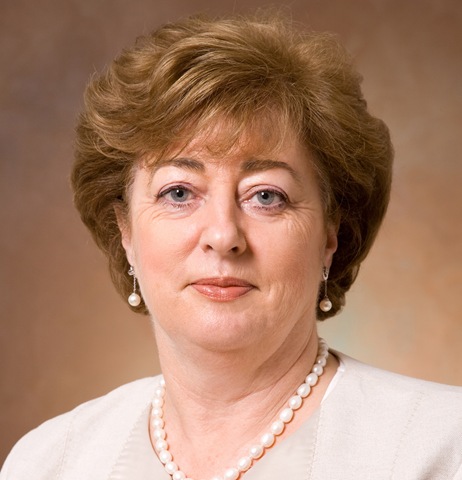
Similar allegations that he was shown favoritism over his purchase of Siteserv were aired in Dail Eireann yesterday by the Independent TD for Kildare, Catherine Murphy. She was able to defy the High Court injunction by invoking Parliamentary or Dail privilege, although leading Irish media outlets, such as The Irish Times, have declined to report her remarks in full.

So here are the words spoken in the Dail yesterday by Catherine Murphy. At least some Irish people will now be able to fully inform themselves about the reasons for Mr O’Brien’s injunction. (Note to Mr O’Brien’s lawyers: in America there is a thing called the First Amendment of the Constitution. Look it up. It is very enlightening. It has to do with free speech.)

Catherine Murphy TD

Catherine Murphy TD

Comptroller and Auditor General (Amendment) Bill 2015: First Stage

Thursday, 28 May 2015

Dáil Éireann Debate
UnrevisedFirst Page Previous Page Page
of 36 Next Page Last Page

Comptroller and Auditor General (Amendment) Bill 2015: First Stage

Deputy Catherine Murphy: Information on Catherine Murphy Zoom on Catherine Murphy I move:

    That leave be granted to introduce a Bill entitled an Act to amend the Comptroller and Auditor General (Amendment) Act 1993 in order to make an addition to the First Schedule, to expand the areas under which an examination under section 9 may be conducted, and to provide for related matters.

The Comptroller and Auditor General (Amendment) Bill 2015 proposes to extend the functions and powers of the Comptroller and Auditor General to cover IBRC. It was the Taoiseach who first suggested that the Comptroller and Auditor General review the Siteserv sale process at which time it was pointed out to him that the IBRC does not come within the Comptroller and Auditor General’s remit. With this Bill, I am attempting to address that problem by broadening the remit of the Comptroller and Auditor General. The reason I anticipate the need to involve the Comptroller and Auditor General, if not a full commission of inquiry which latter might well be a better option, is that the Government has got this matter badly wrong. That is not least because most of the key players in the Siteserv saga have links with KPMG and the eventual purchaser and vice versa. It is a web of connections and conflicts that requires outside eyes to unravel.

I have no doubt that the special liquidator is more than capable of carrying out such a review, but his direct involvement in the sale process, his relationship with the eventual purchaser of Siteserv and his current actions in the High Court in supporting Mr. Denis O’Brien against RTE place him in a position where there is, at the very least, a perceived if not an actual conflict of interest. The review is not confined to Siteserv, but that is the transaction that prompted a review in the first instance. I worry about the transactions that have been excluded from the review given what that we now know that in the final months before prom night, the relationship between the Department and IBRC had completely broken down. If deals were being done without the knowledge or input of the Minister, we must know what those were. We are now aware, for example, that the former CEO of IBRC made verbal agreements with Denis O’Brien to allow him to extend the terms of his already expired loans. We also know that the verbal agreement was never escalated to the credit committee for approval. I am led to believe and would welcome clarification by the Minister that the rates applicable to the extension were extremely favourable. I understand that Mr. O’Brien was enjoying a rate of approximately 1.25% when IBRC could, and arguably should, have been charging 7.5%. Given that we are talking about outstanding sums of upwards of €500 million, the interest rate applied is not an insignificant issue for the public interest. We also know that Denis O’Brien felt confident enough in his dealings with IBRC that he could write to Kieran Wallace, the special liquidator, to demand that the same favourable terms extended to him by way of a verbal agreement be continued. We now have Kieran Wallace, who has been appointed by the Government to conduct the IBRC review, joining with IBRC and Denis O’Brien in the High Court to seek to injunct the information I have outlined from coming into the public domain. Surely, that alone represents a conflict.

In documents released to me under freedom of information, the Minister, his officials, the Central Bank and even the troika acknowledge that IBRC – the former Anglo Irish Bank – is no ordinary bank and that there is a significant public interest as the bank was fully nationalised and was in wind-down mode. They all accept that this is the people’s money we are dealing with and that there can be no dispute regarding the public interest in this. The same materials obtained under freedom of information detail instances where the Minister can specifically intervene and issue a ministerial order that material matters have a significant public interest. Included in these material matters are instances that are outside the ordinary course of business. I argue that what I have outlined here regarding verbal deals and extensions etc. are outside the normal course of business and ask the Minister to exercise his right to intervene in the current proceedings to defend the public interest.

I have a motion on the Order Paper signed by the majority of Opposition Members calling for a debate on the proposed review. I note that 45 Members have signed and more are welcome to. When I tried to raise the matter on the Order of Business, I was silenced and told to take it up with my Whip. I am the Whip of the Technical Group and I had raised the matter at the weekly Whips’ meeting. The Government Chief Whip told me that the Government would not be altering the KPMG review and that it would not provide time to debate this issue. He suggested that we use Private Members’ time. This is not just an Opposition issue; it is an issue for the whole House. It is an issue of serious public concern involving public money. If the Minister opposite, Deputy Paschal Donohoe, got his hands on an extra €20 million, he would not have to think too hard about how to spend it. I urge the Government to reconsider this matter and to give the Bill and the motion the time they deserve. It is in the public interest to do so.

Imminent Publication Of A/G Report On Gerry Adams and Liam Adams Case

When sorrows come, they come not single spies. But in battalions. – Hamlet, Act 4, Scene 5. By William Shakespeare

John Larkin, NI's Attorney-General

John Larkin, NI’s Attorney-General

I am reliably informed that the long awaited report by Northern Ireland’s Attorney-General, John Larkin on the decision by Barra McGrory’s Public Prosecution Service’s (PPS) not to charge Gerry Adams for withholding information about his brother Liam Adams’ abuse of his daughter, Aine Dahlstrom, is due for publication late this week, or early next.

Liam Adams - told his brother Gerry that he had abused his daughter

Liam Adams – told his brother Gerry that he had abused his daughter

The A/G’s investigation was launched after it emerged during Liam Adams’ trial that the Sinn Fein president did not tell police for nine years that his brother had confessed to the abuse and incest allegation.

The recent failure of Liam Adams’ appeal against his conviction has, it seems, cleared the way to publish the report, which has been in the PPS’ hands since around June 2014.

Gerry Adams - didn't tell police about Liam and was not charged with withholding information, like we would be........

Gerry Adams – didn’t tell police about Liam and was not charged with withholding information, like we would be……..

Whatever the report’s findings, the experience is likely to be as uncomfortable for the Director of Public Prosecutions as it could be for Mr Adams, even though the DPP recused himself from this case (that makes how many times now…..?).

Barra McGrory was the Sinn Fein leader’s solicitor at the time that Liam Adams was exposed as an abuser and then charged and inevitably attention will focus on what advice Mr McGrory gave his client at the time.

Barra McGrory - Gerry Adams' lawyer when Liam Adams was exposed, now the North's  DPP

Barra McGrory – Gerry Adams’ lawyer when Liam Adams was exposed, now the North’s DPP

Not for the first time, attention is also likely to be directed at the wisdom of appointing a lawyer who had such a high profile and controversial figure as a client to the highest prosecutorial post in the land, an appointment that increasingly seems destined to be filed under the heading: ‘It seemed like a good idea at the time’ .

The Partial Repayment Of A Debt

Now, I wonder will Barra McGrory issue any subpoenas for this one? Silly question.

psefton2014's avatarseftonblog

Today I lodged papers with the Police Ombudsman.

Details will follow.

Essentially, I contend that PIRA was so completely penetrated by the state in 1990 that the murders of my parents were the state’s responsibility. This the police failed to investigate.

I have given details of the PIRA informers, whose names I know and I have asked the Ombudsman to examine all state files.

The exercise has taken a year of my life, which I have gladly given, for my parents.

Other events have given me this opportunity, which I failed to take for twenty four years.

A number of people who treated me badly during that time and who gave me no support will have their own God to answer to.

I thank those who have stood by me through all my travails for these years.

I thank those from both communities, who, in the last twelve months have…

View original post 27 more words

The Simple Response To Gerry Adams’ Latest Assault On Mairia Cahill

Amid the twists and turns in the wake of the Starmer report – which examined the way Barra McGrory’s increasingly dysfunctional Public Prosecution Service handled sexual abuse charges involving prominent IRA figures in West Belfast – one the most intriguing has come from SF supremo, Gerry Adams. His response has been to claim that the abuse carried out against the most prominent victim, Mairia Cahill, was in fact perpetrated by ‘an uncle’, i.e. Martin Morris.

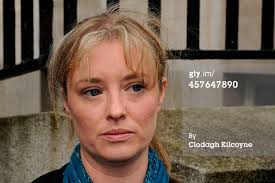
Mairia Cahill

Mairia Cahill

It is clear that what Adams is trying to do here is to divert attention away from the IRA’s involvement in this sordid case by placing it in a family context and therefore nothing to do with the Provos. But the IRA’s fingerprints, so to speak, are all over the scandal.

First of all the accused abuser, Martin Morris was a member of the IRA’s secret police force, the so-called Administrative IRA, a much-feared body with the power to blow a person’s kneecaps into the next street.

Secondly those charged with attempting to cover up the allegations or force their withdrawal by Mairia Cahill and two other women known only as AA and BB, are among the best known Provisional activists in the city. The kangaroo courts they staged were designed not to get at the truth but to force the accusers to back down so their buddy Morris would walk free.

So from the point of view of the Sinn Fein President, it makes perfect sense to level the ‘uncle’ charge so as to minimise IRA involvement and to divert media attention from his own less than irreproachable part in the affair.

This includes his decision to involve himself in the matter only when the tabloid media began sniffing around the story and the fact that he dragged out the resulting face-to-face meetings with Mairia Cahill for six years!

(This is not the first time I have encountered this tactic by Mr Adams. He invites a person with a grievance to a meeting, sits them down with a cup of tea and talks sympathetically to them. Then he invites them back for another meeting after he has completed some promised background research or talked to person A or B. The invitee, invariably flattered to be in his presence in the first place, usually accepts without hesitation. And so it goes on. Before they know what has happened years have gone by, they have drunk gallons of Mr Adams’ tea and they are no nearer a resolution of their complaint. But Mr Adams has gained a valuable insight into the strengths and weaknesses of the potential troublemaker.)

There is a simple way to answer Mr Adams’ charges in relation to the Mairia Cahill case.

Martin Morris was Mairia Cahill’s uncle by marriage, not by blood. When sexual abuse is committed by a blood relative, the offender would be liable to a charge of incest as well as rape or sexual abuse. Martin Morris was not charged with incest but with rape and abuse, ergo he was not treated by the PPS as a blood relative.

The legal definition of a blood relative can be found here, i.e. “…a person related to another by birth as distinct from one related by marriage.”

Gerry Adams’ father was a blood relative of those in his family he abused, as was his brother Liam, who raped his own daughter, Aine Dahlstrom. They committed incest as well as sexual abuse. Fifty per cent of abusers are also guilty of incest.

Martin Morris however falls into the category of the estimated other fifty per cent of abusers who are able to commit their offence because the victims know and trust them. But he was not a blood relative, only a relative by chance, i.e. by marriage. That gave him the opportunity to abuse Mairia Cahill and because he was her aunt’s husband, he had her trust, at least initially.

Mr Adams is deliberately conflating the two categories in an effort to move the spotlight away from the IRA and the stubborn suspicion, Starmer report or no, that saving the peace process somehow played a role in the shenanigans at the PPS over the Mairia Cahill case.

It is striking that he is not making the same allegation in relation to AA and BB. Just about Mairia Cahill, who has made his life pretty difficult over recent months.

The media needs to wake up to this ploy.