What Hillary Clinton’s America Will Look Like…….Or, Whoever You Voted For, Wall Street Won

With the opinion pollsters increasingly favouring a Hillary win in November 8th’s US presidential election, long time Wall Street observer Nomi Prins takes a caustic look at how a Clinton presidency and the titans of America’s financial world will get along. This article first appeared on Tom Dispatch.
Waking Up in Hillary Clinton’s America
Wall Street in the Saddle

By Nomi Prins

As this endless election limps toward its last days, while spiraling into a bizarre duel over vote-rigging accusations, a deep sigh is undoubtedly in order. The entire process has been an emotionally draining, frustration-inducing, rage-inflaming spectacle of repellent form over shallow substance. For many, the third debate evoked fatigue. More worrying, there was again no discussion of how to prevent another financial crisis, an ominous possibility in the next presidency, whether Donald Trump or Hillary Clinton enters the Oval Office — given that nothing fundamental has been altered when it comes to Wall Street’s practices and predation.

At the heart of American political consciousness right now lies a soul-crushing reality for millions of distraught Americans: the choices for president couldn’t be feebler or more disappointing. On the one hand, we have a petulant, vocabulary-challenged man-boar of a billionaire, who hasn’t paid his taxes, has regularly left those supporting him holding the bag, and seems like a ludicrous composite of every bad trait in every bad date any woman has ever had. On the other hand, we’re offered a walking photo-op for and well-paid speechmaker to Wall-Street CEOs, a one-woman money-raising machine from the 1% of the 1%, who, despite a folksiness that couldn’t look more rehearsed, has methodically outplayed her opponent.

With less than two weeks to go before E-day — despite the Trumptilian upheaval of the last year — the high probability of a Clinton win means the establishment remains intact. When we awaken on November 9th, it will undoubtedly be dawn in Hillary Clinton’s America and that potentially means four years of an economic dystopia that will (as would Donald Trump’s version of the same) leave many Americans rightfully anxious about their economic futures.

None of the three presidential debates suggested that either candidate would have the ability (or desire) to confront Wall Street from the Oval Office. In the second and third debates, in case you missed them, Hillary didn’t even mention the Glass-Steagall Act, too big to fail, or Wall Street. While in the first debate, the subject of Wall Street only came up after she disparaged the tax policies of “Trumped-up, trickle down economics” (or, as I like to call it, the Trumpledown economics of giving tax and financial benefits to the rich and to corporations).

In this election, Hillary has crafted her talking points regarding the causes of the last financial crisis as weapons against Trump, but they hardly begin to tell the real story of what happened to the American economy. The meltdown of 2007-2008 was not mainly due to “tax policies that slashed taxes on the wealthy” or a “failure to invest in the middle class,” two subjects she has repeatedly highlighted to slam the Republicans and their candidate. It was a byproduct of the destruction of the regulations that opened the way for a too-big-to-fail framework to thrive. Under the presidency of Bill Clinton, Glass-Steagall, the Depression-era act that once separated people’s bank deposits and loans from any kind of risky bets or other similar actions in which banks might engage, was repealed under the Financial Modernization Act of 1999. In addition, the Commodity Futures Modernization Act was passed, which allowed Wall Street to concoct devastating unregulated side bets on what became the subprime crisis.

Given that the people involved with those choices are still around and some are still advising (or in the case of one former president living with) Hillary Clinton, it’s reasonable to imagine that, in January 2017, she’ll launch the third term of Bill Clinton when it comes to financial policy, banks, and the economy. Only now, the stakes are even higher, the banks larger, and their impunity still remarkably unchallenged.

Consider President Obama’s current treasury secretary, Jack Lew. It was Hillary who hit the Clinton Rolodex to bring him back to Washington. Lew first entered Bill Clinton’s White House in 1993 as special assistant to the president.  Between his stints working for Clinton and Obama, he made his way into the private sector and eventually to Wall Street — as so many of his predecessors had done and successors would do.  He scored a leadership role with Citigroup during the time that Bill Clinton’s former Treasury Secretary (and former Goldman Sachs co-Chairman) Robert Rubin was on its board of directors.  In 2009, Hillary selected him to be her deputy secretary of state.

Lew is hardly the only example of the busy revolving door to power that led from the Clinton administration to the Obama administration via Wall Street (or activities connected to it). Bill Clinton’s Treasury Under Secretary for International Affairs, Timothy Geithner worked with Robert Rubin, later championed Wall Street as president and CEO of the New York Federal Reserve while Hillary was senator from New York (representing Wall Street), and then became Obama’s first treasury secretary while Hillary was secretary of state.

One possible contender for treasury secretary in a new Clinton administration would be Bill Clinton’s Under Secretary of Domestic Finance and Obama’s Commodity Futures Trading Commission chairman, Gary Gensler (who was — I’m sure you won’t be shocked — a Goldman Sachs partner before entering public service). These, then, are typical inhabitants of the Clinton inner circle and of the political-financial corridors of power. Their thinking, like Hillary’s, meshes well with support for the status quo in the banking system, even if, like her, they are willing on occasion to admonish it for its “mistakes.”

This thru-line of personnel in and out of Clinton World is dangerous for most of the rest of us, because behind all the “talking heads” and genuinely amusing Saturday Night Live skits about this bizarre election lie certain crucial issues that will have to be dealt with: decisions about climate change, foreign wars, student-loan unaffordability, rising income inequality, declining social mobility, and, yes, the threat of another financial crisis. And keep in mind that such a future economic meltdown isn’t an absurdly long-shot possibility. Earlier this year, the Federal Reserve, the nation’s main bank regulator, and the Federal Deposit Insurance Corporation, the government entity that insures our bank deposits, collectively noted that seven of our biggest eight banks — Citigroup was the exception — still have inadequate emergency plans in the event of another financial crisis.

Exploring a Two-Faced World

Politicians regularly act one way publicly and another privately, as Hillary was “outed” for doing by WikiLeaks via its document dump from Clinton campaign manager John Podesta’s hacked email account. Such realities should be treated as neither shockers nor smoking guns. Everybody postures. Everybody lies. Everybody’s two-faced in certain aspects of their lives. Politicians just make a career out of it.

What’s problematic about Hillary’s public and private positions in the economic sphere, at least, isn’t their two-facedness but how of a piece they are. Yes, she warned the bankers to “cut it out! Quit foreclosing on homes! Quit engaging in these kinds of speculative behaviors!” — but that was no demonstration of strength in relation to the big banks. Her comments revealed no real understanding of their precise role in exacerbating a fixable subprime loan calamity and global financial crisis, nor did her finger-wagging mean anything to Wall Street.

Keep in mind that, during the build-up to that crisis, as banks took advantage of looser regulations, she collected more than $7 million from the securities and investment industry for her New York Senate runs ($18 million during her career). In her first Senate campaign, Citigroup was her top contributor.  The four Wall-Street-based banks (JPMorgan Chase, Citigroup, Goldman Sachs, and Morgan Stanley) all feature among her top 10 career contributors. As a senator, she didn’t introduce any bills aimed at reforming or regulating Wall Street. During the lead-up to the financial crisis of 2007-2008, she did introduce five (out of 140) bills relating to the housing crisis, but they all died before making it through a Senate committee. So did a bill she sponsored to curtail corporate executive compensation. Though she has publicly called for a reduction in hedge-fund tax breaks (known as “closing the carried interest loophole”), including at the second debate, she never signed on to the bill that would have done so (one that Obama co-sponsored in 2007). Perhaps her most important gesture of support for Wall Street was her vote in favor of the $700 billion 2008 bank bailout bill. (Bernie Sanders opposed it.)

After her secretary of state stint, she returned to the scene of banking crimes. Many times. As we know, she was also paid exceedingly well for it. Friendship with the Clintons doesn’t come cheap. As she said in October 2013, while speaking at a Goldman Sachs AIMS Alternative Investments’ Symposium, “running for office in our country takes a lot of money, and candidates have to go out and raise it. New York is probably the leading site for contributions for fundraising for candidates on both sides of the aisle.”

Between 2013 and 2015, she gave 12 speeches to Wall Street banks, private equity firms, and other financial corporations, reaping a whopping $2,935,000 for them. In her 2016 presidential run, the securities and investment sector (aka Wall Street) has contributed the most of any industry to PACs supporting Hillary: $56.4 million.

Yes, everybody needs to make a buck or a few million of them. This is America after all, but Hillary was a political figure paid by the same banks routinely getting slapped with criminal settlements by the Department of Justice. In addition, the Clinton Foundation counted as generous donors all four of the major Wall Street-based mega-banks. She was voracious when it came to such money and tone-deaf when it came to the irony of it all.

Glass-Steagall and Bernie Sanders

One of the more illuminating aspects of the Podesta emails was a series of communications that took place in the fall of 2015. That’s when Bernie Sanders was gaining traction for, among other things, his calls to break up the big banks and resurrect the Glass-Steagall Act of 1933.  The Clinton administration’s dismantling of that act in 1999 had freed the big banks to use their depositors’ money as collateral for risky bets in the real estate market and elsewhere, and so allowed them to become ever more engorged with questionable securities.

On December 7, 2015, with her campaign well underway and worried about the Sanders challenge, the Clinton camp debuted a key Hillary op-ed, “How I’d Rein in Wall Street,” in the New York Times. This followed two months of emails and internal debate within her campaign over whether supporting the return of Glass-Steagall was politically palatable for her and whether not supporting it would antagonize Senator Elizabeth Warren. In the end, though Glass-Steagall was mentioned in passing in her op-ed, she chose not to endorse its return.

She explained her decision not to do so this way (and her advisers and media apostles have stuck with this explanation ever since):

“Some have urged the return of a Depression-era rule called Glass-Steagall, which separated traditional banking from investment banking. But many of the firms that contributed to the crash in 2008, like A.I.G. and Lehman Brothers, weren’t traditional banks, so Glass-Steagall wouldn’t have limited their reckless behavior. Nor would restoring Glass-Steagall help contain other parts of the ‘shadow banking’ sector, including certain activities of hedge funds, investment banks, and other non-bank institutions.”

Her entire characterization of how the 2007-2008 banking crisis unfolded was — well — wrong.  Here’s how traditional banks (like JPMorgan Chase) operated: they lent money to investment banks like Lehman Brothers so that they could buy more financial waste products stuffed with subprime mortgages that these traditional banks were, in turn, trying to sell. They then backed up those toxic financial products through insurance companies like AIG, which came close to collapse when what it was insuring became too toxically overwhelming to afford.  AIG then got a $182 billion government bailout that also had the effect of bailing out those traditional banks (including Goldman Sachs and Morgan Stanley, which became “traditional” during the crisis). In this way, the whole vicious cycle started with the traditional banks that hold your deposits and at the same time could produce and sell those waste products thanks to the repeal of Glass-Steagall. So yes, the loss of that act caused the crisis and, in its wake, every big traditional bank was fined for crisis-related crimes.

Hillary won’t push to bring back Glass-Steagall. Doing so would dismantle her husband’s legacy and that of the men he and she appointed to public office. Whatever cosmetic alterations may be in store, count on that act remaining an artifact of the past, since its resurrection would dismay the bankers who, over the past three decades, made the Clintons what they are.

No wonder many diehard Sanders supporters remain disillusioned and skeptical — not to speak of the fact that their candidate featured dead last (39th) on a list of recommended vice presidential candidates in the Podesta emails. That’s unfortunately how much his agenda is likely to matter to her in the Oval Office.

Go Regulate Yourselves!

Before he resigned with his nine-figure golden parachute, Wells Fargo CEO and Chairman John Stumpf addressed Congress over disclosures that 5,300 of his employees had created two million fake accounts, scamming $2.4 million from existing customers. The bank was fined $185 million for that (out of a total $10 billion in fines for a range of other crimes committed before and during the financial crisis).

In response, Hillary wrote a letter to Wells Fargo’s customers. In it, she didn’t actually mention Stumpf by name, as she has not mentioned any Wall Street CEO by name in the context of criminal activity. Instead, she simply spoke of “he.”  As she put it, “He owes all of you a clear explanation as to how this happened under his watch.” She added, “Executives should be held individually accountable when rampant illegal activity happens on their watch.”

She does have a plan to fine banks for being too big, but they’ve already been fined repeatedly for being crooked and it hasn’t made them any smaller or less threatening.  As their top officials evidently view the matter, paying up for breaking the law is just another cost of doing business.

Hillary also wrote, “If any bank can’t be managed effectively, it should be broken up.” But the question is: Why doesn’t ongoing criminal activity that threatens the rest of us correlate with ineffective management — or put another way, when was the last time you saw a major bank broken up? And don’t hold your breath for that to happen in a new Clinton administration either.

In her public letter, she added, “I’ll appoint regulators who will stand with taxpayers and consumers, not with big banks and their friends in Congress.”  On the other hand, at that same Goldman Sachs symposium, while in fundraising mode, she gave bankers a pass relative to regulators and commented: “Well, I represented all of you for eight years. I had great relations and worked so close together after 9/11 to rebuild downtown, and [I have] a lot of respect for the work you do and the people who do it.”

She has steadfastly worked to craft explanations for the financial crisis and the Great Recession that don’t endanger the banks as we presently know them. In addition, she has supported the idea of appointing insider regulators, insisting that “the people that know the industry better than anybody are the people who work in the industry.” (Let’s not forget that former Goldman Sachs CEO and Chairman Hank Paulson ran the Treasury Department while the crisis brewed.)

Among the emails sent to John Podesta that were posted by WikiLeaks is an article I wrote for TomDispatch on the Clintons’ relationships with bankers.  “She will not point fingers at her friends,” I said in that piece in May 2015. She will not chastise the people who pay her hundreds of thousands of dollars a pop to speak or the ones who have long shared the social circles in which she and her husband move.” I also suggested that she wouldn’t call out any CEO by name. To this day she hasn’t. I said that she would never be an advocate for Glass-Steagall. And she hasn’t been. What was true then will be no less true once she’s in the White House and no longer has to make gestures toward the platform on which Bernie ran and so can once again more openly embrace the bankers’ way of conducting business.

There’s a reason Wall Street has a crush on her and its monarchs like Goldman Sachs CEO and Chairman Lloyd Blankfein pay her such stunning sums to offer anodyne remarks to their employees and others. Blankfein has been coy about an official Clinton endorsement simply because he doesn’t want to rock her campaign boat, but make no mistake, this Wall Street kingpin’s silence is tantamount to an endorsement.

To date, $10 trillion worth of assets sits on the books of the Big Six banks. Since 2008, these same banks have copped to more than $150 billion in fines for pre-crisis behavior that ranged on the spectrum of criminality from manipulating multiple public markets to outright fraud. Hillary Clinton has arguably taken money that would not have been so available if it weren’t for the ill-gotten gains those banks secured. In her usual measured way, albeit with some light admonishments, she has told them what they want to hear: that if they behave — something that in her dictionary of definitions involves little in the way of personalized pain or punishment — so will she.

So let’s recap Hillary’s America, past, present, and future. It’s a land lacking in meaningful structural reform of the financial system, a place where the big banks have been, and will continue to be, coddled by the government. No CEO will be jailed, no matter how large the fines his bank is saddled with or how widespread the crimes it committed.  Instead, he’s likely to be invited to the inaugural ball in January. Because its practices have not been adequately controlled or curtailed, the inherent risk that Wall Street poses for Main Street will only grow as bankers continue to use our money to make their bets. (The 2010 Dodd-Frank Act was supposed to help on this score, but has yet to make the big banks any smaller.)

And here’s an obvious corollary to all this: the next bank-instigated economic catastrophe will not be dealt with until it has once again crushed the financial stability of millions of Americans.

The banks have voted with their dollars on all of this in multiple ways. Hillary won’t do anything to upset that applecart. We should have no illusions about what her presidency would mean from a Wall Street vs. Main Street perspective. Certainly, JPMorgan Chase CEO Jamie Dimon doesn’t. He effectively endorsed Hillary before a crowd of financial industry players, saying, “I hope the next president, she reaches across the aisle.”

For Wall Street, of course, that aisle is essentially illusory, since its players operate so easily and effectively on both sides of it. In Hillary’s America, Wall Street will still own Main Street.

Nomi Prins, a TomDispatch regular, is the author of six books. Her most recent is All the Presidents’ Bankers: The Hidden Alliances That Drive American Power (Nation Books). She is a former Wall Street executive. Special thanks go to researcher Craig Wilson for his superb work on this piece.
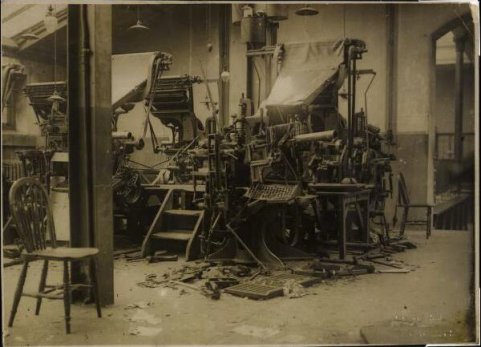
What Does A Printing Press Destroyed By The IRA Look Like?

Readers might remember a controversial speech made by the Sinn Fein leader Gerry Adams a couple of years ago during a fund-raising trip to New York in which, in the context of the modern Irish Independent’s hostility towards himself, he recalled how during the Tan war, Michael Collins had dispatched IRA Volunteers to Middle Abbey Street to bash up the Indo’s printing press while holding the editor at gunpoint.

Gerry was the target of a lot of criticism, and not just from the usual suspects, since his remarks strayed into that ambiguous strip of land that separates amusing anecdote from veiled threat.

Well have you ever wondered what a printing press looks like after the IRA has had an angry word or two with it? I came across this photo of a printing press destroyed by the IRA in August 1922. It belonged to the Cork Examiner and was taken out of commission just prior to the arrival of Free State troops in Cork during the civil war, an event the Examiner was apparently looking forward to.

printingpress


US Journalists Shower Hillary With Financial Donations

A very interesting and disturbing piece, at least for those who care about principled journalism, from the Center for Public Integrity about US journalists backing the two candidates in the presidential election.

Not just with their coverage but with their pocket books. And no surprise either that of the two main runners, Hillary Clinton is the overwhelming favourite of the fourth estate. Another way in which this election will leave America in a different place.

ap_16249789137991

What Nussbaum didn’t disclose in her dispatches: she contributed $250 to Democrat Hillary Clinton in April.

On the nation’s left coast, Les Waldron, an Emmy Award-winning assignment editor at television station KFMB, the CBS affiliate in San Diego, swung right in July, shooting $28 to Trump.

And Carole Simpson, a former ABC “World News Tonight” anchor who in 1992 became the first African-American woman to moderate a presidential debate, is not moderate about her personal politics: the current Emerson College distinguished journalist-in-residence and regular TV news guest has given Clinton $2,800.

Conventional journalistic wisdom holds that reporters and editors are referees on politics’ playing field — bastions of neutrality who mustn’t root for Team Red or Team Blue, either in word or deed.

But during this decidedly unconventional election season, during which “the media” has itself become a prominent storyline, several hundred news professionals have aligned themselves with Clinton or Trump by personally donating money to one or the other.

In all, people identified in federal campaign finance filings as journalists, reporters, news editors or television news anchors — as well as other donors known to be working in journalism — have combined to give more than $396,000 to the presidential campaigns of Clinton and Trump, according to a Center for Public Integrity analysis.

Nearly all of that money — more than 96 percent — has benefited Clinton: About 430 people who work in journalism have, through August, combined to give about $382,000 to the Democratic nominee, the Center for Public Integrity’s analysis indicates.

About 50 identifiable journalists have combined to give about $14,000 to Trump. (Talk radio ideologues, paid TV pundits and the like — think former Trump campaign manager-turned-CNN commentator Corey Lewandowski — are not included in the tally.)

Generally, the law obligates federal candidates only to disclose the names of people making contributions of more than $200 during a single election cycle, along with their addresses and employer and occupation. That means it’s likely that many more journalists have given the Clinton or Trump campaigns cash, but in amounts too small to trigger reporting requirements.

Together, these journalist-donors work for news organizations great and small, from The New York Times to sleepy, small-town dailies. While many of them don’t primarily edit or report on political news, some do.

And each news professional offers his or her own unique take on a basic question: Why risk credibility — even one’s livelihood — to help pad a presidential candidate’s campaign account?

Simpson today describes herself as an “academic” and “former journalist.” Therefore, she says she’s “free to do many things I was prohibited from doing as a working journalist,” including giving money to Clinton.

“I have been waiting for the day our country would have a woman president,” Simpson said. “When Hillary decided to run, I was delighted because I couldn’t think of a more qualified woman to seek the high office.”

Waldron, of KFMB in San Diego, describes himself as a “lower case ‘l’ libertarian,” and believes journalists like him who both vote and make small-dollar political donations are within their rights to do so.

Why give money to Trump, a man who Forbes last month estimated is worth $3.7 billion? To fight against Clinton.

“I’m a big, big fan of the United States Constitution,” Waldron said, and Clinton “seems to care very little for the Constitution.”

Said The New Yorker’s Nussbaum: “I rarely write about politics, but it’s true that the RNC-on-TV posts verged on punditry, and I can understand the concern about disclosure.”

Donations often banned

Almost any U.S. citizen or foreign national with a U.S. green card may, by law, give money to a federal political candidate.

But major news organizations often restrict, if not prohibit, their journalists (and occasionally non-journalist employees) from making political campaign contributions.

The news organizations’ overriding concern: Such contributions will compromise journalists’ impartiality or seed the perception that journalists are biased toward certain politicians or political parties.

The New York Timesethics handbook declares that its staffers may not give money to, or raise money for, political candidates or election causes. “Any political giving by a Times staff member would carry a great risk of feeding a false impression that the paper is taking sides,” it reads.

The Associated Press is even more blunt with its journalists, stating that “under no circumstances should they donate money to political organizations or political campaigns.”

CNN spokeswoman Bridget Leininger said the cable network “does not allow editorial staff to contribute to candidates or political parties.”

A review of several dozen newsroom ethics policies indicates many other notable news outlets have similar no-political-donations mandates, including The Dallas Morning News, Houston Chronicle, Los Angeles Times, National Public Radio, ProPublica, San Antonio Express-News, The Seattle Times and Tampa Bay Times. (The Center for Public Integrity’s staff handbook states that all employees are “prohibited from engaging in political advocacy or donating to political candidates at any level of government.”)

And while some journalists do give politicians money, the vast majority do not.

“Not having that affiliation helps me feel more independent,” said Margaret Sullivan, The Washington Post’s media columnist, and a former New York Times public editor and Buffalo News editor and vice president. “I wouldn’t do it, and when I was supervising a newsroom, we had rules against it. It’s a good discipline, I think.”

Although journalists may have a right to give money to political candidates, the act of doing so “easily could be perceived as a conflict of interest,” said Paul Fletcher, editor-in-chief of Virginia Lawyers Weekly, who recently served as president of the Society of Professional Journalists.

So concerned about bias was former Washington Post Executive Editor Leonard Downie Jr. that he didn’t even vote.

No restrictions

Strict political contribution policies are not, however, universal among news organizations.

What’s patently prohibited at one news organization may be perfectly permissible at another.

Some outlets also differentiate among newsroom employees: A reporter covering a governmental agency, for example, might be punished for cutting checks to a U.S. Senate or presidential candidate. But the resident arts correspondent or star sports writer? Play ball.

Take Orange County Register restaurant critic Brad Johnson in California, who this year made dozens of smalldollar contributions to Clinton’s campaign that total more than $750.

Digital First Media’s Southern California News Group, of which The Orange County Register is a part, expressly prohibits news reporters from engaging in campaign activities “related to candidates, campaigns or issues which they may cover,” news group Executive Editor Frank Pine said. But while Johnson fits the broad definition of “journalist,” Pine doesn’t consider Johnson a news reporter — and therefore, he’s free to give the Clinton campaign money.

Johnson concurs: “I don’t cover politics. I don’t do investigative reporting. I’m just interested in finding the best pad thai and sharing what I find with our readers.”

Bernadette On The Peace Process: ‘A State Of Chassis’

Police Ombudsman Accepts Liam Adams’ Complaint Against PSNI & Barra McGrory

The North’s Police Ombudsman’s office (PONI) has agreed to investigate a complaint from Liam Adams, brother of Gerry Adams and a convicted sex offender, that the PSNI had refused to question the North’s Director of Public Prosecutions, Barra McGrory about Gerry Adams’ prior knowledge of allegations that Liam Adams had sexually assaulted his daughter, Aine Dahlstrom.

The complaint arises out of a consultation Mr McGrory had with Gerry Adams that took place in 2007, two years before the allegations against Liam Adams became public and some six years before he was found guilty of sexual assault and sentenced to sixteen years in jail.

At the time Mr McGrory was Gerry Adams’ solicitor. Four years after the consultation with Gerry Adams he was appointed the North’s Director of Public Prosecutions. He had been fast-tracked prior to this to the Northern Bar.

The significance of all this lies in a statement that Gerry Adams gave to the police in 2007 denying any knowledge of the accusations against his brother.

If the allegations had been discussed with Barra McGrory in the consultation, which had taken place prior to him giving the statement to the PSNI, this would show that his police statement was false and Gerry Adams could be accused of lying to the police and withholding information, potentially serious criminal charges.

The refusal of the PSNI to question Barra McGrory arises from the discovery by the DPP in February 2015 of a file containing notes about the consultation with Gerry Adams some eighteen months after Liam Adams’ conviction and a few days before his appeal began in the Belfast High Court. Mr McGrory said he had found the file on a home computer, not a computer from his law offices.

Mr McGrory’s discovery of the file led the senior Crown counsel in the case to ‘advise’ the PSNI to question the DPP about what he knew, arising from the consultation, of Gerry Adams’ knowledge of the sexual assault claims against his brother – in other words what did Gerry Adams know, and when did he know it?

This the PSNI did not do, nor did they act on a criminal complaint lodged by Liam Adams’ legal advisers arising from this, hence the complaint lodged with the Police Ombudsman.

A June 2015 report by the North’s Attorney-General, John Larkin recommended that Gerry Adams should not be prosecuted for withholding evidence. The report was issued some three months after Mr McGrory discovered the computer file and alerted the authorities but since the PSNI never questioned him, it is unlikely that the Attorney-General could have advanced the story.

Asked about the status of the Liam Adams’ complaint, the Ombudsman’s office responded: “This is an ongoing investigation and are (sic) enquiries are continuing.”

However the decision by the Ombudsman to take the case appears to represent a volte-face by his office. In September the Ombudsman had rejected the complaint. One source familiar with the interaction told thebrokenelbow.com:

‘….the PONI (were) today (September 7th) saying they were not taking any action re his complaint because when they contacted the police officers involved, the PONI were informed that the officers had been advised by senior officers that Liam’s complaint was a legal matter not criminal and that it was being addressed by the Bar.’

Back in September 2015 I wrote a lengthy piece describing in some detail the background to the case and I reproduce it here, for the benefit of readers who are coming fresh to what is a complex and tangled case. Below that is a copy of recent correspondence between Liam Adams’ legal advisers and the Police Ombudsman’s office.

Here it is. Enjoy:

There is growing disquiet in the North’s legal world over the failure of the N.I. Director of Public Prosecutions, Barra McGrory QC to disclose to the PSNI a file he had kept containing details of a legal consultation held with the Sinn Fein president Gerry Adams in February, 2007 concerning allegations that his brother, Liam Adams had sexually abused his daughter, Ainé.

Mr McGrory was Gerry Adams’ solicitor at the time. He was appointed Director of Public Prosecutions in succession to Sir Alastair Fraser in November 2011.

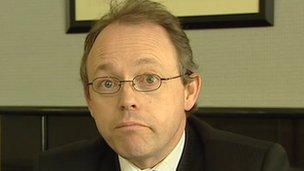
Barra McGrory - kept a file on a consultation with Gerry Adams but did not disclose it to PSNI or his own prosecution service

Barra McGrory – before he become the North’s DPP, he kept a file on a consultation with Gerry Adams but did not disclose it to PSNI or the North’s prosecution service, which he subsequently headed. Since the file dealt with law company business, it should have been on his law firm’s computer system but somehow made its way onto a home computer two years after he was made DPP. It therefore escaped a court order. How did that happen?

The file was eventually disclosed by Mr McGrory but not until February 2015, eighteen months after Liam Adams was tried and convicted on charges that he had sexually abused his daughter and almost exactly eight years after the consultation had taken place. This was only days before Liam Adams began an appeal against his conviction.

The senior Crown counsel involved in the case then ‘advised’ the PSNI to question Mr McGrory about what he knew about Gerry Adams’ knowledge of the abuse allegations. He could have ‘instructed’ the PSNI to do this but chose to ‘advise’ instead.

The PSNI chose not to follow this ‘advice’. Had they been ‘instructed’ to question him, they would have had no choice and Northern Ireland would have witnessed, albeit second hand, the spectacle of the Director of Public Prosecutions being questioned by police about allegations that he may have withheld evidence about a crime involving the most famous IRA-linked family in Ireland.

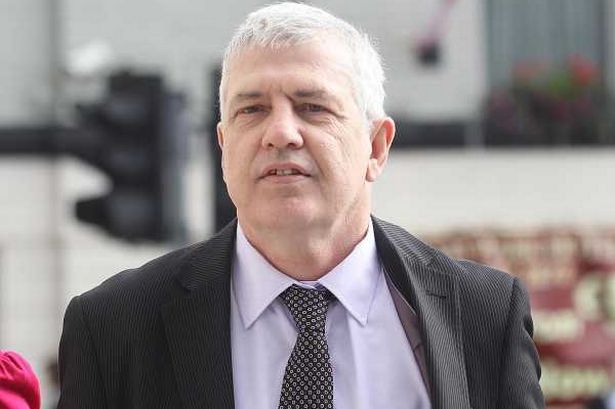
Liam Adams, pictured around the time of his trial

Liam Adams, pictured around the time of his trial

Instead, Mr McGrory’s response came in an unsigned statement on two A4 size sheets of paper which Mr McGrory’s solicitor sent to the Public Prosecution Service – which is headed by Mr McGrory, but who had recused himself from the Liam Adams’ case.

The contents of that explanation, which were passed on to the Liam Adams’ legal team, cannot be revealed because of a condition attached to its disclosure which said that it could only be used or revealed in legal proceedings.

Others present at the consultation were another Adams’ brother, Patrick, better known as Paddy Adams – who is a former Belfast Commander of the IRA – and the Sinn Fein president’s personal aide and press officer, Richard McAuley. Paddy Adams was a member of an IRA firing party at the funeral of hunger striker Joe McDonnell in 1981; he was shot and wounded and arrested by British troops.

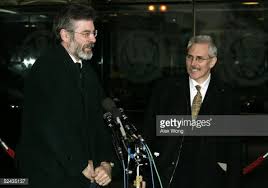
Richard McAuley, inseparable press aide to Gerry Adams outside Downing Street

Richard McAuley, inseparable press aide to Gerry Adams speaking to reporters during the peace process negotiations

The consultation took place just after Liam Adams had been arrested – on February 15th, 2007 – and questioned by PSNI detectives. Liam Adams’ daughter, Ainé had just revived a complaint she had first lodged in 1987, but had then withdrawn, and his arrest was leaked, apparently by the police, to The Sunday World newspaper. Liam Adams was not named in the report which instead referred to the arrest of a relative of a high-ranking republican.

Six years later, Aine Adams told The Belfast Telegraph that in 2007, Gerry Adams attempted to persuade her to seek a court injunction which would ban publicity about the scandal:

“He frantically phoned me about twenty times”, she told the newspaper, when he heard about the planned story. “He said he needed to make sure it didn’t get into the press to protect me. Looking back, he was buttering me up.”

According to sources familiar with the file, it also describes how Mr McGrory agreed to arrange a meeting between then PSNI Assistant Chief Constable, Peter Sheridon and Gerry Adams.

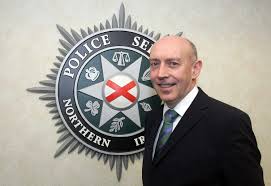
Former PSNI Assistant Chief Constable Peter Sheridan - has 'no recollection' of meeting Adams before he gave his PSNI statement

Former PSNI Assistant Chief Constable Peter Sheridan – has ‘no recollection’ of meeting Adams before he gave his statement to  PSNI detectives investigating allegations that Liam Adams had abused his daughter.

Allegedly, the document – or ‘minute’, as it is officially described – details that Mr Sheridan agreed to meet Mr Adams before he gave a statement in June 2007 to PSNI detectives investigating claims from Ainé Adams that she had been sexually assaulted by her father as a young child.

Contacted for comment by thebrokenelbow.com, Mr Sheridan, who quit the PSNI in 2008 and now heads Co-operation Ireland, said that he had “no recollection” of meeting Gerry Adams:

“I would have had no reason to, I was not part of the investigation team”, he said.

Contrary to what the ‘Gerry Adams’ file says, Mr Sheridan maintains that the leak about Liam Adams’ arrest did not come from the PSNI but from the republican community.

The question of Gerry Adams’ 2007 statement to the PSNI would later assume special significance, for in that statement he made no mention of any admission to him from Liam Adams that he had sexually abused his daughter Ainé.

However, eighteen months later, in 2009, he remembered that Liam had made an admission, allegedly during ‘a walk in the rain in Dundalk’, and included this in a fresh statement made to the PSNI.

He gave that statement a few weeks before being interviewed for a UTV documentary during which both Ainé and her mother claimed they had told Gerry Adams all about the sexual abuse. That led Liam Adams’ barrister, Eilis McDermott QC to accuse him of remembering the incident, ‘to save his political skin’.

Barra McGrory’s failure to hand over the 2007 file meant that the PSNI were not able to interview possibly important witnesses, including Paddy Adams, Richard McAuley and Peter Sheridan, about Gerry Adams’ knowledge of the sexual abuse allegations at that time. Nor was Liam Adams’ legal team able to question them in court.

The file, marked ‘Gerry Adams’, was found on Mr McGrory’s home computer. Liam Adams’ legal team had, before the first trial in April 2013, made a third party disclosure application for all relevant files kept by Mr McGrory’s then legal firm, PJ McGrory & Co dealing with Gerry Adams and the child sexual abuse allegations against Liam Adams.

His father, the late Paddy McGrory, had founded the firm and was one of the North’s ablest and best known criminal lawyers. He also was Gerry Adams’ lawyer and Barra McGrory inherited the SF leader as a client,  along with other prominent republicans – Bobby Storey was one – when his father died. (Full disclosure: he was also a friend of this writer and is dearly missed.)

Paddy McGrory - a friend of the author and father to Barra McGrory

Paddy McGrory – a friend of the author and father to Barra McGrory

The ‘Gerry Adams’ file was not amongst the documents handed over. The questions thus arise: was the file ever on the PJ McGrory computer system and if so, how and when did it make its way to Mr McGrory’s home computer?

A letter from the Public Prosecution Service to Liam Adams’ lawyers in February 15th, 2015, claimed that the minute:

“….only came to light last month when he was tidying up data stored on different computers held by him. This minute was contained in a folder relating to Gerard Adams. Mr McGrory was completely unaware of the minute when he made his police statement in connection with the trial of Liam Adams.”

The first trial of Liam Adams in April 2013 collapsed when it emerged that the trial judge, Corinne Philpott had neglected to hand over a prosecution file to the defence team. A second trial was held in September 2013 and in October, Liam Adams was found guilty on ten counts of sexual abuse.

His lawyers then launched an appeal which began on 25th March 2015. A month or so before the appeal began the Public Prosecution Service handed over to them the ‘Gerry Adams’ file discovered on Barra McGrory’s computer.

By this stage the file was of little use to Liam Adams’ lawyers. Not only had the first trial collapsed but Gerry Adams had been withdrawn from the witness list for the second trial after the defence had threatened to make a ‘bad character evidence’ application.

This meant that the defence was not able to summon Mr McGrory as a witness during the second trial and ask him about significant discrepancies between the undisclosed ‘Gerry Adams’ file and the statement he gave PSNI detectives. Nor were they able to call Paddy Adams, Richard McAuley or Peter Sheridan of the PSNI.

Because Gerry Adams did not figure in the trial, his dealings with Barra McGrory, his lawyer, also could not figure in the appeal.

According to sources familiar with both documents there is no reference at all in Mr McGrory’s 2012 PSNI statement to the consultation he had with Gerry Adams. In fact the two accounts are impossible to reconcile.

Said one source who has seen the recently rediscovered ‘Gerry Adams’ document:

In the ‘Gerry Adams’ document, Barra McGrory states that he had a consultation with Gerry Adams MP, who was accompanied by Patrick Adams and Richard McAuley in his office in February 2007. They discussed the case and the leaking of information to the press by the PSNI. Barra McGrory then contacted ACC Peter Sheridon who agreed that there had been a leak to the press by the PSNI and he said he would meet Gerry Adams voluntarily, before he made any statement to the PSNI.

In contrast, Mr McGrory’s statement to the PSNI, made on August 28th, 2012, reads in part:

Sometime in May or June 2007, I was contacted by the police and was informed they were seeking Gerry Adams’ co-operation in an investigation….I duly contacted Gerry Adams and arranged to consult. A consultation took place. I do not have a minute or record of that consultation….Following this consultation I contacted police and facilitated a meeting between them and Gerry Adams during which time he gave them a statement. I was present on June 20th, 2007 when that statement was made. The only notes I have to my involvement in this matter are those already disclosed consisting of 2 separate pages. The first note headed ‘meeting 1987’ was a consultation note I made during the interview with Constable Corrigan and Cartmill. The second note beginning ‘calls to Insp Black and Ivan Anderson…’ was made in 2009 after I was requested by Gerry Adams to ascertain who was now in charge of the investigation.

Troublesome Questions For Sinn Fein On The Separated Brethren…..

Gareth Mulvenna, whose engrossing book on the Tartan Gangs of Belfast in the early 1970’s I was pleased to review in these pages, has been engaged in a fascinating if somewhat fruitless dialogue with Sinn Fein over their claimed commitment to engage positively and sympathetically with their separated brethren in the Loyalist community.

I reproduce here without comment, his recent post on the matter on his blog, with thanks to Huw Bennett for bringing it to my attention. Free life-time subscription to TBE for those who correctly put names to the Shinners involved. Enjoy:

Too uncomfortable a conversation?

In August I e-mailed a prominent member of Sinn Féin who recently came out in praise of the Orange Order.

The e-mail was as follows:

Dear xxxxxx,

I am a friend of both xxxx xxxx xxxxxxx and xx xxxx xxxxxxx.

My first book, ‘Tartan Gangs and Paramilitaries – The Loyalist Backlash’ will be published by Liverpool University Press on 30 September 2016.

Tartan Gangs and Paramilitaries

I recently wrote about the book for The Irish Times: http://www.irishtimes.com/culture/books/tartan-army-how-belfast-gang-culture-morphed-into-paramilitarism-1.2737322

…and was also interviewed for Balaclava Street blog: https://balaclavastreet.wordpress.com/2016/07/15/tartan-gangs-and-paramilitaries-interview-with-gareth-mulvenna/

As it is based on in-depth interviews conducted by myself I am hoping that the book provokes a more nuanced understanding of the loyalist experience at the start of the conflict.

I was wondering whether you would be interested in an ‘Uncomfortable Conversations’ piece for An Phoblacht?

I look forward to your thoughts.

All the best,
Gareth

I received a response via e-mail from another Sinn Féin member, who I had a telephone conversation with. I repeated the premise of my proposed piece and had a good chat about the subject and other matters. He told me to make the article as uncomfortable as I wanted it to be; basically to pose questions of the readership. It was suggested to me that I should look at the party’s ‘Toward An Agreed and Reconciled Future: Sinn Féin policy on reconciliation and healing’, bearing it in mind while writing the UC piece.

In this document, the party states that,

Irish society has yet to deal with the harms, fears and mistrust from the conflict. Despite the contribution from Republicans, and many others, the legacy of conflict and division stills casts a long shadow over efforts to build a better future. At its core a reconciliation and healing process must create the common ground to deal with the fears, the unanswered questions from the past and shape thinking and deeds that will create a pathway from the past to the future.

It also states that Sinn Féin’s approach to reconciliation and healing ‘has been informed by…The need to be sensitive to all hurt, loss and pain [and] The need for an acknowledgement of all the different human experiences of conflict felt across society, on this island and beyond…’

With all of this in mind I stated that I would try and get a piece together within the next few weeks. Shortly thereafter – within days – my first child was born. The person I had been talking to was keen that I get the piece in by Sunday 14 August if at all possible – long before the original deadline, and the day after my daughter had returned from hospital. The reason being that An Phoblacht wanted the article for its September edition. I got the article written and submitted on time. I have included it in full below

Over two years ago I set out to write a book about the loyalist Tartan gangs in early 1970s Belfast. Through conversations and meetings with former Tartan gang members who became loyalist paramilitaries I was given access to former senior members the Young Citizen Volunteers and the Red Hand Commando, the latter of which little is known about. Inevitably the book became more than a study of the Tartan phenomenon of which the Bay City Rollers had no bearing on.

Republicans gave Tony Novosel’s fantastic study of early loyalist paramilitary political initiatives a fair hearing. Indeed, I dare say that some people might have been a bit taken aback by just how progressive the political formulations of the Ulster Volunteer Force and RHC were during the mid-1970s. These ideas laid the seed by which the Progressive Unionist Party would flourish from the late 1980s until the late 1990s, but in the dark days of Kingsmill and the UVF Butcher gang they found little favour on the grey and frantic streets of Northern Ireland.
My book, Tartan Gangs and Paramilitaries is one which I do hope republicans will read. It will be slightly harder to digest as it concentrates on the violent activities of loyalists. This is understandably an area which must be approached with sensitivity, but it is also one we cannot shy away from in attempting to find a peaceful resolution in Northern Ireland.

The book also importantly demonstrates that there is more nuance to the pre and early Troubles loyalist story than has previously been heard.
While loyalists will openly admit that many of their actions were driven by sectarianism, there has been little to no public acknowledgement by former republican combatants and their supporters that the PIRA carried out a number of sectarian killings. This continues to frustrate the loyalist and unionist community. The men that I interviewed for Tartan Gangs and Paramilitaries speak with an almost eidetic memory about their experiences of the Four Step Inn and Balmoral Furniture Showrooms bombings of September and December 1971 respectively.

They ask what the PIRA – long suspected of these ‘operations’ – had to gain from such devastating acts?

Did the PIRA seek to draw their Protestant working-class neighbours into a dirty sectarian war?
One thing that we know for certain is that these two events were key factors in driving many young loyalists, including Tartan gang members, into the nascent loyalist paramilitaries.

Throughout the loyalist ‘backlash’ in 1972 and beyond innocent Catholics would die at the hands of travelling gunmen, something which Plum Smith dispassionately stated some years later, ‘wasn’t personal’. Others would die horrific deaths in romper rooms.

Of course it is necessary to get past ‘whataboutery’, but the loyalists I interviewed would point to the gruesome deaths of Tom Kells, Robert McFarland and Robert Collins which were meted out by republicans. Republicans cannot seek to claim a ‘higher morality’ in legitimising their campaign.
For many loyalists, particularly those who agreed to ‘abject and true remorse’ this is an unresolved facet of post-conflict Northern Ireland.

Anthony McIntyre conceded in 2013 that ‘We [republicans] are often cynical about loyalists maintaining as a motivation a defence of their communities. Yet it features so much in their conversation and writings that it is simply impossible to think they are all lying’.

Gerry Adams stated in the Houses of the Oireachtas in 2014 that ‘The IRA that emerged in these years [between the 1950s and 1970s] was one built by ordinary people out of sheer necessity because of the conditions in which they found themselves. In nationalist areas of the north, the IRA was from the people, not some abstract idea’.

It might be impossible for many readers of An Phoblacht to acknowledge, but what I heard through the interviews that I carried out and the long conversations I had with former loyalists paramilitaries was a mirror image of Adams’s statement.

There is a long and deep feeling within the loyalist community that the PIRA set out over the final weekend of June 1970, during the St Matthews and Whiterock episodes, to kill Protestants in an attempt to provoke a backlash. It was shortly after these killings that a group of young men met in a house in Rosevale Street in the Oldpark area. There they agreed the founding principles of the grouping which would become the Red Hand Commando.

When Brendan Hughes stated that the republican objective was to ‘Get the Brits out through armed resistance, engage them in armed conflict and send them back across the water with their tanks and guns’ he may well have meant the British military presence in Northern Ireland. However, this was miscommunicated by republicans when they killed constitutional unionists and working-class Protestants. Ronnie McCullough, one of those young men who met in Rosevale Street, told me that such utterances couldn’t help but sound personal: ‘To get the British out of the north part of Ireland effectively meant to get us out of the north part of Ireland, because we subscribed to the British identity. Whilst we were Irish and recognised the fact that we do have an Irishness, we were Irish Unionists and wished to remain part of the British household’.
Republicans must ponder on the experiences and rationale which informed young loyalist men to take up arms in the early 1970s.

At the end of the month (August) I inquired about my article and was told that it was with the editor and hopefully ‘scheduled in in next month’. The article did not appear in the September AP.

In the middle of September I e-mailed to ask whether the editor had made a call on my piece. I was texted a few days later by the SF member I had been corresponding with and was told that he would phone me the next day. He didn’t for one reason or another.

At the beginning of October I sent a message to the SF member stating:

Hi xxxx – can I take it at this stage that the UC piece is not being printed? The deadline seemed pressing almost two months ago.

To which the response was:

Gareth can we schedule call. View is that pieces should engaged with UC parameters. Still up 4 piece. xxxx

I replied:

That is a shame xxxx – particularly that it has taken so long given that I rushed it together two days after the baby was born. Having read it again I feel it does fit into UC parameters but if AP doesn’t wish to publish it I think I will leave it.

The response was:

Gareth let’s schedule a call and talk through.

I very much appreciate the effort you put into article and I’d like to see a contribution from you in paper.

I wasn’t able to have the phone conversation due to work commitments and instead decided to write an e-mail outling my feelings:


Hi xxxx

Hope you are well.

Having now asked a few people with very different opinions on NI to read my article in the context of UC parameters they too are struggling to see why AP won’t publish – other than the obvious point…is the piece too uncomfortable?

Recent articles by Chris Donnelly and Ciaran MacAirt give one the impression that the UC series is now just republicans merely having very comforting conversations in-house and demanding that everyone else feel uncomfortable.

My article poses direct questions from loyalists to republicans that I encountered in my research – they are all crucial questions in legacy issues and reconciliation for Ireland. I am feeding back what I heard.

I absolutely fail to see where this article does not engage with the UC parameters and I can’t come to any conclusion other (which others agree with me on) that I have been censored so that there is no actual robust or truly uncomfortable questions asked of republicans in the UC series.

All the best
Gareth


There the correspondence ends…

I hold no ill will toward the person I was corresponding with (I actually admire quite a lot of their discourses and work) but the big question here is – are SF serious about their UC series? Or do they believe in an ‘acceptable level of discomfort’ when discussing legacy issues and the past?

How Was Denis Donaldson Recruited As A Spy?

Very few journalists knew Denis Donaldson as well as Tunis-born, French writer, Sorj Chalandon, a 27-year veteran of the left-wing daily Liberation and a prize-winning author of seven books.

One book which won him a prize – the Grand Prix du roman de l’Académie française – and which was short-listed for the prestigious Prix Goncourt, was ‘Return to Killybegs’, an account of an IRA man turned British spy – called Tyrone Meehan in the book – whose life is loosely based on Denis Donaldson’s own tragic voyage to that lonely cottage in Co Donegal.

Sorj Chalandon

Sorj Chalandon

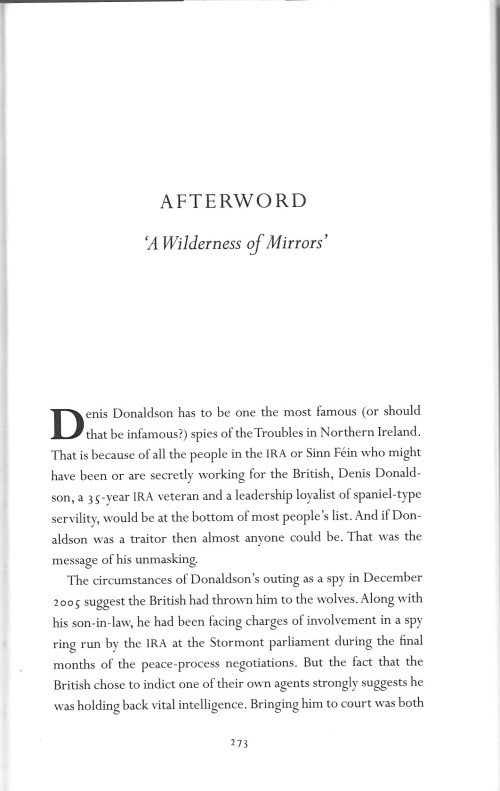
I was greatly honored to be asked to write an afterword to ‘Killybegs’ and to share in the praise for Chalandon’s work. Like anyone reading this book I was of course curious to discover how the author explained his hero’s entry to the ranks of British intelligence agents but, as I did in my afterword, I won’t reveal it here. Those eager to know will have to buy the book.

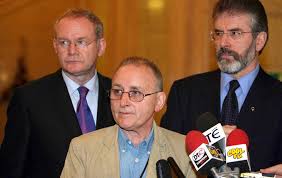
Denis Donaldson with two friends

Denis Donaldson with two friends

In the meantime I reproduce here the book cover and my afterword. Enjoy:

EPSON MFP image

EPSON MFP image

EPSON MFP image

EPSON MFP image

EPSON MFP image

Is This Hillary’s Iran-Contra Scandal?

The story below first appeared in the US edition of Politico nine days ago, and its implications are potentially serious for Hillary Clinton since some of the weaponry covertly – and illegally – supplied to anti-Gaddafi rebels made their way into ISIS hands in Libya.

160410-clinton-obama-libya-1160
Secretary of State Hillary Clinton walks with President Barack Obama on Sept. 12, 2012, where he spoke about the death of U.S. ambassador to Libya Christopher Stevens. | AP Photo

Obama DOJ drops charges against alleged broker of Libyan weapons

Arms dealer had threatened to expose Hillary Clinton’s talks about arming anti-Qadhafi rebels.

The Obama administration is moving to dismiss charges against an arms dealer it had accused of selling weapons that were destined for Libyan rebels.

Lawyers for the Justice Department on Monday filed a motion in federal court in Phoenix to drop the case against the arms dealer, an American named Marc Turi, whose lawyers also signed the motion.

The deal averts a trial that threatened to cast additional scrutiny on Hillary Clinton’s private emails as Secretary of State, and to expose reported Central Intelligence Agency attempts to arm rebels fighting Libyan leader Moammar Qadhafi.

Government lawyers were facing a Wednesday deadline to produce documents to Turi’s legal team, and the trial was officially set to begin on Election Day, although it likely would have been delayed by protracted disputes about classified information in the case.

A Turi associate asserted that the government dropped the case because the proceedings could have embarrassed Clinton and President Barack Obama by calling attention to the reported role of their administration in supplying weapons that fell into the hands of Islamic extremist militants.

“They don’t want this stuff to come out because it will look really bad for Obama and Clinton just before the election,” said the associate.

In the dismissal motion, prosecutors say “discovery rulings” from U.S. District Court Judge David Campbell contributed to the decision to drop the case. The joint motion asks the judge to accept a confidential agreement to resolve the case through a civil settlement between the State Department and the arms broker.

“Our position from the outset has been that this case never should have been brought and we’re glad it’s over,” said Jean-Jacques Cabou, a Perkins Coie partner serving as court-appointed defense counsel in the case. “Mr Turi didn’t break the law….We’re very glad the charges are being dismissed.”

Under the deal, Turi admits no guilt in the transactions he participated in, but he agreed to refrain from U.S.-regulated arms dealing for four years. A $200,000 civil penalty will be waived if Turi abides by the agreement.

A State Department official confirmed the outlines of the agreement.

“Mr. Turi cooperated with the Department’s Directorate of Defense Trade Controls in its review and proposed administrative settlement of the alleged violations,” said the official, who asked not be named. “Based on a compliance review, DDTC alleged that Mr. Turi…engaged in brokering activities for the proposed transfer of defense articles to Libya, a proscribed destination under [arms trade regulations,] despite the Department’s denial of…requests for the required prior approval of such activities.”

Turi adviser Robert Stryk of the government relations and consulting firm SPG accused the government of trying to scapegoat Turi to cover up Clinton’s mishandling of Libya.

“The U.S. government spent millions of dollars, went all over the world to bankrupt him, and destroyed his life — all to protect Hillary Clinton’s crimes,” he said, alluding to the deadly Sept. 11, 2012 terrorist attack on the U.S. Consulate in Benghazi, Libya.

Republicans hold Clinton responsible for mishandling the circumstances around that attack. And Stryk said that Turi was now weighing book and movie deals to tell his story, and to weigh in on the Benghazi attack.

Representatives of the Justice Department, the White House and Clinton’s presidential campaign either declined to comment or did not respond to requests for comment on the case or the settlement.

Turi was indicted in 2014 on four felony counts: two of arms dealing in violation of the Arms Export Control Act and two of lying to the State Department in official applications. The charges accused Turi of claiming that the weapons involved were destined for Qatar and the United Arab Emirates, when the arms were actually intended to reach Libya.

Turi’s lawyers argued that the shipments were part of a U.S. government-authorized effort to arm Libyan rebels.

It’s unclear if any of the weapons made it to Libya, and there’s no evidence linking weapons provided by the U.S. government to the Benghazi attacks.

“The proposal did not result in an actual transfer of defense articles to Libya,” the State Department official told POLITICO on Tuesday.

But questions about U.S. efforts to arm Libyan rebels have been mounting, since weapons have reportedly made their way from Libya to Syria, where a civil war is raging between the Syrian Government and ISIL-aligned fighters.

In an interview last year, Turi said the U.S. was aware that weapons being shipped into Libya during the unrest there were being immediately diverted to Syria.

“When this equipment landed in Libya, half went one way, and the half went the other way,” Turi said in an interview broadcast on Fox Business Channel. “The half that went the other way is the half that ended up in Syria.”

Turi also said he came up with an idea he termed “zero footprint,” where the U.S. would send weapons to Libyan rebels through Arab countries, like Qatar and the United Arab Emirates.

During 2013 Senate hearings on the 2012 Benghazi attack, Clinton, under questioning from Sen. Rand Paul (R-Kentucky), said she had no knowledge of weapons moving from Libya into Turkey, for ultimate transfer to Syria.

Wikileaks head Julian Assange in July suggested that he had emails proving that Clinton “pushed” the “flows” of weapons “going over to Syria.”

Additionally, Turi’s case had delved into emails sent to and from the controversial private account that Clinton used as Secretary of State, which the defense planned to harness at any trial.

At a court hearing in 2015, Cabou said emails between Clinton and her top aides indicated that efforts to arm the rebels were — at a minimum — under discussion at the highest levels of the government.

“We’re entitled to tell the jury, ladies and gentlemen of the jury, the Secretary of State and her highest staff members were actively contemplating providing exactly the type of military assistance that Mr. Turi is here to answer for,” the defense attorney said, according to a transcript.

Turi’s defense was pressing for more documents about the alleged rebel-arming effort and for testimony from officials who worked on the issue for the State Department and the CIA. The defense said it planned to argue that Turi believed he had official permission to work on arms transfers to Libya

“If we armed the rebels, as publicly reported in many, many sources and as we strongly believe happened and as we believe at least one witness told the grand jury, then documents about that process relate to that effort,” Cabou told Campbell at the same hearing last year.

Hillary Responds To Calls To Release Her Goldman Sachs Speeches

Hillary’s Cat Out Of The Bag – Her Campaign Against Sanders Was A Lie

Courtesy of Wikileaks – and, if the Obama White House is to be believed, Vladimir Putin – those Wall Street speeches that Hillary Clinton refused to make public during her bitter primary battle with Bernie Sanders have now been released to the world. Or at least some of their contents have.

And what do they show? Well, no surprise there. Hillary is, as many have long suspected, a bought and paid for shill of Wall Street whose real, private stance on key economic matters is starkly at variance with the one she presented to the Democratic base during the primaries.

Her speeches show that, like her husband’s two terms in Washington, a Hillary Clinton White House is likely to be every bit as Wall Street friendly.

Meanwhile Donald Trump’s ‘groping’ is the issue that leads the New York Times today, as it does with most of the mainstream media. On the Times‘ webpage, the Hillary story ranks third, below two Trump pieces. It will be interesting to see how the Wikileaks story is treated elsewhere.

For myself, I rather think we all owe Putin and Wikileaks a vote of thanks.

Here is the New York Times’ version of the Hillary story. Enjoy:

Leaked Speech Excerpts Show a Hillary Clinton at Ease With Wall Street

By AMY CHOZICK, NICHOLAS CONFESSORE and MICHAEL BARBARO

OCT. 7, 2016

In lucrative paid speeches that Hillary Clinton delivered to elite financial firms but refused to disclose to the public, she displayed an easy comfort with titans of business, embraced unfettered international trade and praised a budget-balancing plan that would have required cuts to Social Security, according to documents posted online Friday by WikiLeaks.

The tone and language of the excerpts clash with the fiery liberal approach she used later in her bitter primary battle with Senator Bernie Sanders of Vermont and could have undermined her candidacy had it become public.

Mrs. Clinton comes across less as a firebrand than as a technocrat at home with her powerful audience, willing to be critical of large financial institutions but more inclined to view them as partners in restoring the country’s economic health.

In the excerpts from her paid speeches to financial institutions and corporate audiences, Mrs. Clinton said she dreamed of “open trade and open borders” throughout the Western Hemisphere. Citing the back-room deal-making and arm-twisting used by Abraham Lincoln, she mused on the necessity of having “both a public and a private position” on politically contentious issues. Reflecting in 2014 on the rage against political and economic elites that swept the country after the 2008 financial crash, Mrs. Clinton acknowledged that her family’s rising wealth had made her “kind of far removed” from the struggles of the middle class.

The passages were contained in an internal review of Mrs. Clinton’s paid speeches undertaken by her campaign, which was identifying potential land mines should the speeches become public. They offer a glimpse at one of the most sought-after troves of information in the 2016 presidential race — and an explanation, perhaps, for why Mrs. Clinton has steadfastly refused demands by Mr. Sanders and Donald J. Trump, her Republican rival, to release them.

Mrs. Clinton’s campaign would not confirm the authenticity of the documents. They were released on Friday night by WikiLeaks, the hacker collective founded by the activist Julian Assange, saying that they had come from the email account of John D. Podesta, Mrs. Clinton’s campaign chairman.

In a statement, a Clinton spokesman, Glen Caplin, suggested that the leak could have been engineered by Russian officials determined to help Mr. Trump and noted that a Twitter message from WikiLeaks promoting the documents had incorrectly identified Mr. Podesta as a co-owner of his brother’s lobbying firm.

But Clinton officials did not deny that the email containing the excerpts was real.

The leaked email, dated Jan. 25, does not contain Mrs. Clinton’s full speeches to the financial firms, leaving it unclear what her overall message was to these audiences.

But in the excerpts, Ms. Clinton demonstrates her long and warm ties to some of Wall Street’s most powerful figures. In a discussion in the fall of 2013 with Lloyd Blankfein, a friend who is the chief executive of Goldman Sachs, Mrs. Clinton said that the political climate had made it overly difficult for wealthy people to serve in government.

“There is such a bias against people who have led successful and/or complicated lives,” Mrs. Clinton said. The pressure on officials to sell or divest assets in order to serve, she added, had become “very onerous and unnecessary.”

In a separate speech to Goldman Sachs employees the same month, Mrs. Clinton said it was an “oversimplification” to blame the global financial crisis of 2008 on the U.S. banking system.

“It was conventional wisdom,” Mrs. Clinton said of the tendency to blame the banking system. “And I think that there’s a lot that could have been avoided in terms of both misunderstanding and really politicizing what happened.”

And she praised a deficit-reduction proposal from President Obama’s fiscal commission that called for raising the Social Security retirement age, saying that the commission’s leaders “had put forth the right framework.”

Such comments could have proven devastating to Mrs. Clinton during the Democratic primary fight, when Mr. Sanders promoted himself as the enemy of Wall Street and of a rigged economic system.

Several of the most eye-popping passages ultimately express more nuanced explanations of her views. When Mrs. Clinton describes herself as “far removed” from average Americans and their finances, she had just finished describing her growing appreciation for how “anxiety and even anger in the country over the feeling that the game is rigged.” And she reminds the audience that her father “loved to complain about big business and big government.”

The Clintons have made more than $120 million in speeches to Wall Street and special interests since Bill Clinton left the White House in 2001. Mrs. Clinton typically earned $225,000 for speeches, though she sometimes donated her fees to her family foundation.

“I kind of think if you’re going to be paid $225,000 for a speech, it must be a fantastic speech,” Mr. Sanders said during the primary, “a brilliant speech which you would want to share with the American people.”

As her race against Mr. Sanders — who now campaigns for Mrs. Clinton — grew unexpectedly contentious and close, Mrs. Clinton sought to portray herself as deeply skeptical of Wall Street and eager to punish its wayward leaders.

“I believe strongly that we need to make sure that Wall Street never wrecks Main Street again,” Mrs. Clinton said in January. “No bank is too big to fail, and no executive is too powerful to jail.”

As she sought to burnish her image as an advocate of working America, Mrs. Clinton declared her opposition to the Trans-Pacific Partnership, Mr. Obama’s 12-nation trade pact, and distanced herself from Nafta, which her husband signed into law.

But in a 2013 speech to a Brazilian bank, Mrs. Clinton took a far different approach. “My dream,” she said, “is a hemispheric common market, with open borders, sometime in the future.”

Some of her paid remarks embrace the view that the public can benefit when Wall Street partners with government. When it comes to writing effective financial regulations, Mrs. Clinton said, “The people that know the industry better than anybody are the people who work in the industry.”

Foreign hackers — authorized by Russian security agencies, according to national security officials — have successfully penetrated the operations of the Democratic Party and its candidates over the past year. They broke into the email servers of the Democratic National Committee, revealing embarrassing internal messages in which party leaders who were supposed to be neutral expressed their preference for Mrs. Clinton even as she was campaigning against Mr. Sanders. And Mr. Assange is an avowed critic of Mrs. Clinton who has made clear that he wishes to hurt her chances of winning the presidency.

Half of all registered voters said it bothered them “a lot” that Mrs. Clinton had given numerous paid speeches to Wall Street banks, according to a Bloomberg Politics poll in June.

Asked in an interview that month if the practice was self-defeating, given the anger over income inequality, Mrs. Clinton responded that her predecessors as secretary of state had given paid speeches, too.

“I actually think it makes sense,” she said. “Because a lot of people know you have a front-row seat in watching what’s going on in the world.”