Huma Abedin, former wife of Anthony Wiener, whose email traffic with her former spouse gave the FBI an excuse/reason to re-open Hillary Clinton’s private email server scandal. Pictured here at Hillary’s concession speech:


Huma Abedin, former wife of Anthony Wiener, whose email traffic with her former spouse gave the FBI an excuse/reason to re-open Hillary Clinton’s private email server scandal. Pictured here at Hillary’s concession speech:
Posted in Uncategorized
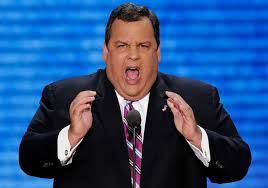
He’s back!!!!!!!!!!
Posted in Uncategorized
These are not my thoughts but those of Naked Capitalism, one of my favourite blogs. I don’t find much to disagree with here, except I would probably be more harsh on la Clinton, le Clinton and the whole bunch of useless establishment Dems. Enjoy:
Even if Clinton manages to come out with a lead in the popular vote when California’s results are added to the evening’s totals1, the results are a stunning repudiation to pollsters, the punditocracy, the mainstream media, professionals in both major parties, and most important, to Hillary Clinton herself.
I seriously considered shorting the market first thing yesterday morning, and have the e-mail record to prove it. And this wasn’t confirmation bias since I decided not to vote for any Presidential candidate.
It was based on the fact that every single bit of anecdotal information I had from real people ran against what experts and the polls were saying. For instance, the overwhelming majority of Hispanics I ran into, once I gave them latitude to express their views by saying I hated both candidates, made clear they were seriously entertaining a Trump vote, including a van driver in Dallas. The upper income, 30s to middle aged guys in my gym, all of whom save one had been Sanders voters, were voting for Trump (I added another one to that tally tonight). A 70 year old college educated friend in Dallas, never married, who’d lived ten years in New York running a major department at Christies and joked that she was the only one of her girlfriends not to carry a gun in her purse, said apologetically that she thought both candidates were terrible but Trump might be a tiny bit less terrible. The 40-ish partner from Apollo who sat next to me on the plane to Dallas (a rare sighting, private equity partners rarely slum by flying commercial) was reading the New York Post and checking Drudge on his iPhone and thus clearly not going to vote for Clinton.
So even though my sample was small (and I have more examples), it said the closeted Trump voter was a real phenomenon and likely bigger than anyone was allowing for.
The election outcome was based not just on Clinton being a terrible candidate on the merits, but on the abjectly poor conduct of the Clinton campaign.
Let us not forget that Clinton had every advantage: Presidential campaign experience, the full backing of her party, a much bigger ground apparatus, oodles of experts and surrogates, the Mighty Wurlitzer of the media behind her, an opponent widely deemed to be world-class terrible – utterly unqualified, undisciplined, offensive, with a mother lode of scandals – and what historically was deemed the most important asset of all, a large lead in fundraising.
Yet Clinton was a lousy campaigner and strategist. By all accounts, she was a micromanager who regularly overrode her staff’s advice. All the big-ticket Madison Avenue spin-meistering could not get the dogs to eat enough dog food.
You don’t win voters by telling them they are stupid and beneath contempt. That is tantamount to saying you have no intention of representing them
You don’t win voters by failing to offer a positive vision and selling only fear
You don’t win voters by trying to get them to believe you’ll suddenly behave differently and take positions contrary to the ones you’ve held for decades to extract cash from the the richest and most powerful
You don’t win voters with a record of failing upward
You don’t win voters by saying your opponent is a sleaze, even when undeniably true, when you are at least as sleazy yourself.
Posted in Uncategorized
This graph records the decline in print newspaper advertising revenue in the US between 1950 and 2014 and shows quite compellingly that the cause can be found on the internet, primarily in the shape of Google and Facebook.
There is no reason to suppose that this pattern is not repeated in Ireland, Britain or elsewhere in Europe. Interestingly. print media efforts to raise money themselves on the internet, presumably through web subscriptions, have had little ameliorating effect according to the graph.
Bye, bye newspapers…….

Posted in Uncategorized
Posted in Uncategorized
The issue of republican abstention from the Westminster parliament has always been framed by republicans themselves in simple ideological terms: taking seats in parliaments established by British law or fiat implied in an undeniable fashion acceptance of, and acquiescence to British claims of sovereignty in Ireland.
For traditional republicans that always meant that while Sinn Fein candidates could and did stand for election to all the post-1921 parliaments in Britain and Ireland, they would never take their seats.
It was not so much about taking the oath of allegiance that successful candidates would be asked to swear, albeit that such oaths were in themselves regarded as obnoxious, as about what the oath implied regarding Irish independence, or rather its lack thereof.
In the case of modern Sinn Fein, the ideology was set aside in 1986 when Sinn Fein voted at its ard-fheis to take seats in the Dublin parliament, Dail Eireann, whose origin lies in the 1921 settlement which also partitioned Ireland and kept part of Ireland, in the North, under British rule, albeit at arms’ length.
Once breached, a principle ceases to be a principle and becomes instead a tactic, to be followed or discarded as circumstances and political expediency dictate. And so it has been with Sinn Fein and by such a route has the party’s journey been mapped.
The principle was further breached in 1998, with the Good Friday Agreement and Sinn Fein’s subsequent agreement to take seats in the new Northern Assembly. Having decided to take seats in the Dail, the party could hardly do otherwise.
Throughout Sinn Fein’s lengthy and slow voyage to constitutional nationalism – and that is what it has been – tactical considerations have always dictated the pace and direction of the expedition.
Prime among the factors influencing this journey has been the mood of the IRA’s grassroots supporters and the caution of Sinn Fein’s leadership; dropping Dail abstentionism was achieved, for instance, by extravagant promises never to abandon armed struggle (boosted by Libyan arms shipments which had begun to arrive, a secret that by 1986 was being increasingly shared with key figures) and the fact that taking seats in the Dail was less objectionable to the Northerners than Stormont or Westminster.
By the time the decision was made to take seats at Stormont, the abstentionist argument had been stripped of any ideological principle; what mattered was what the SF leadership wanted and how skilled their management of the IRA grassroots was.
On that basis there is no reason why Sinn Fein should not, could not take its seats at Westminster, as speculation suggests the party’s leadership may be mulling in the wake the court decision on Brexit in London last week.
And to judge by the friendliness that now exists between Sinn Fein’s Northern leader Martin McGuinness and the British Queen – as evident in this clip published by The Daily Telegraph earlier this year – the party may have less difficulty swearing the oath of allegiance to her than might be imagined.
Posted in Uncategorized
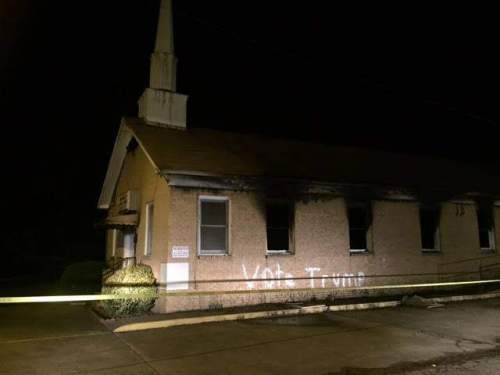
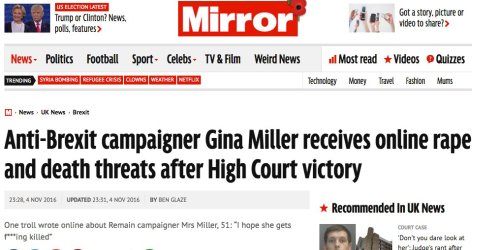
This is a photo of Hopewell Baptist church in Mississippi after Donald Trump supporters set it ablaze. Below it is a headline in the UK daily, The Daily Mirror following a successful bid at the High Court in London to force Brexiteers to refer the anti-EU vote to the British parliament. Below that is a photo of the Brexiteers target, Gina Miller.
What do all three pics have in common? You got, it. The targets are Black, the attackers racist Whites.
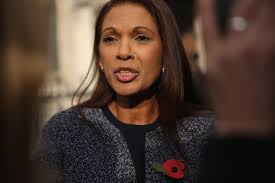
Gina Miller – target of racist Brexiteers
Posted in Uncategorized
Nate Silver is one of America’s best known and consistently reliable election forecasters. A former reporter for The New York Times, he left that paper a few years ago and set up his own blog, FiveThirtyEight, which appears on the ESPN website.
In this analysis, Silver accepts that the gap between Trump and Clinton is narrowing, evidence that recent sex scandals have not harmed him while distrust of Hillary may have been fired up thanks to the FBI’s re-opening of the probe of her email server. If the gap continues to narrow, he concludes, then Trump has a path to victory next Tuesday. Brexit, how are ye?
Tuesday was another pretty good day of polling for Donald Trump. It’s also not an easy day to characterize given the large number of polls published. You could cherry-pick and point to the poll that has Trump up 7 percentage points in North Carolina, for example, or the ABC News/Washington Post national tracking poll that has Trump up 1 point overall. And you could counter, on the Hillary Clinton side, with a poll showing her up by 11 points in Pennsylvania, or a national poll that gives her a 9-point lead.1
Our model takes all this data in stride, along with all the other polls that nobody pays much attention to. And it thinks the results are most consistent with a 3- or 4-percentage point national lead for Clinton, down from a lead of about 7 points in mid-October. Trump remains an underdog, but no longer really a longshot: His Electoral College chances are 29 percent in our polls-only model — his highest probability since Oct. 2 — and 30 percent in polls-plus.
Whenever the race tightens, we get people protesting that the popular vote doesn’t matter because it’s all about the Electoral College, and that Trump has no path to 270 electoral votes. But this presumes that the states behave independently from national trends, when in fact they tend to move in tandem. We had a good illustration of this in mid-September, when in the midst of a tight race overall, about half of swing state polls showed Clinton trailing Trump, including several polls in Colorado, which would have broken Clinton’s firewall.
This time around, we haven’t seen too many of those polls in Clinton’s firewall states, such as Colorado, Pennsylvania, Wisconsin and Michigan. But that’s misleading, because we haven’t seen many high-quality polls from those states, period! We have seen lots of polls from North Carolina and Florida — for some reason, they get polled far more than any other states — and plenty of them have shown Trump gaining ground, to the point that both states are pure toss-ups right now.
So, should you expect to see polls showing Clinton behind in states like Colorado and Wisconsin? Not necessarily. Clinton probably still leads in those states, and we’d expect her to win them if she wins nationally by 4 points or so, where national polls have the race.
Here’s an illustration of that. From a set of simulations the polls-only model ran earlier this evening, I pulled the cases where Clinton won the national popular vote by 3 to 5 percentage points. In other words, we’re positing that the national polling average is about right, and seeing how the results shake out in the states:
| STATE | ELECTORAL VOTES | PROJECTED MARGIN | TRUMP WIN PROBABILITY (%) |
|---|---|---|---|
| Clinton “firewall” (272 EV) | |||
| New Mexico | 5 | -7.7 | 6 |
| Maine | 2 | -7.5 | 12 |
| Virginia | 13 | -6.3 | 3 |
| Minnesota | 10 | -5.7 | 6 |
| Wisconsin | 10 | -5.0 | 7 |
| Michigan | 16 | -4.8 | 7 |
| New Hampshire | 4 | -4.6 | 17 |
| Pennsylvania | 20 | -4.6 | 8 |
| Colorado | 9 | -4.1 | 10 |
| _ | |||
| Other competitive states | |||
| Nevada | 6 | -1.2 | 37 |
| North Carolina | 15 | -0.4 | 46 |
| Maine CD-2 | 1 | -0.3 | 48 |
| Florida | 29 | -0.3 | 47 |
| Ohio | 18 | +1.2 | 66 |
| Arizona | 11 | +1.6 | 68 |
| Iowa | 6 | +1.6 | 68 |
| Nebraska CD-2 | 1 | +3.5 | 64 |
| Georgia | 16 | +4.9 | 92 |
| Alaska | 3 | +5.9 | 75 |
| Utah | 6 | +8.9 | 77 |
Trump’s chances are slim-to-none in this scenario. His odds are 10 percent or below in all of the Clinton firewall states except for Maine and New Hampshire — both of which our model considers more uncertain than other states for a variety of reasons. And Maine wouldn’t be enough to put Trump ahead anyway.2 Sure, there’s the chance that the polling in one of the other states could be wacky (maybe there’s an unexpectedly high Gary Johnson vote in Colorado, for instance). But if that happens, Clinton has some backup options in the form of Florida, North Carolina and Nevada. She’d have to get really unlucky to lose the Electoral College with a popular vote lead like the one she has now.
But the thing is, this doesn’t really have anything to do with an intrinsic advantage for Clinton in the Electoral College, or Trump’s lack of a path to 270 electoral votes. It’s just saying that if the polls are about right overall — even if they’re off in some individual states — Clinton will win. We agree with that, and that’s why Clinton’s a favorite in our model overall. The polls have her ahead.
The question is how robust Clinton’s lead would be to a modest error in the polling, or a further tightening of the race. So here’s a second set of simulations, drawn from cases in which Trump or Clinton win the national popular vote by less than 2 percentage points:
| STATE | ELECTORAL VOTES | PROJECTED MARGIN | TRUMP WIN PROBABILITY (%) |
|---|---|---|---|
| Clinton “firewall” (272 EV) | |||
| New Mexico | 5 | -4.1 | 20 |
| Maine | 2 | -3.0 | 32 |
| Virginia | 13 | -2.7 | 21 |
| Minnesota | 10 | -1.8 | 31 |
| Wisconsin | 10 | -1.0 | 37 |
| Pennsylvania | 20 | -1.0 | 39 |
| Michigan | 16 | -1.0 | 38 |
| Colorado | 9 | -0.3 | 46 |
| New Hampshire | 4 | -0.3 | 48 |
| _ | |||
| Other competitive states | |||
| Nevada | 6 | +2.6 | 73 |
| North Carolina | 15 | +3.3 | 83 |
| Florida | 29 | +3.7 | 86 |
| Maine CD-2 | 1 | +4.1 | 68 |
| Ohio | 18 | +5.1 | 92 |
| Arizona | 11 | +5.4 | 91 |
| Iowa | 6 | +5.6 | 91 |
| Nebraska CD-2 | 1 | +7.1 | 74 |
| Georgia | 16 | +8.2 | 98 |
| Alaska | 3 | +9.5 | 84 |
| Utah | 6 | +11.6 | 82 |
This isn’t a secure map for Clinton at all. In a race where the popular vote is roughly tied nationally, Colorado and New Hampshire are toss-ups, and Clinton’s chances are only 60 to 65 percent in Wisconsin, Michigan and Pennsylvania. She has quite a gauntlet to run through to hold her firewall, and she doesn’t have a lot of good backup options. While she could still hold on to Nevada, it doesn’t have enough electoral votes to make up for the loss of Michigan or Pennsylvania. And while she could win North Carolina or Florida if polls hold where they are now, they’d verge on being lost causes if the race shifts by another few points toward Trump. In fact, Clinton would probably lose the Electoral College in the event of a very close national popular vote.
It’s true that Trump would have to make a breakthrough somewhere, by winning at least one state in Clinton’s firewall. But that’s why it’s not only reasonable but 100 percent strategically correct for Trump to be campaigning in states such as Michigan and Wisconsin. (I’ll grant that New Mexico is more of a stretch.) Sure, Trump’s behind in these states, but he has to win somewhere where he’s behind — or he’s consigning himself to four more years in Trump Tower instead of the White House. Michigan and Wisconsin are as reasonable as any other targets: Trump isn’t any further behind in them than he is in higher-profile battleground states such as Pennsylvania, and the demographics are potentially more favorable for him.
If you want to debate a campaign’s geographic planning, Hillary Clinton spending time in Arizona is a much worse decision than Trump hanging out in Michigan or Wisconsin. Sure, she could win the state — but probably only if she’s having a strong night nationally. If the results are tight next Tuesday instead, Michigan and Wisconsin are much more likely to swing the election.
Nate Silver is the founder and editor in chief of FiveThirtyEight
Posted in Uncategorized
I have been following David Malone via his blog Golem XIV for a good few years now and have always found his take on matters economic rousing and provocative.
A member of the UK Green Party, he gives an interview (below) on what happened to him when he blew the lid on a particularly seamy piece of money-laundering by banks of stolen Russian government funds and underneath that is an 2012 article which explains in easy-to-understand detail, just exactly how the banks go about this seamy business.
One conclusion that he doesn’t make, but which I do, is that every time Hillary gets a $250k check from a bank to give a speech, a measurable amount of that payment is derived from the profits made by the sale of drugs in some of America’s poorest neighbourhoods. And much the same happens all over Europe.
He also explains that aside from banks, casinos are also favoured places to clean dirty drug money which begs one question: why do so many of Donald Trump’s casinos go bust? Answer: Well they do, but Donald never seems to. Wonder why……
Such nice people we have running to lead the so-called free world.
(By the way, did you know that Spain still has two Gibraltar-like colonies in Morocco? They are called Cueta and Melilla and have become centres of drug money-laundering by international banks.)
Posted in Uncategorized


 The Broken Elbow
You must be logged in to post a comment.