Once upon a time, a long time ago, in fact a very, very long time ago, the United States was a radical place where people were quick to stand up to authority when it abused its powers. It was these attitudes that led the American colonists to throw the English out of the country, declare independence and set up a republic free of monarchical interference from London. America set an example first to France which had its revolution in 1789, thirteen years after the Declaration of Independence, and then to Ireland where an uprising took place in 1798 and was brutally put down by Lord Cornwallis, the same barbarian whose ass had been badly spanked by the American colonists at Yorktown. The United Irishmen rebellion, as it was known, laid the foundations of modern, non-sectarian Irish Republicanism, the outworkings of which are plain to see at Boston College this week. The United Irishmen’s revolt and that of the French were essentially about the same things that had inspired the Americans: a desire to throw off the yoke of intolerable and unjust authority.
But as I said that was long, long ago. The America of 2012 is as different from that of 1776 as it is possible to be. The modern America is the America of the one per cent versus the ninety-nine per cent, of corporations who control what people eat, read and watch on television, of politicians who are corrupted by the same corporations’ profits and, for the last decade, an America of the security state, where fear of a poorly-armed, brown-skinned enemy many thousands of miles away has created a profitable industry of watchers and scaremongers, a government which spies uncontrollably on its citizens, where drones fly above homes and roads filming their every day activity, of a policing system that routinely employs agents provocateurs to invent and amplify the threat and where just the mention of the word terrorism is sufficient to induce communal obedience and compliance and where a President with a stroke of a pen can imprison an American citizen for life or sign his or her life away.
It is also an America where deference to power is commonplace and its polar opposite a rare and infrequent phenomenon. Unquestioning obedience to authority and power, driven by fear of the consequences of doing otherwise and the personal benefit that can derive from conforming to it, is invariably the rule in modern America. If the Americans of 2012 could be transplanted back to the America of 1776, there would have been no revolution, no declaration of a republic, no written constitution, no Bill of Rights and France and Ireland – and arguably the world – would be immeasurably poorer for it. Americans would still be kissing the ass of the Queen of England and a very different red, white and blue flag would flutter over its buildings. When the Occupy Wall Street movement erupted briefly on the streets of New York and elsewhere last Fall the most remarkable thing about it was that it had happened at all. The America of 1776 is a dim, distant thing but so too is the America of the Sixties and Seventies.
Throughout the saga of the Boston College archives, one voice has been notable for its dependable defense of Boston College as it abandoned its interviewees, fled the legal field of battle and left its researchers alone to fight on to protect those to whom the college had given such solemn assurances of confidentiality when they agreed to be interviewed about their lives in the IRA and Ulster Volunteer Force (UVF).
I have never met Ted Folkman. I am sure he is a good person who loves his family dearly and his dogs and cats almost as much. I also hope that he can be persuaded out of his dogged and pathetically predictable advocacy of Boston College’s legal strategy and criticism of that of the researchers, and by proxy the interviewees which he has pursued through his blog Letters Blogatory. I’d like to think that he arrived at his various positions on the Boston College subpoenas by dint of intellectual discovery rather than deference to local power and wealth – but I would have to be persuaded. I have ignored most of his posts on the subject or at least not allowed myself to get worked up by them. But a recent posting proved to be the unbearable straw and so myself and Anthony McIntyre drew up this reply to Ted Folkman, which I hope you enjoy:
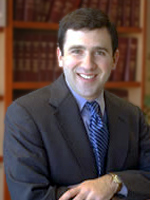
Ted, or to give him his correct name, Theodore Folkman
Ted Folkman, a Boston based lawyer, is living proof that because one follows a case it does not follow that they come remotely close to grasping what lies at the heart of it.
He writes that he has been struck by a change in emphasis among those ‘publishing articles critical of subpoenas.’ In essence he means Ed Moloney and Anthony McIntyre given his accompanying reference to ‘their defeat in the District Court.’
There has not been a shift in emphasis but rather an expansion of the discussion to encompass the conditions that helped produce the crisis that has beset the Belfast Project. The fight to prevent the enforcement of the subpoenas, although abandoned by Boston College, is very much a work in progress. Are we in court contesting the enforceability merely for the optics?
Ted Folkman seeks to frame the current debate in terms of an assumption on our part that the subpoenas are enforceable. The problem is less that the subpoenas are enforceable but more that they could ever have been issued in the first place. Boston College is on public record as stating that ‘the arrival of subpoenas was ‘totally unexpected’. It found them totally unexpected, despite its current waffling about ‘to the extent American law allows’ only because it was certain no such action was possible; an assurance it separately conveyed to both sides of the Belfast Project, loyalist and republican.
In the contract given to the Belfast project director it was stated that:
each interviewee is to be given a contract guaranteeing to the extent American law allows the conditions of the interview and the conditions of its deposit at the Burns Library including terms of an embargo period, if this becomes necessary…
Yet that undertaking was never put into effect. BC did not give each interviewee a contract to this effect and the question must be why not? Why did they break their word? What they did was bury the ‘American law’ reference in a separate contract with Ed Moloney. Had this reference been included in the donor agreement this would have been a red flag to everyone, project director, interviewers and interviewees alike and the project would have been dead in the water. But the reference was excluded. Why? Was it because BC did not want to kill off the project at this point? That they did not want to lose this opportunity to acquire a very valuable historical archive? These were BC’s contracts not ours. BC stated that the operative contract was the donor agreement which encapsulated what they stipulated at the outset, that nothing would be allowed into the Burns Library that would be at legal risk. The question then becomes, did BC deliberately mislead the project director, interviewers and interviewees?
We will be charitable and assume that Ted Folkman did not fully read the blog post that we separately posted over the weekend that addressed this issue and that he entirely missed the contribution of the Loyalist group involved in this project, the Ulster Volunteer Force (UVF).
For obvious reason Anthony McIntyre was not involved in the dealings that led to the UVF’s inclusion in the project and aside from one brief meeting in Belfast, Ed Moloney, then based in New York, was not substantially involved either. Instead representatives of that group held their own face-to-face meetings with senior BC staff which were, by their account, dominated by the issue of legal safety.
One of their number gave us this quote, which we reproduced: ‘they i.e. BC)…..from day one, gave guarantees that were directly related to the interest this material would have from the PSNI.” Allow us to translate in words that close down the space for Ted Folkman to proffer any alternative plausible interpretation: we asked whether the cops could ever get their hands on the interviews and we were told no.
At the heel of the hunt everything lies within the donor agreement, the operative contract. While it can be argued with hindsight that the reference to American law can be cited as covering the issue of confidentiality it nevertheless does not single out and specify confidentiality. In fact it could as easily be argued that given BC’s own wording in the donor contract, which the College crafted, the American law reference was framed with ownership of copyright in mind, which was very clearly written into the contract. This concerned Brendan Hughes so much that in his own donor agreement he imposed limits on the effects of copyright belonging exclusively to Boston College.
The confidentiality issue appears very much as a standalone matter in the contract. There is a very specific reference to confidentiality in the donor contract: ‘the ultimate power of release shall rest with me.’ It is clear that ‘ultimate’ is not BC, the courts or anybody else but the interviewee. If American law did not permit ‘ultimate power’ of release to reside with the interviewee why was it ever part of the donor agreement? If a court constituted a higher power that rendered the ‘ultimate power’ of the interviewee redundant why write into the donor contract that the interviewee had such power?
The sin of omission Ted Folkman refers to finds its equivalent in the case of the driver who omitted to sound his horn and then blamed the pedestrians he mowed down.
Mr Folkman also argues that:
Promises of confidentiality are always subject to the power of a court to issue subpoenas, except in cases where there is an evidentiary privilege (the best known examples in the US: the attorney/client privilege and the priest/penitent privilege).
Yet given the highly sensitive nature of the Belfast Project, for it not to have specified the nature of limitations is an omission that begs for much greater scrutiny than Ted Folkman is prepared to give it with his dismissive comment ‘I don’t think it’s particularly blameworthy to have omitted something that should have been generally understood.’
Why should it have been generally understood if in assurance after assurance, and also in its donor contract, Boston College stated that the archived material was subject to the ‘ultimate power’ of release by the interviewee? Surely, such an ambiguity-free undertaking, were it not given in bad faith, ought to have had any derogation explicitly pointed out in the same document?
That one simple line of Folkman, ‘promises of confidentiality are always subject to the power of a court to issue subpoenas’, could easily have been inserted into the donor contract and all current problems would never have arisen. As Ed Moloney has correctly pointed out there would have been no archives to invade had that been in the contract.
To boot, we do not have to guess what Boston College’s own thoughts on the matter of privilege were. In his May 2000 fax the Burns Librarian stated “Nevertheless, the First Amendment to our Constitution is greatly cherished here, and I suspect the courts would look upon these interviews as privileged information.” If, Boston College resiled from this position where did it make this clear? Certainly not in the donor agreement, the tone and tenor of which resonated with the notion of privilege. The term ‘ultimate power of release’ does not lend itself to any other inference.
Moreover, Boston College has shown its own contempt for the notion ‘to the extent American law allows.’ American law allowed it not to hand over the entire republican archive to the court for in camera review; American law allowed it to appeal the decision by the District Court to hand the Dolours Price interviews over to British authorities. Yet, in spite of ‘the extent American law allows’ Boston College did not make use of such allowance and pulled out of the case. It is quite prepared to allow the archive to be handed over to British authorities even though American law allows Boston College to go much further in its legal battle than round one. This is evidenced by the fact that the archive remains on US soil not as a result of Boston College’s legal strategy which has clearly failed, but because we are fighting the case ‘to the extent American law allows.’ How come Boston College is not doing the same?
Ted Folkman displays a stultifying sense of respect for institutional authority so breathtakingly deferential that it raises the issue of what trust can be placed in an institution that is quite prepared to let its researchers and research participants go to prison before making any sort of ethical stand itself. Has he thought through the implications of what he is actually advocating, that researchers and their participants should go to prison while the university should eat, drink and be merry? Such gratuitous acquiescence in the institutional abrogation of ethical responsibility is a slave owner’s charter not a code of ethics for a modern university.





 The Broken Elbow
You must be logged in to post a comment.