Adam Curtis On Muammar Gaddafi


Col Gaddafi – a real threat or a pantomime clown?

The BBC is having a rough time right now because of the Jimmy Savile scandal and if the reports of what happened in the Newsnight offices are correct then deservedly so. At the same time it would be a great pity if right-wingers in the Cameron government use it as an excuse/opportunity to do what some Tories have long wanted to do to the BBC, which is to dismantle,  privatise and effectively destroy it. How fortunate that at this moment the one man who could make that happen, Rupert Murdoch, is hobbled by his own scandal.

Adam Curtis, a BBC jewel

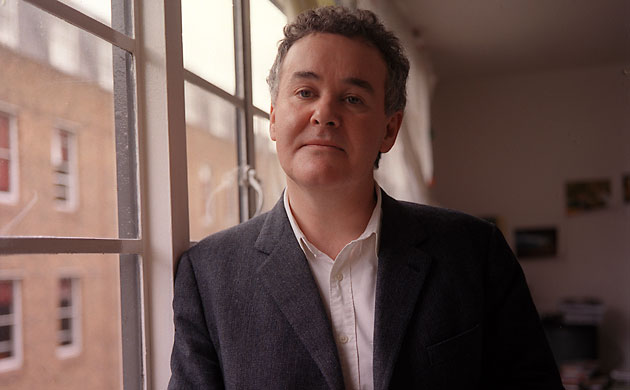
If there is one reason why the BBC deserves to survive it is because it gives a home and an outlet to journalists and film-makers like Adam Curtis. His mammoth, epic study of neoconservatism and Islam, The Power of Nightmares – released in 2004, a year after the Bush-Cheney invasion of Iraq – gave a cogent and mesmerizing explanation for events since 9/11, in particular the need of both, especially the neocons, to create the myth of a dangerous enemy. Now that is not exactly a new idea – what was the Cold War about? – but he put the hypothesis together in a very convincing, revealing and absorbing way.

Curtis has returned to the theme of how a myth shapes history with a long essay, illustrated by some fascinating BBC archive material, on Colonel Gaddafi, the deposed and assassinated Libyan leader, a subject that readers of this blog will know has long fascinated me. “He’s Behind You”, which appears on a BBC blog, outlines Curtis’ theory that Gaddafi created a myth about himself that the West happily co-opted and which sustained and benefited both. The myth was that Gaddafi was a seriously dangerous threat to the West while the reality was that the Libyan leader was really a clown, a pantomime character as Curtis calls him, whose antics enabled leaders like Reagan forge a more aggressive US foreign policy more or less cost and risk-free, paving the way for where we are now. In return Gaddafi acquired a status as an international trouble-maker out of all proportion to the threat that he really posed, and strutted the world stage in a way that otherwise could never have happened.

I have to say that I think he is spot on. Two episodes stand out. The first in 1986 was the bombing of a Berlin disco which killed an American serviceman. Reagan used that attack to launch a bombing raid on Tripoli, facilitated by Margaret Thatcher, which targeted Gaddafi himself and allegedly killed his adopted daughter. It is now widely believed that Syria was really responsible for the disco  bomb not Gaddafi, but Syria was a close ally of the Soviet Union and any reprisal on Damascus could risk a much more serious confrontation with Moscow. How much easier to blame Gaddafi and flex  American muscle as a warning to others in the region?

The other incident was the downing of the PanAm flight over Lockerbie in 1988. Curtis, like others who have examined the evidence, clears Gaddafi of any responsibility and lays the blame at the feet of Iran and Syria. Iran had a motive – revenge for the downing of an Iranian airliner by the US Navy – and Gaddafi did not. And Syria, still allied to the Soviet Union, was Iran’s closest friend in the Arab world. Again, on the flimsiest and most doubtful of evidence, Gaddafi was blamed but the sanctions against Libya and the isolation of Gaddafi that followed set a precedent for treating the West’s Middle East enemies that was applied to Saddam, Iran and now Assad, a precedent that more often than not has led to the overthrow of the despised leader.

If I have one criticism of Curtis’ approach it is that he skimps over the period following Gaddafi’s rehabilitation by the West, led by the noxious Tony Blair but soon joined by a gallery of rogues and scoundrels, from Berlusconi to the neocon savant Francis Fukuyama, all eager to plunder Gaddafi’s oil treasury. Nor does he dwell much on the dubious circumstances of the revolt against Gaddafi, which has all sorts of interesting aspects worth investigating, not least the fact that Western corporations will soon have access to Africa’s – and possibly the world’s – largest underground source of water. And water, as they say, is the new oil. But all in all, a fascinating piece of work by Adam Curtis and a tribute to the BBC for sponsoring it. Read, watch and enjoy!

Victory At The Supreme Court!

Our lawyers, Eamonn Dornan, JJ Cotter and Jonathan Albano have won a fantastic victory at the US Supreme Court with the approval of Justice Stephen Breyer that our request for a stay of the handover of interviews from the Belfast Project archive at Boston College be granted and extended until the Supreme Court decides whether to hear the case. Here is the text of the decision:
“IT IS ORDERED that the mandate of the United States Court of Appeals for the First Circuit, case Nos. 11-2511 and 12-1159, is hereby stayed until November 16, 2012. If the applicants file a petition for a writ of certiorari on or before that date, then the mandate of the First Circuit is further stayed until the petition is resolved by this Court. Should the petition be denied, this stay shall terminate automatically. In the event the petition for a writ of certiorari is granted, the stay shall terminate upon the sending down of the judgment of this Court. If the applicants do not file a petition for certiorari on or before November 16, then the stay shall expire at 5 p.m. that day.”

Congratulations to Eamonn, Jim and Jonathan!!

What Do Lance Armstrong, Jimmy Savile and Jerry Sandusky Have In Common? They Founded Charities To Hide Their Crimes

It is a striking feature of the three scandals. Each of them founded charities and used the consequent acclaim and public admiration to deflect, rebut or even assist them in their criminal pursuits. It worked for all three because nobody could quite believe that someone who did so much free work to help others could be guilty of such terrible things. They had to be good people. But they weren’t.

Lance Armstrong founded Livestrong, a charity founded to raise funds for cancer research. Livestrong dovetailed perfectly with Armstrong’s narrative, the cancer survivor who battled the odds to emerge as a sporting phenomenon. It meant that the aura of doing good for other cancer victims armored Armstrong against prying skeptics who doubted his story and for many, many years it worked. Go ask David Walsh.

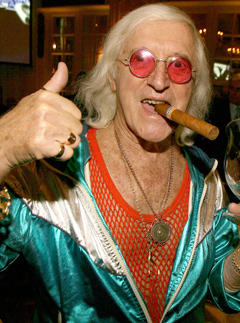
Likewise Jimmy Savile donned the garments of the charity-worker to bullet proof himself against investigation and in the process used his fund raising at hospitals like Stoke Mandeville to gain access to more under age sex victims. In his case suspicion about his activities existed for far longer than Armstrong yet thanks in no small way to his charity work, he survived serious scrutiny until after his death.

The former football coach at Penn State University, Jerry Sandusky founded his charity, The Second Mile, way back in 1977 to serve the needs of underprivileged and at risk youth in the state. Some 100,000 youngsters a year received help from the charity and some became objects of sexual gratification for Sandusky until he was uncovered as an abuser in 2011. His charity work, like Savile’s, protected him from scrutiny and provided him with victims.

So the moral of the story? Any public personality who cloaks him or herself in the respectability of charity work should be looked at askance. Just in case. They might be hiding some awful secret. They might not. But they might.


Will CBS and Sunday Telegraph Defy PSNI Demands For Dolours Price Material?

This weekend a number of news reports claimed that the PSNI has requested that journalistic material from the US broadcaster CBS and the British newspaper, The Sunday Telegraph concerning Dolours Price and the abduction and ‘disappearance’ of Jean McConville be handed over to detectives investigating her death.

The Telegraph interviewed Dolours Price about her alleged role, inter alia, in the disappearance of Jean McConville by the IRA in 1972. It is believed that the paper’s reporters tape-recorded their interviews with her. She said Sinn Fein leader Gerry Adams had given her the order for these operations which included the 1973 bombing of London, for which she was arrested and imprisoned. CBS News’ London bureau also interviewed Dolours Price and an item based on the interview was broadcast on national US television and radio. It is likely that the PSNI are seeking film that was not broadcast.
If past practice is a reliable guide, it is likely that the PSNI have requested that this material be handed over voluntarily by these two organisations and if they refuse will then serve them with subpoenas. It remains to be seen what the response is from The Sunday Telegraph and CBS but hopefully a voluntary handover is not on the menu at either organization!. More crucially, what will they do if, having refused to hand over the material voluntarily they then are served with subpoenas? Will they move in the courts to quash them? Not to do so will set an alarming and dangerous precedent because this will entail two of the foremost media concerns in the Western world accepting the unbridled, unchallenged right of the police to use journalistic material in criminal investigations while implicitly accepting that journalists can and even should work alongside police detectives to supplement their work. Where CBS and The Sunday Telegraph go today, others will follow tomorrow.

It is the thin end of a very dangerous wedge. It would end by cementing the police and the Fourth Estate together as partners, the latter collecting information for the former to use, degrading the supposed independence of the media in a most disconcerting way and undermining its ability to hold society and its institutions, including the police, to account and under scrutiny. With the Leveson inquiry due to recommend tighter state oversight of the media, this move by the PSNI holds great destructive potential for a free society in Britain. In the US, CBS’ capitulation would mark another depressing waypoint on a post-911 journey that has seen civil liberties erased and media independence eroded. These are bad days for this to happen.

The nature of the crime under investigation, the “disappearance” of alleged British Army informer, Jean McConville by the IRA some forty years ago may tempt CBS and the Sunday Telegraph to hand over the material, on the grounds that the crime was so monstrous that nobody could stand in the way of bringing the matter to a just end. While not wishing to minimise the sheer wrongness and wickedness of what happened to Jean McConville, it would be unfortunate if that did happen and both institutions should reflect on a number of realities before contemplating that path.

They should remember that there were many, many monstrous crimes committed during the Troubles in Northern Ireland, and quite a few of them were carried out by the state. Those crimes however remain uninvestigated and untouched by the same police force that now seeks to discover what happened to Jean McConville. They were carried out by the PSNI’s predecessors, the RUC, by British Military intelligence and by the Security Service, MI5 – the gory details are well known in Northern Ireland – yet no subpoenas are ever slapped on their desks. And we all know they won’t be. There are double standards at work here.

Secondly, for the most part of the last forty years neither the police nor any other security force agency cared a damn about Jean McConville, to the extent that only recently did they even classify her death as a murder, even though their intelligence files must have been bursting with information about her fate .

If the IRA is telling the truth and she was an informer who was caught but then let go with a warning before resuming her work for the British military, then the Army has some hard questions to answer, not least why they continued to use an agent whose life they must have known was in danger. And is it only coincidence that the state’s new found concern for Jean McConville comes when the Provo leadership has no more peace process cards to play, has disarmed and defanged the IRA and presents a great electoral threat to the Southern establishment parties? When the PSNI embarked on this investigation, with subpoenas served only when Gerry Adams was no longer a member of the British parliament and a potential source of embarrassment for that institution, they knew full well that all paths in their investigation would lead to his door. In these circumstances we are entitled to ask whether the opportunity to wreak revenge against a long-time foe rivals any concern for the death of Jean McConville.

Finally, CBS and The Sunday Telegraph, should bear in mind that no matter the distressing circumstances of Jean McConville’s abduction and death, it is the principle that matters above all, that the media should be and must stay independent. It is this that is at stake in this matter. Today it is Jean McConville but tomorrow it may be opponents of war or people protesting the power of Wall Street or the City of London. The day the media accepts without protest or effort to deny in the courts, a role as an active partner with the police, no matter the justness of the cause, is the day they cease to matter and the rest of us lose a crucial if erratic bulwark of freedom. We are too close to that as it is. If, finally, both outlets must hand over the material it can only be after a fierce fight to protect their independence and to reassure their readers and viewers.

The following is a statement I issued in the wake of the weekend reports:
“I view with great concern and no little alarm this effort by the PSNI to further intrude upon media rights by seeking interview material from CBS News and the Sunday Telegraph. It is clear that in the light of recent court decisions in the United States and Belfast, the police feel encouraged to raid for journalistic material rather than conduct investigations under their own steam, as they had many opportunities to do in this case.

“I sincerely hope and trust that neither CBS nor the Sunday Telegraph will voluntarily hand over material to the PSNI and in the event of a subpoena being served on either organisation they will have my complete and unqualified support in resisting it. It is vital to remember that Article 10 of the European Convention on Human Rights provides a robust bulwark against incursions into freedom of speech and I trust both organisations will seek its protection against this effort by the PSNI.

“Clearly this case is developing into a major assault on privacy. Not content with assailing academic rights, the PSNI are now set to lay siege to the media as well. Where will this stop? The right and duty of the media to report fully and freely without having to look over their shoulders for prying policemen has to be protected if the media is to perform its role of holding society to account.

“There are a number of points I wish to make about this issue:

“It is clear that the PSNI is substituting the efforts of journalists for basic detective work. I cite one glaring example. In August 2010, Dolours Price, who lives in Dublin, appeared in a Northern Ireland court on a minor charge. The court was full of policemen at the time and the authorities were well aware in advance of her appearance. The PSNI had a perfect opportunity to question her about the allegations in the Irish News and Sunday Life but did not do so. The questions must be asked, why not? And why should media and academic organisations now be asked to pay the price for police incompetence?

“I also wish to point out that notwithstanding a recent decision in the Belfast High Court I am firmly and unalterably of the view that if these interviews from Boston College are handed over, the risk to the life of BC researcher, Anthony McIntyre will be very great indeed. The IRA will view him as someone who encouraged living, fellow former members of the IRA to break their rule of silence in circumstances that could lead to criminal charges against living IRA leaders and members. As someone who has covered IRA matters as a journalist for many years, I know what the penalty for that is. Thankfully, none of the journalists from CBS or the Sunday Telegraph are likely to face the same consequences.

“The speed with which the PSNI have acted against CBS and the Sunday Telegraph is in sharp contrast to its complete inactivity when similar reports surfaced in the Irish News and Sunday Life newspapers in February 2010. One of those reports wrongly claimed that Anthony McIntyre’s interview with Dolours Price contained details about the disappearance of Jean McConville. It did not but that did not stop the PSNI from issuing subpoenas more than a year later against Boston College. Had the PSNI conducted basic due diligence in 2010 those subpoenas would never have been issued.

“In this regard it is worth noting that this move against CBS and the Sunday Telegraph is the first time since this case began that the PSNI has sought to obtain allegedly similar materials through domestic channels.”

US Supreme Court Grants Temporary Stay On Boston College Handover

Press release – October 1st, 2012
Contact Sabina Clarke: +1 215 509 2345; +1 215 908 7960

(Updated/corrected 16:21 EST)

United States Supreme Court Justice Stephen Breyer has today granted a temporary stay on the handover of interviews from the Belfast Project at Boston College to the Police Service of Northern Ireland. The stay will be in place until at least October 11th, when the US government, which facilitated the subpoenas, is due to formally respond to an application from Eamonn Dornan, JJ Cotter and Jonathan Albano, attorneys for Belfast Project researchers Ed Moloney and Anthony McIntyre, that the handover be stayed until the Supreme Court decides whether to hold a full hearing on the case.

A Day Late And A Dollar Short (What’s New?), Niall O’Dowd Joins The Boston College Fray

Niall O’Dowd

This week, more than sixteen months after the Boston College subpoenas were served by the US Department of Justice and the PSNI, Irish Voice publisher Niall O’Dowd finally made a call that most others in Irish-America had made many months before – asking Hillary Clinton to intervene to stop the BC interviews ending up in Belfast.

Now, don’t get me wrong. I am glad he has at last done the right thing even if it is so late in the game it may not actually make much difference. But the man does have a direct line to Foggy Bottom and/or Chappaqua – or so he claims – so here’s hoping he makes use of it.

Nonetheless, I do think it is worth asking why he did not do this long before last week and what it was that happened to change his mind? After all look at the groups and individuals in the U.S. who long ago put their names to this call: the AOH, the IAUC, the INC, the Brehon Law Society, a host of Senators and Congressmen, ranging from John Kerry to Frank Pallone and so many ordinary Irish-Americans it would be hard to count them. But not a peep from Mr O’Dowd.

It is not as if there were no good reasons to join the chorus to Hillary. Let’s have a look at just some of them:

♦This one may not rate very high on Niall’s list, but if the interviews get handed over and people end up in the dock, the life of interviewer Dr Anthony McIntyre and the safety of his wife and two small children will certainly be at risk if revenge is sought. Mr O’Dowd knows enough about the psyche of Irish Republicanism to know that this is a very real possibility;

♦The PSNI action may cripple oral history in America, Ireland and Britain for the foreseeable future;

♦The PSNI action is a real slap in the face to all those, not least in the United States, who worked to end the violence in Northern Ireland. By digging into pre-1998 events in an effort to get prosecutions, the PSNI is effectively resuming its war against the IRA, thereby shattering and betraying the spirit of the Good Friday Agreement;

♦The PSNI action reeks of double standards. Contrast this action with the complete lack of interest in pursuing the RUC Special Branch officers, British Army intelligence officers and MI5 agents who were complicit in the UDA killing of Pat Finucane; or the Special Branch officers who gave UVF leader Mark Haddock free license to murder and pillage in North Belfast for so long, or the British Army agents who allowed and encouraged informer Freddie Scappaticci to kill innocents so as to protect valuable IRA informers. And that’s just the tip of an iceberg of cover-up’s of British state criminality that neither the PSNI nor their Historical Enquiries Team show the slightest interest in pursuing;

Pat Finucane – his killing was arranged by British intelligence but no subpoenas for him!

♦The PSNI action is eloquent testimony to the continuing influence within Northern Ireland policing of the old RUC and especially the old RUC Special Branch who have seized on this case and, hiding behind the skirts of the unfortunate Jean McConville, have set out to wreak revenge against those they hold responsible for changing their world. The formation of the PSNI was supposed to herald a whole new era in policing in that troubled region. It wasn’t supposed to be the same old, same old…..;

Mark Haddock – UVF killer given licence to kill by RUC Special Branch. But no subpoenas for his victims.

♦The PSNI/DoJ action is of enormous constitutional importance to citizens of the United States. Niall O’Dowd writes that efforts to bring the case to the Supreme Court “will almost certainly fail” because the Mutual Legal Assistance Treaty (MLAT) which empowers these subpoenas gives the government the power to hand over material to foreign governments. (Incidentally he somehow has got it into his head that Boston College is part of the move to the Supreme Court when of course they have nothing to do with it) But he has got this wrong. What is nefarious about the MLAT is that it actually bestows on foreign governments more powers over American citizens in relation to subpoenas than could ever be exercised by federal agencies such as the FBI. As an intrusion into American constitutional rights, as a subject worthy of consideration by the Supreme Court it is up there with the best. This does not guarantee that it will get there but it is in with a shout.

Freddie Scappaticci – given free rein by British Army handlers to kill accused informers to protect real ones. No subpoenas for his victims.

♦And finally, as a newspaper publisher, Niall O’Dowd should be concerned about the vast intrusion into and erosion of First Amendment rights that will follow if this PSNI/DoJ action proves to be successful. One presumes that Niall O’Dowd values freedom of the press – he ought to – and if that assumption is well-based then he should have been one of the very first, not the last, to urge action by Hillary.

From the very start of this affair we have warned of two things: one, that the PSNI move against the BC interviews could seriously damage the peace process in Northern Ireland; the second is that the real and main target of this operation is Gerry Adams. The two are linked of course.

Either because he didn’t believe this or was so overcome by his hostility towards myself, Niall O’Dowd paid no heed to the warnings. Until last week that is, when Dolours Price went on the rampage in the columns of The Sunday Telegraph and the airwaves of CBS news. At that point he then seems to have realised that our warnings were real, that if the PSNI was successful then Gerry Adams could very well face a charge of conspiracy to murder and that in the backwash, the power-sharing Executive in Belfast would likely collapse with possibly dire consequences for the peace itself.

He and Gerry Adams are friends, or at least it sometimes looks that way, and it might be one friend’s concern for another that motivated this week’s Irish Voice editorial. But Niall O’Dowd has also created a small industry out of his own contribution to the Good Friday Agreement, often placing himself at the forefront of the Irish-Americans who acted as midwives to the peace process. Should the power sharing deal collapse then his place in history will disappear with it. Sometimes self-interest can be a great motivator.

Not for the first time, Niall O’Dowd cast aspersions on myself in the course of his editorial, suggesting that “deep hostility” to Sinn Fein on my part motivated the Belfast Project at Boston College which concentrated on interviewing “dissidents”.

Well the best answer I can give to this charge is to say that I am exactly the same journalist that I was in the late 1980’s when our paths first crossed. A brief history of the relationship between myself and Niall O’Dowd will help to fill out this explanation and account for the poison in our relationship.

Niall O’Dowd founded the Irish Voice in 1987. Not long afterwards it was suggested to him that he might hire myself as his Belfast correspondent. This he refused to do, on the grounds that I was regarded as being far too close to the IRA. It is easy to forget these things but in those days Niall O’Dowd would rather have been dead than be seen in the company of Gerry Adams and as for his sympathy for the North, well he always was very keen to get adverts from the Northern Ireland Tourist Board.

I presume he had been fed this line by his mates in the Department of Foreign Affairs then battling desperately to shore up the SDLP in its life or death electoral struggle with Sinn Fein. As the recent Northern Editor of The Irish Times, I had angered the DFA with my coverage of that battle, predicting correctly, for instance, that Sinn Fein would win seats at the SDLP’s expense in working class Nationalist areas due to their advantages in age, class, enthusiasm and drive. But sometimes truth-telling can get you into a heap of trouble. And it is sometimes remarkable how these phases in your career can be airbrushed out by people.

I heard about all this in Belfast but paid no heed to it. Until a year or so later when we took our annual vacation in New York, picked up a copy of The Irish Voice and lo and behold, staring out at me from the front page with the byline ‘From Ed Moloney in Belfast’, was a piece I had written the week before for the Sunday Tribune then my employer. I made enquiries and discovered that this had been going on for some time. In fact every week for months, O’Dowd had lifted my articles in the  Tribune and published them in the Irish Voice. I was never told about this, my permission was never sought and, needless to say, I was never paid.

Part of me was flattered by this, a part outraged. A year or so before I was poison but since then the quality of my coverage had clearly turned him round. That felt good. On the other hand he didn’t have the gumption to admit he had made a mistake and put our relationship on a proper footing. And then there was the cheapness, the willingness to steal my journalism – it was worth using in his paper, it added to his product but he didn’t want to pay for it. So, I have to say I was tempted to take legal action against him, so angry was I. But that could cost the paper money and jobs could be lost. So we made a deal. He would be able to use my pieces but he would pay me.

And so it went on until the peace process began to pick up speed. I approached that story in the same way I had all others, which was to dig as far as possible below the surface to discover what was really happening. And what a story it was! When an organisation like the IRA makes such a radical U-turn then it is rarely done in a straightforward way. Lies are told, tricks are played, extraordinary things happen and people get disappointed and disillusioned. But for a journalist like me it is all your dreams come true – great stories as far as the eye can see, a host of sources all with reason to talk. Sheer bliss! But the important point was that I had approached all my journalism, from Kincora, to Paisley, to the SDLP, to Billy Stobie – and more recently the Belfast Project at Boston College – in exactly the same spirit.

Alas Niall O’Dowd didn’t see it that way at all. Sometimes a journalist can dig too deep and the rows began, angry calls from New York about this or that article – presumably preceded by angry calls to him from Suffolk Road in West Belfast. Finally the break came. And the given reason? Well, I wasn’t writing original pieces for the Voice, just sending them articles that also appeared in the Sunday Tribune. That just wasn’t good enough complained Niall O’Dowd as he put the phone down.
And that was the end of my relationship with Niall O’Dowd and the beginning of what promises to be a lifelong enmity. Now, dear reader, you understand.

Press Statement For Belfast Court Hearing – Boston College Subpoenas Caused By Journalist’s Lies and PSNI Failings

Statement by Ed Moloney, former Director, The Belfast Project, Boston College

For Release September 14th 2012

Press Contact – Sabina Clarke +1 215-509-2345; 215-908-7960


PREAMBLE


When the US government served subpoenas on Boston College’s Belfast Project archive in May 2011 on behalf of the PSNI, the subsequent legal challenge was led by Boston College and the strategy was decided by the College’s leaders in consultation with their lawyers. These were not our lawyers, nor our strategy.


Eventually, dissatisfaction with the Boston College strategy persuaded us to break from them and to hire our own attorneys, Eamonn Dornan and Jim Cotter and to devise our own strategy in consultation with them. We had important, perhaps decisive things to say but we needed to say them in a court of law where we had a chance of overturning the subpoenas.


We had been trying to get the go-ahead from a US court to intervene at which point we could make these arguments public during a decisive hearing in an American court. So far we have not succeeded. Now that there is a possibility of a Judicial Review being held in Belfast we believe that this moment has come. Accordingly, I have sworn an affidavit for the Belfast court this morning summarizing the essential facts and my statement below goes into far more detail.


BOSTON COLLEGE SUBPOENA WAS BASED ON A JOURNALIST’S LIE & PSNI FAILINGS


When this research project at Boston College (BC) began we gave interviewees a pledge that nothing of what they said would be revealed until their deaths. I intend to keep that promise.


But the pledge did not cover what the interviewees did not say.


I now wish to make the following facts public: in her interviews with BC researcher, Anthony McIntyre, Dolours Price did not once mention the name Jean McConville. The subject of that unfortunate woman’s disappearance is not even mentioned. Not once. Neither are the allegations that Dolours Price was involved in any other disappearance carried out by the IRA in Belfast, nor that she received orders to disappear people from Gerry Adams or any other IRA figure. None of this is in her interviews with Anthony McIntyre.


The subpoena served in May 2011 by the US government on behalf of the Police Service of Northern Ireland (PSNI) seeking her interviews, which was followed in August by other subpoenas seeking more interviews from the BC archive, was based upon a false newspaper report in Northern Ireland published in February 2010 alleging that she had talked about the disappearance of Jean McConville to Anthony McIntyre for the BC project.


The McIntyre-Price-BC interviews are the wellspring for this extensive legal action carried out by the British and American governments, a legal action that could do irreparable harm to the peace process in Northern Ireland, irretrievably reduce academic and media freedoms in the United States and imperil the lives of researchers and interviewees alike.


In this document I will provide evidence to show that the PSNI failed in its basic duty of establishing the reliability and credibility of the false newspaper report until fifteen months after the article had appeared and after the subpoenas had been served on BC. There is a responsibility on a police force in such circumstances to seek evidence firstly from the sources that are nearest to hand, what the American legal system calls “the least sensitive source”. This the PSNI did not do.


I will show that the PSNI moved to check the newspaper material or gather evidence only after I had placed on legal record with the District Court in Boston my belief that the basis for the subpoena was flawed and that the taped interview referred to was not from BC but was made by the Belfast daily newspaper, The Irish News. The evidence I now present establishes beyond any doubt that the first subpoena was deeply flawed.


The United States Department of Justice presumably believed that the PSNI had carried out due diligence before embarking on the subpoena route but in that respect it was either mistaken or misled. This was an egregious abuse by the PSNI of the Mutual Legal Assistance Treaty (MLAT) between the US and the UK which facilitated these subpoenas. Under the terms of the MLAT, myself and Anthony McIntyre were barred from opposing the action in court. This abuse of the MLAT by the PSNI demonstrates beyond peradventure the need for Congress to urgently rewrite these treaties to prevent a future similar injustice.


I will now describe the background to the false newspaper article that began this legal nightmare.


THE IRISH NEWS – THE SUNDAY LIFE


The newspaper report that began the saga of the BC subpoenas appeared in The Sunday Life, a popular tabloid circulated in Northern Ireland, on February 21st, 2010 under the by-line of Ciaran Barnes. The report, splashed on the front page and continued inside, alleged that Dolours Price had been involved in the McConville disappearance and several other similar events and had admitted all this in a tape recorded interview.


The article went on to claim that Dolours Price had given taped interviews to what Barnes called “Boston University” and he told his readers that he had heard tape recordings in which Dolours Price confessed her role. The piece was written in such a way as to lead the average reader to conclude that she had made these admissions on tape to BC and that Ciaran Barnes had listened to them; this assumption was subsequently shared by the PSNI and the US Department of Justice.


To quote Ciaran Barnes’ report: “Price recently gave a series of interviews to academics from Boston University (sic) about her role in the IRA. These include admissions about her role in transporting some of the disappeared to their deaths. The interviews were given on the basis that they will not be published until after her death”, and “Price, who has made taped confessions of her role in the abductions to academics at Boston University, will relay this information to Independent Commission for Location of Victims’ Remains (ICLVR) investigators later this week”. And also: “Sunday Life has heard tape recordings made by Price in which she details the allegations against Adams and confesses her own involvement in a series of murders and secret burials”.


Ciaran Barnes’ report featured centrally in the US government’s defence of the subpoenas when the action was challenged in the Federal District Court by BC. Here is what the US Attorney for Massachusetts, Carmen Ortiz had to say in her July 2011 submission: “Ms Price’s interviews by BC were the subjects of news reports published in Northern Ireland in 2010, in which Ms Price admitted her involvement in the murder and “disappearances” of at least four persons which the IRA targeted: Jean McConville, Joe Lynskey, Seamus Wright and Kevin McKee. See Exhibits 1 and 2. Moreover, according to one news report, the reporter was permitted to listen to portions of Ms Price’s BC interviews.”


In other words the official US Government stance was that The Sunday Life reporter, Ciaran Barnes had listened to Dolours Price’s interview with BC and had heard her confessing to the disappearance of Jean McConville and others. Presumably this is what the PSNI told the US government and presumably the US government believed it. The subpoenas served against BC were therefore justified, the US government argued.


The truth is that the interviews that Anthony McIntyre conducted with Dolours Price are notable for the absence of any material that could ever have justified the subpoenas. In this respect it is worth remembering that when she was interviewed by McIntyre, Dolours Price was given the same confidentiality assurances as other interviewees, which was that whatever she said would not be revealed until her death. As the interviews with Brendan Hughes, later published in the book Voices From The Grave, graphically demonstrate this enabled interviewees to speak freely, fully and candidly and to talk honestly about their lives in the IRA.


(Incidentally all this nails the lie that the Belfast Project was established to “Get Gerry Adams” as people like Niall O’Dowd and Danny Morrison have alleged. As this episode demonstrates, no interviewees were ever put under pressure to implicate him or anyone else in IRA activity.)


So what was the genesis of Ciaran Barnes’ shocking misreporting?


Three days before his report appeared, on February 18th 2010, The Irish News, Northern Ireland’s daily Nationalist newspaper, published a lengthy series of articles based on an interview with Dolours Price conducted in Dublin earlier that week by one of the paper’s senior reporters, Allison Morris. The front page lead carried the headline: “Dolours Price’s trauma over IRA disappeared”. The interview was tape recorded and it has been my consistent belief throughout this affair that the tape recording that Ciaran Barnes listened to and upon which he based his Sunday Life article was Allison Morris’ tape. It certainly could not have been BC’s.


Some background is needed here. When Dolours Price’s family heard that she had given an interview to Allison Morris they were alarmed. She had a history of psychiatric problems and substance abuse. She has been diagnosed with PTSD, had been hospitalized repeatedly and was taking strong psychotropic drugs. Indeed on the day she spoke to Morris she was on day leave from St Patrick’s Psychiatric Hospital in Dublin. Her family believed that in her mental state, and because of her anger over Gerry Adams’ disavowal of the IRA, she was capable of saying literally anything and getting herself into undeserved trouble.


To cut a long story short the family intervened with the editor of The Irish News, Noel Doran and as a consequence the resulting story published by Doran was very restrained. There were no direct quotes from her and in relation to Jean McConville, the Irish News had just this to say: “Ms Price is also said to have been privy to details of the final days of mother-of-ten Jean McConville, whose remains have already been recovered”, and “She is believed to possess previously undisclosed information about at least four Disappeared victims.”


Most crucially of all, the Irish News couched its report in the context of Dolours Price taking the story of what she allegedly knew about the “disappeared” to the Independent Commission for the Location of Victims’ Remains (ICLVR), a body set up under the aegis of the peace process to deal with the vexed and troubling issue of victims ‘disappeared’ by the IRA. That was crucial because the ICLVR bestows immunity from prosecution and so Dolours Price would not be subjected to criminal prosecution as a result of anything she told the Commission. And The Irish News was careful not to implicate her directly in any criminal offence.


I would like to place on record my belief is that the editor of The Irish News, Noel Doran behaved properly in all this. But sadly, the same cannot be said for his reporter Allison Morris.


All would have been fine and I would not now be writing this statement and the courts in two jurisdictions would not have had their time taken up with the case of the BC subpoenas but for the fact that three days later, The Sunday Life took the story a stage further, adding garish and gruesome detail to The Irish News story and seemingly citing the BC interviews as the source for the story.


The immediate effect of Ciaran Barnes’ reportage was to make the immunity deal arranged by Noel Doran and the ICLVR redundant. Dolours Price could not be prosecuted for what she told the commission but she could face charges over what Ciaran Barnes’ claimed she had told BC.


So why do I believe that Ciaran Barnes got his story from Allison Morris?


Well, first of all it could not have come from Anthony McIntyre’s interview with Dolours Price because it does not mention Jean McConville at all nor any of the other people disappeared by the IRA at the same time. So the idea that Barnes listened to the BC tape and used it as a source for his story is a sheer impossibility.


Barnes does however say very distinctly that he did listen to “tape recordings made by Price” admitting to the Jean McConville and other disappearances. So a tape did exist. So whose tape was it? I believe it was Allison Morris’ tape not least because Irish News editor Noel Doran admitted that Morris had taped Dolours Price in the course of a lengthy debate with myself carried out in the columns of the Irish-American website, TheWildGeese.com during 2011. (Source: http://thewildgeeseblog.blogspot.com/2011/11/moloney-vs-irish-news-final-word.html )


He wrote: “As I have pointed out, Moloney himself could have solved this ‘mystery’ through one simple telephone call. We would have been happy to tell him that PSNI detectives did attempt to obtain the Irish News tape but were informed that we were no longer in possession of any such material.” (More about this further down)


So there was a tape of the Dolours Price interview. Given that we don’t know of any other interview that Dolours Price gave and that her interview with Anthony McIntyre made no mention of the material that made up the bulk of Ciaran Barnes’ report, suspicion must inevitably fall on Allison Morris as being the source. Barnes had to be quoting from Allison Morris’ tape because there was no other tape.


There were no quotes from Dolours Price in the Irish News report of her interview with Allison Morris and that was understandable, given the deal that had been struck between her family and the paper’s editor. But why no quotes in the Ciaran Barnes’ article? After all he had seemingly gotten access to a sensational exclusive, a tape recorded interview made by a respectable and credible American college revealing the background to one of the Troubles’ most notorious killings, so why not use direct quotes from the interview to substantiate and add credibility to his story. It is what nearly every journalist I know would do, and certainly what a reputable reporter would do. Nor was he restrained by any deal made by his source or the source’s family with his editor. But he didn’t. So why not?


Well put yourself in Ciaran Barnes’ shoes. He thinks he knows Dolours Price has given interviews to BC and he guesses that she must have covered the same ground as Allison Morris did, although he can’t know that for certain. But if he uses quotes from the Morris interview and pretends they came from BC then it will be a simple matter to prove he is lying by comparing the Boston interview with the quotes he publishes. If they don’t match then he is caught with his pants down. And once found out he and his paper could face legal retribution from one of America’s wealthiest colleges. Not a nice prospect; so far better to use no quotes.


The effect of The Sunday Life story was to add lustre and credibility to Allison Morris’ scoop and not long after the two stories appeared, Allison Morris won two prestigious journalistic prizes, the National Union of Journalists’ Regional Journalist of the Year and a similar award from the Society of British Regional Editors. For each prize she submitted a three-article portfolio, one of which was her interview with Dolours Price. Now regarded as one of The Irish News’ star reporters, Allison Morris and Ciaran Barnes have come a long way since they both worked together and became friends in the west Belfast weekly, The Andersonstown News.


THE PSNI AND THE DUE DILIGENCE FAILURE


As I was putting the pieces of this story together the Leveson Inquiry had begun hearing evidence about the hacking scandal involving Rupert Murdoch’s News International and I wrote a detailed email to Lord Leveson’s team asking that this episode be included in his investigation. I did so after taking legal advice and because his inquiry encompassed both the questionable practices of some journalists and the relationship between the media and the police.


Unfortunately, this was not possible; the Leveson team told me that the appropriate place for hearings into “who did what to whom” would be in Part Two of his Inquiry which will happen if and when police investigations and criminal prosecutions have taken place. So maybe on another day the behaviour of Ciaran Barnes and Allison Morris will come under proper scrutiny.


Aside from being an egregious case of media misbehavior, the reason I wanted Leveson to have a look at the Sunday Life-Irish News case was that the PSNI had seemingly made no effort to locate relevant material right on their doorstep – that is the Irish News interview with Dolours Price and the “tape” that Ciaran Barnes had claimed to have listened to. Instead they had ignored these local sources and opted instead to seek their evidence 3,000 miles away in Boston. Why?


In my June 2011 affidavit I made it clear that I believed that Dolours Price’s interview with Allison Morris had been taped and that the tape had been passed on to Ciaran Barnes in The Sunday Life. And I added that there was no way that Ciaran Barnes could have heard her BC interview. Without spelling out the reality that Dolours Price had not talked about Jean McConville in her interviews with Anthony McIntyre, my affidavit clearly said that the basis of the subpoenas was flawed.


When The Boston Globe published an editorial urging the college to hand over the tapes I emailed Tom Hachey, the head of the Irish Studies Center and the man in charge of the archive, asking if he or someone else from the college would respond. He did not reply, so myself and Anthony McIntyre asked The Boston Globe for the right to reply which they granted.


Our article, published on August 23rd, 2011 had this to say, inter alia: “The subpoenas that have been served are based on an unproven assertion: that an interview given to the college by a former Irish Republican Army activist, Dolours Price, could shed light on a 40-year-old murder and should be surrendered.


“The truth, however, is that the Police Service of Northern Ireland (PSNI), on whose behalf US Attorney Carmen M. Ortiz is acting, does not know what Dolours Price told BC’s interviewers. Neither does Ortiz.


“They do not know because the legal basis for the subpoenas is deeply flawed, the result of either rank incompetence or sleight of hand. The authorities have justified the action by claiming that an interview with Price published in a Belfast newspaper in February 2010 about the murder was derived from her BC interview, when in fact it was based on a separate taped interview given directly to the newspaper. Price’s interviews have never been released by BC and never would be – because a guarantee of confidentiality was given to every interviewee.


“What is happening is essentially an unwarranted fishing expedition into the college archives.”


It must be clear to the reader now why we wrote those words.


But the question remains, why had the PSNI not gone straight away to the source of those two stories in the Irish News and Sunday Life as soon as they were published? When I was subpoenaed in 1999 by Scotland Yard over the Billy Stobie case because of an article I wrote, the subpoena was served within days of publication. When Suzanne Breen was subpoenaed following an interview she had with the Real IRA, again it was served within days. But after the Irish News and Sunday Life articles appeared nothing happened and the PSNI sat on their hands.


Let me be clear about one thing. While I utterly abhor the behavior of Allison Morris and Ciaran Barnes, I am not for one moment suggesting that The Irish News or Sunday Life should take our place in this awful legal ordeal. I would not wish that on anyone. I do not believe the police should have the right to demand any media material and I have long advocated for a shield law to protect the media. And had those two newspapers found themselves in our place I am sure they would have resisted and fought for confidentiality. In those circumstances I would have volunteered my support for them.


What concerns me here is the behavior of the PSNI and the question of why they did not seek material nearer at hand than Boston College?


It has been suggested that one reason is that the PSNI, battling for support from a suspicious Catholic community in the troubled wake of the peace process, is unwilling to confront and embarrass Northern Ireland’s largest Nationalist daily newspaper. Some have argued that this explains why the PSNI served subpoenas on Suzanne Breen when she wrote about dissident IRA matters but ignored Allison Morris when she wrote in a similar vein. I do not know if this explains why the PSNI went to BC rather than to The Irish News but it is an intriguing question.


So what did the PSNI ever do about checking the veracity of the Irish News and Sunday Life articles and tracing their sources? Well, we know from Irish News editor Noel Doran’s article in TheWildGeese.com that, as he put it: “….. PSNI detectives did attempt to obtain the Irish News tape but were informed that we were no longer in possession of any such material”.


But the crucial question is when did that happen? Surely, if the PSNI was up to scratch, it had to be not long after the articles appeared? The answer was provided by none other than Allison Morris who wrote in the Irish News on October 19th, 2011 the following: “Moloney has suggested there is some sort of mystery as to whether the PSNI has attempted to obtain material from the Irish News. In fact the Irish News was approached by the PSNI in June this year. The police were informed I had not retained any material in relation to my discussion with Ms Price and had nothing further to add to what had appeared in the Irish News in February 2010.”


Two things jump out from Morris’ article and both raise serious questions about the PSNI’s Crime Branch, currently led by Assistant Chief Constable Drew Harris, which is in charge of the Dolours Price investigation. The first is that the PSNI waited until June 2011, before it got round to checking with the Irish News about the paper’s interview with a person who is allegedly at the centre of one of Northern Ireland’s most notorious killings and the subject of an unprecedented transatlantic legal action. The Irish News interview appeared in February 2010, PSNI detectives eventually tracked down the newspaper in June 2011. That is a gap of fifteen months. Fifteen months!


The other is the date, June 2011. What else happened in June 2011? Well one thing that did happen that month was that my affidavit, setting out the claim that the Sunday Life article was based on the Irish News’ taped interview with Dolours Price was lodged with the District Court in Boston and made available to the PSNI’s ally in this affair, the US Attorney’s office. Now it may be that a little bird landed on Drew Harris’ shoulder and whispered into his ear that he better send some of his guys round to the Irish News but I’d bet the mortgage that it was my affidavit landing on his desk c/o the US Attorney that sent detectives scurrying to Allison Morris’ desk. In impolite circles this is called ‘Covering Your Arse’.


While we do not yet know whether the PSNI ever got round to talking to Ciaran Barnes about his sources there are really only two conclusions possible about the PSNI’s handling of this matter. One is that its Crime Branch is seriously incompetent. The other is that something more sinister is going on. I could speculate about what this could be but I won’t. But it ought to be investigated by someone. This was the reason I tried to refer all this to the Leveson inquiry. Either way the PSNI’s handling of the matter suggests that something is very seriously amiss in its Crime Branch.


BOSTON COLLEGE REDUX


Throughout the last year or so of legal struggle myself and Anthony McIntyre knew full well that in her interviews as part of the Belfast Project, Dolours Price had made no mention of Jean McConville or her disappearance. But we were not alone. BC also knew this. The academics and administrators there knew that when Ciaran Barnes suggested that she had implicated herself in the McConville disappearance in her interviews with McIntyre that this was complete rubbish and possibly deliberate lies.


In such disgraceful circumstances the claim that she had also admitted giving interviews to BC ought to have been treated with skepticism and at the very least Dolours Price should have been given the benefit of the doubt. But BC chose to believe Ciaran Barnes in this matter despite the fact that his central charge against her was invented, that he had not produced one quote from her in his report to substantiate the claim that she had talked about her BC interviews, and that he even got the name of the college wrong, calling it “Boston University”.


Having invented the contents of her interviews with BC, Ciaran Barnes could just as easily have made up the claim that she had admitted giving the interviews, especially if the goal was to hide the real source for his article, Allison Morris’ taped interview.


The existence of the BC archive was well known by that time and Morris herself had phoned me more than once in early 2010 in an effort to learn what Brendan Hughes had said in his interviews, then about to be published in Voices From The Grave. It would have been natural to link Dolours Price with BC, or have guessed that she might be an interviewee, without having definite knowledge.


Despite all this, BC decided to throw Dolours Price to the wolves. When the college eventually decided to launch a limited appeal to protect the content of other interviews subpoenaed by the PSNI, she was deliberately excluded on the grounds that she had compromised her confidentiality. Not one scintilla of evidence was provided, other than Ciaran Barnes’ yellow journalism, to back up this claim.


Amidst the failure to stand by its own research project by fighting this case to the highest court in the land, the abandonment and disparagement of its researchers and research subjects and the failure to fight for academic freedom on behalf of all America’s scholars, this moment was surely the lowest in BC’s ignoble odyssey through the PSNI subpoenas.


Moloney Affidavit

Boston College Subpoenas – Press Release Sept 6th, 2012

Dolours Price, pictured during a February 2011 interview with Allison Morris of the Irish News, an interview that led to the Boston College subpoenas

As Boston College’s appeal to limit the handover of interviews from its Belfast Project IRA archive begins in front of the First Circuit Court of Appeals in Boston tomorrow (Fri, EST), lawyers for researchers Ed Moloney and Anthony McIntyre will be separately applying to courts in Belfast and Boston to stay the handover of interviews given by the former IRA activist, Dolours Price.

In Belfast, solicitor Kevin Winters will be seeking a High Court injunction tomorrow morning (Fri, 10:00 a.m. GMT) preventing the PSNI from accessing any interviews that may be handed over by the US authorities prior to a hearing for a Judicial Review of the PSNI subpoenas which were served on Boston College via the United States Department of Justice. The application for a Judicial Review is scheduled to be heard on September 14th.

In Boston, attorneys Eamonn Dornan and JJ Cotter have filed a motion
with the First Circuit Court of Appeals seeking a stay on the handover
of the Price interviews until the Supreme Court of the United States
considers a bid by the researchers to hear their case, which many
organizations believe has huge constitutional, legal and political
implications.

The Crown Solicitor’s Office in Belfast rejected a request by Mr Winters to impose a voluntary stay on the interviews saying: “The challenges to the Mutual Legal Assistance Treaty in the United States have currently delayed this investigation by almost 2 years.” The US Attorney’s Office in Boston has similarly rejected any idea of extending the stay and may file its own motion seeking the immediate handover of the materials.

Commenting on this, former Belfast Project Director Ed Moloney said: “Both sets of legal authorities are complaining about the delay caused by our legal challenge. Since Mrs McConville was killed in 1972 and it was not until the mid-1990’s that her disappearance was even classified as a murder by the police in Northern Ireland, it ill behooves anyone in legal authority to complain about delays”.

Contacts:

Kevin Winters: +44 28 9024 1888. +44 7976070020

Eamonn Dornan: +1 718 707 9997

JJ Cotter: +1 617 899 0549

Ed Moloney: +1 917 250 5629

Boston College Archives – Papers Filed for En Banc Hearing

August 20th, 2012

Press Statement From Ed Moloney and Anthony McIntyre:

Eamonn Dornan and James J Cotter, attorneys for Ed Moloney and Anthony McIntyre, have today filed papers in the First Circuit Court of Appeal seeking a rehearing en banc* of a July 6th decision by a First Circuit panel affirming a lower court’s decision ordering Boston College to hand over archived interviews with former IRA activists on foot of subpoenas from the Police Service of Northern Ireland (PSNI), facilitated by the Mutual Legal Assistance Treaty (MLAT) between the United States and the United Kingdom.

The court also refused Moloney and McIntyre permission to intervene in the case, thereby preventing them from presenting evidence objecting to the decision by the US Attorney-General, Eric Holder to issue the MLAT subpoenas.

The application is based on a number of issues of great public interest and constitutional importance, not least that one effect of the First Circuit decision is to give foreign law enforcement agencies greater power over US citizens in respect of subpoenas than could ever be exercised by domestic agencies.

The First Circuit decision effectively precludes the assertion of U.S. constitutional rights guaranteed in the First and Fifth Amendments to the Constitution. In the case of the Boston College archives the Constitution guarantees, prior to the enforcement of the subpoena, the consideration of the free flow of historical documents to the American public and the protection of Ed Moloney and Anthony McIntyre – and their interviewees – against the deprivation of life, liberty or property without due process of law.

Ed Moloney and Anthony McIntyre’s lawyers are arguing that the MLAT bestows upon the PSNI greater powers in relation to the serving of subpoenas in the United States than could be exercised by, for instance, the FBI. U.S. citizens could challenge a subpoena served by the FBI on First and Fifth Amendment grounds but are precluded from doing so in the case of subpoenas served by foreign powers under an MLAT. Sixty-two countries have signed MLAT’s with the U.S., some of which have poor human rights records.**

Their lawyers will also argue, inter alia, that the First Circuit panel conflicts with Supreme Court rulings in the landmark judgement, Branzburg v. Hayes in as much as that case permitted journalists to seek First Amendment protection against subpoena powers in order to demonstrate bad faith on the part of the requesting authority.

In this case the plaintiffs, Ed Moloney and Anthony McIntyre have been prevented by the First Circuit decision from arguing that the PSNI action is politically motivated and that the material requested by the PSNI was available in Northern Ireland. Their lawyers argue that Moloney and McIntyre have been denied their constitutional and statutory rights and protections and suffer violations of constitutional rights if the subpoenas are enforced by the Attorney-General.

Eamonn Dornan and James J Cotter also argue that because this is a case of first impression, as the First Circuit panel recognized, a re-hearing is warranted.

An en banc hearing takes place in front of the full appeal court.
* Here is the full list of countries which have signed MLAT’s with the U.S.: http://acfcs.org/sites/default/files/United%20States%20Mutual%20Legal%20Assistance%20Treaties.pdf

NOTE ON MLATS:

The US enacted MLATs with 62 countries during the years 1981 to 2010. The US State Department has also noted human rights problems in many of these same countries. The US Bureau of Democracy Reports on Human Rights Practices for 2011 notes a range of problems such as impairing freedom of the press (Argentina), violence against women and children (Bulgaria), violence against religious minorities (Egypt), government interference in elections (Russia), government harassment of the media and journalists (Venezuela).
Source: http://www.state.gov/j/drl/rls/hrrpt/humanrightsreport/index.htm#wrapper

Countries that the US has MLATs with and reports of human rights problems from the US Bureau of Democracy, Country Reports on Human Rights Practices for 2011

Argentina 2004 (date treaty went into effect)
The principal human rights problems included use of excessive force by police, sometimes resulting in deaths; actions that risk impairing freedom of the press; and continuing infringements on the rights of indigenous people.
Other human rights problems included poor prison conditions, including mistreatment of some prisoners; occasional arbitrary arrest and detention; prolonged pretrial detention; continued concerns about judicial efficiency and independence; official corruption; domestic violence against women; child abuse; sex trafficking and forced labor, primarily within the country; and child labor.
Judicial authorities prosecuted a number of officials who committed abuses during the reporting period; however, some officials engaged in corruption or other abuses with impunity.

Bulgaria 2010
The marginalization of the Romani minority remained Bulgaria’s most pressing human rights problem. Also of note was right-wing extremist violence against Roma, Muslims, and other religious minorities. Corruption continued to be a drag on the government’s capabilities and public confidence in the judiciary and other state institutions.
Other human rights problems included harsh conditions in prisons and detention facilities, including overcrowding. Mistreatment of prisoners and detainees, especially members of minorities, was also alleged. There were also long delays in the judicial system; apparent abuse of wiretapping; violence and discrimination against women; violence against children; discrimination against members of the Romani and Turkish ethnic minorities; anti-Semitic vandalism; trafficking in persons; and discrimination against persons with disabilities, against lesbian, gay, bisexual, and transgender persons, and persons with HIV/AIDS.

Egypt 2001
The most significant human rights problems during the year were attacks on demonstrators, violence against religious minorities, the use of military courts in civilian cases, and arbitrary arrest, especially as permitted under the Emergency Law. Authorities harassed and pursued a broad-based investigation of nongovernmental organizations (NGOs) and their staff; state media and government figures branded many civil society activists “traitors” in a campaign against foreign funding of civil society groups. Security forces and civilian thugs attacked demonstrators during the year; these attacks, along with clashes among opposing groups of demonstrators, killed at least 930 persons. Beginning on January 28, authorities arrested and tried approximately 12,000 civilians in military courts that lacked fundamental due process procedures for offenses ranging from “thuggery” to “insulting the military.” The SCAF expanded the Emergency Law, in place almost continuously since 1967, to include broad offenses such as “causing internal tensions.” Under the Emergency Law, citizens were subject to arbitrary arrest and detention and unfair judicial procedures, although the transitional authorities primarily applied the code of military justice, rather than the Emergency Law, against demonstrators during the year.
Other human rights problems included physical abuse and torture by security forces, poor prison conditions, and governmental restrictions on freedom of expression, assembly, and association. Authorities detained journalists and bloggers for criticizing the military. The previous government severely restricted Internet freedom when it cut connections to telecommunication networks during the peak of antigovernment demonstrations. After the revolution security forces, including military police, used excessive force to disperse protesters and specifically harassed female protesters. Authorities continued to enforce onerous restrictions on non-Muslims establishing and repairing places of worship, and non-Muslims were targets of government and societal violence. The government continued to shoot African migrants attempting to cross the Sinai Desert en route to Israel. Domestic violence and societal discrimination against women was widespread.

Russia
The most significant human rights problems during the year involved:
1. Violations of Democratic Processes: Parliamentary elections were held in December; domestic and international observers described these elections as marked by government interference, manipulation, electoral irregularities, and restrictions on the ability of opposition parties to organize, register candidates for public office, access the media, or conduct political campaigns.
2. Administration of Justice and Rule of Law: Individuals who threatened powerful state or business interests were subjected to political prosecution, as well as to harsh conditions of detention. The conditions of prisons constituted a major violation of the human rights of many prisoners, who were subjected to poor medical care, lack of basic human needs, and abuse by prison officials. These conditions at times resulted in death. The government did not take adequate steps to prosecute or punish most officials who committed abuses, resulting in a climate of impunity. Rule of law was particularly deficient in the North Caucasus, where the conflict between the government and insurgents, Islamist militants, and criminal forces led to numerous human rights abuses by security forces and insurgents, who reportedly engaged in killing, torture, physical abuse, and politically motivated abductions. In addition the government of Ramzan Kadyrov in Chechnya continued to violate fundamental freedoms, engage in collective retribution against families of suspected militants, and foster an overall atmosphere of fear and intimidation.
3. Freedom of Expression: While there was free expression on the Internet and in some print and electronic media, self-censorship and the government’s ownership of and pressure on some print and most broadcast media outlets limited political discourse. Some journalists and activists who publicly criticized or challenged the government or well-connected business interests were subject to physical attack, harassment, increased scrutiny from government regulatory agencies, politically motivated prosecutions, and other forms of pressure. Attacks on and killings of journalists and activists occurred, and a number of high-profile cases from previous years remained unsolved. During the December Duma elections, Web sites that published reports of electoral fraud were disabled by distributed denial of service (DDoS) attacks.
Other problems observed during the year included physical abuse of conscripts by military officers; restrictions on the right to free assembly; widespread corruption at all levels of government and law enforcement; violence against women and children; trafficking in persons; xenophobic attacks and hate crimes; societal discrimination, harassment, and attacks on religious and ethnic minorities and immigrants; societal and official intimidation of civil society and labor activists; discrimination against lesbian, gay, bisexual, and transgender (LGBT) persons; limitations on the rights of workers..

Venezuela 2004
The principal human rights abuses reported during the year included government actions to impede freedom of expression and criminalize dissent. The government harassed and intimidated privately owned television stations, other media outlets, and journalists throughout the year, using threats, fines, property seizures, targeted regulations, and criminal investigations and prosecutions. The government did not respect judicial independence or permit judges to act according to the law without fear of retaliation. The government used the judiciary to intimidate and selectively prosecute political, union, business, and civil society leaders who were critical of government policies or actions. Failure to provide for the due process rights, physical safety, and humane conditions for inmates contributed to widespread violence, riots, injuries, and deaths in the country’s prisons.
In addition, the following human rights problems were reported by nongovernmental organizations (NGOs), the media, and in some cases the government itself: unlawful killings, including summary executions of criminal suspects; torture and other cruel, inhuman, or degrading treatment; prison violence and harsh prison conditions; inadequate juvenile detention centers; arbitrary arrests and detentions; corruption and impunity in police forces; corruption, inefficiency, and politicization in a judicial system characterized by trial delays and violations of due process; political prisoners; interference with privacy rights; restrictions on freedom of expression; corruption at all levels of government; threats against domestic NGOs; violence against women; anti-Semitism in the official media; trafficking in persons; violence based on sexual orientation and gender identity; and restrictions on workers’ right of association.

Harvey Silverglate Strikes Again!

Another great piece by the redoubtable Harvey Silverglate on the Boston College story in Forbes Magazine, assisted by Zachary Bloom and Julian DeVries. In this piece Harvey takes the US media to task for not recognizing the dangers posed to journalism by the Obama/Holder action to confiscate the Belfast archive from Boston College on foot of subpoenas fashioned by the PSNI. Any diminution in First Amendment rights on the part of academics as a result of this case will, he argues, inevitably extend to the media, but instead newspapers like the Boston Globe have supported the First Circuit appeal court’s support for the subpoenas. That editorial by the Globe will, in my view, go down in media history as a particularly dark moment. Shame on the Globe!

He also notes that myself and Anthony McIntyre were denied the opportunity, thanks to Boston College’s disgraceful decision to hand the contested interviews over to court officers for scrutiny, to make the argument that the PSNI investigation which began this saga, was not conducted in good faith. Had we been able to to we would have been able to show two things: first, that if the interviews were handed over lives would have been put in danger, specifically that of the interviewer, Anthony McIntyre and second, that the PSNI had no reason to come to Boston to advance their investigation as relevant material was available on their own doorstep and the police had an opportunity, in August 2011, to take Dolours Price into custody for questioning about their investigation but failed to take advantage of either opportunity – whether due to incompetence or because of an unwillingness to offend friends in the Belfast media remains to be decided.

Anyway, here is Harvey’s piece. Enjoy: