Adams Seeks To Intimidate Media

Gerry Adams’ decision to sue Independent Newspapers over a piece published in the Irish Independent reporting that the North’s Police Ombudsman is investigating a complaint that he was briefed by the PSNI about the details of the case against his pedophile brother Liam before he gave evidence at his brother’s trial, is really aimed at silencing the media over the Jean McConville disappearance.

The story of that complaint to the Ombudsman was reproduced in the Indo’s sister paper, the Belfast Telegraph and can be read here.

Gerry Adams knows that one only has to whisper the words “libel action” in the ears of the Irish and British media for editors to run for cover over any story concerning the individual making the threat. While Mr Adams certainly has cause for concern if the complaint to the Ombudsman is upheld, he has perhaps a greater interest in killing off the Jean McConville story.

Interestingly the person who lodged the complaint is Liam Adams’ second wife Bronagh, and that suggests intense family strife over Gerry’s decision to turn against Liam in the witness box.

The real story he wants to quosh is the one about his alleged part in the disappearance of Jean McConville, especially if there is more damaging material ready to spill out, material he perhaps learned about during his brief sojourn in Antrim PSNI station.

It is my guess that he will be hoping that the threat of a lawsuit about the Indo story will have a knock-on effect on editors and they will practice caution about everything to do with Gerry Adams.

This is a time for the media to keep its nerve. Threatening a lawsuit does not mean that it will end up in court. Often lawsuits are threatened just to silence the media and Adams does have a problem should he decide to follow through. A case like this revolves almost entirely around the credibility of the person bringing the complaint and in Adams’ case that means a libel case will become a trial over whether he was or was not a member of the IRA. He will have to take the witness box and if his interrogator is again Eilis McDermott, then all bets are off.

If he has any sense he won’t be tempted to go the full mile. The number of witnesses ready to swear he was in the IRA is likely to circle the law courts in downtown Belfast several times.

Boston College – The Truth-Telling Is On Its Way

For the best part of three years myself and researcher Anthony McIntyre have been battling on two fronts on behalf of the Boston College oral history archive.

One front was occupied by the Provisional movement’s leaders and their many allies in Irish political, media and academic life. The other was Boston College itself.

One was intent on slandering our motives for starting the archive, the other intent on slandering us by shifting the blame for the subpoenas away from itself and on to us.

The first of those forces has been on the retreat now for years and will continue to be on the retreat as more and more of the truth, at least as the tellers see it, spills out. When I first wrote about Gerry Adams’ role in the disappearing of Jean McConville in A Secret History of the IRA in 2002, the Sinn Fein leader was able to silence and halt the media storm that followed with a single threat of a libel suit. Now a thousand threats would have no effect at all.

The second of those forces, Boston College, will soon feel something of the same as former interviewees for the college’s oral history project take the college to court in Belfast. At the heart of the case will be an email exchange between myself and college librarian Bob O’Neill in 2001 in which I received an assurance that the contract signed by interviewees which gave them ‘ultimate’ control over who had access to their tapes would be vetted by the college’s lawyer and by the man in charge of the project Tom Hachey. This contract was the assurance to the interviewees, and us, that no-one, least of all the PSNI could gain access.

For three years we believed that the contract had been vetted by lawyers. But recently an investigation by the Chronicle of Higher Education extracted an admission from O’Neill that he had misled us, that the college’s lawyers had never vetted or even seen the contract. We had been lied to.

The story below by Liam Clarke of the Belfast Telegraph is the best account of all this and I heartily recommend that followers of this blog read it:

Former IRA man Richard O’Rawe is intending to take legal action over the handover of parts of his interview.
By Liam Clarke – 13 May 2014

A former IRA prisoner is to sue Boston College after it handed over parts of interviews he recorded to police investigating the murder of Jean McConville, it can be revealed.

Richard O’Rawe was one of more than 40 paramilitaries who gave their testimony about their role in the Troubles to an oral history project for Boston College.

The interviews were given on the basis that their contents would not be revealed until after their deaths, but after a protracted transatlantic legal battle the PSNI secured access to a number of interviews.

In the wake of the handover of the tapes, police have arrested a number of republicans in relation to the McConville murder –including Sinn Fein leader Gerry Adams. He denies involvement.

The PSNI was supposed to be handed only those recordings where the 1972 abduction and murder of west Belfast mother-of-10 Mrs McConville was discussed.

However, solicitor Kevin Winters said that the Massachusetts university had handed over a recording of O’Rawe – despite the fact that Mrs McConville was not discussed on it.

O’Rawe was active in Ballymurphy in 1972.

Mrs McConville was abducted from her home in Divis flats, at the other end of the Falls Road, by a separate IRA company. Accused of being an informer, she was taken away, interrogated, shot dead and buried in secret.

Republican involvement was a closely guarded secret for years and O’Rawe knew nothing of it while he was active in the organisation.

He still lives in west Belfast, where graffiti has appeared in nine separate locations across the carea branding those who gave interviews to Boston College as “touts”.

This is causing O’Rawe “distress, stress, and serious inconvenience resulting from intimidation and reputational damage,” Mr Winters said.

“We will issue a letter of claim setting out the case and about 14 days later we will issue a writ,” Mr Winters said. The action will be taken in the High Court in Belfast, which deals with monetary awards in excess of £30,000.

The case could open the way for other republicans and loyalists who gave recorded interviews to Boston College for its Belfast Project to sue.

O’Rawe recounted his career in the Provos to Boston College researchers on the basis of strict conditions contained in a ‘donor contract’ with the college.

These conditions stated that “access to the tapes and transcripts shall be restricted until after my death except in those cases where I have provided prior written approval for their use following consultation with Burns Library, Boston College”.

However, the contract didn’t specify that the secrecy of the archive was limited under American law.

“In retrospect, that was my mistake,” Robert O’Neill, of Boston College’s Burns Library, told the Chronicle of Higher Education this year.

The college has argued that Ed Moloney, the journalist who directed the project for it, and Anthony McIntyre, the former IRA prisoner who interviewed republicans for the project, should have pointed out the problem.

However, Mr Moloney has a 2001 email from Mr O’Neill stating: “I am working on the wording of the contract to be signed by the interview(ee), and I’ll run this by Tom (Hachey) and university counsel”. Thomas Hachey was executive director of the Center for Irish Programs at Boston College.

“The college cannot pass the buck. It had overall control of what was going on,” said Mr Winters. “Mr Moloney and Mr McIntyre were employed by Boston College. This is as if one of my staff did something within his employment and I said, ‘this is nothing to do with me – it was up to him to sort out the legalities’. That wouldn’t wash and I could be sued.”

Boston College has a subsidiary, Boston College Ireland, in Dublin, which reports directly to Professor Hachey and handles all its business in the UK and Europe. This is the body being sued in Belfast and enforcement of an award is possible under European law.

Mr Winters argued that the Belfast Courts were appropriate because the contract was signed in Northern Ireland, the interview was given here and O’Rawe allegedly suffered damage here.

Profile

Richard O’Rawe is best known for his two controversial books on the 1981 Maze hunger strike and is a former H Block prisoner himself.

He acted as the spokesman for the protesting republican prisoners in the jail and after his release he worked as a Sinn Fein Press officer.

He was jailed for armed robbery but did not become active in the IRA again after he was released in 1983. Only a small portion of his testimony is in the hands of the PSNI.

 

How Kitty Kiernan Learned To Like The ‘B’ Specials

From Ed Moloney and Bob Mitchell

By the autumn of 1922, the ‘B’ Specials had already established themselves in the Irish Nationalist psyche as a much feared, sectarian force which acted as the military wing of the Northern Unionist government.

Established shortly before partition in October 1920 at the request of Unionist leader and future prime minister of Northern Ireland, Sir James Craig, the Ulster Special Constabulary quickly absorbed large sections of Edward Carson’s Ulster Volunteer Force, set up to resist Home Rule, and some early units were even equipped with UVF weapons smuggled from Germany in 1912.

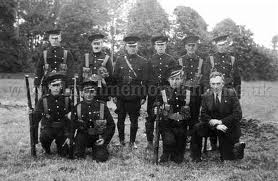
'B' Specials pose for a photograph - undated

‘B’ Specials pose for a photograph – undated

Overwhelmingly Protestant and Unionist in make-up, the Specials were soon at the front line of violence in the North. Initially regarded as a reserve force to assist the RIC and the British Army, the Specials’s profile increased after the Treaty. During the short-lived ‘Border War’ of 1922, for example, the Specials played the leading role in clashes with the IRA, whose members put aside their differences on the Treaty in opposition to the new border, and forty-nine of the new group’s members were killed.

But by this stage the Specials had also earned a name for fierce anti-Catholic violence. In Newry, they were accused of burning 160 Catholic homes and killing ten Catholic civilians and engaged in tit-for-tat attacks on Catholics elsewhere in response to IRA killings of security force members. The most notorious of these incidents was the massacre of six members of the MacMahon family at their Antrim Road home in Belfast in March 1922, apparently in reprisal for the IRA murder of two Specials earlier the same day.

The 'B' Specials were disbanded in 1970. Here some of their number are marching to a demobilisation ceremony at St Anne's Cathedral, Belfast

The ‘B’ Specials were disbanded in 1970. Here some of their number are marching to a demobilisation ceremony at St Anne’s Cathedral, Belfast

It was little wonder then that Nationalists on both sides of the new Border viewed the Specials with a mixture of fear, distrust and loathing.

That certainly was a judgement shared by Michael Collins’ fiancee, Kitty Kiernan. Or at least it was her view until her husband-to-be was felled by an anti-Treaty bullet at Béal na Bláth in August 1922, some two months after the outbreak of the civil war.

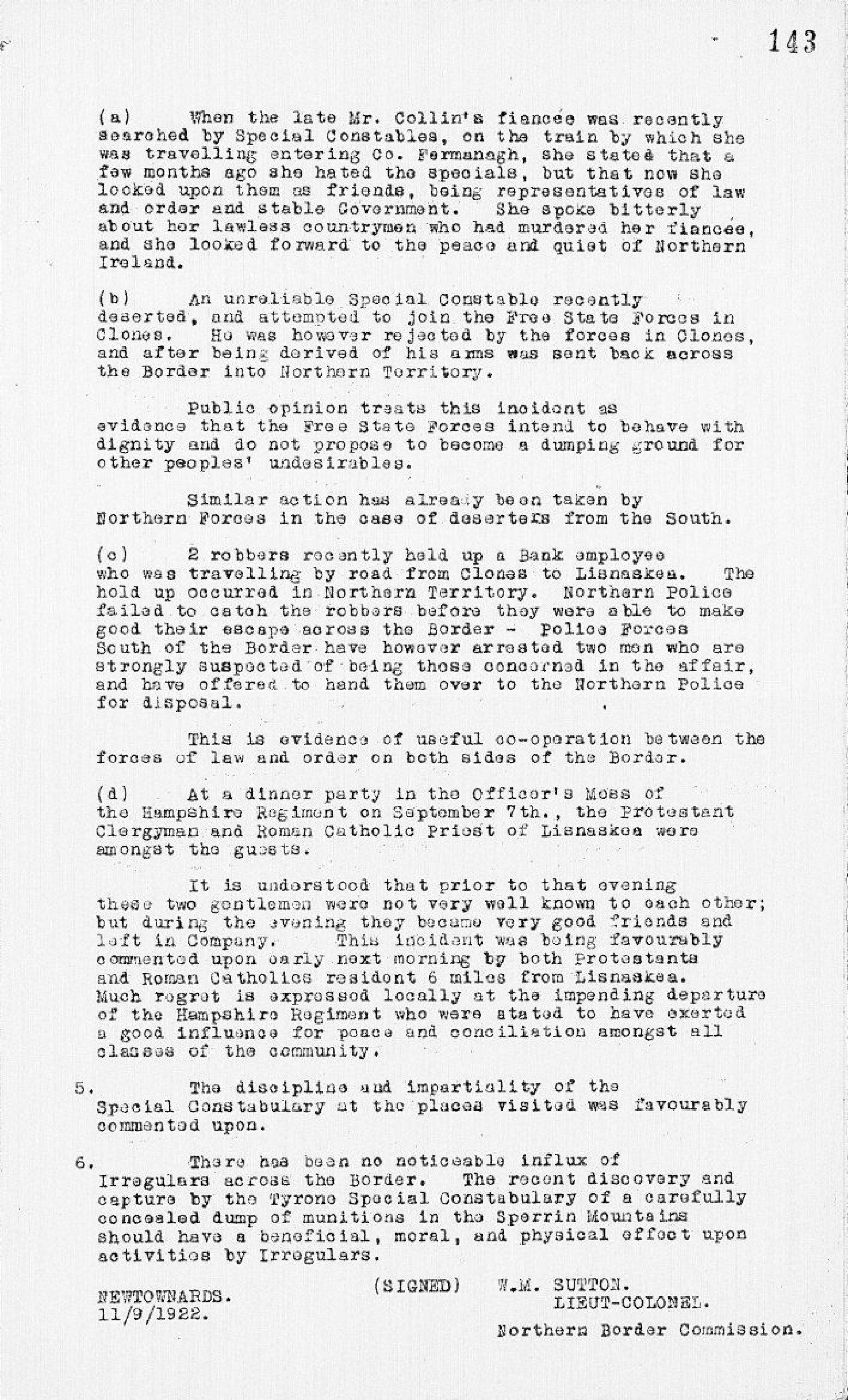
An insight into how even the most steadfast of political views can be turned upside down by painful personal experience is given by a recently discovered document at the British National Archive at Kew, Surrey. It comes in the shape of a report of the Northern Border Commission in early September 1922 written by a Lt.Col W. M. Sutton on the security situation in counties Fermanagh, Tyrone, Armagh and Down.

Sutton wrote that all those areas were “extremely quiet” and that “Happier relations than usual appeared to exist between people of different shades of political and religious opinion.” Among the reasons he gave was the “widely held belief that the forces of law and order are in the ascendant, South of the Border.”

As further evidence Sutton cited a number of incidents which “were being much discussed by inhabitants of the Border Counties”, the first of which dealt with an encounter on a train between Kitty Kiernan and a patrol of Specials.

Kitty Kiernan - Collins and Harry Boland vied for her affections

Kitty Kiernan – Collins and Harry Boland vied for her affections

It reads: “When the late Mr Collin’s (sic) fiancee was recently searched by Special Constables, on the train by which she was travelling entering Co. Fermanagh, she stated that a few months ago she hated the specials, but that now she looked upon them as friends, being representatives of law and order and stable government. She spoke bitterly about her lawless countrymen who had murdered her fiancee, and she looked forward to the peace and quiet of Northern Ireland.”

Other evidence cited by Sutton included a decision by “Free State Forces in Clones” to return a deserter from the Specials after he had attempted to join them, the arrest and handover of two bank robbers by Gardai shortly after they had held up a bank employee near Lisnaskea and a newly forged friendship between a Protestant clergyman and a Catholic priest from Lisnaskea who had met a dinner party hosted by the Hampshire regiment.

The romance between Michael Collins and Kitty Kiernan, and the rivalry for her affection between Collins and his friend Harry Boland provide one of the most engaging sidebars in the story of the War of Independence. Collins eventually won out when he and Kitty Kiernan became engaged (doubtless Collins’ cause was aided by Boland’s prolonged absence in America alongside Eamon de Valera as the unrecognised president of the Irish republic sought funds and recognition in the US).

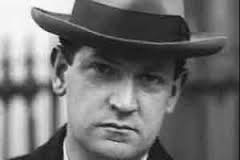
Michael Collins

Michael Collins

Boland broke with Collins over the Anglo-Irish Treaty and sided with the recalcitrant elements in the IRA. On August 1st, 1922 Boland was shot dead by soldiers of the new Free State army in disputed circumstances as they attempted to arrest him in the Grand Skerries Hotel. Boland was unarmed at the time. His death so affected Collins that, according to some reports, he reached out to de Valera for peace talks to end the civil war but he was himself killed not long afterwards during a fateful visit to West Cork.

Harry Boland

Harry Boland

Why Kitty Kiernan was on the cross-Border train and who she intended to visit is, alas, not revealed in the document.

KItty01Kitty02

Tim Pat Coogan – A Reaction

I have just read Tim Pat Coogan’s article in Niall O’Dowd’s website Irish Central which you can read here.

A number of people have urged me to respond but after reflection this is what I have to say: isn’t it a shame that after such an illustrious career, which has included writing major books on Irish republican history and editing one of Ireland’s major daily newspapers, he has reduced himself to such a level. Very sad indeed?

Did Gerry Adams ‘Felon Set’ Ivor Bell To The PSNI?

Will Gerry Adams appear as a witness against Ivor Bell in his trial on charges of aiding and abetting the murder of Jean McConville?

That is the question that leaps out of a statement issued by Mr Adams yesterday that was critical of Boston College’s Belfast Oral History Project but in the process also apparently identified Ivor Bell as the mysterious interviewee known only as ‘Z’.

In the statement Adams says that Anthony McIntyre’s “interview with Ivor Bell”, along with other interviews with the late Brendan Hughes and Dolours Price, “formed the mainstay of my arrest last week.” Since Bell has not admitted to being ‘Z’ and the PSNI concede they must still positively identify this person, Adams’ statement could be of invaluable assistance to the prosecution.

Bell was arrested and charged in March in connection with the disappearance of Jean McConville, the widowed mother of ten abducted and shot dead by the IRA on foot of allegations that she was an informer. But in bail appearances the police admitted they could not yet positively identify Bell as interviewee ‘Z’, whose interview was handed over by Boston College to the US government acting on behalf of the PSNI.

It became clear that Bell had not admitted being ‘Z’ during questioning and that the PSNI would therefore have to prove that the two were one and the same before they could even mount a prosecution case against him.

The reason why the PSNI cannot yet positively identify Bell is that Boston College has lost the donor contracts for ‘Z’, which would have identified the interviewee in a document signed and dated for each interview.

Collection of the contracts was the job of Boston College librarian Bob O’Neill who was supposed to collect the contracts from Ireland and ferry them by hand to Boston for safekeeping. These were the only documents which identified the interviewees. But for reasons which have yet to be made clear, O’Neill misplaced ‘Z’s’ contracts as well as an unknown number of other contracts. These include the contract for Dolours Price.

Adams’ statement definitively refers to an interview with “Ivor Bell” which was presented to him for a response and since this appears to identify Bell as ‘Z’,  two questions immediately arise.

The first is: did Adams identify Bell in his four days of interviews with the PSNI? The second: will Adams’ statement identifying Bell be admissable in court as evidence that ‘Z’ is in fact Ivor Bell?

This raises the intriguing and dramatic possibility that Gerry Adams, a former Belfast Commander of the IRA, will be called to testify against one of his closest friends and a senior colleague in the Belfast IRA. A number of reports have said that Bell was in fact Adams’ number two during the early 1970’s.

It would be a dramatic and unprecedented development which could place Adams, as far as many republicans are concerned, in the place which Sinn Fein is saying is now occupied by the Boston College interviewees, as “touts”, or informers.

Here is the full statement issued by Gerry Adams yesterday via 4ni.co.uk. The reference to Ivor Bell, which the PSNI and the prosecution service are likely to seize on, is in the penultimate paragraph:

“Everyone has the right to record their history but not at the expense of the lives of others.

“The Boston College Belfast Project was flawed from the beginning. It was conceived by Lord Paul Bew. He proposed Ed Moloney and Anthony McIntyre despite the fact that both individuals were extremely hostile to myself, Sinn Fein, the peace process and the political process.

“I was not and am not aware of any republican or member of Sinn Fein in support of the peace process who were approached by Anthony McIntyre to be interviewed. On the contrary, the individuals so far revealed as having participated are all hostile to Sinn Fein. On RTE last Sunday Anthony McIntyre was forced to concede that perhaps two out of the twenty-six people he interviewed were not anti-Sinn Fein.

“This flawed project was exposed when Ed Moloney chose to capitalise on the death of Brendan Hughes and write a book called, ‘Voices From The Grave’. No republicans, including myself, who were slandered in that book were offered the opportunity before publication to rebut the allegations made against them. Ed Moloney needs to explain that decision. He also needs to explain why, after the project officially closed, he returned to Ireland in 2011 and asked Dolours Price, whom he had currently described as mentally unwell and suffering from PTSD, to be interviewed on DVD, a DVD which he then lodged in the archive. It is that interview, Anthony McIntyre’s interview with the late Brendan Hughes and his interview with Ivor Bell, which formed the mainstay for my arrest last week.
“I welcome the end of the Boston Belfast Project, indicated by the College’s offer to now return the interviews to the interviewees before the securocrats who cannot live with the peace seek to seize the rest of the archive and do mischief.”

“I Did Not Interview People Because They Might Be Hostile To Gerry Adams” – Boston Researcher, Anthony McIntyre

Further to my statement answering allegations from Gerry Adams that the Boston College project was biased against the Sinn Fein president, lead IRA researcher Anthony McIntyre shed some fascinating light on his conduct of the interviews with RTE’s Marian Finucane on her radio show last Saturday.

Finucane asked him this question: “……not all of your interviewees were opposed to the peace process, isn’t that right?”

And he answered: “That’s correct. Not all of them were.

“Two at least were very strong supporters of Sinn Féin. Others were not hostile to Sinn Féin. I didn’t just interview people who…when this ultimately does come out I think society may be surprised about the nature of the people that I did interview.

“I did not interview people because they might be hostile to Gerry Adams.

“I interviewed people for their ability to enhance knowledge and to bring more knowledge of Republicanism into the public domain. And this on occasion meant that I had to interview people who might have had no connection with the IRA or the INLA but who may have had valuable knowledge and I thought that knowledge was essential to obtain.

“And would have no bearing whatsoever on Mr. Adams.”

McIntyre’s description of his work not only accords with Judge Young’s assessment that the project was “a bona fide academic exercise of considerable intellectual merit” but it also raises some important points about the nature of oral history when it deals with a subject like the Troubles in Northern Ireland.

History is invariably written by the winners and leaders. If there was a bias in this project it was to get the viewpoint of grassroots activists, not their leaders. By virtue of their position leaders invariably dominate the narrative in the wake of conflict situations, imposing an often self-serving version of the truth on everyone else

But no political leader has the right to demand that they and they alone should have control over what that history says. No political leader has the right to determine who should or should not be allowed to contribute to a project like this.

The primary objective of this project was to ensure that the people who fought the war, as opposed to those who directed it from safe houses, be allowed to tell that story. I suspect that is the real objection such leaders have to the Belfast Project. It is all about control and the fear of losing it.


Gerry Adams And The Belfast Project – A Statement In Response

In the past few days a concerted attack has been made on the integrity of the Belfast Oral History Project, led by the leadership of Sinn Fein, in which the claim has been made that this was a ‘Get Gerry Adams’ enterprise designed to embarrass and discomfort Mr Adams.

I wish to refute this allegation in the strongest possible terms. It is a slur on my professional integrity as a journalist of over thirty years standing who has covered nearly every aspect and participant in the Troubles. It is a slur on the professionalism and detachment with which I know the lead IRA researcher Dr Anthony McIntyre approached his work interviewing the participants.

One simple reality has been overlooked. Mr Adams does not know what he is talking about. There were over 200 interviews from 26 participants housed in the Boston College archive and Mr Adams has not read them, does not know their full content and aside from two or three names that are in the public domain, does not know who was interviewed. He speaks from a position of almost complete ignorance about the archive.

Only one other person aside from myself and Dr McIntyre has read the full archive from beginning to end. That was Judge William Young who presided over the first hearing dealing with Boston College’s attempt to get the British subpoenas dismissed at the Federal District Court in Boston in December-January 2011/2012.

This is what he said about the archive: “This was a bona fide academic exercise of considerable intellectual merit.”

And he went on: “[These materials] are of interest – valid academic interest. They’re of interest to the historian, sociologist, the student of religion, the student of youth movements, academics who are interested in insurgency and counterinsurgency, in terrorism and counterterrorism. They’re of interest to those who study the history of religions.”

So how does one reconcile Mr Adams’ wild and unsubstantiated accusations based on almost complete ignorance of the archive’s contents with the opinion of a disinterested American judge who has actually read the entire archive? I don’t think it is possible to do so.

Judge Young was obliged to read the archive because of an extraordinary claim from Boston College that its academics could not help him decide which interviews were responsive to the subpoena because they had not read it.

So the judge spent the Chistmas holidays reading the interviews to decide which ones should be handed over. In his judgement, which has been reproduced elsewhere on this blog. Judge Young could find only one interview that was fully responsive, i.e. that dealt directly with what had allegedly happened to Jean McConville.

Another ten or so interviews made some reference to her and because the British had asked the American courts to be “expansive” in their approach to the subpoena request he decided to also hand these over. This meant that even if an interviewee had said, “I don’t really know much about Jean McConville other than what I have read in the papers”, then that interview had to be surrendered.

Out of over 180 interviews that he read only eleven met Judge Young’s generous criteria for surrender. That is just under six per cent of the interviews reviewed by the judge. At one point in his judgement he referred to “….the paucity of information (about the McConville case) unearthed after extensive review by this court.”

If this was indeed a “Get Gerry Adams” project then all I can say is that we did not do a very good job of it.

‘Gerry Adams Hired Lawyer From Barra McGrory’s Old Office’ – Legal Sources

According to legal sources in Belfast, Gerry Adams hired a lawyer from the old law firm of the North’s Director of Public Prosecutions (DPP), Barra McGrory – who was himself Adams’ lawyer until 2011 –  to advise and help him during his interrogation by PSNI detectives at Antrim police station.

The attorney, who apparently does not specialise in criminal law, works at PJ McGrory & Co, the law firm founded by the DPP’s father, the late Paddy McGrory. His son Barra was appointed DPP in 2011 and heads the office which must now decide whether to charge Gerry Adams. The PSNI have referred a file of evidence to the DPP for consideration.

Legal sources also say that the direction of PSNI questioning of Adams points more towards a possible charge of IRA membership rather than involvement in the Jean McConville murder.

It is assumed that Barra McGrory will have to recuse himself from the case because he once acted as Gerry Adams’ lawyer, but it is not known whether he was aware that an employee from his old law firm had been hired to represent the Sinn Fein leader during his four-day detention at Antrim police station.

Gerry Adams And The Public Interest Factor

While we do not know, and probably will never find out, why the PSNI referred Gerry Adams’ file to the prosecution service for a decision on whether to charge him, it is very possible that ‘public interest’ considerations were high on the list of factors.

This is because of Adams’ post as an elected representative, the leader of one of Ireland’s largest political parties and because of his key role as the IRA broker of the peace process. Since his prosecution and/or conviction could have serious implications for the peace process, and therefore for British government policy, this may qualify his case for the ‘public interest’ argument and a government intervention to stop any prosecution.

It may also be the case that the decision was made solely or mainly because the police are unsure whether the evidence they have gathered would be sufficient to secure a conviction at trial and decided to pass the ball to the prosecution service’s lawyers to decide. But common sense suggests that ‘public interest’ is likely to be an element in the decision.

The doctrine of ‘public interest’ was devised by Sir Hartley Shawcross QC, a Labour Attorney-General in the first post-war British government who later became chief prosecutor at the Nuremburg war trials.

The doctrine was outline in a statement to the British House of Commons on January 29th 1951 from Shawcross which read:

“It is the duty of an Attorney-General, in deciding whether or not to authorise the prosecution, to acquaint himself with all the relevant facts, including, for instance, the effect which the prosecution, successful or unsuccessful as the case may be, would have upon public morale and order, and with any other considerations affecting public policy.

“In order so to inform himself, he may, although I do not think he is obliged to, consult with any of his colleagues in the Government; and indeed, as Lord Simon once said, he would in some cases be a fool if he did not. On the other hand, the assistance of his colleagues is confined to informing him of particular considerations which might affect his own decision, and does not consist, and must not consist, in telling him what that decision ought to be. The responsibility for the eventual decision rests with the Attorney-General, and he is not to be put, and is not put, under pressure by his colleagues in the matter.”

Given the profile and sensitivity of the case it seems unlikely that a decision of this gravity would be left to Barra McGrory’s deputy, assuming he recuses himself from the case. Instead she is likely to refer the case to the British Attorney-General, Dominic Grieve MP. In effect the British government will decide whether Gerry Adams ends up in the dock.

So in a nutshell Gerry Adams might end up a beneficiary of a rule which permits dropping a prosecution which might have an adverse impact on “public morale and order, and with any other considerations affecting public policy”.

Stand by for the mother and father of political rows if that happens.

Over To You Barra!

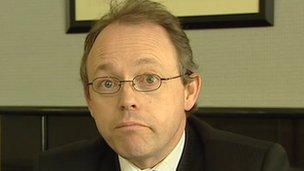
Barra McGrory - North's Director of Public Prosecution

Barra McGrory – North’s Director of Public Prosecutions

According to the BBC, Gerry Adams is to be released from custody at Antrim police station but a file will be sent to the Public Prosecution Service. For those not familiar with legal practice in the UK and Ireland, that means that the police think they may have material for a charge but want the Director of Public Prosecutions to make the final decision, which is usually governed by a calculation of whether a conviction can be secured.

Presumably the possible charge facing Gerry Adams, is in relation to the matter he has been questioned about, the disappearance of Jean McConville.

The irony of course is that the man in charge of the prosecution service, the Director of Public Prosecutions or DPP, is Barra McGrory who until his appointment in 2011 was none other than Gerry Adams’ own lawyer. Barra’s late father Paddy, a famous figure in the North’s legal and political world, was Adams’ lawyer before that (full disclosure: both Barra and Paddy were/are good friends of mine, as is his mother and sisters, and have been for many years).

Presumably, Barra McGrory will have to recuse himself from the decision-making process meaning that Gerry Adams will have a few more nervous months of waiting before he knows whether he is out of the woods.