Category Archives: Uncategorized

….And This Is Why British Labour Really Lost The Election

A brilliant piece below by Richard Seymour analysing the real ills of British Labour which appeared in the April 25th edition of the London Review of Books, just a few days before Miliband’s miserable election result.

This is why Labour lost and why moving to the Right and towards Tony Bliar, as the top job-seekers in the party now want to do, will only accentuate the party’s decline. My own view is that the party is beyond reform; the rottenness is beyond fixing and perhaps it is time for the Left to break away.

Otherwise they will find themselves stranded like the so-called left in the Democratic Party in America, in a rigid two-party system, sharing the same broad neo-liberal economic policies and the same broad neoconservative foreign policies with the British equivalent of the Republicans, and with nowhere else to go.

(By the way Richard Seymour is a Ballymena Prod, a Marxist writer and broadcaster and is in the process of co-founding a new socialist magazine, Salvage, which sounds an appropriate title for what’s left of the Labour party.

Bye Bye Labour

Richard Seymour

In David Hare’s play The Absence of War, the Kinnock-like party leader, George Jones, is a tragic figure. His wit, his passion and his ability to extemporise are gradually extinguished, with his connivance, by a party machine that spends its time trying to out-Tory the Tories. They obey the polls religiously, yet still the voters aren’t ‘churning’. They do what ‘everyone agrees’ is necessary in order to win, but to no effect. Unable to work out why, they face the oncoming election much as they might a whirring propeller, and are left in shreds.

There is no tragic note to be sounded about any senior Labour figure today. Ed Miliband sacks his shadow attorney general, Emily Thornberry, for conveying a ‘sense of disrespect’ towards the owner of a white van. Ed Balls, having given up his brief attempt at an attack on the coalition’s austerity policy, courts respectability by pledging to honour all the coalition government’s spending cuts. Rachel Reeves gratuitously alienates the unemployed and welfare recipients – groups she treats as identical, although the majority of people who receive benefits are in work – by insisting that Labour ‘is not the party to represent those who are out of work’. All of this is evidence of Labour’s clumsy move rightwards in the hope of expanding its base. What has happened instead is that chunks of that base have seceded to the Scottish National Party, Plaid Cymru, the Greens or even Ukip. Labour does not lack popular policy initiatives, from repealing the Health and Social Care Act or the bedroom tax to freezing fuel prices and introducing rent controls. What it lacks is a purpose.

Labour claims that addressing the ‘cost of living crisis’ is what really matters. But having accepted the straitjacket of austerity, what can Labour really do about it? The longest decline in living standards in fifty years can hardly be uncoupled from austerity policies that have retarded growth and removed vital support from working-class incomes. Ed Balls’s promise to continue cutting means that Labour can at best tinker at the margins of the crisis. In some instances, as with its de facto agreement with the Tories that unemployment benefit for the under-25s must be scrapped, Labour apes Tory policy. Even if this achieved its stated aim, by forcing unemployed young people to find work for poverty pay, how would that improve living standards?

Worse, Labour has accepted Conservative precepts. The private sector knows, and grows, best. The City is untouchable: it may be chastised, but never seriously confronted. Unemployment is a form of dependency, best dealt with through market discipline. Competition is the law of all social and economic life, and it is the role of the state to encourage it and to secure public participation in it. And the British state, and its military commitments, are sacrosanct. In the months leading up to the Scottish independence referendum – the sole recent instance of mass, enthusiastic democratic participation in the UK – Labour found itself campaigning alongside the Conservatives, with the result that in May’s election it will be all but wiped out north of the border. The logic of its position has compelled Labour to attack the SNP far more vehemently than it has the Conservatives. Miliband has been forced, under Tory pressure, to rule out a post-election coalition with the SNP, which may be enough to end any prospect of a viable Labour government.

By degrees, Labour has come to accept most of the Conservative ‘vision’, not least because it lacks one of its own. The Tory Weltanschauung is complex, its racist and authoritarian flavours tempered by business-friendly cosmopolitanism and ‘free market’ libertarianism. It has taken only thirty years for Labour to metabolise the right’s ‘common sense’ about the market and spending, its repressive attitude to security and criminal justice (the prison population and police numbers expanded at a much higher rate under Labour than they have under the Conservatives; ‘anti-terror’ legislation and Asbos proliferated), and now its immigration policy. Shortly after William Hague became Tory leader in 1997, Labour took up the Tories’ rhetoric about asylum seekers and gypsies. Its response to the riots in the north of England in 2001, which pitted young Asian men against the far right and the police, was to blame local tensions on the Asian propensity for self-segregation. There were years of authoritarian exhortations to embrace ‘Britishness’. But, as the Blairite columnist Dan Hodges has argued, ‘trying to ape the language of the BNP succeeded only in boosting the BNP.’ It also gave Cameron the opportunity in opposition to belittle the ‘Alf Garnett’ race politics of the Labour front bench and to pledge to ‘reverse the substantial erosion of civil liberties under the Labour government’.

Judging from Labour’s painstaking recapitulation of Tory ideas, one would think that its main problem is the overweening strength of the Conservatives. Yet the Tory share of the vote is stuck in the range 30 to 35 per cent, exactly where it has been since Black Wednesday in 1992. The question of Europe has fatally divided its base, as a swelling coalition of small businessmen, lone traders and hyper-Atlanticist cowboy capitalists have shifted their loyalties to challengers such as Ukip. Big business, which traditionally dominates the Conservative leadership, may enjoy the fruits of Europe’s free-trade rules, but many small businesses demand the right to use cheap and precarious labour with as little regulation from Brussels as possible.

The roots of Miliband’s dilemma lie instead in a crisis of representative democracy that is not peculiar to the UK but is afflicting all the rich democracies. The context for this crisis is a rise in public indebtedness across the industrialised world whose proximate cause is the collapse of revenues resulting from the global recession and the subsequent need for unprecedented bailouts to rescue banks and prop up economic activity. But the problem is chronic; it was first detected in the 1970s. Among the root causes of increasing public debt are the slowing of growth rates compared to the postwar era, a demographic shift that has increased the size of the dependent population relative to the working-age population, and a displacement of manufacturing by service industries that are less profitable and thus generate lower tax revenues. But in the period of Thatcher and Reagan, it was argued that the postwar Keynesian consensus was the main culprit: it had distorted the market and driven up inflation, and state expenditure had outrun the productive base of the economy. Successive governments – Thatcher in the 1980s, Clinton in the 1990s, Schroeder and Blair in the 2000s – sought to reform the state to control costs. There were cutbacks in discretionary spending, and the public sector was restructured by the creation of internal markets.

The result was not a smaller state, or even a more efficient one (the introduction of internal markets in the NHS, for instance, has increased overheads from 3 per cent to 15 per cent of total costs), but a state that is more business-friendly and less democratic. And deficits have not significantly decreased in most cases. In the US, Clinton’s blitz on welfare and pro-Wall Street policies produced a short-lived budget surplus by the close of his administration. In the UK, governments have run deficits in all but six years since 1979, and even before 2008, the trend was that they were gradually increasing. Indeed, the surge in structural unemployment, used to control inflation and bust unions, has tended to exacerbate the public debt problem.

Wolfgang Streeck and Armin Schäfer argue in Politics in the Age of Austerity (2013) that one result of cost controls is to emaciate the budget for discretionary programmes, as more of the budget is consumed by debt repayments and other mandatory expenditures. Given the success of the rich in lobbying against tax increases, and in avoiding paying tax in the first place, it is increasingly difficult to raise the revenues needed for existing services. Taxes on consumption – which hit the poor hardest – have been implemented, but there is limited political tolerance for these. States are increasingly left with very little room to manoeuvre, while the growing domination of government discourse by neoliberal doctrine tends to suppress policy choices which are not ‘market-friendly’. In this situation, mild market interventions such as temporary energy price freezes might be possible, but nationalising energy companies will not be seriously considered. This narrowing of democratic choice renders Westminster politics increasingly irrelevant to the lives of citizens, except in so far as it panders to spite: the punishment of the obese, the disabled, Scots, single mothers, immigrants and so on.

Now that we’re expected to fend for ourselves, the expectations invested in parliamentary democracy have tended to dwindle, as has participation in it. Voter turnout has fallen across the rich democracies, most sharply among the poorer and less educated. The tendency is particularly advanced in Britain: turnout in general elections between 2000 and 2010 varied between 60 and 65 per cent, well below the 72.5 per cent average recorded by Streeck and Schäfer for the core economies in the same period. In the 2010 general election, turnout ranged from 44 to 72 per cent, with the lowest turnouts in the areas with the highest unemployment. The collapse in participation rates is much steeper in local and regional elections, perhaps partly in response to the centralisation of political power and the decreasing scope of local government to effect real change.

In Labour’s case, the collapse of its representative link with its base also has specific causes. The social basis of Labourism is the labour movement, and it is in retreat. Union membership has halved since 1980. The co-operative movement has shrivelled and the Methodist halls are no longer filled; the broader labour movement no longer produces a steady stream of orators and organisers. Even so, the accelerated rot of recent years is a product of New Labour’s period in office. The Blairites had argued that mass recruitment of new members would anchor the party to the mainstream, while a centrist governing strategy would help bind middle-class voters to progressive ideas. In fact, membership fell to the lowest levels in the party’s history after 13 years of Labour government, and the loss of five million working-class votes between 1997 and 2010 resulted in Labour’s lowest share of the vote since 1918.

Ed Miliband’s leadership bid was based partly on the need to reclaim the working-class vote. The first year of his leadership saw a brief revival in party membership. Yet he has struggled to reconcile his objective with Labour’s continued acceptance of the post-Thatcherite consensus – and of austerity politics – as the condition of gaining middle-class votes and the co-operation of business. The essential fallacy of British politics is that there is a large centre ground, and that this is where elections are decided. As Nick Clegg has discovered to his cost, in a period of economic depression this area has a tendency to shrink. Yet as the political situation polarises and the establishment parties feel the earth fall away beneath them, they cling ever more tightly to their belief in this centre ground. Labour is doing just this, as a matter of both principle and strategy. It is doing it because it thinks it’s the right thing to do, because it’s what the party is used to doing, and because it can’t do anything else.

Ironically, Labour’s electoral weakness may stave off the worst for it. The party is trapped in a spiral of self-destruction, which James Doran, a Labour activist, has called ‘Pasokification’. Greece’s dominant centre-left party implemented austerity and its vote collapsed from 43.9 per cent in 2009 to 4.7 per cent in 2015 – but Pasok’s fate is only an extreme form of the implosion threatening most European social democratic parties, from the German Social Democrats to the French Socialists. The Labour Party faces a dilemma in May. Defeat will be demoralising and will increase the possibility that the party will ultimately collapse. There is little evidence that any significant force, other than the Blairites, would be in a position to take advantage of Miliband’s loss, and certainly none that a Labour left with any influence would emerge from the ruins. Yet if it wins, Labour will be forced to implement an austerity agenda which, while not enough to satisfy Conservative voters, will turn its own remaining voters off in droves. That would be a defeat of a different order. For a vision of that future, one need only look across the Channel, at François Hollande sinking and sinking in the polls, and the Front National on the rise.
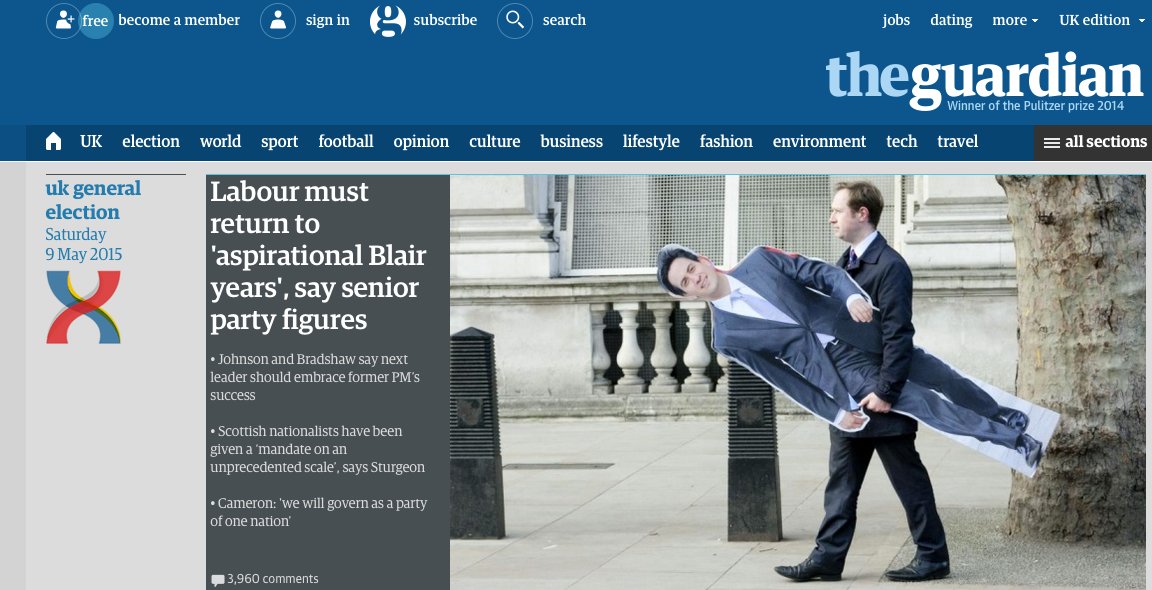
British Labour Party Learns Nothing From Election Result

As in: “Those who cannot learn from history are doomed to repeat it.”
George Santayana

BritLab

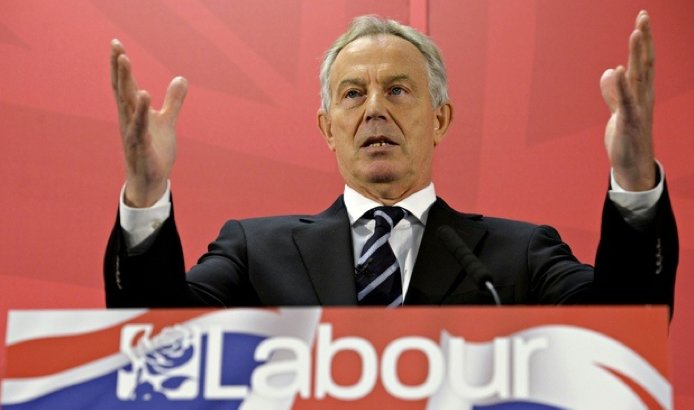
Heeeee’s baaaaaaaack!

And it will be as as if all those people never died in Iraq, all those lies with Bush & Cheney were never told, all that arse-licking of Murdoch never happened, all that undermining of the NHS didn’t take place, all those millions made in the middle east on the back of his contrived and fraudulent role as ‘peacemaker’ in Ireland were a leftist fantasy………

Bliar


British Election Exit Polls Suggest DUP Will Control Everything While Sinn Fein May Finally Swear The Dreaded Oath!

If the exit polls from today’s British general election as reported by the BBC tonight translate into actual results, then stand by for the dawning of the age of the DUP.

The exit polls suggest that Cameron’s Tories will win 316 seats, more than the last election but still short of an overall majority. Thanks to Sinn Fein’s abstention from the House of Commons, the number of votes needed to form a government is 323 and Cameron is seven votes shy.

By happy, or unhappy coincidence, the DUP currently hold eight sets which, if they are retained, would give the Tories their majority; and the DUP may actually increase to nine seats which would give Cameron some breathing space.

However, if Sinn Fein took its seats, and swore the necessary oath of allegiance to Queen Elizabeth, then according to the BBC, the Tories would need 326 votes and currently, on the basis of the exit polls, they are ten seats short of that and the DUP contingent at Westminster would not be strong enough to push them over the line.

However the UKIP could come to Cameron’s rescue; its predicted two seats would mean the stage would be set for a Tory-DUP-UKIP government with a majority of a single vote. Now wouldn’t that be something to contemplate?

Nonetheless, if ever there was a compelling argument for Sinn Fein to drop abstentionism at Westminster it is the prospect of denying the DUP the whip hand over British politics for the foreseeable future at best, or, at worst, making votes at the House of Commons a weekly nightmare for Cameron’s Whips..

All this, of course, is contingent upon the exit polls translating exactly into the BBC prediction and a shift of two or three seats either way could make an enormous difference. However not for the first time in the last forty years of Troubles and ‘peace’, the arithmetic at Westminster may have utterly unforeseeable consequences for that wee place and its politics.

Tomorrow could be a very interesting day.

To The Devil His Own

devil

Dessie O’Hagan, the Beria of the Workers Party, died today. On the same date as Bobby Sands. And on my birthday. Two reasons to celebrate.

The Mystery Of Michael McConville’s ‘Abduction’

UPDATE (see below)

By Ed Moloney and James Kinchin-White

As the more avid followers of the Jean McConville saga will remember, one of her sons, Michael McConville was abducted by the IRA – in fact by its youth wing, the Fianna – not long after his mother was taken away from her Divis Flats apartment in December 1972, tied up, beaten and threatened to keep his mouth shut about what or who he had seen.

The story was first told on Darragh McIntyre’s TV documentary, ‘The Disappeared’, which was broadcast by the BBC in November 2013. This, in his own words, is what happened:

They pulled a hood over my head. It was a sleeve of a jumper, a wooly jumper because I could see through the mask. They took me down out of the Divis Flats into a house. They tied me to their chair, were hitting me with sticks, they were putting a gun to my head and they says they were going to shoot me. I had looked out of the side of my eye and there was a man and he was telling the younger ones what to do with me. So they had me, I would say, for about three hours and they said they were going to shoot me if I told anything about any member of the IRA, they would shoot me or other of my family members. They fired a gun, a cap gun and one of them stuck a penknife in my leg. They took me over to the Divis Flats and let me go at the stairs and I hobbled up the stairs into the house. I had just turned eleven at the time.

Michael McConville - insists he was not abducted in February 1973

Michael McConville – insists he was not abducted in February 1973

There was no official record of this incident and no mention of it in any British security file, although in an interview with thebrokenelbow.com, Michael McConville said he did tell the former NI police ombudsman, Nuala O’Loan about it when she was investigating her mother’s disappearance in 2005 and 2006.

However a separate report of another abduction incident allegedly involving Michael McConville has been unearthed recently at the British government’s official archive at Kew, Surrey.

It is contained in a document called a ‘sitrep’, or daily situation report for February 12th, 1973, some two to three months after Jean McConville’s abduction and disappearance at the hands of the IRA.

Daily ‘sitreps’, or summaries of violent or paramilitary-linked incidents, were widely distributed within official British circles in those days when levels of violence were both intense and serious; thebrokenelbow.com understands that copies were routinely sent to British Army headquarters at Lisburn, Co Antrim, to the three Brigade HQ’s, to the head of RUC Special Branch, to the NIO and, probably, also to MI5/MI6, who were both active in Northern Ireland then.

A copy was also sent to 10 Downing Street, to the office of the British prime minister of the day. In February 1973, the prime minister was Ted Heath and this particular ‘sitrep’ was discovered in his file at the Kew archive.

The relevant section reads:

…..At 2145 hrs in Castle Street (just W of City Centre) 2 Catholic children were taken into a car by 3 masked men in Combat kit. One of the children has since returned home but Michael McConnvill (sic) (10-RC) is still missing.

The surname is misspelt – McConnvill instead of McConville – but the age is close – Michael had turned eleven the previous November – his religion was correct and Castle Street was, as he readily concedes, ‘his area’.

But as for the second alleged abduction, he is insistent that it never happened. “No, I was never taken away in a car. It definitely didn’t happen to me. The only time I was taken away was when they took me as I was walking to my grandmother’s.

Michael McConville’s abduction by the Fianna also took place some three months before the alleged second incident. It happened, he recalled, “….between a week and ten days of my mother (being taken away by the IRA). I’m not a hundred per cent sure but sometime in early December.” The precise date of Jean McConville’s abduction is not known but most accounts put it somewhere between late November and early December.

The 'sitrep' of 11th to 12th February 1973

The ‘sitrep’ of 11th to 12th February 1973

Whatever the truth about that aspect of the affair, the more than two month gap between the two ‘abduction’ incidents involving Michael McConville, one in early December 1972, the other in mid-February 1973, means that there is no chance that the two have been confused or conflated.

Nor does Michael McConville have any obvious motive for lying about the second ‘abduction’. There is no reason to disbelieve his denial. If anything his campaign to hold the IRA responsible for his family’s ills would only benefit if he was to confirm the second abduction. And he had told Nuala O’Loan about the first incident, so why not the second one?

The mystery of Michael McConville’s abduction or abductions does however raise some pertinent questions about Nuala O’Loan’s report into Jean McConville’s disappearance. Michael McConville said he told the police ombudsman about the incident but she did not follow up and made no reference to it in her final report.

“I didn’t tell Nuala the whole story of what happened to me”, he said in an interview over the phone. “I just told her I was taken away myself. I didn’t go into the details of it.” So did she question him about it? “Not that I remember.”

(Michael McConville added two new details to the account of his abduction. He said he gave Gerry Adams the names of two of the Fianna boys who abducted him. And he thinks that the man who gave orders to the Fianna boys was Brendan Hughes. “He was standing in the background and had a moustache. I think it was him although I am not 100 per cent sure.”)

Nuala O’Loan has yet to reply to two emails sent to her in March asking the relevant questions that arise from both the December 1972 abduction of Michael McConville and the ‘sitrep’ document of February 1973.

The emails asked these questions:

i was wondering whether you came across this document (the sitrep) during your inquiry and if so why it was not included in the list of documents that you did present given its direct relevance to the disappearing of jean mcconville? also i was wondering why you made no mention of michael mcconville’s (December 1972) abduction in your report. did he tell you about it at all?

In her 2006 report, Nuala O’Loan listed only two pieces of intelligence from the British Army dealing with the possible reasons for Jean McConville’s disappearance and both served to strengthen the case at the time to close the RUC file on her abduction.

These were:

  • On 13 March 1973 information was received from the military suggesting that the abduction was an elaborate hoax;
  •   On 24 March 1973 further information was received from the military stating that the abduction was a hoax, that Mrs McConville had left of her own free will and was known to be safe.

The first of those reports came just a month after the ‘sitrep’ had reported the alleged abduction of a son of the woman whose disappearance was, in the last month of 1972 and opening weeks of 1973, the subject of considerable local media speculation and had attracted the concerned attention of the Northern Ireland Civil Rights Association and two Nationalist politicians, Paddy Devlin, MP at Stormont and Gerry Fitt, the Westminster MP for West Belfast.

To say that the military reports of February 12th 1973 and March 13th 1973 are in conflict is a bit of an understatement. If Jean McConville had contrived her own abduction why would men ‘in Combat kits’ want to kidnap one of her sons?

Notwithstanding Michael McConville’s credible denial, the ‘sitrep’ of February 12th, 1973 was not magicked out of thin air. It raises obvious questions: Where did it come from? Why was Michael named and not the other child? How solid was the intelligence? What was the follow up?

The information about the alleged abduction of Michael McConville was most likely derived from a ‘Watchkeeper’s Diary’, a ledger of all incidents and intelligence reports compiled in the operations room of all regimental units serving in Northern Ireland (see an example below) during the Troubles.

The operations room that covered Castle Street at that time was in Hastings Street RUC station, the base from which the IRA has claimed Jean McConville was ‘run’ as an agent.

Nuala O’Loan has consistently refused to say, to this and other reporters, whether the access she was given by the British security authorities during her probe of the McConville affair extended as far or as deep as documents such as ‘Watchkeepers’ Diaries’. But since she has admitted she had not heard of War Diaries when they were brought to her attention we can assume not, since War Diaries were also derived from ‘Watchkeepers’ Diaries’.

The answer to the mystery of Michael McConville’s second ‘abduction’ – in particular, if the boy was not abducted why did the military think he had been? – lies somewhere in the dusty files compiled by the British Army during the early 1970’s, only a fraction of which have even been made available for disclosure and many of which have been embargoed until the latter half of this century.

There may be an entirely innocent explanation for the ‘sitrep’, or it may open the way to deeper and darker questions. Either way the McConville family, and the rest of us, deserve the answer to this new mysterious twist in the story.

This matters because the suspicion that the British Army did employ Jean McConville as an informer stubbornly refuses to go away, not least because of the credibility of those like Brendan Hughes who detail the charge. Unlike other republicans embroiled in this tawdry affair, Hughes had no obvious motive to invent or embroider his account.

The IRA has, quite properly, been slated for the ghoulish disappearance of the widowed mother-of-ten. Crime of the Troubles might be taking it too far but her death and disappearance is certainly up there with the worst.

But what if the IRA was right and she did work for the British Army.  What would that say about people who were happy – or ruthless enough – to employ a widow whose discovery by the IRA could, as they well knew, deprive ten children of their mother? The IRA and its then leaders certainly have a motive to mislead and misinform over the death of Jean McConville. But they may not be alone.

This is a page from a Watchkeeper's Diary compiled in the operations room of the Kings Own Scottish Borderers, then stationed in Ballymurphy

This is a page from a Watchkeeper’s Diary compiled in the operations room of the Kings Own Scottish Borderers (KOSB), then stationed in Ballymurphy in December 1971

It is now possible to fill in some important detail regarding the provision of daily NI SITREPS to the British prime minister. According to a Cabinet minute unearthed by Geoffrey Warner in 2006, and published in the Irish Studies Review (made available on the web in 2011) in an article titled ‘The Falls Road Curfew Revisited’, an instruction was issued to the military to furnish the SITREP to Downing Street on a daily basis in July 1970.

The Warner article reads:

In London the immediate consequence of the curfew was a determination to rein in the military. An instruction, issued on 7 July 1970, stated that henceforth a daily report on the situation in Northern Ireland should be sent to the prime minister.73

The footnote reads: 73. Armstrong minute, 7 July 1970, DEFE 13/730, NA.

Jimmy Greaves: A Wonderful Memory

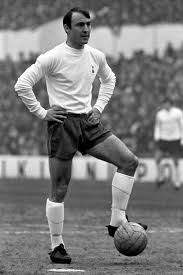
The sad news today that Jimmy Greaves is in intensive care in a London hospital following a stroke, the second he has suffered in three years. The 75-year old was one of the true greats of English soccer: the highest goal scorer for Spurs and England, for whom he scored the most hat tricks, and for six seasons the leading goal scorer in English football. When searching for an adjective to describe his skill with a football, only ‘silky’ seemed to fit the bill.

Jimmy Greaves, in his heyday, playing for Spurs

Jimmy Greaves, in his heyday, playing for Spurs

I was lucky enough to be able to watch Greaves play when he joined Tottenham Hotspur in 1961, first from the boys’ enclosure and then from the stands at White Hart Lane. It was from the stands that I was privileged to watch him score one of the greatest solo goals ever, against a Manchester United team that contained Charlton, Law, Best, Stiles and Crerand.

Spurs trounced United 5-1 that day, which was itself a memorable event, but there was hardly a soul there still alive who does not remember that day for Greaves’ goal. Here it is, the third of Spurs’ handful that day, courtesy of YouTube. Enjoy.

Martin McGuinness’ Royal Baby Tweet

If you are going to congratulate the heir to the British throne on the birth of yet another expensive burden to the taxpayer, wouldn’t it be more dignified to be honest about it?

Approaching the topic in a sideways and backwards fashion is surely calculated to provoke only mirth and contempt, even if it has become in recent years la méthode pour le jour of a certain party’s peace process strategy.

Imagine, for instance, the hoots of derision that greeted this little tweet when it came over the tapes at Loughside?

McG

The Truth About Chelsea, Abramovich And The Parlous State Of English Soccer

Chelsea won the English Premier League this afternoon in what has to have been one of the most predictable and characterless championship races in years. That the laurels have gone to the team owned by the Russian oligarch whose influence on soccer in England has come to symbolise all that has gone wrong with the game is singularly appropriate.

As Matthew Syed points out in the video interview below, Roman Abramovich’s purchase of Chelsea was made for reasons that had absolutely nothing to do with love of football and all to do with advancing his political interests. Other buyers, like Abu Dhabi’s ruler who took over Manchester City, have followed suit, in the process injecting obscene amounts of money and creating the soccer equivalent of an oligarchy.

Sadly, but unsurprisingly, most of those who inhabit the world of soccer journalism are, like their equivalents elsewhere in the trade these days, mostly prisoners of the special interests they are supposed to be covering. Matthew Syed, the freelance writer and broadcaster, is an exception. Watch his interview on Sky Sports below not just for the erudite points he makes but for the squirming of the Sky reporters and commentators.

Desmond Boal & Ian Paisley: An End To The Affair

That Desmond Boal and Ian Paisley should die within six or seven months of each other seems somehow fitting. Paisley died last September and Boal last week, their exit from this world signalling not just the final act in a partnership that has left an indelible mark on Irish politics and history but the passing of an age, the like of which we will probably never see again nor soon even be able to imagine existed.

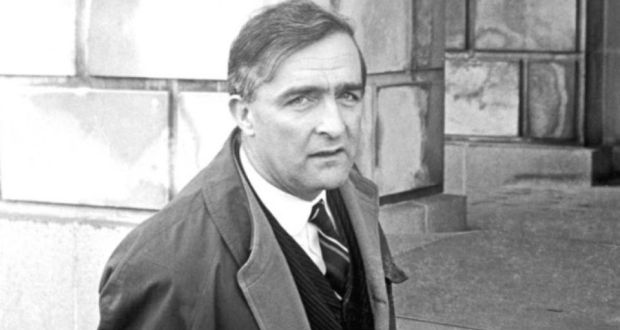
Desmond Boal in an undated photograph

Desmond Boal in an undated photograph

It was the most curious of collaborations, the gifted, cerebral, agnostic and very worldly barrister and the mesmeric, back street preacher cum demagogue united only by their aversion to the establishment forces that dominated their community. In the end the former’s principles could not find houseroom with the latter’s ambition and the alliance foundered. But in-between, in a few short years, they together made history.

I was going to write a lengthy and hopefully erudite essay on the significance of the Boal-Paisley alliance but then I realised that myself and Andy Pollak had already done that, first in ‘Paisley’ which we co-wrote in 1986 and then in the update of the saga, ‘Paisley – From Demagogue to Democrat?’ which was written under my single byline in 2008.

Boal celebrates his election to Stormont as the MP for Shankill. His constituency took in the Court Ward, which some regard as the birthplace of the Gusty Spence UVF. Boal's more radical stance on social and economic issues reflected the area's disregard for 'fur-coat Unionism', its traditional support for Independent Unionism and the subsequent development of the Progressive Unionist Party, the UVF's political wing which embodied many of these

Boal celebrates his election to Stormont as the MP for Shankill. His constituency took in the Court Ward, which some regard as the birthplace of the Gusty Spence UVF. Boal’s more radical stance on social and economic issues reflected the area’s disregard for ‘fur-coat Unionism’, its traditional support for Independent Unionism and the subsequent development of the Progressive Unionist Party, the UVF’s political wing which embodied many of these attributes.

So here are three extracts from those books, the first two from the ‘Paisley’ book and the third from the second book. The first extract deals with the incident that brought the two men together for the first time; the second deals with the formation of the DUP and the gradual fracturing of the relationship between the two men and the last reflects Boal’s anger at Paisley in the wake of the power-sharing deal with Sinn Fein.

(My own view of Boal’s final break with Paisley, for what it is worth, is that he objected not so much to the idea of breaking bread with the Provos, so to speak, but more to the fact that Paisley had gone back on his word never to have any truck with the IRA’s political wing, a commitment that had attracted tens of thousands of Loyalists to his cause, and some to prison cells and early graves. Boal had taken a similar line on Terence O’Neill’s meeting with the Dublin prime minister Sean Lemass. It was not so much the meeting he objected to – although he certainly was not happy about it – as that O’Neill had given Unionist MP’s at Stormont his word that he would never do such a thing.)

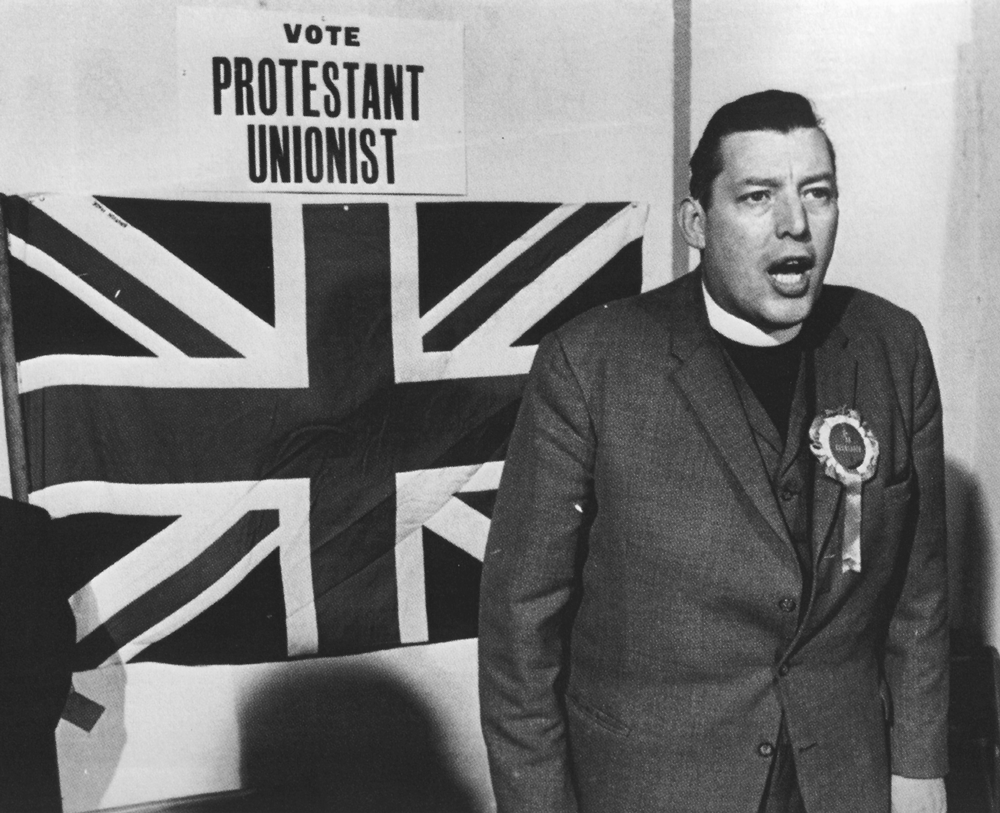
Boal attempted to move Paisley away from the Protestant Unionist Party and broaden its base. He failed in that task but arguably Peter Robinson completed the job.

Boal attempted to move Paisley away from the Free Presbyterian-dominated Protestant Unionist Party and broaden its base. He failed in that task but arguably Peter Robinson completed the job.

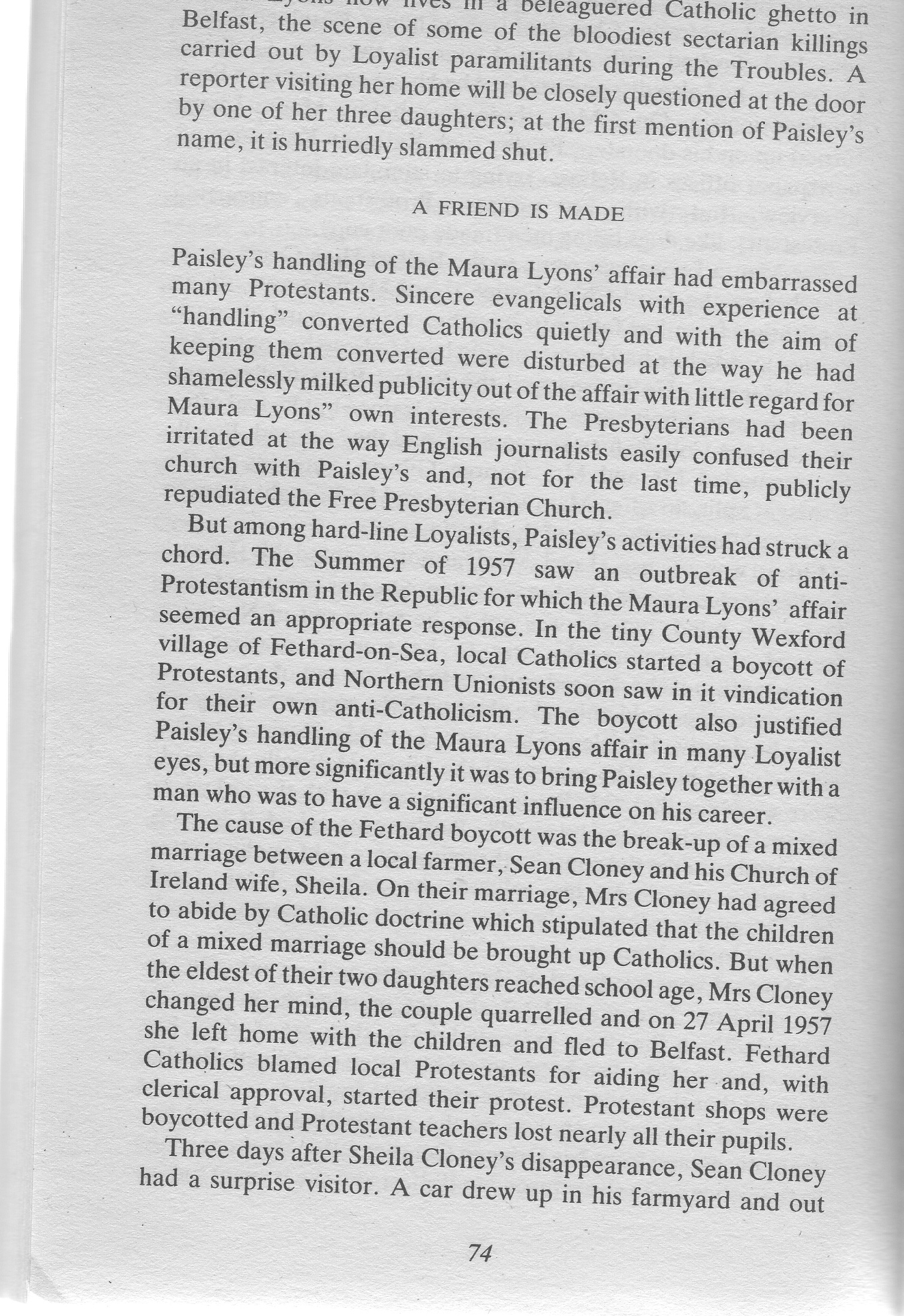
The first extract deals with an incident most readers of this blog have probably never heard of. But for a few weeks in the Summer of 1957, the town of Fethard-on-Sea in County Wexford was on lips throughout Ireland:

fethard1fethard2fethard3 1The second extract deals with the formation of the DUP, early signs of Paisley’s ambition to dominate anti-establishment Unionism, Boal’s failed efforts to make it a broad-based, social and economically radical Unionist alternative and his subsequent dalliances with politically dangerous ideas, dangerous to Paisley that is:

dup01 1dup02dup04dup05dup06dup07dup08dup09dup10dup11dup12Finally, post-St Andrews, came the final break between the two men and with it the end of an extraordinary era in Irish political life:

dup13dup14

Gerry Adams’ ‘Job Interview’ With CBS

I don’t know what the guy who wrote this was smoking but I’m sure it’s not legal, not even in Colorado. It’s not a spoof, I promise, but actually appeared on something called the Bulletin Standard. But be careful of the site, it might carry an infection, so you’d be better just reading below. Enjoy!


Preview: The Fantastic Friday Agreement

In a rare interview, Sinn Fein President Gerry Adams addresses allegations that he was complicit in the 1972 murder of Jean McConville

Preview: The Fantastic Friday Agreement

Gerry Adams, the notable Irish Republican politician and president of the Irish Sinn Fein political bash, speaks to Scott Pelley in a rare job interview. Adams has been accused of earlier involvement in the militant Irish Republican Army and of complicity in the notorious murder of Jean McConville in 1972 by the IRA. These longtime charges heated up a handful of yrs in the past when researchers at Boston School introduced excerpts from oral histories taped with former Irish militants, a person of whom right accuses Adams of offering the purchase to kill McConville. Adams addresses these allegations and the controversy created by his subsequent arrest and release about the Boston College or university tapes, in the job interview to be broadcast on sixty Minutes Sunday, April five at seven p.m. ET/PT.

A lot of believe Adams could be the Republic of Ireland’s primary minister someday. He is watchful in his solutions to thoughts about his affiliation with the IRA, for whom quite a few Catholic Irish voters sympathize. He tells Pelley he never pulled a induce, ordered a murder or established off a bomb during the many years-extended war in Northern Eire that he served to prevent in 1998.

He denies the demand he was a chief in the IRA. “I don’t disassociate myself from the IRA. I believe the IRA was a respectable reaction to what was taking place in this article,” he tells Pelley. “I in no way will [disassociate himself from the IRA]. But I was not a member of the IRA.”

McConville, a widow and mom of 10, was killed simply because she was believed to have betrayed the Catholic IRA by informing on them to the British – the group’s enemy, together with Protestants who supported British rule in Northern Eire. Her body, bullet gap in its skull, was located in 2003.

In 1984, Adams was shot 3 occasions in Belfast, Northern Eire, in an attack that a Protestant militant group reported was retribution on Adams for orchestrating attacks on Protestants. Even so, he says it was a surprise to understand that McConville experienced disappeared back in 1972. “I failed to know,” he tells Pelley, who then asks, “How do you orphan 10 little ones?” to which Adams replies, “That is what takes place in wars, Scott….Which is what American soldiers do, British troopers do, Irish Republican troopers do, that’s what happens in each single conflict.”

Adams states he named the police when he heard about the rates on the Boston College or university tapes he was arrested and held for four days. Did his arrest threaten the peace, asks Pelley? “I believe so, to be straightforward, I was unwell, sore and weary of a tsunami of tales based upon these tapes linking me to Mrs. McConville’s death. So I contacted the law enforcement.”

As Pelley studies, Northern Eire is nevertheless pretty considerably divided. Inspite of a “Superior Friday” agreement for shared power in the country among the Protestant the greater part and the Catholic minority achieved with Adams’ aid in 1998, walls different neighborhoods and Catholics will only phone a Catholic taxi, Protestants patronize their possess livery providers. Other businesses nonetheless work that way to a particular degree.

Helen McKendry, now a grandmother, was one of the 10 McConville youngsters orphaned in 1972. She would not consider Adams. “He is a liar…I would like Gerry Adams to stand up and acknowledge he performed a element,” she tells Pelley. “This man has blood on his arms and I want him to fork out for what he did.

Our editors found this article on this site using Google and regenerated it for our readers