Gerry Adams Was Interned Legally, Just Not In 1973

Amid all the brouhaha about Gerry Adams’ illegal internment in 1973 and a British court’s recent ruling that his imprisonment for two attempted prison escapes was ultra vires, a key biographical fact has been overlooked.

Gerry Adams was interned twice, and as far as I can ascertain from the media reports of last week’s court case, his challenge to internment concerned only one incident, the second time he was put away, tried to escape twice and was then tried, found guilty and imprisoned for the offences.

What was not mentioned – and I stand ready to be corrected here – was the first time he was interned, which was in March 1972. It wasn’t a lengthy period in Long Kesh because the IRA ceasefire followed some three or so months later, in July and, apparently at the insistence of his then Belfast Brigade comrade, Ivor Bell, Adams was released to join the IRA negotiating team.

After that he was on the run for the best part of a year until he was re-arrested, along with other members of the Belfast Brigade, at a house in the mid-Falls area in July 1973. During the next year or so he twice attempted to escape, was caught and then was tried in 1975 and sentenced to four and a half years jail time.

As far as I can ascertain from press reports such as this one, this was the only period of Adams’ internment experience considered by the UK’s Supreme Court, which found that the 1973 British documents had been illegally processed and that therefore Adams was incorrectly interned and wrongly prosecuted for attempting to escape from jail.

Not so, it seems, his earlier experience about which there seems to have been no legal controversy at all. Like other IRA activists, Adams was on the run after internment was introduced in August 1971 and sleeping in different billets each night. But he had got married during this time, to Colette McArdle and she had become pregnant.

Adams arranged for her to live in a house in Harrogate Street, near the Beechmount area of the Falls Road. He would visit her from time to time and even stay overnight and it was during one of these trysts that the house was raided by British soldiers and Adams was arrested and then interned.

At the risk of repeating myself I can find no mention of this earlier internment in the UK Supreme Court’s deliberations, which means that it was in all probability perfectly legal.

So for all those, especially Unionist commentators, who have been wailing about the Supreme Court’s verdict clearing Adams of the last vestige of a connection to the IRA, I am sorry to disappoint you. Adams was interned perfectly legally in 1972 which means that the British government’s then belief in his IRA membership was legally sound.

America – A Country Now To Be Pitied As The Virus Rages

How Coronavirus Spreads In A Restaurant…..

How The Super-Rich Deal With The Virus

Courtesy of the BBC:

https://www.bbc.com/news/av/stories-52669638/how-the-super-rich-spent-lockdown

Mapping The 1918 General Election Results In Ireland

Click on the link and notice how in the North, little has changed in the century or so since:

Mapping_the_1918_British_General_Electio

No Longer An Ex-Internee, Could Adams Lose Membership Of The Felons Club?

The decision by the UK Supreme Court this morning to rule Gerry Adams’ imprisonment as an internee in 1973 illegal, and by implication that his jail sentence for attempting to escape from Long Kesh was also ultra vires, has some intriguing implications.

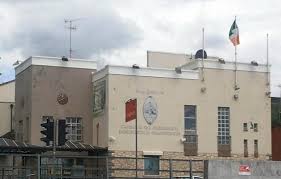
Not least of these is that at a stroke Adams may well have lost his qualification to be a member of the Irish Republican Felons Association, popularly called ‘The Felons’ but better known for the drinking club it runs on the Andersonstown Road which was situated within stone throwing distance of the local RUC station.

The Felons Club, circa 2020 – it has grown and prospered, like some of its members, with the peace process

To lose his membership would be a particularly bitter blow for Gerry Jnr since his father, Gerry Snr, was a co-founder of  the Felons along with a fellow republican called Joe Campbell (presumably something Adams Snr did in his spare time when he was not sexually abusing his children).

Danny Morrison wrote an interesting account of the origin of the Felons for The Guardian back in 1999 which you can read here in which he says that initially internees were not qualified to be members since only sentenced IRA members were real felons.

That rule was bent when the current Troubles began and so Gerry Jnr qualified on both grounds, as an ex-internee and as a felon who had served jail time for trying to escape from internment in Long Kesh.

Both qualifications for Felons membership have now been struck out by the UK Supreme Court, the internment order and the subsequent jail sentence. So Gerry Adams is now an ex-felon  He could always apply for honorary membership but that doesn’t quite carry the same cachet.

So, what’s an ex-Felon to do? Answers on a postcard to thebrokenelbow.com.

An English View Of Trump….

Thanks to PP for bringing this to my attention:

Is It Too Much To Hope?

White House Rattled by a Military Aide’s Positive Coronavirus Test

President Trump said he and Vice President Mike Pence, as well as the White House staff, would now be tested on a daily basis.

Credit…Doug Mills/The New York Times

WASHINGTON — President Trump said on Thursday that the White House staff would be tested every day for the coronaviru after a military aide who has had contact with him was found to have the virus.

Coronavirus Cases Rising In Trump’s America

The graph below, published this a.m. on the Axios website, shows that just as Trump prepares to scale down the Covid-19 crisis, amid suspicions he is prioritizing a revived economy so as to get re-elected, the evidence is that far from the curve flattening or declining, it is rising everywhere in Trump’s America outside of New York:

Sir Seamus Treacy’s Mysterious Decision To Quit The Privy Council

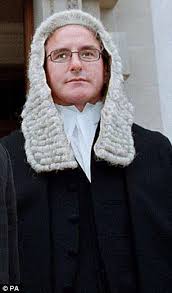
Thanks to PS for alerting me to this 2018 blog post on the unexplained resignation from the Privy Council of prominent legal figure, Seamus Treacy, who in another age represented numerous clients of Madden & Finucane, said in some circles to be the IRA’s favourite legal firm. Followers of my journalism over the years will remember that Treacy first came to the attention of a wide public when I revealed in The Sunday Tribune that he and a colleague were objecting to a rule in the legal profession that to advance to Queen’s Counsel (QC), barristers had to swear an oath of loyalty to Her Majesty. He challenged that ruling in the courts and won, and thereafter, as the peace process gathered momentum, his career blossomed and he was soon a judge and then an appeal court judge. With the latter elevation came promotion to the privy council where, unsurprisingly, the need to swear an oath of allegiance to the monarch is taken a bit more seriously than in Chichester Street, in Belfast – after all the Privy Council is the monarch’s council. His decision to quit the Privy Council happened without explanation and went unnoticed by the media with the sole exception of The Daily Mail. So we are all left in the dark and puzzled about the sudden turn of events that led to LJ Treacy’s resignation. All the more puzzling is that as part of his rise to the dizzy heights of the NI judiciary, the journey involved the acceptance of a knighthood; that is a knight of the realm, the Queen’s realm that is.

Sir Seamus Treacy, whose decision to quit the Privy Council two years ago remains a mystery

You can read more detail and background in this post on the venerablepuzzle.com : https://venerablepuzzle.wordpress.com/2018/04/28/sir-seamus-treacy-the-privy-council-and-northern-ireland/