
You would not have noticed this if you were a regular subscriber to the Irish Times or Irish News (both of which newspapers managed entirely to ignore the story) – or if you expected Sinn Fein to respond to alarming setbacks to that party’s peace strategy – but last week the Cameron government reneged on a small but symbolically important part of the peace accords negotiated in the two decades since the first IRA ceasefire and by so doing have arguably set a precedent that should set the tocsins ringing in Nationalist Ireland.
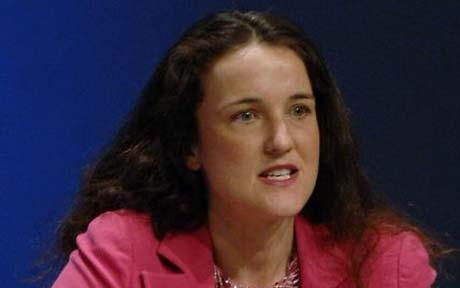
Theresa Villiers
The formal announcement by NI Secretary Theresa Villiers that the letters of comfort given by the Blair government to some 200 IRA fugitives – so-called ‘On The Run’s’ – guaranteeing that they would not face prosecution are now not worth the paper they were written on and that fugitives who once thought they were safe now could be prosecuted, amounts to the first major retreat by the British from assurances given during the peace diplomacy.
The backpedaling is all the more significant since the assurances to the IRA fugitives were well known about at the time they were given and attempts by opponents to now justify their withdrawal on the grounds that these were secret promises held back from other participants in the process are simply bunkum.
It would not be going too far to say that Villiers’ action is just what it seems to be, a blatant appeasement of hardline Unionism and, arguably, a return to the mindset of war (on the basis that the British fought their war against the IRA primarily by prosecuting its members in court).
And nor would it be presumptive to suggest that taken in combination with other happenings – for instance David Cameron’s cozying up to the DUP for electoral reasons and the increasing clamor to return welfare powers to the Westminster parliament – that more defaults and withdrawals from the Good Friday Agreement and its associated arrangements are unlikely to happen.
The significance of the Villiers’ retreat lies in two directions. Firstly, she has broken the ice by choosing an unpopular concession to revoke – unpopular in these days of ISIS beheadings with her own party, the British media and probably British public opinion as well. As precedent settings go this was a sure thing.
And secondly the lack of protest and fightback from Nationalist Ireland – symbolised by the silence on the issue from major Irish media outlets – can only encourage those, especially in the DUP, to press for more backtracking from London.
It is no secret that large swathes of the DUP were only persuaded in the first place to accept power sharing with Sinn Fein because they were assured that it would be temporary and replaced by some form of majority rule when conditions allowed. If the Villiers move is a precedent then its import in Unionist eyes may lie in the hope or belief that it is the first of a thousand cuts whose combined effect will be to end or fundamentally alter a system they detest at heart.
Nowhere has this Nationalist silence been more profound than in the leadership of Sinn Fein, in sharp and complete contrast to the warm welcome given by Unionists, not least among them Martin McGuinness’ partner in government Peter Robinson.
I deliberately refrained from writing this commentary for the best part of week in case it took that long for the party to put its protest together. Even though Villiers retracted a solemn promise given by the Blair government and by so doing set a precedent for other similar actions, there has not been one word of criticism from Sinn Fein and it doesn’t look as if there will be.
On one level that is understandable simply because there is really nothing Sinn Fein can do, short of tearing up the Good Friday Agreement, to reverse the British move. The truth is that Villier’s reneging exposes a fatal flaw in the Sinn Fein peace strategy which until now no British government was ready to exploit.
The strategy was based on the idea that Sinn Fein would trade away the political, ideological and physical ingredients of the IRA’s war machine (the principle of consent, the Mitchell Principles, IRA decommissioning, accepting the PSNI and so on) for political concessions that would on the one hand make the whole business less unpalatable to the republican base – the ‘On The Run’ letters of comfort fell into that category – and on the other enable Sinn Fein to dominate Northern Nationalist politics and become a force to be reckoned with south of the Border. The British would go along with this trading because every concession they made weakened the IRA and diminished the potency of armed struggle while transforming Sinn Fein into a respectable and dependable political party.
It worked but there would always come a day when the Provisionals had no more to trade with the British and the IRA had been fully defanged, so reduced politically and militarily that it posed no threat worthy of the name. At that point, having achieved the defeat of the IRA and with the dissidents going nowhere, the British could have put the machine into reverse gear. That they didn’t is down to a combination of factors, including lingering Blairism, self-interest, common sense and Cameron’s indifference.
But events are moving ahead. A British general election beckons, the UKIP is challenging Cameron’s right flank and the prospect of Scottish independence is a spanner that may do untold damage to the political system. The Liberal Democrats will not be a partner in another coalition with Cameron and to retain power it is not beyond possibility that the Tories may look to the DUP phalanx in the House of Commons for support, hence those cozy soirees at Number Ten.
And Cameron has rediscovered the electoral potency of terrorism, of the Islamic variety that is, along with the lure of an aggressive policy on Ukraine, so aggressive in fact that Cameron has outflanked Obama on Russia and emerged as the leader of the war party in NATO.
The truth is that Cameron’s party and cabinet are choc full of neoconservatives, members of or fellow travelers with the Henry Jackson Society, so-named after the hawkish Democrat Senator for Washington state widely regarded as a founding father of modern American neoconservatism.
Pursuing jihadists in Syria, meddling in Libya, threatening war with Russia are all favorite neocon themes – and so too is the conviction that government must never, ever make deals with terrorists, least of deals that launch them into government. That is why the neocon core of Cameron’s Tories never had any appetite for the NI peace process and energetically peddled the notion that the Sinn Fein strategy was trickery, designed to weaken British resolve and aimed at relaunching the IRA’s military offensive from a position of strength.
Stuff and nonsense of course but the point is that reneging on aspects of the peace process diplomacy is something that would be meat and drink for many in Cameron’s ranks. We will see if there is more to come.

 pp.134-135)










 The Broken Elbow

You must be logged in to post a comment.