Donald Trump & The Mob: BBC Treads Where U.S. Media Will Not

BBC Two’s Newsnight programme carried this item last Friday evening on Donald Trump’s business dealings with mob figures in New York, in particular his relationship with the late Mafia boss, ‘Fat’ Tony Salerno.

Salerno was head of the Genovese crime family and also controlled the concrete business in New York back in the day. When Donald Trump built Trump Tower on 5th Avenue it was, unusually, constructed entirely of concrete which he bought from Salerno’s firm, S&A Concrete.

Trump Tower - constructed of concrete supplied by mob boss 'Fat' Tony Salerno

Trump Tower – constructed of concrete supplied by mob boss ‘Fat’ Tony Salerno

The deal was worth millions to Salerno. Other Trump buildings also used concrete bought from the Genovese family boss. The question is, what did Trump receive in return? Was the absence of labour troubles during the construction of Trump Tower, despite the employment of a non-union, largely illegal immigrant Polish workforce just a coincidence?

Newsnight also highlighted Trump’s relationship with Felix Slater, a Wall Street broker who served time for stabbing a fellow banker in a bar. After his release from jail Slater orchestrated a financial fraud which involved mobsters as co-conspirators. He subsequently made a deal with the authorities and informed on his fellow fraudsters.

Trump was shown on Newsnight disavowing Slater even though documentary evidence showed that Slater used a Trump email address, described himself as a ‘senior adviser’ to Trump on his business card and had an office in Trump Tower on Fifth Avenue, Manhattan.

Plaudits to the BBC for screening this item. Perhaps it will encourage their counterparts in the U.S. to follow suit.

Trump’s alleged Mob links were covered by many media outlets when he first announced his plans to run for the GOP nomination back last summer. That was when he was considered an outsider, even a joke candidate who was primarily interested in the publicity the race could bring him.

But since he became the front runner the media in the U.S. has largely gone silent on the story. Only one fellow Republican candidate, Ted Cruz has raised the issue.

Here is the link to the BBC Newsnight item. Readers who are restricted from  receiving BBC programmes can download Hola, see below. Search on Hola for BBC Newsnight 4/3/2016, remembering that British style places the day first, followed by the month so March 4th reads 4/3.

http://bbc.in/1QwKN4F

https://hola.org/

The Bobby Sands Trust: Some Questions For Stormont Minister Carál Ni Chuilín


Carál Ni Chuilín. member of the BST and the Stormont minister who funds the Arts Council

Carál Ni Chuilín. member of the BST and the Stormont minister who funds the Arts Council

Sinn Fein Assembly Member, Carál ni Chuilín is the Minister for Culture, Arts and Leisure in the power-sharing Executive at Stormont;

She also sits on the board of The Bobby Sands Trust (BST):

BST

The Department of Culture, Arts & Leisure, which she heads, funds the Arts Council of Northern Ireland;

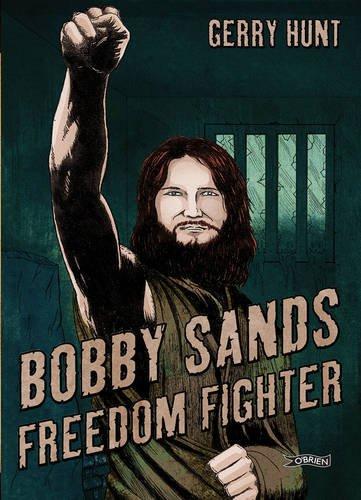
The Arts Council of Northern Ireland gave a grant to The O’Brien Press to help publish the graphic novel ‘Bobby Sands – Freedom Fighter’;

When asked by thebrokenelbow,com whether the Bobby Sands Trust had been paid a fee by O’Brien Press, the Publisher, Michael O’Brien said it had not;

But when I directed a supplementary question to the publisher asking if the BST would receive a share of the royalties from the book in the future, The O’Brien Press declined to answer;

I also asked what dealings, if any, The O’Brien Press had with the BST. Again no answer;

That was a week ago;

The Arts Council’s records show that a grant of £3,994.00 was paid to O’Brien Press in its 2013/2014 funding period;

Ms ni Chuilín became Minister of Culture, Arts & Leisure in May 2011;

The funding of the Bobby Sands graphic novel happened during her watch;

The O’Brien Press needs to clarify this matter;

Minister ni Chuilín needs to clarify her role in this affair.

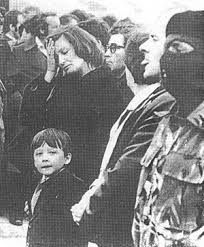
Bobby Sands' son, Robert Gerard at his father's funeral

Bobby Sands’ son, Robert Gerard at his father’s funeral


The Bobby Sands Trust: A Need To Get Answers To Troubling Questions

I am not a lawyer and what I know about the law of Trusts, I have learned only in the last few days and even then my understanding is mostly imperfect.

But you don’t have to be a learned jurist to understand that Trusts are set up to fulfill well-defined responsibilities and must be very careful to ensure that a) those responsibilities are scrupulously executed and b) that only specified parties are beneficiaries of the Trust.

In the case of the Bobby Sands Trust we do not know for certain what its responsibilities are or who the beneficiaries should be. That is because the Trust has so far failed to make the relevant documents outlining these facts available for public scrutiny. Claims have been made but we are unable to judge their truth or weight.

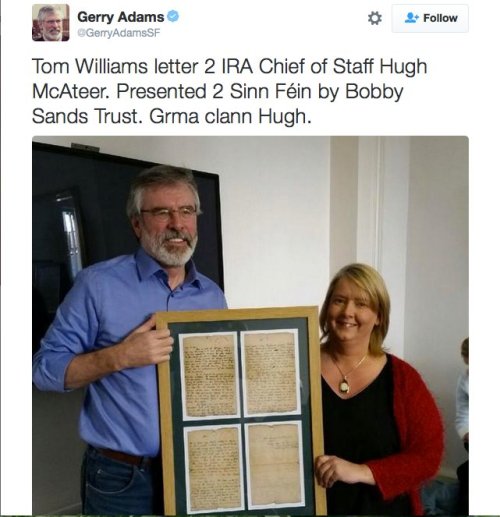
Evidence has now emerged that last February the Bobby Sands Trust gifted an important historical artefact to Sinn Fein, to wit a letter from the about-to-be executed IRA activist, Tom Williams to the then IRA Chief of Staff, Hugh McAteer. The donor was Gerry Adams who is both a member of the Trust and the leader of Sinn Fein.

In the face of this evidence the need for a public explanation and accounting of the Bobby Sands Trust is now overdue.

BobbySandsTrust

As Christy Walsh, who discovered this transaction between Gerry Adams on behalf of the Bobby Sands Trust and Sinn Fein, on the Sinn Fein president’s Twitter feed, put it:

Gerry A(dams) is either making improper donations of Trust assets to a political party which are not part of the Trusts obligation and never intended to be used for that purpose.

Or Sinn Fein is the BST’s secret beneficiary.

Either way this award could give rise to serious impropriety and is it only a breadcrumb of similar sort of things scattered about twitter/facebook.

What happened here raises another troubling question. On behalf of a Trust of which he is a member, Gerry Adams has bestowed a gift to a political party of which he is the leader and of which other Trust members are also members. This appears to be a clear conflict of interest, notwithstanding any other breach of the Trust’s terms.

Bobby Sands’ heir is his son, Robert Gerald. What is his standing in relation to the disposition of his father’s writings? Where do other members of the Sands family stand, his two sisters in particular?

If the Bobby Sands Trust is being run properly, those who have charge of it will have nothing to fear by answering these pertinent questions and making the relevant documents public. They should not be surprised however if failure to provide reassurance at this level is interpreted in a way they will not welcome.

Well, At Least There’s One Radical Political Party (Not Irish!) Which Does What It Said It Would Do

From The Intercept:

American progressives distressed about the prospect of being offered a choice this fall between a right-wing billionaire and a one-time corporate lawyer on the board of Walmart, might look to Spain for a reminder that left-wing leaders with principles and charisma do still exist.

In Madrid on Wednesday, Pablo Iglesias, the 37-year-old leader of Podemos, an anti-austerity party formed just two years ago, blocked the center-left Socialist Party’s attempt to form a centrist coalition government and demonstrated a flair for political theater that galvanized his supporters on social networks.

During an impassioned speech to parliament, Iglesias said that his radical-left party, which is now Spain’s third-largest, would not allow the “miserable” leader of the more mainstream Socialists, Pedro Sánchez, to become prime minister because he had adopted the economic policies of the right.

The debate in parliament was closely watched on social networks, and the Podemos leader then made his opposition to the proposed government even more clear by leaping from his seat to congratulate a Catalan ally who also spoke against it with a bear-hug and a kiss on the lips.

That image, of Iglesias kissing the Catalan representative Xavier Domènech, was both celebrated and mocked in Twitter memes, as his supporters rejoiced at the sight of the two men kissing directly in front of deputies from the conservative People’s Party — which recently tried and failed to ban gay marriage in Spain — and his detractors evoked comparisons to Soviet-era kisses between the leaders of communist states.

Open Letter To The Bobby Sands Trust: Legality Of The Trust Should Be Re-Evaluated

Christy Walsh, who has been commenting at length on thebrokenelbow.com about the latest controversy to hit the Bobby Sands Trust, sends this open letter to the trustees:

The Secretary, Bobby Sands Trust, 51-53 Falls Road, Belfast, BT12 4PD.
By Post & Email
Open Letter to the Trustees of the Bobby Sands Trust

Dear Trustees’
I have recently read a statement on Anthony McIntyre’s’ blog The Pensive Quill: Sands Family Responds To Publication Of Book – ‘Bobby Sands Freedom Fighter’. The Trustees’ may recall that in July 2000 Journalist, Ed Moloney, wrote an article for the Sunday Tribune, reproduced on his blog site The Broken Elbow: “Sands’s family considering legal action against The BST”.

Mr Moloney has suggested to me that the legal action did not materialise because Bobby Sands’ family may not have been financially able to meet the high legal costs of such an action. This letter is my response to the contents of both of the above published articles. As what I detail below has the potential of giving rise to serious ramifications for the Trustees I am addressing my response as a letter to each Trustee.

In light of the expressed and prolonged difficulties or objections made by the Sands Family dating back for at least 16 years it is my view that the Bobby Sands Trust (BST) should at least co-operate with the family and not be obdurately disdainful of Bobby Sands next of kin because of their assertions that they are the lawful beneficiaries of the estate.

This is especially so if the BST only exists on account of a technical legal error made in the terms of the originating instrument. Intransigence on the part of Trustees may contribute to the family’s economic difficulty in having the matter lawfully settled in court.
bobby sands book

Neither an agreement nor faulty Trust that deprived Bobby Sands’ son of his right to inherit from his father would likely be held valid if the matter were to come before the courts. The purpose of this letter is to urge the Trustees to have the legality of the BST governing instrument properly re-evaluated with regard to probate and intestacy law.

Possible financial difficulties preventing any legal challenge by relatives does not relieve the BST and its legal advisors from their responsibility to due diligence in knowing, whether or not, if they may be acting unlawfully on accounted of a flawed Trust.

I understand that Bobby Sands had never expressed that it was his wish to disinherit his son in order to establish the BST. I note that the idea of a BST was formed sometime after his death and it has summarised its mandate in the following terms:

“The Trust holds the copyright on all Bobby’s poetry and prose and was established to publish, promote and keep in print the extraordinary writings of this young Irish man, who from prison isolation became an international figure in 1981, and who to this day continues to inspire Irish republicans in their pursuit of freedom from British rule.”

It appears from the Trusts statement above that the BST Trustees only act as custodians of Bobby Sands’ estate and not in the interests of any beneficiaries.

One rule against Private Purpose Trusts is that it must have at least one beneficiary to enforce the Trustees obligations. A trust for an abstract purpose like ‘keeping in print’, or ‘promoting’, Bobby Sands work, with no beneficiary, is void in law.

The BST asserts that it possesses the copyright to all of Bobby Sands works. The members of the Trust are complete strangers to the title of Bobby Sands estate, and, they are not managing the estate in the interests of his next of kin. This is not a case of a deceased author’s work becoming ‘orphaned’ because no living relatives can be traced. Bobby Sands’ next of kin are known to the BST. The Sands Family have publically called on the BST to disband, specifically because; it does not act in the interests of the deceased or his next of kin.

A trustee has a legal relationship with the beneficiaries of a trust. Like all trusts, the BST Trustees principle obligation would be to account to the beneficiaries to whom they owe their duty of care. If Bobby Sands’ next of kin are not his heirs and beneficiaries then the Sands Family have a right to know from the Trustees who they allege is the beneficiary of his estate, and, for whom they act. For a Trust with no known beneficiary it is notable that it has no fewer than eight Trustees.

Since Trustees are usually paid for their services it then would appear, in this case, that they are the only drain on the BST’s funds. Further, what are the BST’s governing rules on the numbers of Trustees and the terms of remuneration of expenses? What are the BST’s rules on Trustees length of service? These questions are also relevant to the legitimacy of the BST.

The BST should act appropriately and respectfully toward Bobby Sands’ successors and not leave them lingering in prolonged years of uncertainty on account of the BST’s own confusion, secrecy and lack of transparency. If lawful title over Bobby Sands estate has been vested in the Trustees the Sands Family, at minimum, deserves to have sight of such proof confirming that, as the deceased’s next of kin, they have been lawfully disinherited. The BST is potentially responsible for serious interference with the private life of Bobby Sands’ relatives’ right to inherit.

The Trustees should also consider that in the 1980s any Lawyers acting on behalf of the proposed Trust may have been confused at that time as perhaps were the relatives, friends or associates of Bobby Sands. Fundamental mistakes made on how to administrate the intestate estate and any copyright, I believe, are inherent in the trust’s instrument and thus the problems today. One basic error that immediately appears obvious is that the Lawyers failed to properly ascertain the precise identity of all relevant kin, and, who among them was Bobby Sands’ actual ‘priority’ successor in title. The rights of the deceased’s son were not taken into account.

There is no doubt that Bobby Sands son would have been entitled to a grant of representation had any lawyer considered his interests in his father’s property.

Another possible error is that, if, for example, one of Bobby Sands’ sisters had agreed to the setting up of the Trust, then that would not have deprived her, or any other relative of their rights as beneficiaries if the focus of the Trust was only on printing and promoting the work; that is because that would have been a natural pursuit of the BST without need to be specified in the originating instrument.

As a Trustee it is relevant for you to know that in cases where a deceased died after 1st January 1956 intestate, and domiciled in the North of Ireland, their spouse, children, brothers or sisters are, in that ‘priority’ order, the lawful successor/s of the deceased’s estate and not any formulated Trust devised by unrelated associates.

Hence, Bobby Sands’ son was, and is, the lawful successor in title of his father’s estate. However, until now you may have been misinformed or misguided on the legal status of the BST because it has been in existence for so long without challenge but that does not mean that it was formed in accordance with the wishes of the deceased Bobby Sands, or, his lawful successor.

If I am correct then each Trustee could risk personal liability for gross negligence amounting to fraud should you wilfully ignore valid evidence or facts of law that may subsequently come to your notice during your service as a Trustee. If Bobby Sands’ next of kin still retain their right to the copyright then I would urge each Trustee to consider the potential for personal criminal liability for involvement in copyright piracy, infringement, exhibiting, distributing, depriving or otherwise prejudicing the true copyright owner/s of Bobby Sands work.

By this, I am not suggesting that any member of the Trust has knowingly acted in bad faith to date but once the Trustees become aware of such a scenario then they would be foolish not to at least have the BST’s legal standing re-evaluated.

Even if the risk of any criminal liability is remote, civil liability may not be, in the event that Bobby Sands’ next of kin are ever in a position to finance a legal action against the BST. Should that happen, then the Trustees are personally liable and could be faced with extra costs and damages for any unnecessary delay they cause in releasing control of Bobby Sands copyright material back to his next of kin and rightful heirs.

If my concerns about the legitimacy of the BST are accurate then ‘printing and promoting’ Bobby Sands work is none of the Trustees business without formal consent from Bobby Sands’ successor. As successor in title of his father’s work, Bobby Sands’ son’s ownership of copyright still subsists. There are members on the BST who are themselves published authors and have children of their own. It would be in their personal interests to know that someone more meaningful, like their own children, will inherit copyright of their work when they die and not a motley crew of former associates like the self-styled Bobby Sands Trust.

I would re-emphasis to the Trustees that in the absence of any written will the law is explicit on who is a deceased’s priority successors in title. Bobby Sands’ son’s current deprivation from his father’s estate may have originally arisen as a result of possible confusion or lack of legal representation when he was a child. If there has been any misappropriation in error of his father’s estate then I am sure the Trustees’ will now do the honourable thing and endeavour to put matters right.

Yours Sincerely
Christy Walsh
2nd March 2016

New Questions About Barra McGrory’s Role In Boston College Probe

A troubling question about the conduct of the North’s Director of Public Prosecutions (DPP), Barra McGrory has been raised by a report today in Belfast that Mr McGrory may have ordered the PSNI probe into the Boston College oral history archive when he should have recused himself because of a conflict of interest.

Today’s (Tuesday’s) News Letter reports that at a weekend victims conference in Enniskillen, the PSNI Chief Constable, George Hamilton said that historical investigations into ordinary victims’ killings have been hampered because the DPP’s office is using all of the force’s legacy resources conducting investigations ordered by Mr McGrory.

PSNI Chief Constable, George Hamilton

PSNI Chief Constable, George Hamilton

These include probes of Bloody Sunday, the Military Reaction Force, the ‘on the runs’ controversy and the Boston College archive, an investigation which initially was confined to the killing and disappearance by the IRA of alleged informer Jean McConville.

If, as the Chief Constable appears to be saying, Mr McGrory ordered the Boston College probe then it created a conflict of interest since his former client, Gerry Adams was already publicly embroiled in allegations that he was involved in the McConville affair. If this is what happened then Mr McGrory should have recused himself.

Barra McGrory

Barra McGrory

At the time that the PSNI probe of the archive got underway two prominent republicans and critics of Gerry Adams, Brendan Hughes, who was dead, and Dolours Price had spoken publicly about the McConville disappearance, and one, Brendan Hughes had implicated Gerry Adams. Dolours Price had allegedly implicated herself in an interview with The Irish News.

This is what the News Letter reported:

Mr Hamilton said: “Under section 35 of the criminal justice act – the Justice (NI) Act 2002 – there is a duty on me when requested by the director of public prosecutions to supply information, to ascertain facts and report to him.

“Now the rest of us ordinary folk would call that an investigation, so effectively that is what it is. There are some circumstances where the director of public prosecutions can direct me to effectively conduct an investigation. There are other fluffy words around that, but that is in practice what it means.

“And it is actually in those cases that the majority of my legacy investigations branch officers are occupied at the moment.

“With finite resources available I have no option but to fulfil those legal obligations.”

Other cases which Mr Hamilton has been legally obliged to investigate, he said, include Bloody Sunday, the Military Reaction Force, the Boston College tapes and the ‘on the run’ letters scheme.

A Public Prosecution Service (PPS) spokeswoman did not contest Mr Hamilton’s assertions.

Boston College And The ‘Spotlight’ Movie On Catholic Church Pedophiles

As you probably know by now, Spotlight has won this year’s Oscar for best movie. The film portrays the Boston Globe’s investigation into the Catholic church’s cover up of the sexual abuse of young people by Catholic priests in Boston dating back many years and was regarded as a hot favourite for the prize.

The expose won the Globe a Pulitzer prize, led to the downfall of Cardinal Bernard Law (although his punishment, exile to the Patriarchal Basilica of St. Mary Major in Rome, hardly fit the crime), impoverished the church in Boston and led to a worldwide avalanche of similar exposés.

Before the Oscar ceremonies in Hollywood, the public radio programme, ‘The Frame’, interviewed the movie’s director Tom McCarthy about the resistance from church bodies in Boston that he encountered while filming.

The following extract will be of interest to those familiar with Boston College and its role in the Troubles archive that it handed over to the PSNI:

FG-FF ‘Grand Coalition’ Would Be Sinn Fein’s Wet Dream

Although the final votes are a long way from being counted in the general election in the South of Ireland, it is already clear that the previous Fine Gael-Labour coalition is doomed.

The poll has been nothing short of a disaster for Fine Gael (FG) and for Labour, especially the latter, but a triumph for Fianna Fail (FF) leader Micheal Martin whose party has recovered a lot of the ground lost in the 2011 poll, when FF went from 71 seats to 20. Fianna Fail look to be heading for 40 seats this time.

Sinn Fein look set to win between 22 and 25 seats, up from 14 in 2011. Not a spectacular result but a very promising one for the future.

There seem to be only two routes to a new government. Either Fine Gael or Fianna Fail cobble together some sort of deal with the plethora of independents set to be returned to the Dail, an inherently unstable arrangement, or a coalition government of Fine Gael and Fianna Fail is formed, the so-called ‘grand coalition’.

The other permutation involving Sinn Fein appears to be a non-starter for both FF and FG.

A Fine Gael-Fianna Fail coalition appears on its face to be as inherently unstable as an arrangement involving the independents. But it would be a delightful prospect for Sinn Fein.

It would be unstable because the competition between the two remnants of the Irish civil war would be too intense, the temptation to screw the other too great for it to last. It would likely be a government that would stagger from crisis to crisis, caused by personality clashes, policy differences or just plain ambition, personal and party.

But the stage would be set to allow Sinn Fein to present themselves as the real opposition. Not only would the party’s Stalinist-like discipline compare favourably to the chaos and backbiting that would infect the coalition government, but the Shinners would play it all to their advantage in other ways.

They would use the life of that arrangement to infiltrate and subvert both the Labour party and the various independents in the Dail, so when the time came, Sinn Fein would emerge larger and healthier and ready to take power, either by itself or in coalition with whichever party was willing. It would then gobble up that party in turn.

Study the history of the party under its current leadership and you will find that these are the skills that have been honed to perfection by its leadership cadre over the years and implemented with military-style discipline, ensuring not only the triumph of that leadership over internal opposition but its survival for over three decades.

You don’t stay at the top of the greasy pole known as the IRA without having very sharp claws.


As Trump Surges, Is It Time To Play The Mob Card?

The sense of panic in the Republican party as Donald Trump surges ahead of his only viable rivals, Marco Rubio and Ted Cruz in the race for the GOP nomination is almost palpable.

Having won all but one of the Republican primaries so far and a favorite to emerge victorious on Super Tuesday, it seems that Trump is unstoppable and that he will be that party’s candidate for the White House in November.

An outcome that would have been dismissed as beyond belief two months ago now seems inevitable.

Unless, perhaps, the Republicans reach for a card that many observers can’t believe they didn’t play weeks ago: the Mob card.

trump

Trump’s suspicious links to organised crime were highlighted by one of my favorite American journalists, David Cay Johnston in the National Memo online magazine way back in May 2015 but have so far gone unnoticed, or so it seems, by either the GOP’s hierarchy or the media (no surprise there!).

Johnston raised the Mob issue, along with many other dubious aspects of Trump’s business career, in form of  questions he posed to Trump, twenty-one in all, of which six dealt directly or otherwise with Trump’s alleged dealings with organised crime bosses.

As, Johnston put it, “Reporters, competing Republican candidates, and voters would learn a lot about Trump if they asked for complete answers to these 21 questions.”

Here are the relevant mob-linked questions posed by Johnston:

6. Trump Tower is not a steel girder high rise, but 58 stories of concrete.

Why did you use concrete instead of traditional steel girders?

7. Trump Tower was built by S&A Concrete, whose owners were “Fat” Tony Salerno, head of the Genovese crime family, and Paul “Big Paul” Castellano, head of the Gambinos, another well-known crime family.

If you did not know of their ownership, what does that tell voters about your management skills?

8. You later used S&A Concrete on other Manhattan buildings bearing your name.

Why?

9. In demolishing the Bonwit Teller building to make way for Trump Tower, you had no labor troubles, even though only about 15 unionists worked at the site alongside 150 Polish men, most of whom entered the country illegally, lacked hard hats, and slept on the site.

How did you manage to avoid labor troubles, like picketing and strikes, and job safety inspections while using mostly non-union labor at a union worksite — without hard hats for the Polish workers?

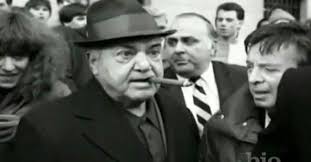
Fat Tony Salerno

Fat Tony Salerno

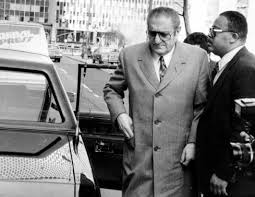
Paul Castellano

Paul Castellano

And these:

11. You sent your top lieutenant, lawyer Harvey I. Freeman, to negotiate with Ken Shapiro, the “investment banker” for Nicky Scarfo, the especially vicious killer who was Atlantic City’s mob boss, according to federal prosecutors and the New Jersey State Commission on Investigation.

Since you emphasize your negotiating skills, why didn’t you negotiate yourself?

12. You later paid a Scarfo associate twice the value of a lot, officials determined.

Since you boast that you always negotiate the best prices, why did you pay double the value of this real estate?

Nicky Scarfo

Nicky Scarfo

It would be interesting to hear Trump’s answers to these questions and perhaps even more interesting to hear them asked!

That Bobby Sands Book, The Sands Family And The Bobby Sands Trust

bobby sands book

Sands Family Claim Gerry Adams Wanted To Be A Financial Beneficiary Of Bobby Sands Writings


It has been difficult, to say the least, to excavate the truth about an allegation made by the Sands’ family this week about the role of the Bobby Sands Trust in the preparation and publication of the controversial graphic novel ‘Bobby Sands – Freedom Fighter’.

While Unionists have vented their spleen at the sympathetic light in which the late IRA hunger striker is portrayed, the Sands family have complained that the Sinn Fein-controlled Bobby Sands Trust played a central role in creating the book, did so without the family’s assent and in the process hijacked their  history.

They have demanded that the Trust disband and stop using Bobby Sands’ writing for commercial gain.

Superficial evidence points to some involvement by the Trust, or some of its board, not least media appearances this week praising the book by Danny Morrison, at one time the Trust’s secretary, as well as reports that Gerry Adams was approached for help by the author or his publisher. Sands family sources also say some details about Bobby Sands’ life could only have come from Trust members.

In an effort to shed light on the matter, I emailed Michael O’Brien, Publisher of O’Brien Press, who must be reveling in all the publicity, to ask him what dealings or financial relationship his firm had with the Trust. His reply dealt with one of those questions – “I confirm that no fee was paid to the Bobby Sands trust” – but not the other.

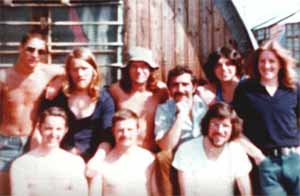
Gerry Adams, in Long Kesh seated (far right) with Brendan Hughes to his right and Bobby Sands to his left (both standing)

Gerry Adams, in Long Kesh (seated far right) with Brendan Hughes to his right and Bobby Sands to his left (both standing)

So today (Friday) I phoned The O’Brien Press to ask what dealings the company had had, if any, with the Trust and a supplementary to O’Brien’s emailed answer to me: ‘Okay, O’Brien Press hasn’t paid any fees to the Trust as of now but would the company pay any share of the royalties to the Trust in the future?’

The PR person could not come to the phone when I rang but I was assured she would get back to me. I am still waiting.

The Bobby Sands Trust, which has a website here, is a highly secretive and controversial body which has ownership of all of Bobby Sands writings and memorabilia, and therefore is the beneficiary of royalties and other income from his work. Since his writings have been on sale since 1981 that must amount to a tidy sum.

How much has been earned and where the money goes remain mysteries however since the Bobby Sands Trust has never once published a report of its activities or any financial accounts.

Nor does the Trust explain what its purpose in life is, i.e. why it exists. All that it says in that regard is this: “The Trust holds the copyright on all Bobby’s poetry and prose and was established to publish, promote and keep in print the extraordinary writings of this young Irish man, who from prison isolation became an international figure in 1981, and who to this day continues to inspire Irish republicans in their pursuit of freedom from British rule.”

adams_sands

A cynic might look at the Trust’s members and conclude that only confirmed Adamsistas qualify: Current members are Gerry Adams TD, Danny Morrison, Tom Hartley, Jim Gibney, Brendan ‘Bik’ McFarlane, Sile Darragh and Caral Ni Chuilin MLA. All are close colleagues or confidantes of the Sinn Fein president.

The original Trust had two of Bobby Sands’ sisters on the board, Marcella and Bernadette but they left in disputed circumstances. Adams’ loyalists claim the falling out was connected to the split in the Provos in 1997 which led to Michael McKevitt, Bernadette Sands’ husband, forming the Real IRA, while Sands family members insist the bad feeling predated the split by some years and was caused by mounting concern over the Trust’s secrecy and lack of accountability and transparency.

Back in July 2000, I wrote the following article about the spat between the family and the Trust for The Sunday Tribune which included the spectacular claim from Sands family members that Gerry Adams had at one time attempted to insert a new clause in the Trust’s constitution making himself a financial beneficiary of Bobby Sands writings. As you can read I never did get a response to that allegation from the Trust.

You can read the full article here. Enjoy:

Sands’s family considering legal action against The Bobby Sands Trust
(by Ed Moloney, Sunday Tribune, July 2, 2000)

The family of the IRA hunger striker Bobby Sands are considering legal action to force the winding up of a Sinn Féin dominated trust established in the dead hunger striker’s name and to get his many prison writings returned to the family after a row over an alleged breach in the terms of the trust.

A spokesperson for the Sands family said that all of the dead hunger striker’s family were united on the issue and would consider any avenue to wind up the trust. “We simply want his property returned and for (Sinn Féin) to cease using him as a commodity”, said the spokesperson. “I think it would be correct to say that we intend to pursue this matter and we have not excluded any avenue”.

The Bobby Sands Trust was set up after his death in 1981 with the aim of raising money for the dependants of IRA prisoners through the sale of books, photographs and memorabilia about the dead IRA protester. The Sands family is claiming that a recent decision by the Trust to make “republican writings” the main beneficiary instead was illegal and taken without their permission.

The dispute significantly widens a long standing breach between the Sands family and the leadership of the Provisionals over the heritage of Bobby Sands, the leader of the 1981 hunger strike protest and unquestionably the single most powerful symbol of the republican movement’s resistance campaign.

Membership of the trust include the SF president Gerry Adams and a number of his allies from Sinn Féin including the former SF publicity director, Danny Morrison and Belfast councillors Tom Hartley and Marie Moore. The Sands family are represented by two sisters of the dead hunger striker, Bernadette Sands-McKevitt, a leader of the 32 County Sovereignty Movement and Marcella Sands, whose name Bobby Sands used as a nom-de-plume for some of his prison writings.

Although the dispute has been characterised as an extension of the 1997 split within the Provisionals over the peace process its origins appear to go back many years to before the first IRA cease fire in 1994.

According to the Sands family version of events it was their unhappiness with the way Bobby Sands’ writings and poetry were being treated by some in the Sinn Féin leadership that led to a new Trust being set up in 1994.

“We came to look closer at the Trust and in turn were concerned at the lack of control or accountability”, said one family source. “There were no records of minutes etc. or proper accounts and it was debatable if they ever functioned as a Trust but rather as an extension of SF. It has been claimed that Marcella was a member of the Trust for instance yet she was never informed of meetings or for that matter who the other members were”.

There was also family concern over an alleged attempt by Sinn Féin to insert a clause in the new Trust which would have made Gerry Adams a financial beneficiary. “It came in the draft version of the new trust documents drawn up in 1994 though Adams said that it should read the president of Sinn Féin of the day. We didn’t agree to either”.

Asked about these allegations the secretary of the Bobby Sands Trust, Danny Morrison said he would refer the Sunday Tribune’s queries to the next meeting. “For your information, in the meantime, you have been badly misinformed on several counts”, he said.

For the record I never did hear back from Danny Morrison about all this, in particular the claim that Gerry Adams had tried to make himself a financial beneficiary, so I don’t know whether my queries were referred to the Trust or what their response was. I assume the silence meant that nothing happened.