Monthly Archives: September 2024

Some thoughts on the life and death of Pat Finucane

For almost as long as I can remember, Pat Finucane was shunned by the bulk of the Irish media; he was contagious it was said, toxic even, and any journalist who associated with him risked the label ‘Provo fellow traveller’, a career threatening tag to be sure.

But risks like that are what journalists are paid to take and no-one was more eager to do that than myself, caring dangerously little what other reporters or editors thought or whispered to each other over late night pints.

In those days there was almost a class split in the choice of legal representation, not least in the IRA. Leaders like Gerry Adams had the late, great ‘Paddy’ PJ McGrory – a friend and long time confidante of Charlie Haughey no less – arguing their case in court when necessary, while the IRA rank and file had to settle for Pat Finucane and junior colleagues from his firm.

Get close to PJ McGrory, and, so it was hinted darkly, you might come close, almost to Army Council thinking, someone on long and close terms with Gerry Adams; less so Pat Finucane. The truth was that when you met, it was he peppering the reporter with questions. Nonetheless no lawyer knew the heart and soul of the Provo rank and file better than he. He was also a very sharp advocate to have on your side.

So it was that in the late 1980’s, I decided to make contact with Pat. We agreed that we would meet in an hotel bar on the Antrim Road, usually on a Monday evening, once a month or so, where we would chew the fat and enjoy a pint or two. That was a deliberate choice. Bars in pricey joints like hotels, even on the Antrim Road, were most frequented at the weekend, but on a Monday or Tuesday night you’d likely have the bar to yourselves, free of prying eyes and flapping ears.

But it was hard when you met Pat to avoid the thought that the man was living on the edge. The RUC hated him and Loyalists despised him; sometimes, when meeting him, you knew that the man sipping a drink with you was on a limited life span. And so it transpired.

When the news came that he had been shot dead by the UDA, the only surprise was that it hadn’t happened long before. The RUC loathed him and there is no doubt in my mind that quietly, many a policeman cheered when the news came that he had been killed.

The part of the Pat Finucane story that has never really been told is that played by media in his killing.

In a very real sense, some members of the media were effectively complicit in his death. The Christmas before he was killed saw myself and another reporter having Christmas lunch with the UDA commander for the Shankill Road area and the memory of the conversation is burned deep in my memory.

The UDA man brought up the subject of Pat Finucane’s alleged role as a ‘Provo fellow traveller’, and he told us what had happened very recently when the UDA’s leading killer had been arrested. The UDA gunman may have expected a rough time from the police interrogators but that is not what happened.

Instead he was brought into an interrogation room where the detectives, all Special Branch men, berated the gunman for picking innocent Catholics to kill when there were targets like Pat Finucane, Paddy McGrory and Oliver Kelly – all defence lawyers whose whose deaths they said would inflict real damage on the Provos. Within a fortnight Pat Finucane was dead.

Not for the first occasion in my time as a journalist I was faced with a dilemma when I heard about the threat to the lawyers; should I warn the lawyers or stay silent? When, to my horror, I heard my lunch companion tell the UDA chief that Pat Finucane was indeed a Provo, there was no choice; to stay silent would effectively make me guilty of murder. So I chose to warn them. I went to Paddy McGrory, who I knew best, and he contacted Charles Haughey, then Taoiseach, who, I was told, took the appropriate action – or so I was assured.

But it was not enough to save Pat Finucane.

So who killed him? The UDA, who pulled the trigger; the RUC who pointed the gunmen in his direction or those in the media who quietly approved Pat Finucane’s assassination? The answer, sadly, is all three.

How The Soviet Union Helped Save The World From Polio (I Kid You Not!) While Netanyahu Brought It Back…

There has been an apparent reluctance on the part of the world’s media to delve too deeply into the origins of the vaccine that can kill the polio virus before it can damage the body. It’s a complex story while coverage of the recent upsurge in polio in Gaza is a simpler story that has, understandably and properly, concentrated on the role played by the Israeli military in helping to create ideal conditions – a superfluity of human excrement – for polio to re-appear in those, mostly children, too young to have acquired natural immunity from their mother’s milk.

But how did the world defeat polio way back in the 1950’s, sadly too late for myself and countless others but in time to save millions if not billions of human beings from a life of pain, severely limited physical ability and, too often, death itself? I thought I knew but the story is a complex one, that not everyone knows.

I eventually unearthed the full story not in The Guardian or The New York Times but in The Singapore Medical Journal (January 19, 2019), of all places. I hope you enjoy and learn a little, as I did:

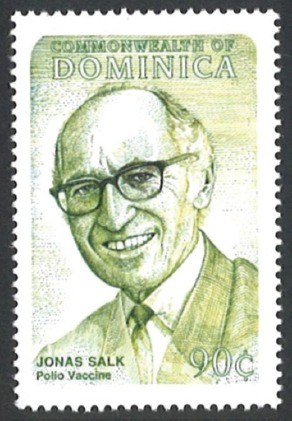
“Those who lived through the 1940s and 1950s will not forget the devastating ravages of poliomyelitis, a spinal cord motor neuron disease caused by the polio virus. Indeed, the mere mention of the virus quickly evokes heart wrenching images of crippled children in leg braces, or an infant trapped in a sarcophagus-like breathing machine known as the ‘iron lung’. However, the polio virus is on the verge of global eradication today – an astounding achievement of modern medicine. Jonas Salk played a pivotal role in achieving this success by being the first to devise and implement a safe and effective vaccine against polio.

THE HUMAN SIDE OF NATURE

“Jonas Salk was born in New York City, New York, United States (US), to an Orthodox Polish-Jewish immigrant family on 28 October 1914. His parents lacked the benefits of a formal education, so they actively encouraged Jonas and his siblings to focus on their studies. After completing high school, Jonas matriculated at the City College of New York, and became the first member in the family to obtain a college education. However, it was law, not science, that initially kindled his academic interest. While growing up, Salk showed little affinity for the didactic aspects of the natural sciences, but his words belied a deep-rooted respect for human biology. “As a child,” he wrote, “I was not interested in human anatomy. I was merely interested in things human, the human side of nature, if you like, and I continue to be interested in that. That’s what motivates me. And in a way, it’s the human dimension that has intrigued me.”

“Salk was deterred from a career in law when his mother insisted he could never succeed in a courtroom if he could not even win an argument with her. He later found himself impressed with the combination of science and the humanities, and switched his academic focus from pre-law to pre-med. He studied medicine at the New York University School of Medicine and dabbled in research involving the influenza virus as a medical student. Upon graduation, Salk obtained a prestigious research fellowship at the University of Michigan, Michigan, under the direction of Dr Thomas Francis. The pair worked towards the development and implementation of an effective influenza vaccine for the US military, which was entrenched in World War II at the time. Following the completion of his fellowship, Salk turned his attention to the polio virus in a similar search for an effective and safe vaccine. He began his work at the University of Pittsburgh, Pennsylvania, and there set the stage for one of the most heralded medical breakthroughs in the history of medicine.

A DIFFERENT PARADIGM

“In 1947, Salk was appointed director of the Virus Research Laboratory at the University of Pittsburgh School of Medicine. At the time, the established paradigm of vaccine development was to first isolate a ‘live’ but weakened micro-organism. This attenuated virus or bacteria would then be administered to patients in order to create a low-grade, innocuous infection that would confer long-standing immunity. However, Salk had employed an alternative approach in his prior work on the influenza vaccine. He had used non-infectious killed viruses to induce protective immunity. Despite the discouragement of his peers and detractors, he decided to take the same approach in his polio research.

“Salk had written a number of scientific and theoretical articles regarding polio and the merits of a killed virus vaccine. His publications eventually captured the attention of the National Foundation for Infantile Paralysis, a charitable organisation first established by US President Franklin D Roosevelt to raise money for poliomyelitis research. This foundation, now widely known as the March of Dimes, provided ample financial support for Salk’s research and helped to jump-start his efforts towards a vaccine goal.

THE VACCINE

“Salk and his team used formaldehyde to kill the polio virus without destroying its antigenic properties. After establishing both safety and efficacy, they administered the vaccine to scores of volunteers, including himself, his wife and their children. In 1954, Salk undertook a large-scale national study, enrolling over one million paediatric subjects. The next year, on 12 April 1955, he announced the results: the vaccine was both safe and efficacious. Subsequent data showed that in 1955, there were approximately 29,000 cases of poliomyelitis in the US. Just two years after mass production and implementation of the newly developed vaccine, the infection rate plummeted to less than 6,000. The Salk vaccine was quickly adopted nationwide, and by 1959, had reached about 90 countries.

“Despite his momentous work, Salk was conspicuously snubbed for membership in the American Academy of Sciences and was never awarded a Nobel Prize. He is said to have trivialised the contributions of other scientists that preceded him and even downplayed the efforts of his own research team. For example, in 1948, Dr John Enders and his colleagues Dr Thomas H Weller and Dr Frederick Robbins successfully cultivated the poliovirus in human tissue in the laboratory, for which they won the Nobel Prize in 1954. This development greatly facilitated vaccine research and ultimately allowed for the development of vaccines against polio. Another important advance that led to the development of polio vaccines was the identification of three different poliovirus serotypes.

PARALYSIS AND THE SABIN VACCINE

“Shortly after mass polio vaccination began in the US, some subjects developed paralysis in the limb where the vaccine had been administered. Preparations from Cutter Laboratories and, to a lesser extent, Wyeth Laboratories were implicated and the vaccine was recalled after 250 cases of paralytic illness had occurred. There were also reports of paralysis and death in several children. Investigations showed that improperly inactivated vaccine had released live virus into more than 100,000 doses of the vaccine.

“At around this time, Dr Albert Sabin and Dr Hilary Koprowski were working on an attenuated live poliovirus vaccine. In 1955, they presented their preliminary work at a meeting in Stockholm, Sweden, and conducted trials outside the US, such as in Mexico and the Soviet Union, because the US had committed itself to the Salk vaccine. In 1957, Dr Sabin developed a trivalent oral vaccine consisting of attenuated strains of all three types of the polio virus, which was then given to ten million children in the Soviet Union.

“For this work, Dr Sabin, who was originally from Polish Russia, was awarded the Soviets’ highest civilian honour, the medal of the Order of Friendship Among Peoples, even though he had become an American citizen during the height of the Cold War. Their oral vaccine came into commercial use in 1961 and quickly replaced Salk’s injected vaccine, which had suffered a loss of public confidence as a result of the Cutter-Wyeth debacle.

PERSONAL LIFE AND LEGACY

“While in college in New York, Salk met his first wife, Donna Lindsay, whom he married in 1939. Together they had three children, Peter, Darrell and Jonathan, who ultimately pursued their own medical and research careers. In 1965, Jonas Salk moved to La Jolla, California, and founded the Salk Institute for Biological Studies, which remains one of his most enduring legacies. The institute was established to provide an environment of creativity where researchers could “work together to explore the wider implications of their discoveries for the future of humanity”. Many talented scientists were attracted to La Jolla, with the institute’s first faculty consisting of the likes of Dr Francis Crick, the co-discoverer of the DNA double helix.

“In 1968, Salk’s first marriage ended in divorce. Shortly thereafter, he met the French artist Françoise Gilot, a former mistress of Pablo Picasso, and they were married in 1970. He found a rare combination of artistry, intellect and companionship in Gilot, and remained in La Jolla with his new wife for the remainder of his career until his death from heart failure in 1995. An interviewer once inquired about the ownership of the polio vaccine patent, to which Salk famously answered, “Well, the people, I would say. There is no patent. Could you patent the sun?” It was this spirit of humanism in combination with his astounding accomplishments in virology and vaccine development that have permanently etched Salk into the annals of medical history.

“Polio was eliminated from North America by 1994 and in most countries worldwide shortly thereafter. Still, unlike smallpox, polio has not been entirely wiped out. As recently as 2013, Syria witnessed an outbreak, and the disease has now spread to some ten countries in Africa, Asia and the Middle East. Deep-seated distrust stemming from religious and racial origins has led to resistance towards vaccination programmes and even violent attacks on health workers. In 2011, the Central Intelligence Agency organised a fake vaccination programme in the search for Osama bin Laden. This tactic helped to fuel the misconception that the vaccine causes infertility in male children, which unfortunately prompted some parents to forgo vaccinating their children.”

(ends)

Roy Garland Continues His Story of the Road To Kincora….

From Belfast’s Shankill Road

To Counties Monaghan Louth and Meath.

By Roy Garland September 2024

I was born and reared in Orkney Street in the Shankill Road area of Belfast where my bedroom overlooked plots growing vegetables and flowers and beyond this the ancient Shankill Graveyard where some of my mother’s Nolan ancestors had been buried.  I spent many happy hours playing at the River Farset, that ran between the plots and the graveyard.   Beyond these was Divis Mountain and adjoining hills, that greeted usevery morning.  As boys we collected wood from local shops or branches of trees from nearby Glencairn or from theovergrown graveyard for a small Twelfth bonfire.  In the dying embers of the fire we roasted potatoes, and ate themwith heaps of salt.

My parents had told me of visiting the Garland farm and homestead in Monaghan, in the late 1920s, which left me fascinated to learn that the Hand and Pen Orange Hall where the family played a leading role was at the farm.  My familyleft Monaghan in the 19th century and two generation later my great Grandfather James became a leading Tyrone Orangeman.  Another James Garland, a “gentleman of the Pale,” had been with Hugh O’Neill, Earl of Tyrone whoobtained weapons for O’Neill for which he was later pardonedwith O’Neill.  By the mid 1960s I decided to find the old homestead and drove to Monaghan town where I was given directions and found the farm and distant relatives.  One gave me a photograph of my parents, grandfather and Paddy Trainor, employed at the farm and enjoyed playing the drums. I slowly felt a new openness and freedom in the south whereas before I had felt very uneasy.  

A Catholic Lady said she fondly remembered the Hand and Pen Lodge and Band and loved see them at the Twelfth because they gave the kids sweets.  I met members of the Orange Lodge and visited a big house where members wereentertained with meals on the Twelfth Day. My dad knew of his historic links with Monaghan and he, my mother and grandfather William James met the elderly Frank Garland on his death bed.  Frank offered the farm to my grandfather andfather but both thought they needed a woman on the farm andmum refused to live in what she called the “back of beyond”with dirt floors and journeymen going in an out.  Instead of inheriting the farm dad received £50, a substantial sum in those days.

The Garlands first arrive in Ireland with Strongbow in 1170 and settled in County Louth, before moving to Monaghan in 1591. The Irish State, Saorstát Éireann, was formed in December 1922 a few years before my parents arrived in the late 1920s.    By the 1960s I set out to find the farm and inMonaghan town a stranger gave directions to the farm.  Until then I felt uncomfortable crossing the border and was relievedto see the shades of green on my return.  I now began to feelat ease in the South, but I began to feel as free in the south as in the north.  Finding new friends from both traditions played a big part in this, and I saw the need for people to meet each across borders.  I believe that whatever shape the future should take we needed to get to know each other and form friendships whatever political institutions.

By the 1990s Loyalist Gusty Spence invited me to join the Shankill Think Tank that brought people in the community together in dialogue.  At one meeting someone said the Irish News, needed a Loyalist to write a column and I approach them and became a columnist for many years, but I feltdaunted at the prospect.  Occasionally I wrote about distant relatives in Monaghan and a kind letter arrived from Joe Gavin an 81-year-old from Pittsburgh USA.  His father, Brother James Gavin, had been a Capuchin-Franciscan Friar but once worked on the Garland’s Monaghan farm.  In January 2014, Joe Gavin, contacted me through the Irish News and said his dad had been employed on the farm and mywriting about the Garlands touched him deeply.  His fathertook ill at the farm and Joe recalled his dad telling him that: 

Frank Garland was like a father to me and on the 12th July, Orangemen’s Day the Garlands carried my dad into the Orange Hall and told the brethren to give him his dinner in the Orange Hall and treat him with love and kindness.  Dad of course was scared and afraid being a Roman Catholic.  I enjoyed your writings about the Garlands and how they treated my dad with Christian love and kindness when a boy.   I could not die in peace until I expressed my honest thanks to you.   I am 81 years old, an old man.  I wanted to let you know the Garlands are in my prayers.  When I was a boy, my dad told me of his life at the Hand and Pen and the Garland home and farm where he worked.  Thanks again dear friends of my late dad who died January 12th, 1955.

Joe Gavin’s words were very moving and as I read and re-read his letter, I was determined to do what I could to help develop such wholesale friendships across the island.  I met Catholic neighbours who spoke highly of their Protestant and Orange neighbours.  However, some tensions remain.  

For a time, I travelled around the south with local historian, Alphie Reilly and Kevin Gartland from south Monaghan.  We decided to form a dialogue group to bring people from north and south together.  The group was named the Guild of Urielafter Historian Harold O’Sullivan from Dundalk explained that English Uriel was the medieval name of an area based on what is now Louth. But Monaghan and adjacent areas were Irish Uriel. Joe Armstrong, journalist, author, columnist, poet and songwriter, described the Guild as a fascinating group that:

…arranged meetings outside the glare of publicity between the different sides of the socio-political-religious divide in Northern Ireland, often getting enemies into the same room at the same time to…dialogue. They invited guest speakers and organizations to meet with them. They didn’t judge anyone.  Even when the IRA ceasefire broke down, they kept up their quiet, invaluable work.  Some criticized them for talking to the political wing of the IRA – Sinn Fein – but they met them nevertheless, convinced that to resolve conflict you must talk to everyone.  Roy Garland was the inspiration behind the Guild. 

He is a unionist yet he realized the interconnectedness between everyone in Ireland.  He discovered his own family roots through an examination of his family’s Anglo-Norman history.  The truth is so often far more complex than the unionist versus nationalist debate that the conflict was so often seen as.   Roy and Julitta Clancy are both long-time chairs of the Guild.   Julitta is also well known for her work in the Meath Peace Group and was awarded an OBE for her work for peace and reconciliation between the peoples of the two islands that constitute Ireland and Great Britain.

The Guild of Uriel was founded on the 29 October 1995 at Bellingham Castle Hotel.  The emphasis was on diversity past and present and the aim was to facilitate mutual understanding and to learn from each other through dialogue.  Dr O’Sullivan spoke at the Guild’s foundation on the diversity of people in Louth past and present.  Rev Dr John Morrow of Corrymeela spoke on the need for such work while Sam McAughtry, trade unionist and NI Labour Party chaired the meeting.  I was elected northern chair and Julitta Clancy of the Meath Peace Group southern chair.   Commenting on the work of the Guild Julitta Clancy told me: 

The work of the Guild was amazing – you (Roy) led and inspired us! We can never measure what we achieved but it was a tremendous learning experience, building dialogue, true understanding and respect.  An opportunity that very few have, to talk frankly and honestly, share our experiences and aspirations, and see how we can go forward in peace.

A core group drawn from both traditions meant everyone would meet others from a different tradition including, nationalists, loyalists, unionists, republicans, Orangemen, dissidents, former security people, victims, including security force victims, politicians and others who met in together in peace.  People introduced themselves and spoke from their own traditions. The meetings were dynamic and refreshing but painful memories sometimes surfaced.  Julitta Clancy and I chaired meetings and participants were free to say whatever was on their minds and engage respectfully with each other.  We visited strife torn parts of Belfast with some who had never crossed the NI border before.  We visited Dan Winters’ Cottage where a Drogheda man spoke of former Orange parades in his town and was thrilled to be in Dan Winter’s cottage where he met Hilda Winters, a relative of Dan Winters.  The work of the Guild continued for 20 years and was a wonderful experience for us all.

1